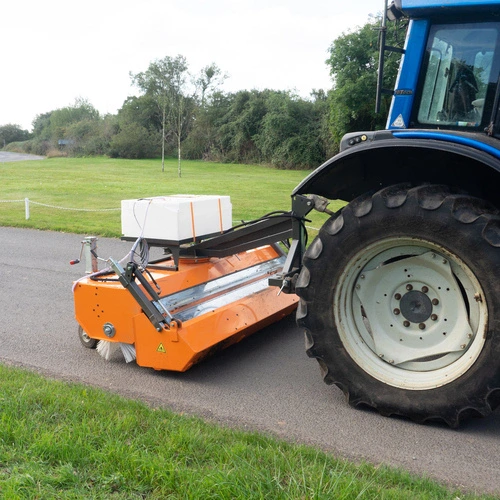
Detritus and surface-condition solutions
What needs
clearing?
Leaves, soil, mud, moss or winter conditions? Start with what is on the surface, then choose the equipment to move it, collect it or loosen it first.
Start with the material
Choose what’s affecting your surface.
Detritus is loose or accumulated material such as leaves, soil and grit. Established growth and snow or ice need different methods; use the routes below to find the right starting point.
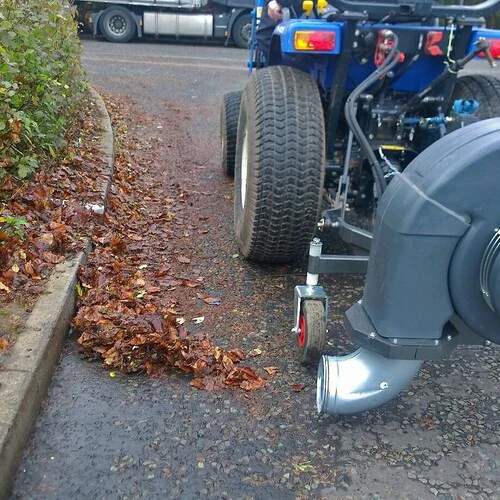
Leaves & grass clippings
Move fresh leaf fall to a planned pickup point, or collect it where a clean finish is needed.
Explore the application →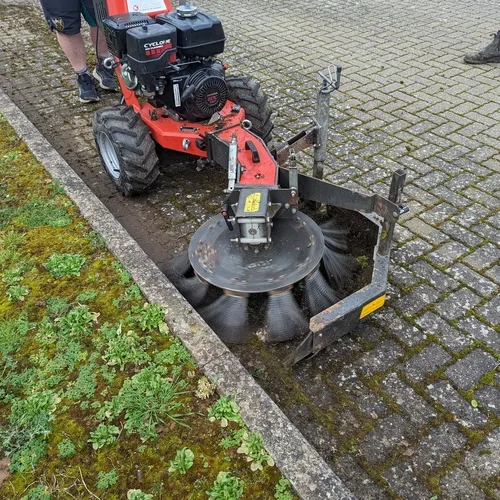
Soil, grit & heavy debris
Sweep loose deposits. Use remedial brushing first where soil or growth is bonded to the surface.
Explore the application →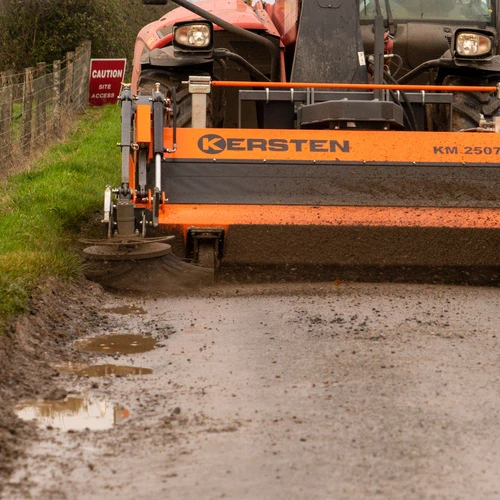
Mud & slurry
Match the brush and collection method to the consistency, volume and condition of the surface.
Explore the application →.webp)
Dust & fine material
Use appropriate brush settings, containment and a compatible water-suppression kit where needed.
Explore the application →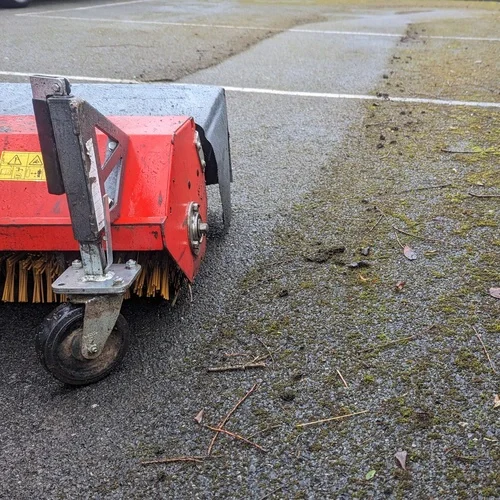
Moss & algae
Remove accumulated debris, choose a surface-appropriate brush and address the damp conditions that favour regrowth.
Explore the application →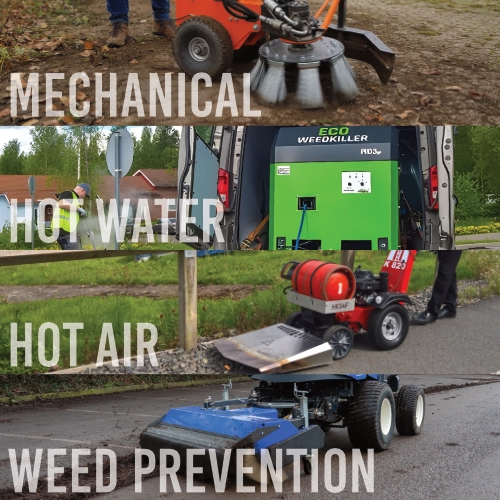
Weeds & rooted growth
Choose mechanical or targeted treatment around the growth, then remove the arisings and supporting detritus.
Explore the application →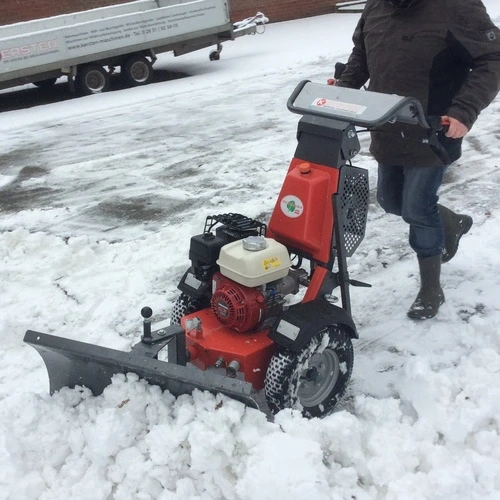
Snow
Choose a sweeper, plough or snow blower around depth, available space and the route you need to open.
Explore the application →.webp)
Ice
Plan spreading around the treatment material, route width and the load your carrier can support.
Explore the application →Selected equipment
Match the machine to the job.
These six examples cover routine sweeping, moss work, remedial brushing and bulk movement. Attachment prices exclude the carrier and extra options unless the listing states otherwise.
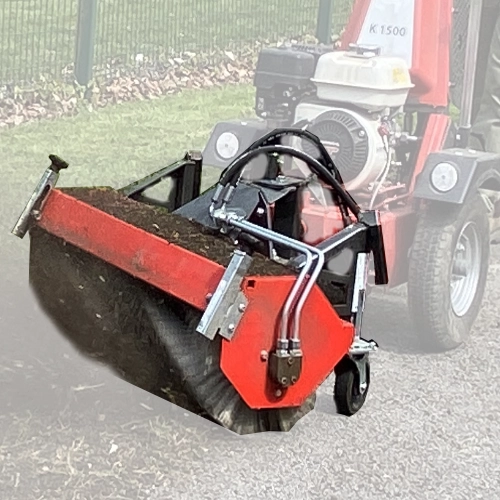
Routine pedestrian sweeping
EFKM 09032 H-K 35
A five-row spiral roller moves loose debris across paths and hard-standing. Add the matched collector when leaves, soil and grit need to leave the surface.
Choose it when: You have a compatible K820, K820 Pro or K1500 and need a compact sweep-and-collect setup.
- 90 cm working width · 32 cm roller
- Hydraulic brush drive · K35 connection
- Manual left/right angling · adjustable brush height
- Power unit and collector supplied separately
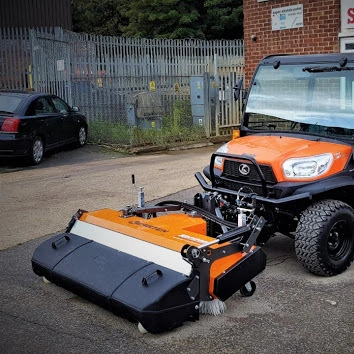
Front-mounted tractor sweeping
KM 15045 H
The larger roller provides space for bulky material to move through the brush. Pendulum suspension and adjustable gauge wheels help set contact across the surface.
Choose it when: Your tractor has the correct mounting and hydraulic supply for wider routine sweeping.
- 150 cm working width · 45 cm roller
- 20 L/min listed hydraulic requirement
- ABR 45 mounting bracket required
- Collector, gully brush and dust suppression optional
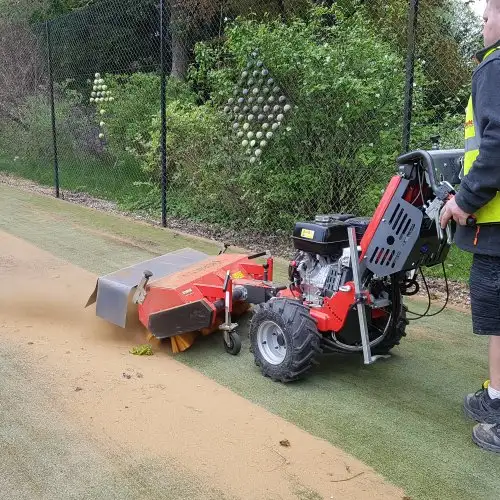
Specialist moss brushing
De-Moss 100
A five-row nylon brush provides more active brushing for moss work. Set brush contact to the surface and follow removal with collection of the loosened material.
Choose it when: A compatible UBS Hydro power unit needs a specialist moss brush rather than a general sweeping roller.
- 100 cm working width · 37 cm roller
- Mechanical PTO drive · K70 bracket included
- Listed for UBS Hydro 9 / 13 / 16
- Power unit and collection equipment separate
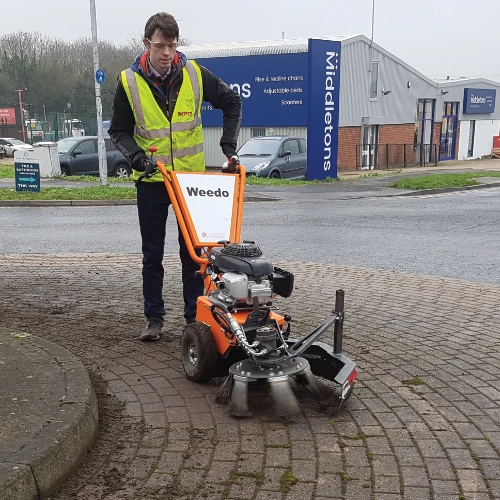
Loosen established growth
Weedo II
The dedicated pedestrian weed brush works on established weeds, moss and compacted material. Reversible rotation and adjustable brush positioning help direct the working action.
Choose it when: Rooted or bonded material needs loosening on smaller hard-surface sites before sweeping and collection.
- 50 cm working width · six-tool brush plate
- Hydraulically driven brush · reversible rotation
- Adjustable brush angle, height and splash guard
- Foldable handlebar · confirm supplied brush tools
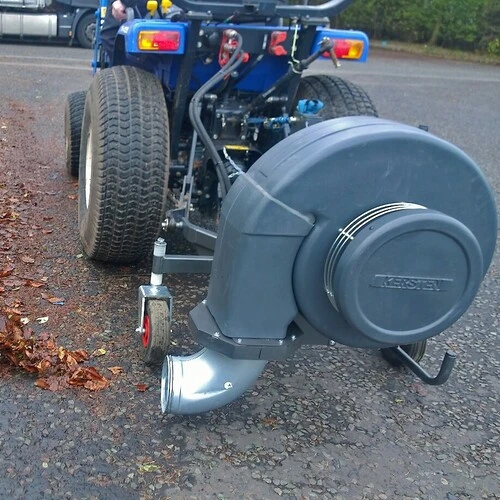
Move leaves to a collection point
LBV 6900 H
Hydraulic drive powers a turbine for moving leaves and light debris. Choose the discharge arrangement around the route and where the material should finish.
Choose it when: A suitable tractor or municipal carrier can move leaf fall to a planned windrow or pickup area.
- 40 L/min listed hydraulic requirement
- Up to 140 m³/min theoretical air output
- 85 kg listed weight · ABR bracket required
- Fixed discharge standard · rotating outlet optional
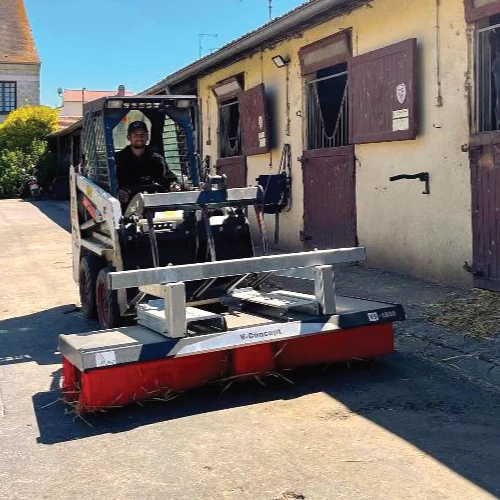
Gather loose bulk material
ActiSweep V9 1800
The carrier’s forward movement pushes material through a V-shaped brush arrangement. No hydraulic brush motor or PTO drive is needed for the sweeping action.
Choose it when: A yard or larger hard-standing has loose bulk material that can be gathered for subsequent pickup.
- 180 cm working width
- Nine-row polypropylene brush arrangement
- Carrier-specific mounting required
- Moves material · collection is a separate operation
Specify the complete working setup. A collector box, gully brush, guard or water-suppression kit must match the exact sweeper. Carrier mounting, hydraulic supply and mechanical PTO are separate checks. Check machine and attachment compatibility or ask for a complete quotation.
Choose by condition
Loose, attached or ready for collection?
The same material can need a different approach as it becomes wet, compacted or rooted. Choose the first operation around its condition, then finish the removal.
Blow or windrow
Use a blower where leaves can go to a suitable pickup point. A powered sweeper or push broom can gather loose material into a controlled windrow. Plan the next handling step.
Sweep and collect
A matched sweeper collector takes material away as it is lifted. For higher volumes of leaves and grass, consider a vacuum pickup and compatible receiving collector or trailer.
Loosen, then remove
Established weeds, moss mats and compacted edge deposits can need remedial brushing. Follow with sweeping and collection so the loosened arisings do not remain on the surface.
Material and surface together
A useful starting point for each condition
| What you find | Start with | Finish and fitment |
|---|---|---|
| Fresh leaves and grass clippings | Blower for relocation; sweeper for mixed debris; vacuum pickup where containment matters. | Choose the destination and emptying arrangement before selecting capacity. |
| Loose soil, grit and decomposed leaves | Powered roller sweeper with suitable brush contact. | Add a matched collector where material must be removed rather than windrowed. |
| Dry dust and fine material | Appropriate brush speed, guard and compatible water suppression where required. | Contain the material; avoid simply creating a wider airborne plume. |
| Wet mud and slurry | A sweeper or push broom suited to the volume and consistency; scraping may be needed for bonded deposits. | Plan collection and the destination of the wet material. |
| Moss mats, weeds and compacted edges | Surface-appropriate remedial brush or specialist moss roller. | Collect the loosened arisings and continue routine maintenance. |
| Painted or vulnerable sports surfaces | Brush choice, light controlled contact and a trial on the actual surface. | Follow the surface supplier’s maintenance requirements; stronger brushing is not automatically better. |
| Gravel or infilled artificial turf | A surface-specific maintenance method. | Distinguish unwanted contamination from gravel or infill that belongs on the surface. |
Make collection part of the plan
Moving material and taking it away are different jobs.
Sweeper-mounted collector
A compact container receives material lifted by the roller. Choose it for routine debris removal and match the box to the exact sweeper family and working width.
Vacuum pickup
A pickup head and hose transfer leaves and light debris into a receiving system. Confirm where suction is generated: the nozzle may need a suction collector or have its own turbine.
Tractor-mounted collection
A higher-capacity collection system suits longer routes and greater leaf or grass volumes. Choose hopper capacity and ground-level or raised unloading around the site.
Keep the edges in the working route. A matched gully brush brings material from kerbs and walls into the main roller’s path. Water suppression helps bind dry material; a brush guard helps control debris discharge. Browse sweeper accessories.
Prevent the next build-up
Clear it early. Keep less material on the surface.
Fresh leaf fall and clippings are generally easier to manage before they decompose and mix with soil. Removing the accumulated material also removes part of the growing medium that supports weeds.
Recover neglected areas
Identify compacted edges, rooted growth and blocked collection points. Loosen what needs remedial work, then remove the arisings.
Schedule around the source
Plan collection after mowing, leaf fall or busy site operations. Inspect kerbs, corners and surface joints where material gathers.
Check the result
Review the finish, drainage routes and returning deposits. Adjust brush contact, collection frequency and the work route to suit the site.
Kersten guidance
See why the method matters.
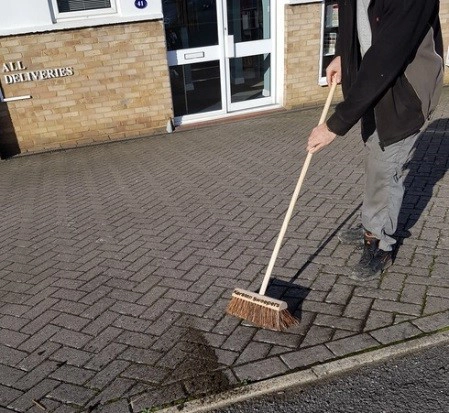
Sweeping and weed prevention
Remove the growing medium
Kersten explains how sweeping and collecting accumulated material can support a preventive weed-management programme.
Read the sweeping guide →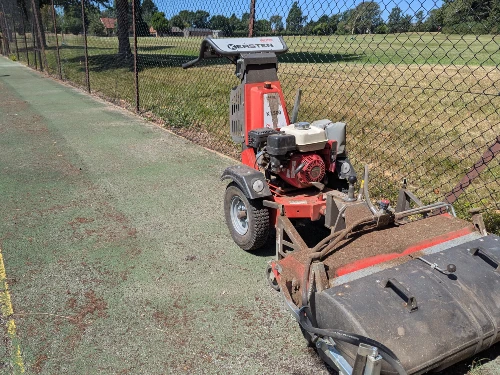
Painted porous tarmac
Choose the brush for the finish
A tennis-court demonstration shows the difference between routine poly brushing and more active De-Moss work, with care needed around the painted coating.
Read the tennis-court article →Common questions
Choosing a detritus-management method
What does detritus mean?
Detritus is loose or accumulated material such as leaves, grass clippings, soil, grit and decomposing organic matter. Its condition matters: fresh leaves, wet deposits and compacted soil can require different methods.
Should I use a blower, sweeper or weed brush?
Use a blower to relocate leaves and light debris to a planned destination. Use a sweeper for loose or friable material, adding collection where needed. Choose remedial brushing for rooted growth or deposits bonded to the surface, then collect the arisings.
Does a sweeper automatically collect the debris?
No. An open, angled sweeper can leave a windrow. Add a matched collector box if the material must be removed during sweeping, or specify a compatible vacuum collection system for suitable leaf and light-debris work.
Can one brush clean every surface?
No. Match bristle material, brush action and contact to the surface and contamination. Painted coatings, joints, gravel and artificial-turf infill need particular care so maintenance removes unwanted material without displacing what belongs there.
Is moss removal the same as algae cleaning?
Not always. Moss can form a brushable layer; a thin slippery film may need a different surface-specific cleaning method. Check the surface condition, drainage and maintenance instructions before choosing the tool.
Are the displayed prices for complete working machines?
Most examples here are attachments. The Weedo II is a dedicated machine listing. Carrier, collector, bracket and optional equipment are separate unless explicitly included. Ask Kersten to quote the complete setup.
Start with your surface
Show us what needs clearing.
Tell us the material, surface, area, access and carrier you already own. Include whether it can be windrowed or needs collecting, and we’ll help specify the working setup.