Chemical-free weed control for sensitive places
A precise, modular hot-air system for schools, historic buildings, estates, councils and contractors that need professional weed control without liquid herbicide residue or a water supply.
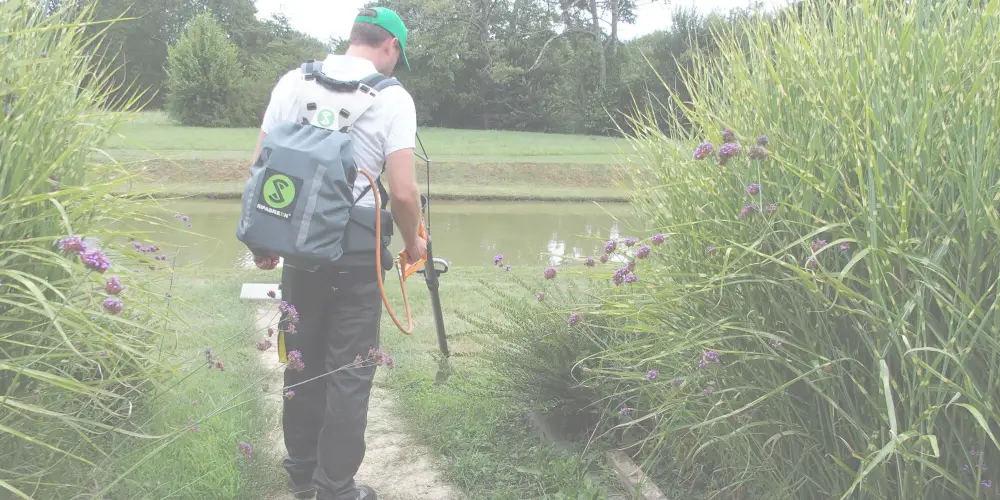
A professional alternative to routine spraying
Precise heat where the team needs it
Ripagreen directs a high-velocity flow of hot air at weeds, moss and fresh growth. The modular system is designed around access, route length and operator comfort rather than a single fixed machine format.
No spray drift
The operator applies heat directly to the target rather than dispersing a liquid treatment across the site.
Fast route movement
Backpack, trolley and vehicle-supported options let teams match the equipment to steps, paths or longer municipal routes.
Controlled gas use
Gas is consumed only while the trigger is held, helping the operator focus energy on the weeds being treated.
Good presentation
No liquid spray marker or chemical residue is left behind on paths, courtyards and public-facing surroundings.
Choose the working pattern before the kit
Two equipment routes, six professional configurations
Start with access and route length. Pedestrian kits prioritise mobility and operator comfort; Autonomy systems use a vehicle-mounted frame and hose reel to support longer routes and larger teams.
Pedestrian and restricted-access work
Best where the operator must move through steps, courtyards, narrow paths, formal grounds or fragmented sites.
- Mobility backpack for maximum access
- Easy trolley for comfortable linear work
- Easy+ combines both operating modes
Vehicle-supported route work
Best for estates, council rounds and contractors working from a UTV, van, three-wheeler or flatbed.
- 15 m automatic hose-reel reach
- One or two cylinder-holder frames
- Single- or dual-operator configurations
Pedestrian Ripagreen kits
Three ways to carry and manoeuvre the same targeted hot-air treatment system across different access conditions.
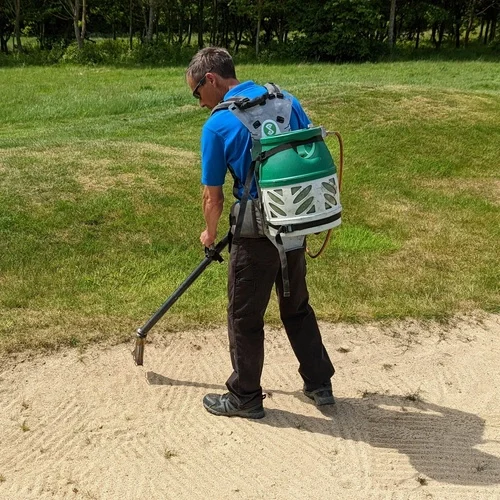 Maximum access
Mobility Kit
A lightweight backpack system for steps, courtyards, narrow paths, cemeteries and other areas where a trolley cannot comfortably reach.
- Backpack-mounted 5–6 kg cylinder
- Single-operator precision work
- Best for fragmented or restricted sites
 Comfortable route work
Easy Kit
A stable trolley and full-length lance for paved campuses, formal grounds and predictable linear work where operator comfort matters.
- 13 kg cylinder trolley
- 40 cm treatment width
- Push or carry operating modes
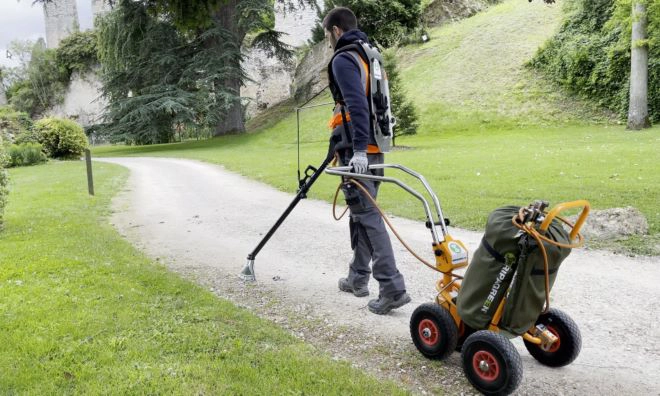 Most versatile
Easy+ Kit
Combines the trolley and ergonomic backpack, allowing one team to move between open routes and awkward access without changing systems.
- Trolley plus backpack harness
- Switch between route and precision work
- Strong all-round choice for mixed estates
Vehicle-supported Autonomy kits
Hose-reel systems for teams working from a suitable UTV, van, three-wheeler or flatbed across longer estate and municipal routes.
 Vehicle-supported coverage
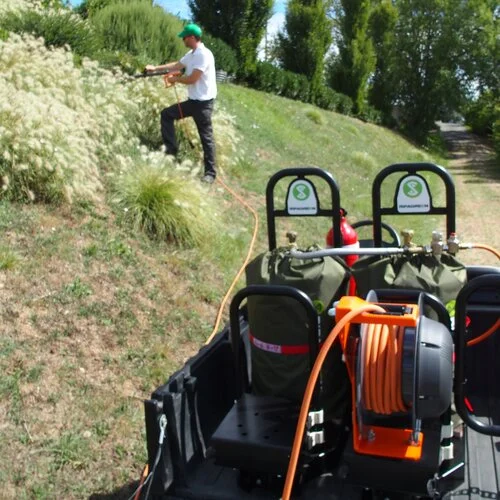
Autonomy Kit
A vehicle-mounted frame, automatic hose reel and 15 m hose for larger sites, municipal routes and estate work.
- 15 m automatic hose reel
- Universal vehicle-mounted frame
- Single-operator route work
 Longer operating windows
Autonomy+ Kit
Adds a second cylinder-holder frame to reduce interruptions during longer shifts while retaining the reach of the Autonomy system.
- Two cylinder-holder frames
- Reduced cylinder-change downtime
- For longer routes and larger programmes
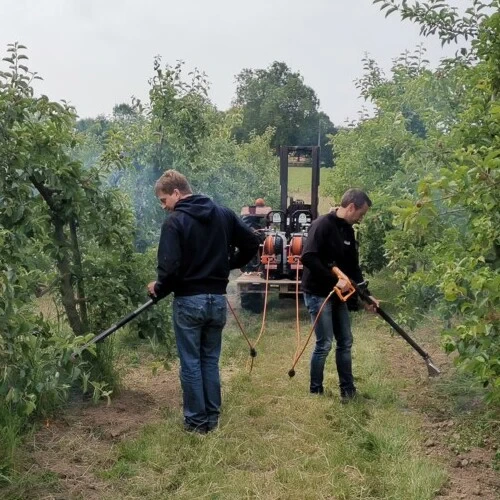 Two-operator productivity
Autonomy Duo
Two lances, two hose reels and two frames allow a trained two-person team to work simultaneously on high-output programmes.
- Two independent thermal lances
- Two 15 m hose reels
- Best for high-output teams
Pulsed hot-air treatment
Thermal shock—not prolonged burning
The operator briefly heats the plant so its cells are damaged and photosynthesis stops. Good timing and repeat frequency matter more than visibly scorching the weed.
Start with young growth
Treat seedlings and fresh annual growth before deeper reserves and woody stems make control more difficult.
Use a brief pass
Maintain the correct distance and look for a leaf response rather than blackening or charring the plant.
Repeat and integrate
Plan follow-up passes and combine hot air with detritus removal, prevention or another method where required.
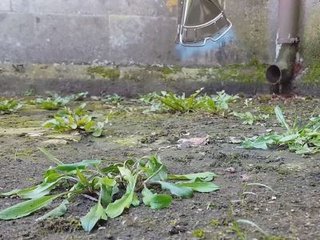
Built around real maintenance environments
Where Ripagreen can make practical sense
The final choice depends on access, surface material, public occupancy, weed maturity, route length and fire-risk controls.
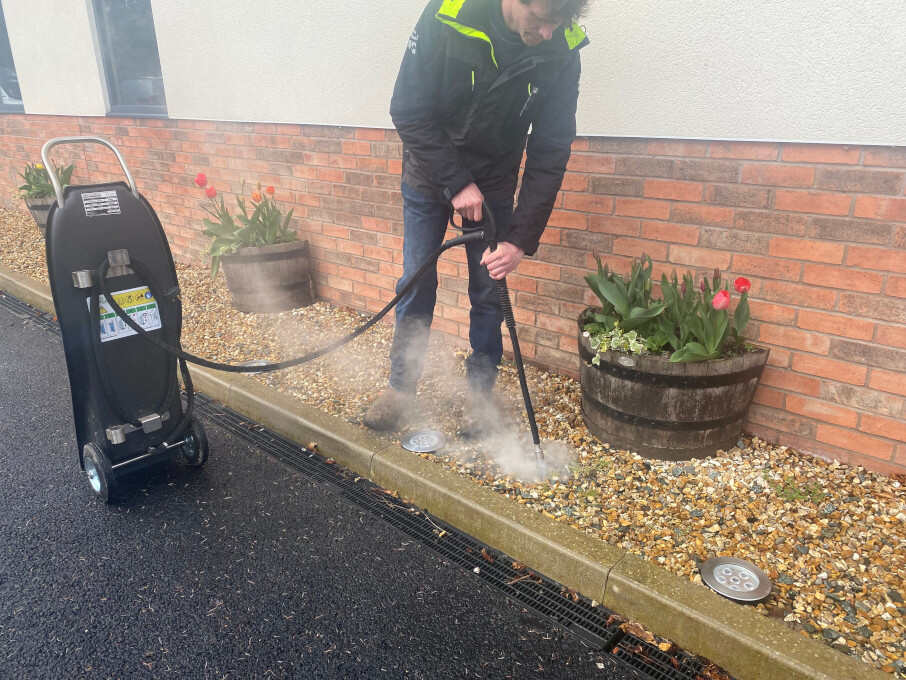 Education
Schools and campuses
Portable treatment for paths, entrances, courtyards and boundary edges, scheduled around occupied periods.
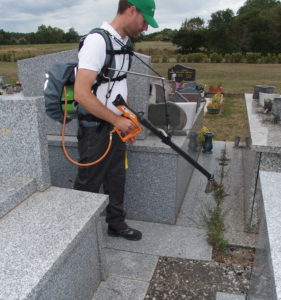 Heritage
Historic and sensitive sites
Precise work around gravel, paving joints, cobbles, cemeteries and formal courtyards.
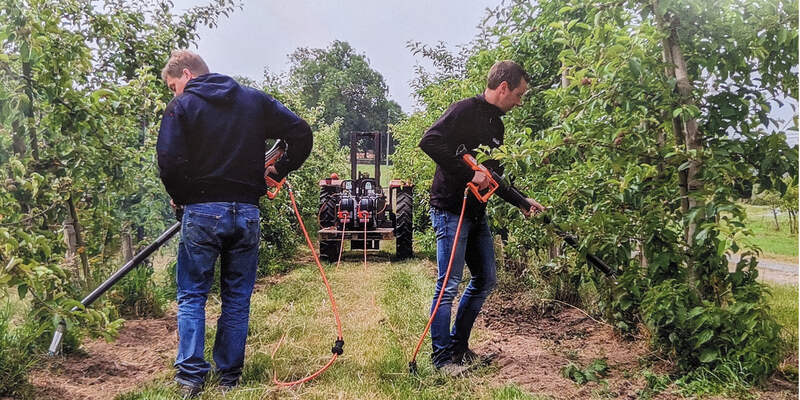 Estates
Estates and visitor destinations
Move between formal gardens, paths, entrances, car parks and restricted-access areas.
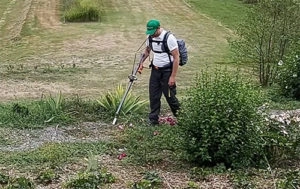 Public realm
Councils and contractors
Build route-based hot-air treatment into a documented Integrated Weed Management programme.
Responsible professional use
Plan the heat, the public and the surface together
Ripagreen is an LPG-powered professional heat tool. Safety features support responsible work, but they do not replace training, supervision or a site-specific assessment.
- Use trained operators and follow the current manufacturer instructions.
- Clear dry detritus and other combustible material before treatment.
- Establish an exclusion zone and schedule public-facing work appropriately.
- Avoid conditions where heat, drought or wind create an unacceptable fire risk.
- Store, transport and connect LPG cylinders in line with current guidance.
- Test representative heritage or heat-sensitive surfaces before wider use.
Build the complete weed-management toolbox
Use Ripagreen where hot air is the right method
No single method suits every weed, surface and operating constraint. These Kersten ranges provide alternatives for deeper roots, larger infestations, sensitive noise conditions and preventative surface care.
Eco Weedkiller
For water-led thermal treatment, shallow root-zone heat transfer and quiet pre-heated options.
Explore hot-water systems → Infrared and hot airHoaf systems
Higher-capacity thermal equipment for larger professional treatment programmes.
Explore Hoaf equipment → Mechanical controlWeed brushes and surface renovation
Remove established growth and accumulated growing media from hard surfaces.
Explore mechanical methods → Targeted brushingWeed-brush equipment
Use powered brushing where physical removal is more appropriate than heat.
View weed brushes → Method comparisonThermal weed management
Compare hot air, hot water and other thermal approaches by site and weed pressure.
Compare thermal methods → Programme planningIntegrated Weed Management
Connect equipment selection with prevention, evidence, timing and repeatable site programmes.
Open the council IWM guide →Plan, train and operate
Ripagreen guidance and practical reading
Use the current product documents, operating guidance and Kersten articles when planning a demonstration or introducing hot-air treatment.
Ripagreen product catalogue
Review the complete kit range and available configurations.
Open catalogue → Operator supportRipagreen start-up guide
Initial setup and first-use information for trained operators.
View start-up guide → Product informationRipagreen product brochure
A concise overview of the technology, kits and applications.
View brochure → WeatherUsing Ripagreen in wet conditions
How treatment planning changes with rain, wind and surface conditions.
Read article → MaintenanceMaintaining the thermal lance
Practical care for dependable operation and a long service life.
Read maintenance guide → TechniqueGet more from thermal treatment
Timing, treatment speed and repeat frequency for stronger results.
Read technique guide →Practical questions
Before introducing hot-air treatment
The current product manual, operator training and site risk assessment remain the controlling documents for use.
Do weeds need to be burnt or charred?+
No. Effective treatment is a brief thermal shock rather than prolonged burning. Blackening the plant wastes time and energy and can increase surface or fire risk.
Can Ripagreen be used in wet weather?+
Hot-air treatment can remain useful in wet conditions, but the operator must still assess wind, combustible material, access and the ability to control the treatment zone safely.
What weeds respond best?+
Young annual weeds, seedlings, moss and fresh growth are the strongest fit. Established woody or deep-rooted perennials may need repeated passes or another method.
Which gas and cylinder size should be used?+
Use propane or compatible biopropane in the gaseous phase and the cylinder size specified for the chosen kit. Follow the current instructions for regulators, hoses, transport, storage and connection.
Which kit should a team choose?+
Choose Mobility for difficult access, Easy for comfortable linear work, Easy+ for mixed sites, Autonomy for vehicle-supported routes, Autonomy+ for longer shifts and Autonomy Duo for simultaneous two-operator work.
Prove the method on the actual site
Arrange a measured Ripagreen demonstration
Show Kersten the access, surface materials, public-use constraints, current weed pressure and route length. The team can then recommend a suitable kit and demonstrate the method on representative surfaces.