Mechanical weed management for hard surfaces
Remove established weeds, moss and the soil that keeps them coming back
A powered sweeper is excellent at collecting loose material. A Kersten weed brush is the key mechanical intervention when vegetation and compacted growth medium are already anchored into paving joints, kerb lines and path edges.
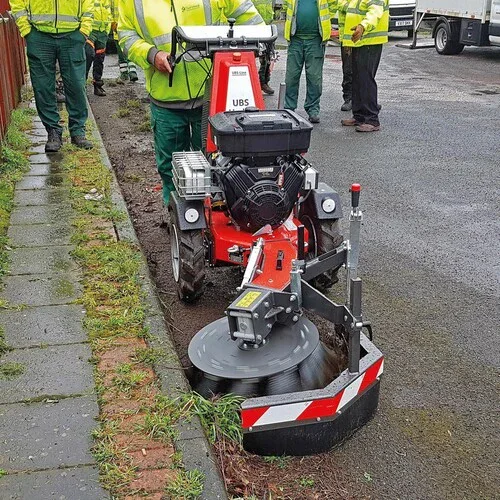
The mechanical hierarchy
Weed brushing and sweeping solve different stages of the same problem.
The important distinction is whether material is loose on the surface or rooted and compacted into it. A complete mechanical programme often uses both tools, in the correct order.
Weed brush: the remedial reset
Use a weed brush when moss, weeds and soil have become established in joints, cracks, edges or encroached margins. The brush cuts, lifts and agitates the rooted material so the growth medium can be removed.
- Established weeds and moss
- Compacted soil in paving joints
- Path and highway edging
- Kerb lines, cambers and difficult pockets
Sweeper: collection and prevention
Use a sweeper to collect the loosened arisings after weed brushing and to remove loose leaves, grit and detritus before they decompose into soil. Regular sweeping helps stop the surface returning to the stage where aggressive remediation is needed.
- Loose leaves, grit and debris
- Collection after weed brushing
- Routine preventative cleansing
- Restoring drainage and surface dryness
Why weed brushes matter in IWM
They physically reset the surface condition that repeated treatment leaves behind.
Thermal, electrical and chemical methods target vegetation. Weed brushing goes further by mechanically removing vegetation together with moss, compacted organic material and soil. That reduction in growth medium can change what is able to re-establish and makes later preventative maintenance more effective.
The objective is not only to make the weeds disappear today. It is to move the surface back towards a shallower, cleaner and more maintainable condition.
Diagnose
Assess surface type, soil depth, rooting, access and the risk of damage.
Reset
Use the correct weed brush, head, angle and pressure to lift rooted material.
Collect
Remove the loosened arisings rather than leaving them to form new soil.
Prevent
Return to lighter sweeping, inspection and early intervention before deep re-establishment.
Complete Kersten weed-brush pathway
Choose the platform by access, area and severity.
The same mechanical principle scales from finishing around street furniture to high-output path edging with agricultural tractors and loaders.
 (1).webp)
Handheld WeedGo brushes
Convert a compatible brushcutter or strimmer into a compact weed brush for obstacles, benches, railings, narrow edges and small areas that larger machines cannot reach.
Current WeedGo products
Connecting to live catalogue…
WG520052
WeedGo QuickPro kit for Stihl FS360–FS460
QuickPro mechanical weed-brush kit for compatible high-output Stihl brushcutters.
Loading live price…Fetched from this product page when viewed on kerstenuk.com
View product →WG540051
WeedGo QuickPro kit for Husqvarna 545
Compact weed-brush conversion kit for compatible Husqvarna 545 brushcutters.
Loading live price…Fetched from this product page when viewed on kerstenuk.com
View product →Every displayed price is fetched from its linked Kersten product page when this page loads. Additional current products may also be refreshed from the live webshop catalogue.
.webp)
Weedo II dedicated pedestrian brush
A compact standalone machine for contractors, housing estates, paths and smaller sites. It combines a 50 cm working width with directional brush rotation, adjustable positioning and folding handlebars.
Current Weedo products
Connecting to live catalogue…
Every displayed price is fetched from its linked Kersten product page when this page loads. Additional current products may also be refreshed from the live webshop catalogue.
.webp)
Pedestrian WKB attachments
Add a professional weed-brush head to a Kersten two-wheel tractor. Adjustable pressure, all-direction angling and replaceable brush sections give a versatile route for paths, squares and cycleways.
Current pedestrian WKB products & accessories
Connecting to live catalogue…
WKB-H-K35-820
WKB 40 cm weed brush for K820 / K820 Pro
Hydraulic 40 cm attachment with replaceable Versa or Hausa brush sections.
Loading live price…Fetched from this product page when viewed on kerstenuk.com
View product →WKB-H-K 70
WKB 40 cm weed brush for K2100
70 mm quick-attach WKB head for the K2100 professional two-wheel tractor.
Loading live price…Fetched from this product page when viewed on kerstenuk.com
View product → (1) (1).jpg)
Optional WKB 60 attachment
Edge cutter for WKB 60 Weedbrush
Creates a defined path edge and breaks overgrown turf and soil into loose, crumbly material for easier collection. Compatible with the 60 cm WKB weedbrush used on UBS-series power units.
Loading live price…Fetched from this product page when viewed on kerstenuk.com
View attachment →Every displayed price is fetched from its linked Kersten product page when this page loads. Additional current products may also be refreshed from the live webshop catalogue.
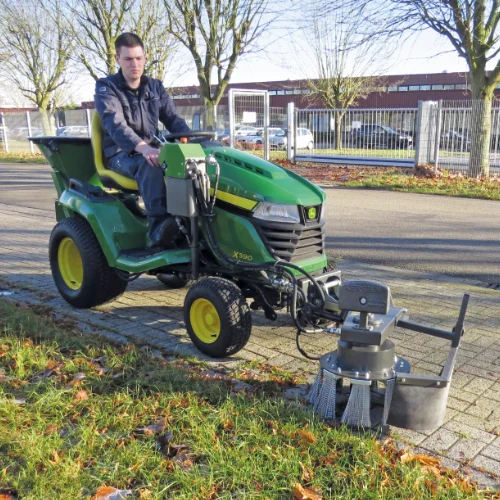
Tractor and ride-on WKB 40
A compact 40 cm brush for ride-on mowers and smaller carrier platforms, suited to narrow routes, squares and edge work where a larger UB system would be excessive.
Current ride-on WKB products
Connecting to live catalogue…
Every displayed price is fetched from its linked Kersten product page when this page loads. Additional current products may also be refreshed from the live webshop catalogue.
.webp)
UB 6080 professional compact-tractor range
The most adjustable tractor-mounted family for compact and municipal carriers. Choose hydraulic or mechanical drive arrangements, 60 or 80 cm brush plates and the carrier-specific mounting and control package.
Current UB 6080 products & accessories
Connecting to live catalogue…
UB 6080 MK-ABR
UB 6080 MK mechanical PTO weed brush
PTO-driven compact-tractor weed brush with 80 cm brush-plate compatibility.
Loading live price…Fetched from this product page when viewed on kerstenuk.com
View product →UB 6080 MH-ABR
UB 6080 MH mechanical-hydraulic weed brush
PTO-driven head with an integrated hydraulic system for lifting and angling.
Loading live price…Fetched from this product page when viewed on kerstenuk.com
View product →UB 6080 H
UB 6080 H hydraulic weed brush
Hydraulic-drive professional head for compatible compact tractors and municipal carriers.
Loading live price…Fetched from this product page when viewed on kerstenuk.com
View product →Optional UB 6080 attachment
Edge cutter for UB
Optional edge-cutter attachment for the UB 6080 range, designed to produce a precise cut while recovering overgrown path, pavement and kerb edges.
Loading live price…Fetched from this product page when viewed on kerstenuk.com
View attachment →Every displayed price is fetched from its linked Kersten product page when this page loads. Additional current products may also be refreshed from the live webshop catalogue.
 (1).webp)
UB EASY heavy-duty range
A simplified, robust 80 cm hydraulic weed brush for larger tractors and loaders. It is aimed at high-output edging and demanding mechanical clearing where the wider adjustment of the UB 6080 is not required.
Current UB EASY products
Connecting to live catalogue…
UB-EASY-PAK-FL
UB EASY PAK FL Versa-brush package
80 cm hydraulic package with replaceable Versa or Hausa brush options.
Loading live price…Fetched from this product page when viewed on kerstenuk.com
View product →UB-EASY-PAK-DS
UB EASY PAK DS flat-wire package
80 cm hydraulic head with plastic-coated flat-wire braids for heavy surface work.
Loading live price…Fetched from this product page when viewed on kerstenuk.com
View product →UB-EASY-PAK-VB
UB EASY PAK VB vertical edging brush
84 cm vertical brush designed for high-output path edging and overburden removal.
Loading live price…Fetched from this product page when viewed on kerstenuk.com
View product →Every displayed price is fetched from its linked Kersten product page when this page loads. Additional current products may also be refreshed from the live webshop catalogue.
Brush-tool selection
The head determines how aggressively the machine cuts, lifts and finishes.
Choose the brush after assessing the surface and material. Test unfamiliar or sensitive paving before committing to production work.
Versa brush
Combines thicker flat inner wires that lift soil and cut vegetation with finer outer wires that sweep the loosened material. It is the general-purpose choice for moss, block paving, kerb lines and routine weed brushing.
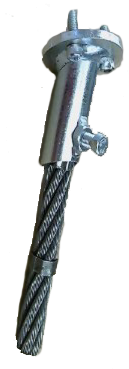
Hausa brush
A dense twisted-wire tool for heavily overgrown or demanding work. It provides a more aggressive option for tough material and significant encroachment.
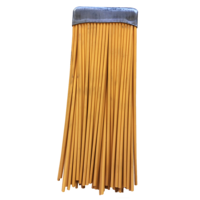
Nylon brush
A gentler alternative for selected surfaces and cleaning tasks. Nylon can be useful where the objective is lighter agitation or where steel tools may be too aggressive.
Why the Kersten system works
Controlled geometry matters as much as raw power.
The result depends on putting the correct part of the brush into the growth medium at the right angle and pressure while containing the material being released.
Multi-direction angling
Angle left, right, forwards or backwards to enter joints, follow cambers and reach path edges.
Near-perpendicular attack
Use the brush tips to concentrate pressure, enter pockets and reduce side wear on the wires.
Adjustable pressure
Castor or gauge wheels and optional weight let the operator balance cleaning force against brush life.
Low-speed torque
Kersten heads operate at 180–400 rpm to reduce projectile energy while retaining useful clearing force.
Debris containment
Adjustable guards keep loosened material close to the head, supporting safer operation and easier collection.
Path edging and surface recovery
Recover the path width—not just the visible edge.
Where turf, soil and rooted vegetation have spread over tarmac or paving, spraying or trimming the top growth does not return the asset to its intended width. A weed brush breaks up and removes the encroached growth medium so the hard surface can be exposed, inspected and maintained again.
A mechanical reset for access and infrastructure
Cut through the turf mat, release the soil and reveal the original surface.
Path edging is a high-torque weed-brush task. The machine must follow the edge, control brush pressure and make the overburden friable enough to collect without unnecessarily attacking the sound surface below.
- Restore usable width for pedestrians, pushchairs, wheelchairs and maintenance access.
- Remove soil and turf that retain moisture and conceal cracking or edge deterioration.
- Collect, sweep or blow the loosened arisings away from the recovered surface.
- Return earlier with lighter maintenance before another deep turf mat develops.
Veolia cost trial
How machine path edging can save money
The West Berkshire trial compared powered edging with hand work. The published case reports roughly half the working time and a calculated machine payback after 81 miles.
Read the Veolia case study →Pedestrian productivity
Path edging time and effort cut by 80%
See a Kersten pedestrian weed brush remove soil, grass, weeds and moss from a tarmac edge so the friable material can be cleared afterwards.
Read the path-edging article →Accessibility and asset recovery
Siding out overgrown paths
A practical example of exposing a buried hard surface, restoring usable width and making the broken-up overburden easier to shovel, sweep or blow away.
Read the recovery example →
Measured IWM evidence
The Bracknell weed-management trial
Follow the wider field trial examining preventative brushing, surface condition and how mechanical intervention can support a lower-pesticide programme.
Explore the Bracknell trial →Range selector
Start with the carrier and access restriction.
This quick guide identifies the most likely range family. Final selection still requires confirmation of carrier fitment, power, hydraulics, surface and brush type.
At-a-glance comparison
Match output to site scale without oversizing the machine.
Published figures vary by exact model, bracket and brush plate. Use this table to narrow the family before checking the detailed range page.
| Range | Best fit | Typical working system | Primary role |
|---|---|---|---|
| WeedGo | Brushcutters and strimmers | Steel or poly handheld head | Confined areas, obstacles and finishing |
| Weedo II | Dedicated pedestrian operation | 50 cm, 6-tool plate | Small sites, social housing and repeated transport |
| Pedestrian WKB | Kersten K- and UBS-series | 40 or 60 cm attachment | Professional route work with a multi-attachment carrier |
| Ride-on WKB 40 | Ride-on mower / compact carrier | 40 cm, 8-section head | Narrow tractor routes and front-mounted edge work |
| UB 6080 | Compact and municipal tractors | 60 or 80 cm; hydraulic or mechanical drive | Adjustable wide-area brushing and path edging |
| UB EASY | 45 hp+ tractors and loaders | 80 cm hydraulic head | Heavy-duty, high-output path edging |
See the process
Watch the brush lift material rather than merely move over it.
Look at how the head is angled into the affected area, how pressure is controlled and where the loosened material is placed. The useful output is a cleaner joint or edge with the growth medium physically released for collection.
Mechanical weed-management reading
Understand the surface before selecting the brush.
These articles explain why soil depth, brush geometry, surface construction and collection determine whether weed brushing becomes a lasting reset or a repeated cosmetic task.
Brush selection
Moss brushes, weed brushes and weed rippers
Understand the terminology, aggressiveness and surface implications before choosing a tool.
Read the article →
Root cause
The importance of minimising soil buildup
Why soil depth affects the type of weed that can establish and the difficulty of later treatment.
Read the article →IWM equipment
Equipment for an Integrated Weed Management Strategy
See where weed brushes, sweepers, thermal tools and path renovation equipment each fit.
Read the article →Surface performance
The three biggest threats to block paving
How detritus, blocked joints and moss affect drainage—and where weed brushing fits into remedial work.
Read the article →Frequently asked questions
Weed-brush essentials
Correct setup protects the surface, controls consumable use and improves the quality of the mechanical reset.
Why use a weed brush rather than only a sweeper?
A sweeper is designed primarily to move or collect loose material. A weed brush is designed to cut and lift established weeds, moss and compacted soil from joints, cracks and edges. The sweeper is often used afterwards to collect the released material.
Which brush should be used first?
Versa is the general-purpose starting point. Hausa is for heavier growth and demanding edging. Nylon offers a gentler option for selected surfaces or cleaning tasks. Always assess and test the actual surface.
Why is the brush nearly perpendicular to the surface?
Using the tips concentrates the working pressure, improves access into pockets and joints and reduces wear caused by dragging the side of the wire across the surface.
How is stone throwing reduced?
Kersten heads use low rotational speeds, typically 180–400 rpm, together with high torque and an adjustable protective guard. A task-specific risk assessment and exclusion zone are still required.
Can water be used with a weed brush?
Water can support scrubbing of dirt and algae on suitable paving. Surface compatibility, runoff, slip risk and the selected brush material must be considered before use.
What happens after weed brushing?
Collect the loosened soil, vegetation and moss. Inspect joints or edges for repair or reinstatement needs, then adopt preventative sweeping and earlier intervention so the growth medium does not rebuild.
Confirm the complete setup
Match the brush, carrier and collection method to the surface you actually manage.
Kersten can check working width, carrier compatibility, PTO or hydraulic requirements, brush type, guards, access and the collection step that follows the mechanical reset.