Systemic electric weed control from paths to highways.
Zasso Electroherb™ equipment sends a controlled high-voltage current through the plant, converting its own resistance into heat and damaging tissue through the root system—without herbicide residue.
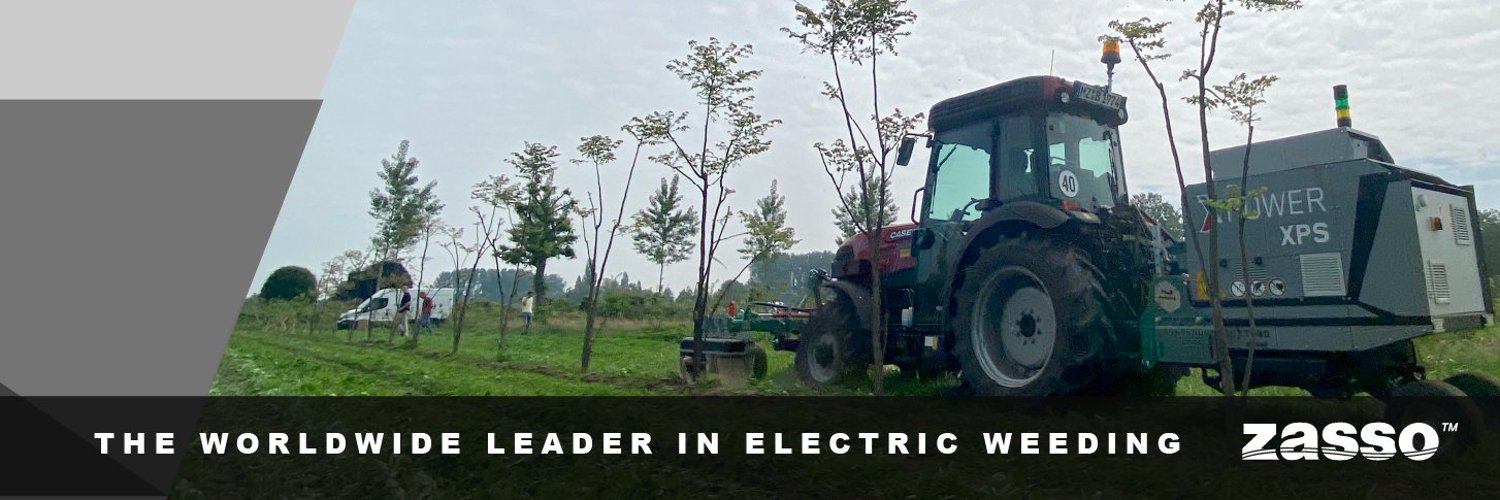
Why electric treatment
A different tool for systemic, residue-free programmes.
Electric treatment is most valuable when root-zone effect, precise route planning and reduced herbicide use matter more than immediate cosmetic scorching.
Electrical energy
Controlled current passes between electrodes through the target vegetation and its connected tissue.
Root-system effect
Plant resistance produces heat internally, helping treatment act beyond the visible top growth.
Scalable equipment
Choose a 60 cm pedestrian platform, a compact urban tractor attachment or a 7.2 m reach arm.
Controlled deployment
CE-certified systems, insulation monitoring and compulsory operator training support professional use.
Complete Zasso range
Choose by route scale, carrier and reach.
The product decision is primarily about the surface network, available carrier and whether treatment stays directly in front of the operator or must reach banks and roadside edges.
Battery walk-behind treatment
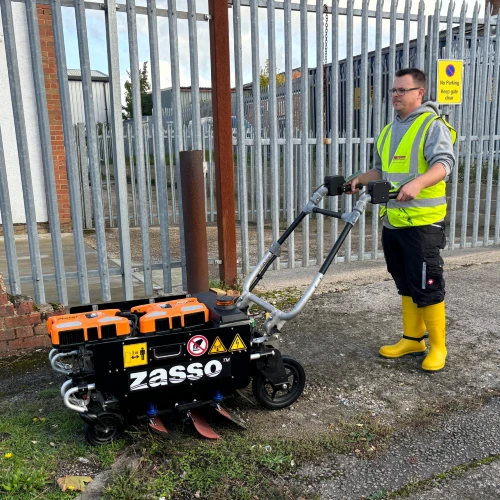
For pavements, footpaths, courtyards and formal hard-surface routes where a compact, low-noise machine must work close to kerbs and walls.
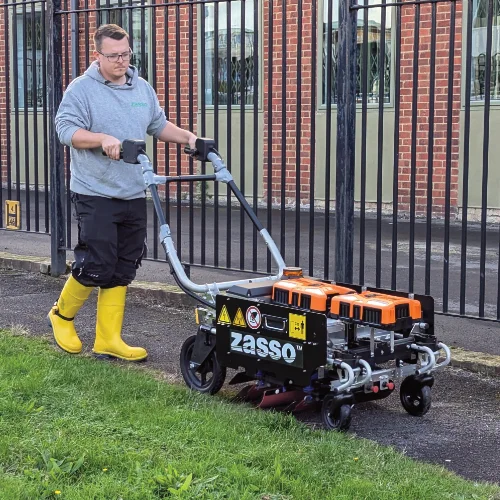 60 cm hard-surface system
Zasso Zap Weeder 5.3
A foldable, battery-powered walk-behind machine using flexible stainless-steel electrodes for hard surfaces, including accurate work alongside kerbs, walls and obstacles.
- 5 cm side shift on either side for edge treatment
- Two Pellenc ULIB 1500 batteries
- 69 kg excluding batteries and less than 80 dB
Plan the complete Zap Weeder package
The machine requires two batteries, a compatible charger, suitable electrical-safety footwear and certified application training.
Compact urban tractor treatment
For councils and contractors needing greater route productivity while retaining a compact 1.2 m applicator for streets, commercial districts, stations and pedestrian areas.
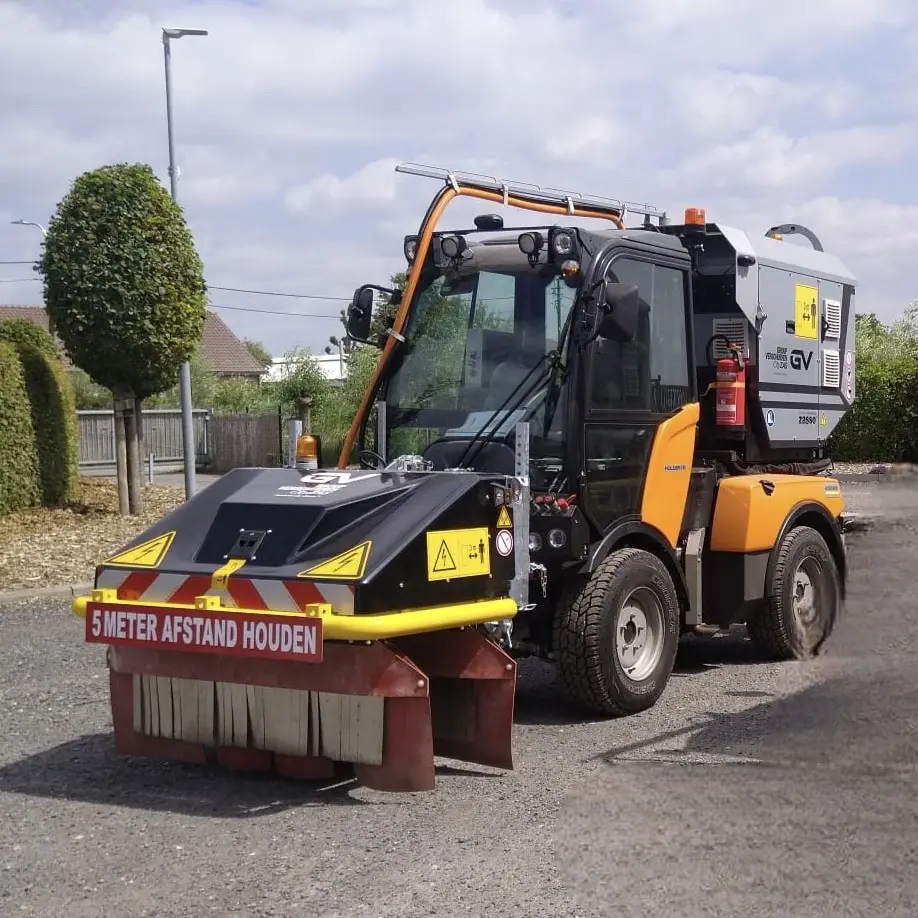 Compact urban attachment
Zasso CityZas
Zasso’s smallest tractor-mounted system, combining a compact working width with an offsettable applicator for kerb lines and constrained urban routes.
- Applicator shifts 50 cm left or right
- Hydraulic or mechanical PTO generator drive
- Approx. 1,400 kg and suitable for tractors over 65 hp
High-reach tractor treatment
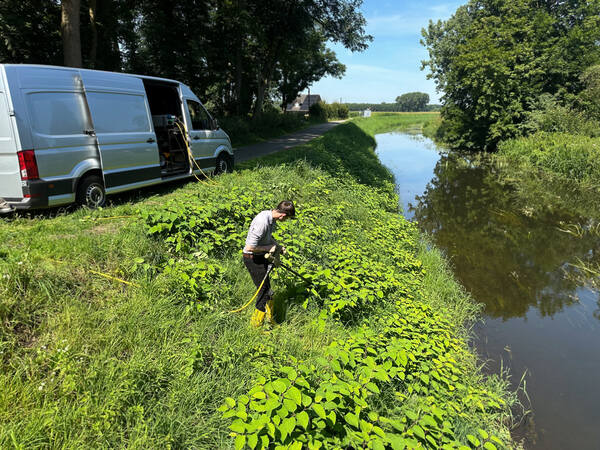
For roadside verges, banks, kerb lines and elevated or awkward terrain where a stable tractor-mounted hydraulic arm keeps the operator within the cab.
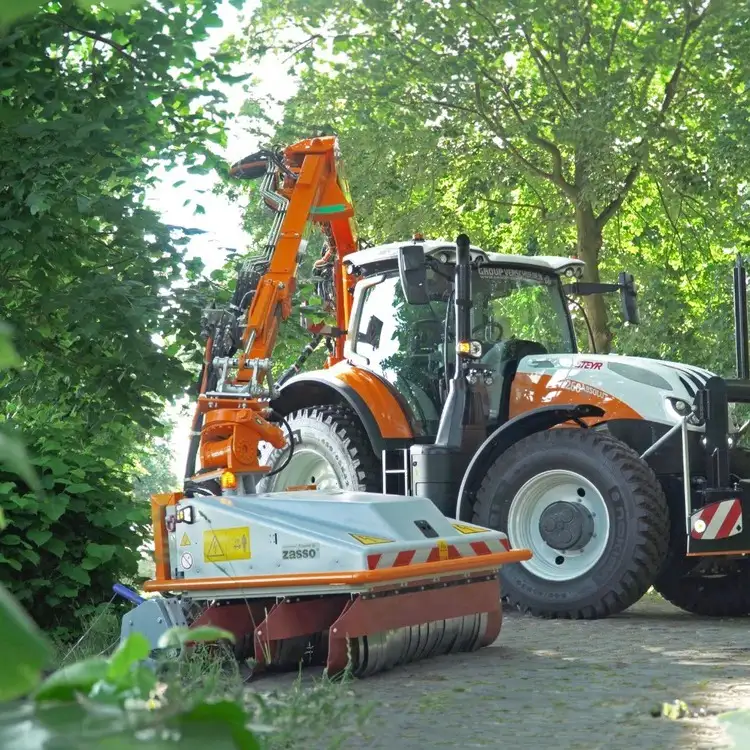 Up to 7.2 m reach
Zasso Urban XPA
A high-output XPower system with an integrated hydraulic arm, 360-degree control head and automatic levelling for safe, precise treatment of difficult roadside terrain.
- 360-degree control head with automatic levelling
- Electrically proportional arm control from the tractor
- For tractors from approximately 200 hp
How Electroherb™ works
Electricity turns plant resistance into internal heat.
The system forms a directed circuit through contacted vegetation. Resistance in plant tissue creates heat, rapidly damaging cell structure and chlorophyll while carrying the effect through connected tissue.
Contact
Positive and return electrodes create a controlled circuit through the vegetation.
Internal heating
Plant resistance converts electrical energy into heat and disrupts water-filled cells.
Systemic decline
Damaged tissue and chlorophyll lose function; the plant wilts, dries and decomposes.
Do not judge treatment by charring. Electric treatment works inside the plant. Results may develop over several days, and established plants can require repeat treatment.
Where the range fits
Match the platform to the route, not only the weed.
Access, surface type, root depth, carrier availability and public-interface controls determine which Zasso platform is practical.
 Public realm
Pavements and town centres
Use the Zap Weeder for compact hard-surface routes or CityZas where a tractor-led programme is justified.
 Sensitive estates
Cemeteries and heritage sites
Residue-free treatment for paths, courtyards and formal areas with carefully managed public access.
Urban fleetsCompact tractor networks
Increase route productivity across stations, commercial districts and kerbside infrastructure.
HighwaysBanks and roadside edges
Reach difficult terrain from a stable tractor platform while keeping the operator within the cab.
Professional safety framework
Training and site control are part of the system.
Electric weed control uses high voltage. Product selection must therefore include certified operators, appropriate PPE, machine checks, exclusion-zone planning and public-interface controls.
- Annual certified application training for operators
- Use required safety footwear and model-specific PPE
- Inspect electrodes, insulation and monitoring systems before work
- Establish a controlled working area around operators and applicators
- Follow carrier, PTO, hydraulic and transport requirements for mounted systems
- Demonstrate the machine on the intended surface before fleet deployment
Other weed-management routes
Use electric treatment inside a wider site strategy.
No single treatment method suits every surface or growth stage. Combine suppression with prevention, surface cleaning and appropriate alternative technologies.
Mechanical weed management
Remove growth and the accumulated detritus that creates a seedbed on robust hard surfaces.
Explore mechanical equipment → Hot waterEco Weedkiller
Water-based thermal treatment for sensitive sites, joints and multifunction cleaning programmes.
Explore hot-water systems → Portable hot airRipagreen
Handheld and vehicle-supported hot-air lances for targeted work and difficult access.
Compare Ripagreen kits → Infrared and hot airHOAF
Hooded pedestrian and tractor-mounted thermal equipment for defined-width route work.
Explore HOAF systems → PreventionReduce the growing medium
Limit silt, detritus and surface conditions that allow weeds to establish repeatedly.
Read the prevention guide → Programme planningIntegrated Weed Management
Place electric treatment within a documented, preventative-first site programme.
Open the council IWM guide →Practical reading
Plan electric treatment around surface and plant behaviour.
Hard surfaces and soil
Understand why voltage, electrode spacing and root depth change the correct electric-weeding approach.
Read the comparison → Product introductionWeed control with the Zap Weeder
See how the battery walk-behind machine fits professional hard-surface programmes.
Read the article → Product literatureZap Weeder catalogue
Open the information-sheet page for the current downloadable product catalogue.
Open catalogue page →Frequently asked questions
What teams need to know before a demonstration.
Does the weed need to burn or char?+
No. The visible plant does not need to be scorched. Electricity produces heat within the plant tissue, so decline develops after treatment rather than being judged only by immediate colour change.
Is special training required?+
Yes. Professional electric weed-control machines require certified application training, including machine operation, PPE, exclusion zones and public-area safety procedures.
Which product is best for hard surfaces?+
The 60 cm Zap Weeder is designed around pedestrian hard-surface routes and shallow-rooted weeds. Its short electrode spacing and side shift suit pavements, joints, kerbs and courtyards.
When does CityZas make more sense?+
CityZas is the step up when a compact tractor is available and the programme covers repeat urban routes where pedestrian productivity is insufficient.
What is the Urban XPA designed for?+
The Urban XPA is for larger tractors and difficult roadside terrain. Its hydraulic arm reaches banks and kerbside areas while the trained operator controls treatment from the tractor.
Will every weed be eliminated in one pass?+
Results depend on plant size, water content, root system and application conditions. Emerging weeds are generally easier to treat; established plants and long-term programmes may require repeat visits.
Test Zasso on the surfaces you actually manage.
A site demonstration can confirm access, carrier requirements, route productivity, electrode behaviour, operator controls and the correct place for electric treatment within the wider weed-management plan.