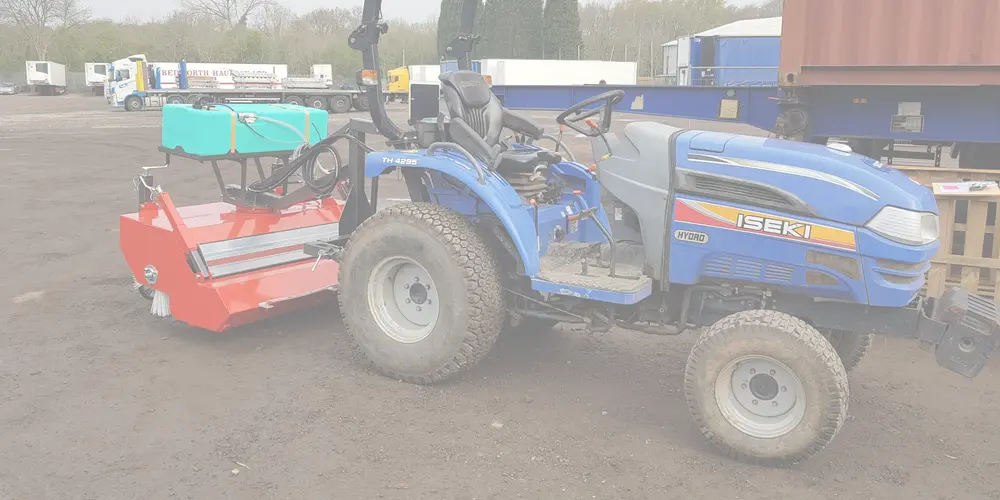
Dust management · water suppression kits
Damp the dust.
Collect the debris.
Put water where it makes a difference: onto the brush or onto the ground before sweeping. Compare Kersten’s 5, 100 and 200-litre kits and build the right setup for your machine.
The water-kit range
Choose the kit around your sweeper.
Start with the sweeper family, then choose where the tank will sit and how often you can refill. Each variant below has its own product link and price. These are water-kit prices; the sweeper, carrier, collector and fitting are separate unless included in your quotation.
.jpg)
Actual 5-litre kit, including tank, hoses and nozzle components.
WAS 51 K 1500
5-litre pedestrian kit
A compact water-sprayer kit for a matched pedestrian sweeping installation. The small tank keeps the water load low for jobs close to a refill point.
Choose it when: A compatible pedestrian sweeper needs local dust damping on paths and smaller hard-surface areas.
- 5-litre capacity
- Supplied as a water-sprayer kit
- Confirm power-unit, sweeper and collector fit
- No 12 V supply requirement is stated in this listing
WAS 51 K 1500 · 5 litres
£850.00 Ex VAT · kit listing · checked 15 October 2026 View this kit →.jpg)
100-litre CAT1 installation shown; 200-litre tank dimensions differ.
KM45 / KM50 · 100 or 200 litres
Rear-linkage tank kits
Carry the water on the tractor’s rear three-point linkage and supply the spray arrangement at the sweeper. This separates the tank load from the sweeper-mounted alternative.
Choose it when: The rear linkage is available and the tractor can carry the full tank while operating the selected sweeper.
- 100-litre CAT1 or 200-litre three-point tank
- 12 V electric submersible pump
- Spray nozzles and bar
- Vehicle 12 V service plug required
WAS 100 KAT 1 · 100 litres
£1,495.00 Ex VAT · kit listing · checked 15 October 2026 View this kit →WAS 200 KAT 1 · 200 litres
£1,740.18 Ex VAT · kit listing · checked 15 October 2026 View this kit →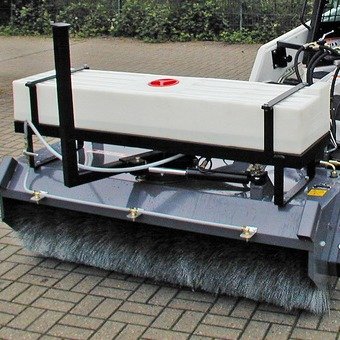
WAS 100 AUF tank and spray rail fitted above the brush.
WAS 100 AUF · KM45 / KM50
Sweeper-mounted 100-litre kit
An alternative to carrying the water on the tractor’s rear linkage. The tank sits on the sweeper, with a pump, spray nozzles and bar.
Choose it when: You need the rear linkage free and the complete sweeper installation has sufficient load capacity.
- 100-litre tank mounted on the sweeper
- Listed for KM45 / KM50 sweepers
- 12 V electric submersible pump
- Vehicle 12 V service plug required
WAS 100 AUF · 100 litres
£1,350.00 Ex VAT · kit listing · checked 15 October 2026 View this kit →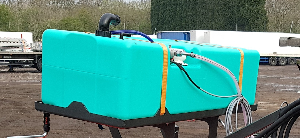
100-litre KM52 tank from the Iseki installation; 200-litre variant differs.
Sweeper-mounted · 100 or 200 litres
KM52 water kits
Specify the tank, nozzle rail and electrical supply around the actual KM52 installation. The 100-litre version appears in Kersten’s Iseki TH4295 case study.
Choose it when: You have a KM52 and want a matched water kit, with capacity selected around refill access and the permitted mounting.
- Tank mounted on the sweeper
- Nozzle rail / nozzle bar
- 12 V water pump
- Confirm exact carrier and sweeper configuration
200-litre restriction: the WAS 200 KM 52 product listing specifies use only when mounted on a forklift. Confirm the complete installation before ordering.
WAS 100 KM 52 · 100 litres
£1,550.00 Ex VAT · kit listing · checked 15 October 2026 View this kit →WAS 200 KM 52 · 200 litres
£1,750.00 Ex VAT · kit listing · checked 15 October 2026 View this kit →WAS 100 / 200 KM 60
KM60 / FKM60 water kits
Two listed capacities for the 60-series sweeping installation. Both listings describe a sweeper-mounted tank with a nozzle rail and 12 V water pump.
Choose it when: A matched 60-series sweeper needs on-board water, and the carrier can support the full working load.
- 100-litre or 200-litre capacity
- Tank mounted on the sweeper
- Nozzle rail and 12 V water pump
- Confirm exact KM60 / FKM60 variant and width
WAS 100 KM 60 · 100 litres
£1,550.00 Ex VAT · kit listing · checked 15 October 2026 View this kit →WAS 200 KM 60 · 200 litres
£1,750.00 Ex VAT · kit listing · checked 15 October 2026 View this kit →WAS 200 KM 70
KM70 200-litre kit
A larger sweeper-mounted water system for the KM70 family, with nozzle rail and a 12 V submersible water pump.
Choose it when: A KM70 installation needs water suppression and has sufficient capacity for the tank, water, collector and material being carried.
- 200-litre tank mounted on sweeper
- Nozzle rail / sprayer boom
- 12 V submersible water pump
- Check carrier load and attachment specification
WAS 200 KM 70 · 200 litres
£1,950.00 Ex VAT · kit listing · checked 15 October 2026 View this kit →Tank mounting and spray target are different choices. A rear-linkage tank can feed nozzles at the sweeper; a sweeper-mounted tank does not automatically mean ground spraying. Confirm the supplied nozzle positions and coverage with your exact brush, collector and side-brush arrangement.
Matching an older kit? The separate WAS 100 KM listing has no published price or detailed fitment. Send the kit code and machine serial number so we can identify the appropriate version.
Photographs show the specific 5-litre, CAT1 100-litre, AUF and KM52 100-litre listings. Capacity variants are grouped together. KM60 and KM70 use specification panels where the catalogue photographs do not clearly identify the exact kit. Prices refresh from the linked product pages when this page runs on kerstenuk.com; checked prices remain if a refresh is unavailable.
Where should the water go?
Wet the brush, wet the ground — or cover both working zones.
A rotating brush can lift fine dry material into the air. Water helps the fines cling together and remain with the material being swept. The important difference is when and where that moisture reaches the dust.
Apply water to the brush
Nozzles direct water onto the bristles or into the brush’s working zone. Moisture is carried into the material as the roller meets it, helping bind fines at the point of agitation.
- Why choose it? Target water where the brush is creating dust, especially within a contained roller-and-collector setup.
- Useful where: The main roller is the dust source and you want controlled, local application rather than wetting a wider area.
- What to check: Coverage across the brush width. One wet patch does little for dry material at the opposite end.
Its limit: Wetting the main brush does not necessarily damp the ground before the first contact, or control dust raised by a separate side brush or vehicle tyres.
Apply water to the ground ahead
A forward-directed spray wets the dusty deposit before the bristles disturb it. The brush then meets dampened material, rather than relying on moisture transferring from its bristles.
- Why choose it? Dampen a dry layer before the first sweeping contact, including an exposed working area outside the main roller housing.
- Useful where: Loose fines cover an open hard surface or a kerb line needs damping before a gully brush draws material in.
- What to check: The wetted strip must overlap the actual brush path, including when the sweeper is angled.
Its limit: A spray that lands behind the brush is too late for that first contact. Wind and nozzle position can also leave part of the working strip dry.
Why not just spray the visible cloud? Water is more useful before or at the point where dust is disturbed. Trying to catch already airborne fines with a general sweeping spray is less dependable than damping the deposit or brush working zone first.
Using a gully brush? Ask whether a separate nozzle is needed ahead of it. A rail serving the main roller may not reach the side brush’s sweep. Where both zones generate dust, discuss coverage for both rather than assuming a larger tank solves the problem.
Nozzle layout matters
Specify the spray pattern with the collector fitted.
The guard, collector and brush housing change where nozzles can sit and where the water can reach. A suitable installation must put moisture into the working material without the spray being blocked by another component.
Identify the dust source
Look at whether dust starts at the main roller, a side brush or before sweeping as tyres cross the deposit. That determines which area needs damping.
Check the complete layout
Confirm nozzle brackets, rail width, collector clearance and coverage at the working angle. Kersten’s pedestrian instructions illustrate different nozzle mounting positions with and without a collector.
Confirm the supplied arrangement
Ask whether your quoted kit wets the brush, sprays the ground or uses separate nozzles for both. The tank size and mounting position alone do not answer that question.
Capacity, weight and refill access
More litres mean more working water — and more load.
| Capacity | Useful starting point | Water weight when full | Important consideration |
|---|---|---|---|
| 5 litres | Compatible pedestrian work over smaller areas with nearby refilling. | Approximately 5 kg | Check the power-unit and nozzle mounting; allow for more frequent refills. |
| 100 litres | Mounted sweeping where refill access and carrier capacity suit the job. | Approximately 100 kg | Choose between rear-linkage and matched sweeper-mounted kits. |
| 200 litres | More water between refills at the same measured spray delivery. | Approximately 200 kg | Check full working load and kit-specific restrictions, particularly the forklift-only KM52 listing. |
Water weights exclude the tank, frame, pump, sweeper, collector and collected material. The tank’s position also affects the load carried by the linkage, loader and axles.
Use litres divided by litres per minute to estimate minutes of continuous spraying. Measure the delivery from all operating nozzles at the chosen setting. A pump’s maximum rating is not the actual spray consumption. Brush width, nozzle selection, intermittent use and the amount of damping required all affect refill intervals.
Get the whole setup working together
Water helps. Brush settings and collection finish the job.
Use enough moisture to bind fines
Aim for damp, collectable material. Excess water can turn soil and fines into sticky mud or slurry. These kits damp sweeping material; they are not pressure-washing systems.
Set the brush for the deposit
Use the lowest effective brush speed within the machine’s operating instructions. Set working height for the correct bristle contact; extra speed and pressure can throw material and increase wear.
Collect what needs to leave
Damping dust does not remove it. A matched collector takes the swept material away; windrowed fines left on the surface can dry and become dust again.
Use the correct guard
A compatible brush guard helps contain thrown material when working without a collector. Guarding and water serve different purposes. A guard is not a sealed, filtered dust-extraction enclosure.
Check every nozzle
Before sweeping, check the spray reaches its intended target, including the ends of the roller and any side-brush zone. A running pump does not prove that a blocked nozzle is delivering water.
Match power and mounting
The listed mounted kits use 12 V pumps. Confirm the vehicle supply, suitable connection, switching, hose routing and mounting components. Check the 5-litre kit separately; its listing does not specify electrical requirements.
Construction dust or other hazardous material? Identify what the dust contains and choose controls from the task assessment. An outdoor sweeper with a water kit is not a substitute for an appropriately rated dust-extraction system. Read HSE guidance on sweeping construction dust.
Choose the complete sweeping system
Start with the access and the carrier.
Kersten installations and guidance
Two tank positions. Two real installations.
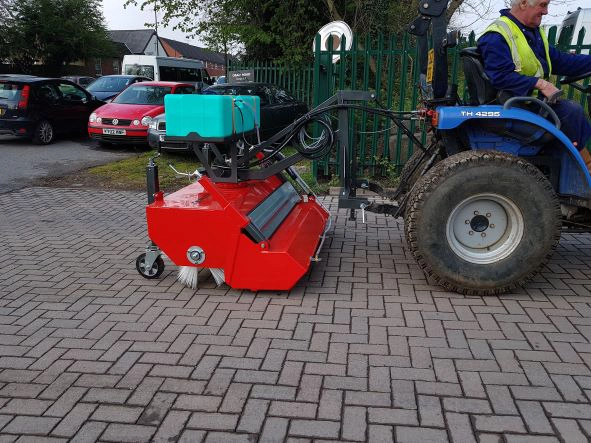
Iseki TH4295 · KM52
100 litres on the sweeper
A KM15052 hydraulic sweeper, ABR52 rear-linkage bracket, collector and WAS 100 KM 52 water kit formed this working combination.
Read the Kersten article →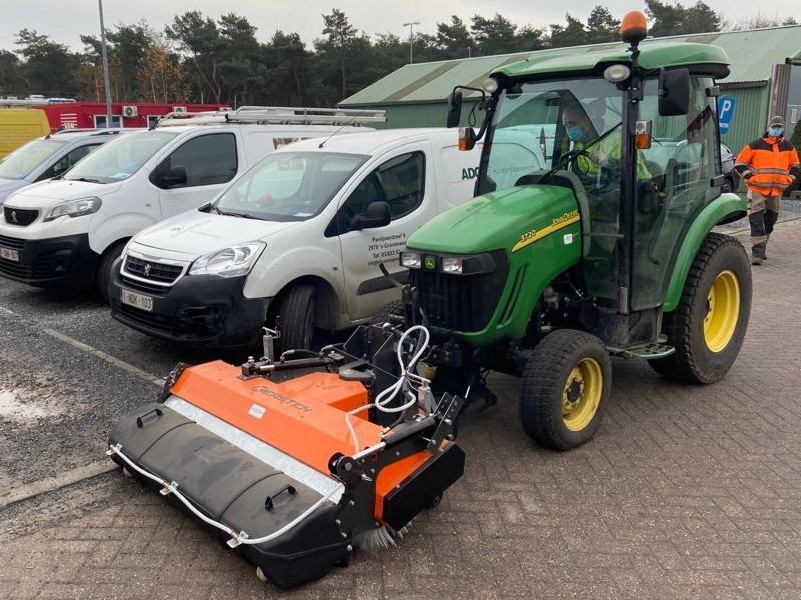
John Deere 3-Series · KM45
200 litres on the tractor linkage
Kersten’s 3720 installation combined a front KM15045 H, collector and WAS 200 KAT 1, keeping the tank separate from the front sweeper.
Read the Kersten article →.jpg)
Footways and pavements
Remove the material that keeps returning
Explore why regular sweeping matters for access, drainage and surface maintenance, alongside the choice of equipment and collection.
Read the Kersten article →Related maintenance
What happens when the material changes?
Common questions
Dust-suppression kit questions
Is spraying the brush better than spraying the ground?
It depends on where the dust starts. Brush wetting targets the bristles and their working zone. Ground spraying damps the deposit before contact, which can matter for an exposed side brush or a loose dry layer. Confirm the nozzle layout for the actual machine; some applications need coverage of both zones.
Does a rear-mounted tank only spray behind the tractor?
No. Tank position describes where the water is carried. Hoses feed the spray arrangement at the sweeper, which may be at the front of the tractor. The John Deere 3-Series case study combines a front sweeper with a WAS 200 KAT 1 tank.
Will the 5-litre kit fit every pedestrian sweeper?
Do not assume universal fit. Confirm the power unit, sweeper model, working width and collector arrangement. The WAS 51 K 1500 listing identifies a 5-litre sprayer but does not give a complete fitting matrix or electrical specification.
Can I fit the 200-litre KM52 kit to my tractor?
The current WAS 200 KM 52 listing explicitly says use only when mounted on a forklift. Do not specify it for a tractor on capacity alone. Ask Kersten to confirm an approved water system for your exact sweeper and carrier.
How long does a 100-litre tank last?
There is no single runtime for every installation. Divide usable tank volume by the combined measured nozzle delivery in litres per minute. The number of nozzles, settings, coverage and spraying duty all matter. At the same delivery, 200 litres provides twice the water volume of 100 litres, subject to usable capacity.
Will more water always reduce dust better?
Use enough water to damp the working material, then check the result. More water in the wrong place will not correct missed coverage and may create sticky mud or slurry. Check nozzle aim, brush speed, working height and collection before increasing delivery.
Can a water kit replace a collector or brush guard?
No. Water binds fines, a collector removes swept material and a compatible guard helps contain thrown debris. Specify each around the job. Water suppression does not make the sweeper a sealed or filtered dust-extraction machine.
What is included in the prices?
Prices shown are for the linked water-kit listings, excluding VAT. Confirm tank capacity, mounting frame, nozzles, hoses, pump, vehicle connection, controls and fitting in your quotation. The carrier, sweeper and collector are separate unless explicitly included.
Match the kit to the job
Tell us where the dust starts.
Send your carrier and sweeper models, a photograph of the installation, surface type and typical debris. Tell us whether you use a collector or side brush, and how close the nearest refill point is.