Soil & heavy debris management
Move heavy debris once. Leave the surface clean.
Loose soil, wet moss, decomposed leaves and compacted kerb-line material need more than air movement. Match the debris to the right brush, carrier and collection method—then stop the build-up returning.
Fast route to the right answer
What state is the debris in?
Density matters, but attachment to the surface matters more. A powered sweeper is the productive answer for loose or friable material. A weed brush is the remedial tool for compacted soil, established moss, weeds and turf encroachment.
Sweep & windrow
For loose soil, sand, moss, grit and site debris that can be moved to an edge or pickup point.
Choose a powered sweeper → 02Sweep & collect
For a clean finish in car parks, estates, campuses and public areas where a windrow cannot be left.
Add a matched collector → 03Loosen, then collect
For compacted kerb lines, rooted growth, moss mats and soil bonded into joints or path edges.
Start with a weed brush → 04Shift bulk on large sites
For yards, roads and industrial areas: use a large-diameter rotary sweeper, or a push broom for loose bulk only.
Compare large-area routes →Method comparison
The fastest method is the one that avoids a second cleanup.
| Material condition | First operation | Finish | Avoid when |
|---|---|---|---|
| Loose soil, grit or friable moss | Powered cylindrical sweeper | Angle into a windrow or fit a collector box | The material is rooted or firmly compacted |
| Compacted detritus and established growth | Weed brush to break the bond | Sweeper and collector for the loosened arisings | You only need routine preventive sweeping |
| Kerb, wall and gully deposits | Gully brush or angled weed brush | Present material to the main sweeper brush | The side brush is not matched to the sweeper family |
| Large loose piles or fibrous debris | Large rotary sweeper or ActiSweep push broom | Windrow for mechanical pickup | You need one-pass collection or must remove bonded material |
Powered sweepers
Choose brush diameter and carrier size for the volume you need to move.
Kersten’s five-row spiral brush lets bulky material pass through the brush rather than forming a solid wall in front of it. Move up through the range as working width, debris volume, carrier power and hydraulic demand increase.
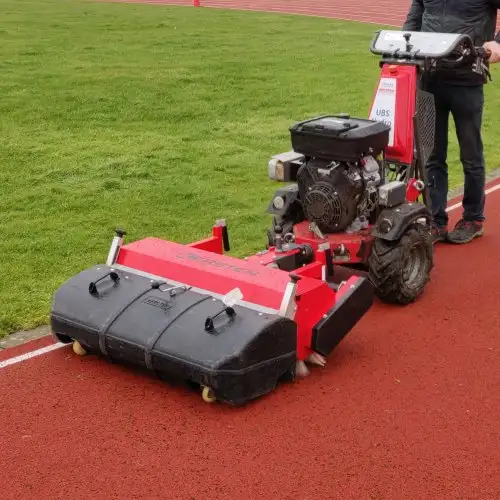
Pedestrian two-wheel tractor
EFKM 12537 M-U 70
Mechanical PTO-driven front sweeper for Kersten K2100 and compatible UBS Hydro power units, with manual angling and an optional collector and gully brush.
Choose it when: paths and confined hard-standing need strong brush action without moving up to a ride-on carrier.
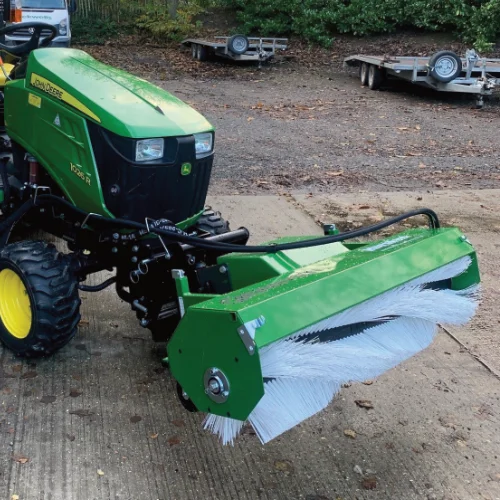
Ride-on mower / sub-compact tractor
FKM 12537 H-ABR 37
Compact hydraulic front sweeper with five-row combi brush, 30° manual angling and options for collection, edge cleaning and discharge control.
Choose it when: a smaller carrier must work around paths, parking bays and tight site furniture.
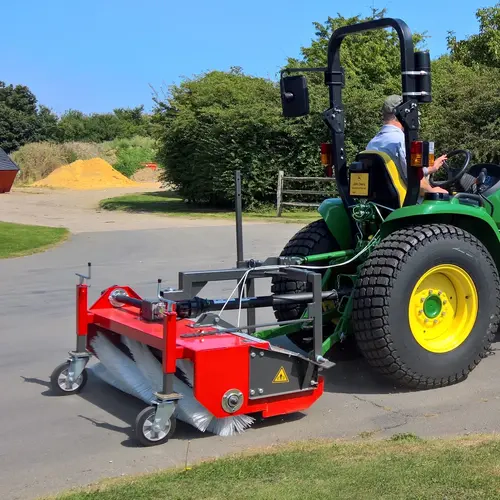
Compact tractor · rear PTO
HKM 15040 M
Category I rear-mounted sweeper with mechanical 540 rpm PTO drive, two-section spiral brush and 20° angling for controlled windrowing.
Choose it when: the tractor already has a suitable rear three-point linkage and PTO, and front visibility is not essential.
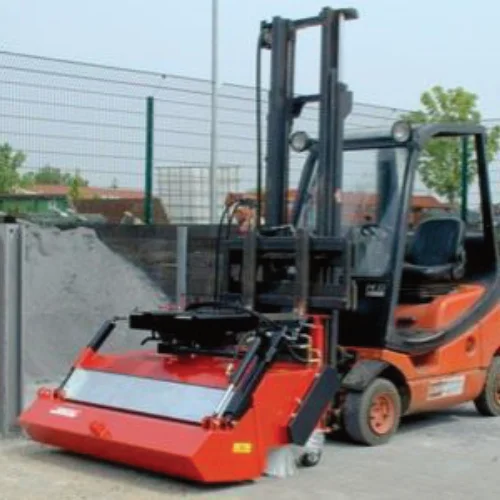
Compact / municipal carrier
KM 19052 H
Hydraulic sweeper with a larger 52 cm brush, pendulum suspension and 25° angling. Collector, gully-brush and dust-suppression options extend its site role.
Choose it when: bulky debris and uneven ground demand more throughput than the compact 37–45 cm brush families.
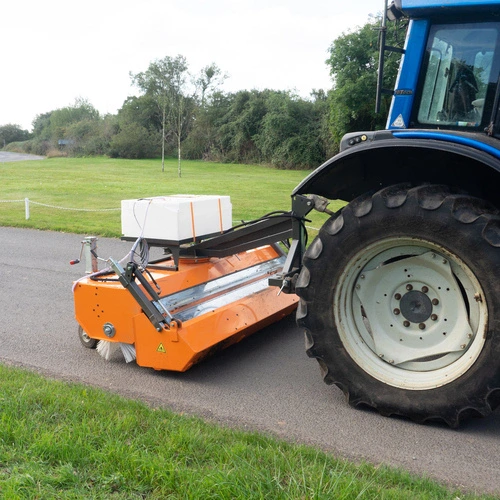
Large tractor / municipal carrier
KM 25060 H
Professional 60 cm-diameter hydraulic sweeper for demanding roads, yards and industrial sites, with pendulum suspension and optional collection and side brush.
Choose it when: daily output and bulky material justify a large brush, but a 70 cm heavy-carrier machine is unnecessary.
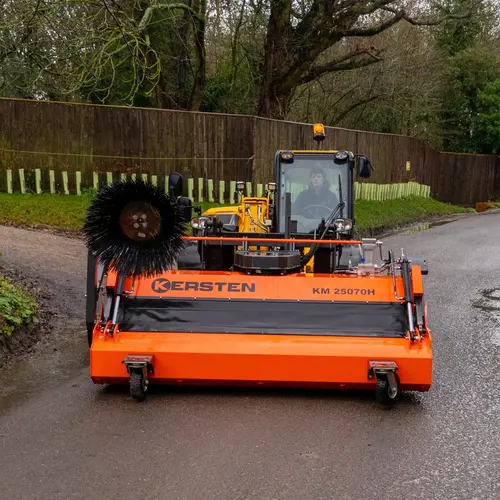
Heavy tractor / loader
KM 25070 H
Large 70 cm-diameter front sweeper with hydraulic control block, pendulum suspension and options including a 300-litre collector, gully brush and KM Control.
Choose it when: high-volume municipal or industrial work needs maximum brush capacity and a substantial compatible carrier.
When sweeping is not enough
Reset the surface, collect the arisings, then keep the soil shallow.
A sweeper is primarily the loose-material tool. If detritus has become a growing medium, or turf and moss are bonded to the edge, break that layer first. The productive workflow is a sequence—not one attachment forced to do every job.
Loosen the bond
Use the correct weed-brush head and controlled pressure to break compacted soil, moss and rooted growth away from the surface or edge.
Collect the arisings
Follow with a powered sweeper and matched collector, or windrow for pickup. Removing the loosened material prevents immediate recontamination.
Prevent the rebuild
Repeat routine sweeping before organic material decomposes into deeper soil that holds moisture and supports persistent weeds.
Weed brushes for compacted material
Match the remedial machine to access, area and carrier.
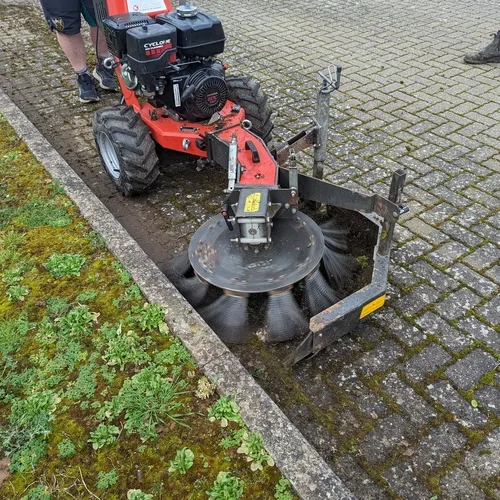
These machines are for the difficult first pass: compacted path edges, ingrained moss and established surface growth. Brush choice and pressure matter; confirm the surface, finish required and carrier before specifying wire or gentler brush options.
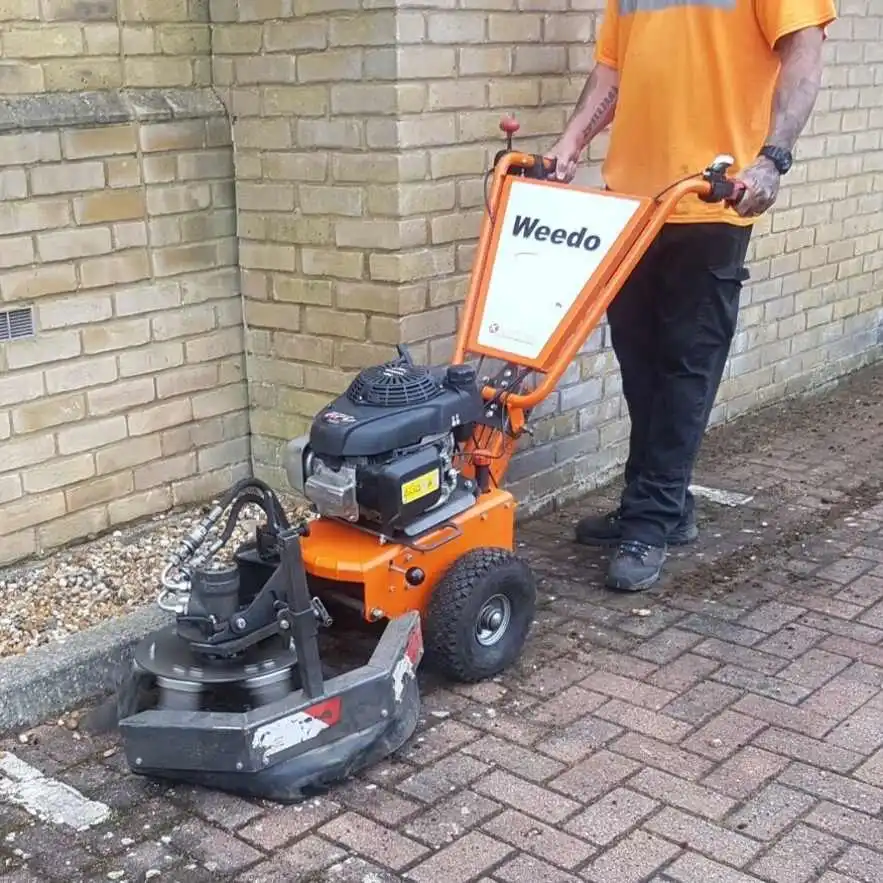
Dedicated pedestrian machine
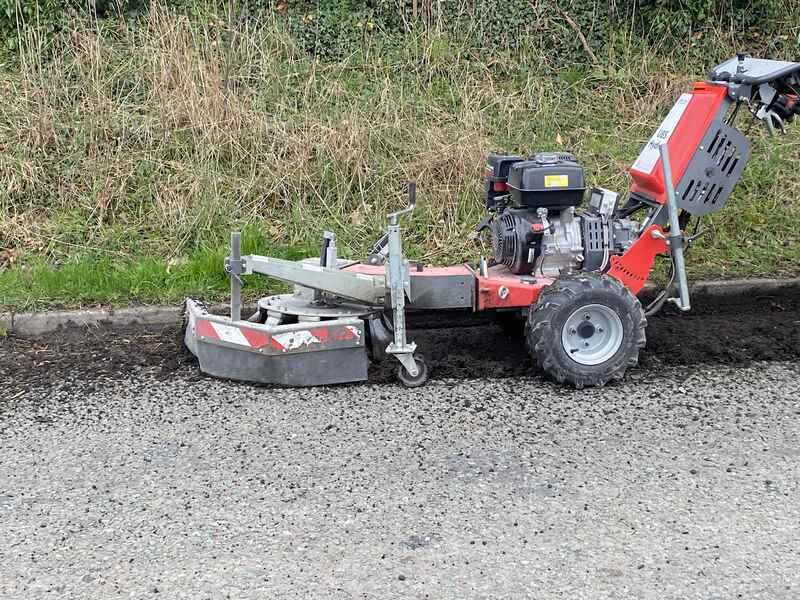
Weedo II
Compact petrol-powered hydraulic weed brush with left/right rotation, adjustable head position and a choice of Hausa or Versa tools.
Choose it when: contractors need a transportable single-purpose machine for tight urban and multi-site work.
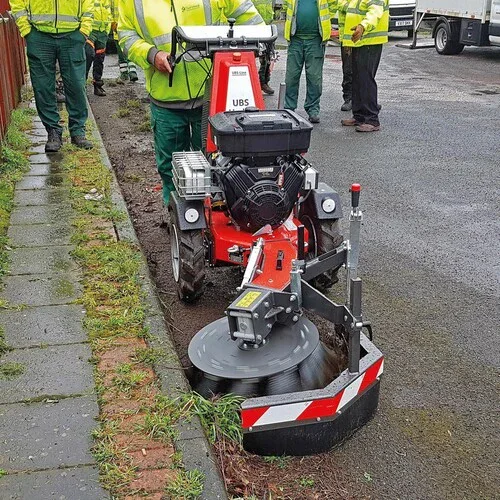
UBS / Matador attachment
WKB 60 M-U 70
Mechanical weed-brush attachment with stepless disc and height adjustment, ten replaceable tools and the 70 mm Kersten quick-change interface.
Choose it when: one compatible pedestrian power unit must switch between aggressive remedial brushing and follow-up sweeping.
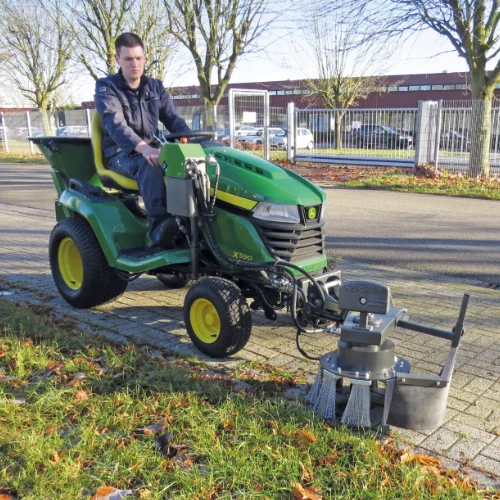
Ride-on mower attachment
WKB-H-K-FKDR
Hydraulic 40 cm weed brush for specified ride-on mower families. It requires the correct FKDR/HYDR linkage kit for hydraulic power and control.
Choose it when: a compatible mower should become a productive path and public-space remediation carrier.
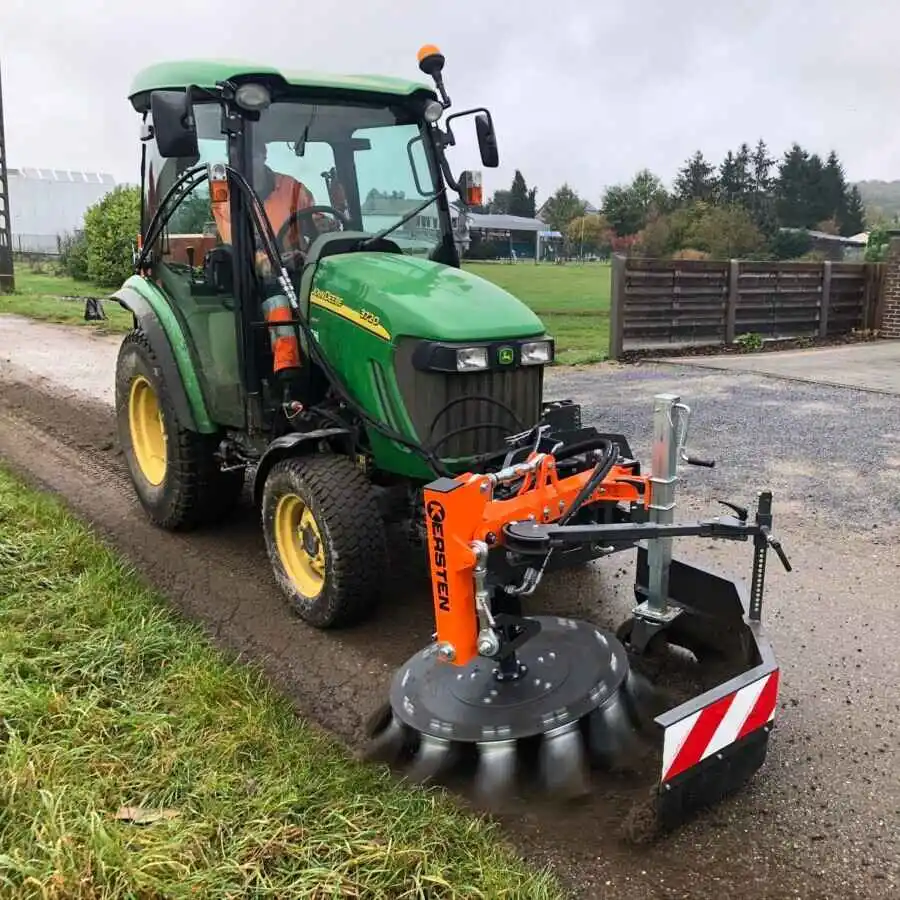
Compact / municipal tractor
UB 6080 H
Professional hydraulic weed brush with 60 or 80 cm plate options, hydraulic lift and angling, and a broad working range for edges and wide areas.
Choose it when: frequent professional path edging needs reach, precise positioning and a configurable tractor installation.
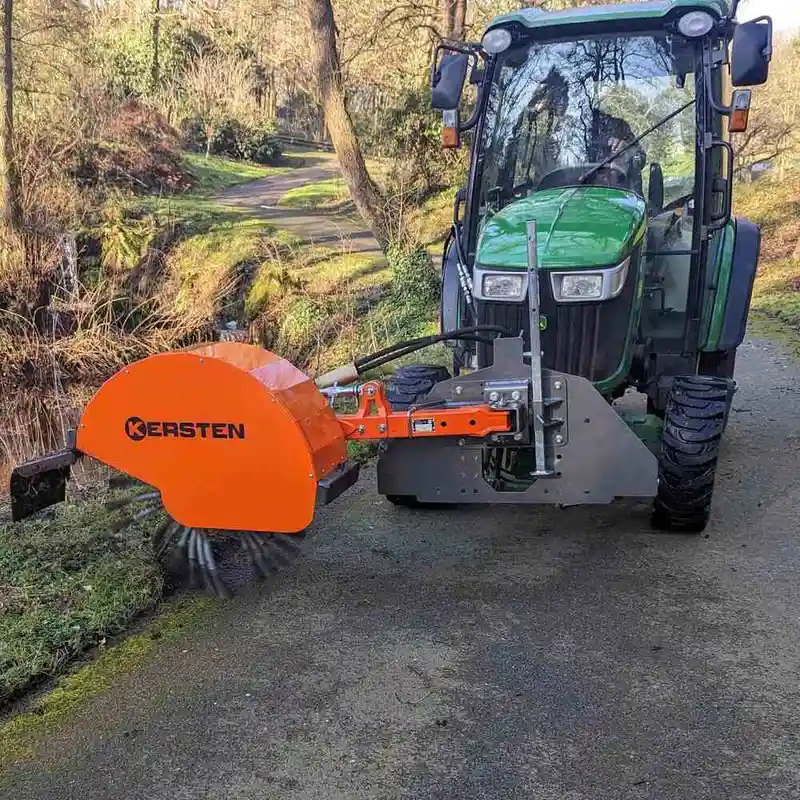
Large tractor / loader
UB EASY PAK DS
Heavy-duty hydraulic 80 cm weed brush with 22 plastic-coated flat-wire braids, mechanical adjustment and mounting routes for tractors and loaders.
Choose it when: robust large-area moss and weed removal matters more than the advanced positioning controls of the UB 6080.
Finish the sweeping setup
Collection and edge cleaning determine the final result.
A collector box captures dense material in the sweeping pass. A gully brush reaches material outside the main cylinder and feeds it into the brush path. Both must match the exact sweeper family, width and drive arrangement.
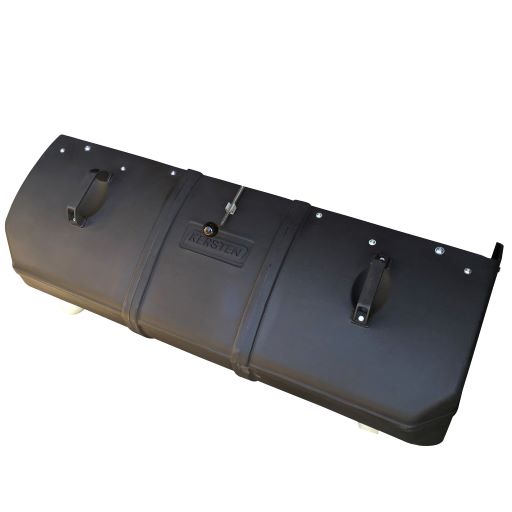
Collect in one pass
SSB 125 K — 125 cm Collector Box
PE collector box with caster wheels, height adjustment, handles, sealing lip and locking system for compatible 125 cm sweepers.
Choose it when: the site cannot be left with a windrow of soil, moss or sand.
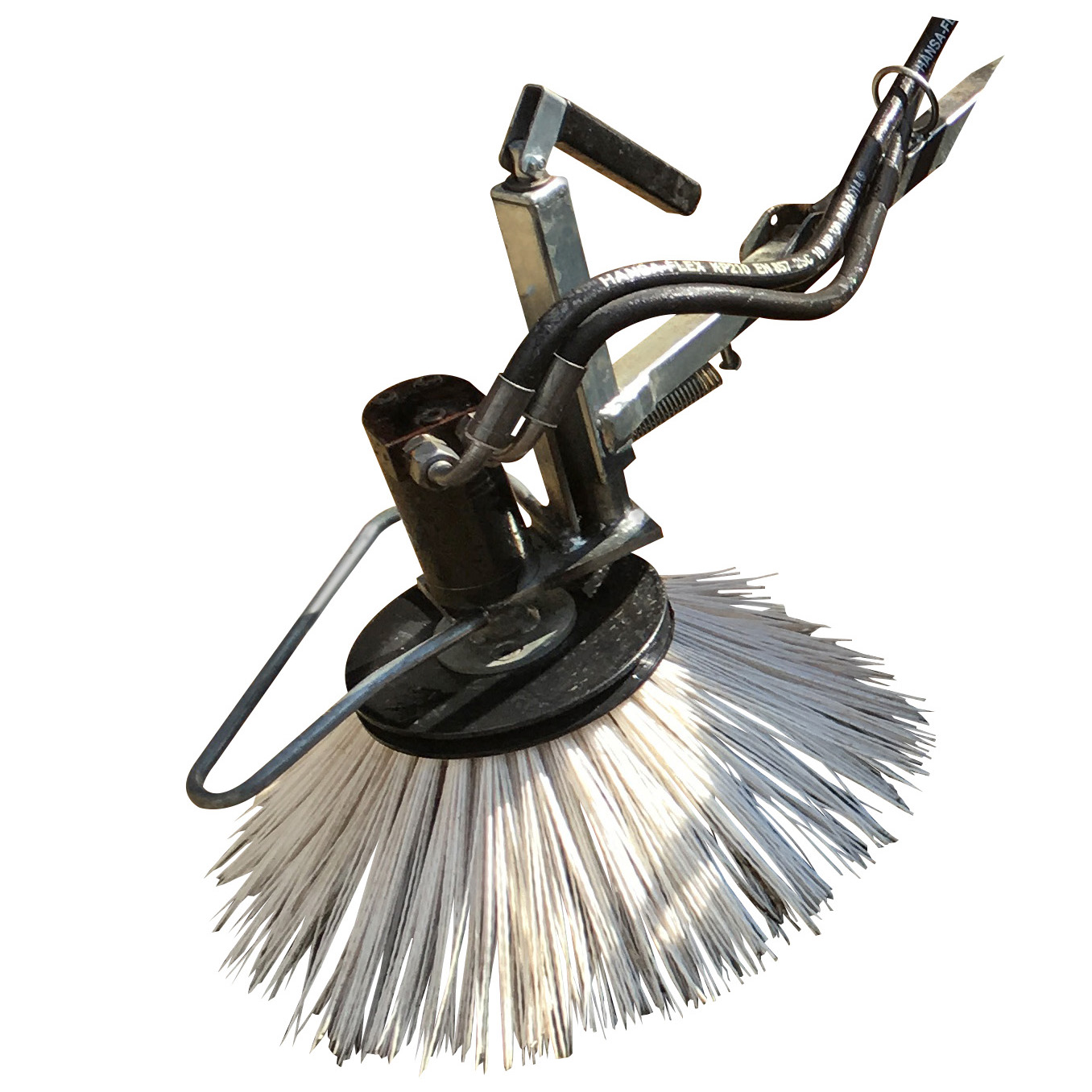
Pull material from the edge
ASH 403237 Hydraulic Gully Brush
Adjustable 40 cm hydraulic side brush with variable speed and breakaway protection for compatible 32 and 37 cm sweeper families.
Choose it when: kerbs, walls and drainage edges need to be cleaned in the same operation.
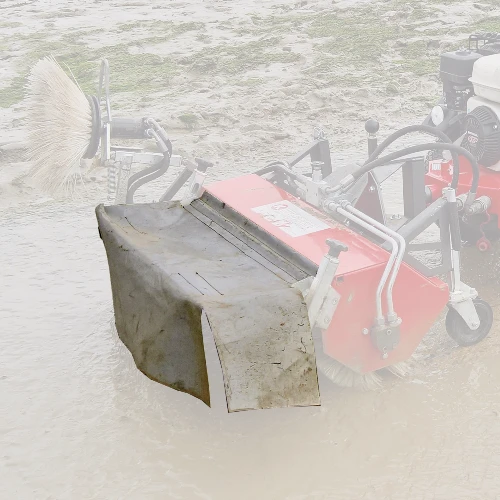
Control the windrow
Front brush guards
A guard contains heavy material close to the brush when the job is to move or windrow debris rather than capture it in a collector.
Choose it when: controlled discharge matters and mechanical pickup will follow.
Match a guard to your sweeper →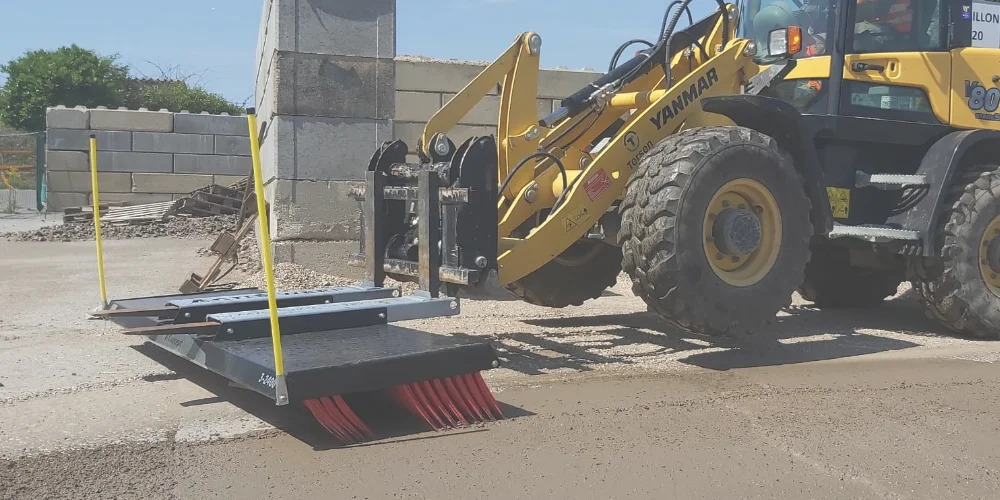
Simple large-area alternative
When a push broom is enough.
An ActiSweep uses the carrier’s forward motion rather than a powered rotating brush. It is a productive, economical route for loose piles and bulky material on yards and industrial sites—but it does not loosen compacted deposits or collect the debris.
- V7: lighter, occasional dry material
- V9: more brush depth for damp, sticky or fibrous material
- V13: maximum brush depth for intensive high-volume work
Mounted attachment compatibility
The attachment is only one part of the installation.
For front-mounted tractor systems, the normal route is carrier, front linkage, power supply, interface bracket and attachment. An attachment does not usually bolt straight to the front linkage. Rear-mounted and specialist carriers can use different arrangements, so confirm the complete system.
Practical Kersten guidance
Why removal and timing matter.
These articles show how heavy soil forms, why it supports weeds and how sweeping and mechanical edge work fit into a longer-term maintenance plan.
Soil and weed removal
How to deal with weed and heavy soil on many surfaces
A practical overview of combining mechanical tools for demanding surface-cleaning work.
Read the article →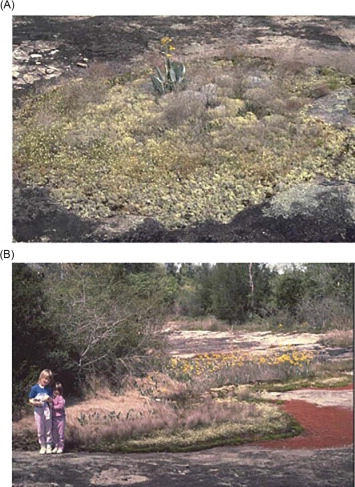
Preventive maintenance
Why minimising soil build-up reduces herbicide demand
Deeper soil holds more water and nutrients, allowing tougher plants to establish on hard surfaces.
Read the article →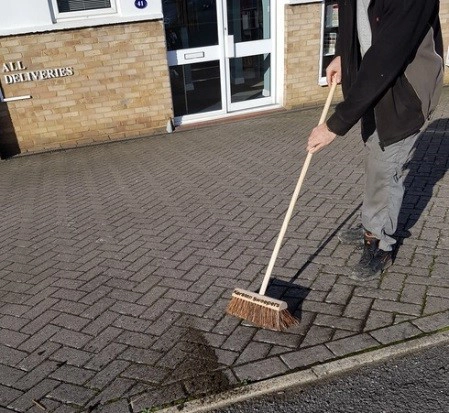
Sweeping strategy
Sweeping hard surfaces as effective weed control
How removing detritus, silt and reproductive material interrupts the conditions weeds need.
Read the article →Frequently asked questions
Heavy debris decisions, clarified.
Do I need a sweeper or a weed brush?
Use a sweeper for loose or friable soil, grit, moss and decomposed organic material. Use a weed brush when the deposit is compacted, rooted or bonded to the surface. For neglected areas, weed brush first and sweep up the loosened arisings afterwards.
Should I collect the debris or leave a windrow?
Fit a collector when the area must be left clean in one pass or the arisings would recontaminate drains and edges. Windrowing is faster when there is a safe pickup route and another machine or crew will remove the pile.
What makes a larger sweeper better for heavy debris?
A larger brush diameter provides more capacity for bulky material, while a wider machine raises site output. The carrier must also supply the correct power, oil flow, linkage and weight capacity; a larger attachment is not automatically faster on an undersized carrier.
Will a gully brush replace a weed brush?
No. A gully brush extends the sweeper’s reach into edges and pulls loose material into the main brush. A weed brush is designed to disrupt established moss, weeds and compacted detritus. They solve different problems.
Can a tractor attachment connect directly to any front linkage?
Usually not. The normal front-mounted route is tractor, vehicle-specific front linkage, PTO or hydraulic power, ABR interface bracket, then attachment. Exact fitment and hydraulic demand must be checked before ordering.
Specify the whole job
Tell us what the debris is, where it sits and what must happen to it.
Include the surface, area, carrier model, access restrictions and whether the material must be collected. Kersten can help match the brush family, working width, drive, interface and accessories.