Kersten professional winter equipment
Match the snow, route and carrier to the right clearing system
Use a plough where snow can be pushed and stored, a two-stage blower where deep accumulations must be collected and discharged, then finish the route with sweeping and controlled de-icing where required.
Choose the clearing action
Push, discharge or finish the surface
The snowfall depth is only one variable. Snow-storage space, surface construction, route width and the available carrier often decide the correct method first.
Push and windrow
Plough fresh or moderate accumulations into a planned storage area. Best where the route has room beside it and repeated passes can keep the route open.
Collect and discharge
Use a two-stage blower for deeper drifts, wet or compacted material, snow banks and routes where a windrow would obstruct access.
Finish and prevent
Sweep shallow fresh snow or remaining material, then apply salt or grit at a controlled rate where refreezing risk remains.
Snow plough ranges
Choose the plough family by carrier class and route
The current Kersten plough page separates road-mobile Faulkner Brothers systems, professional SCHN60 tractor blades and compact SCHN45 configurations for pedestrian machines, mowers and light carriers.
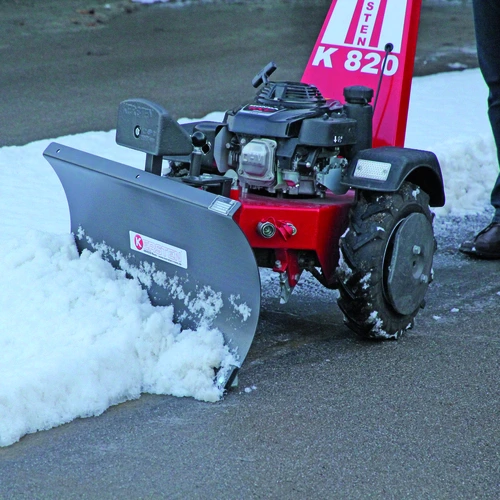 Two-wheel tractors
SCHN45 pedestrian ploughs
Compact spring-protected blades for Kersten K-series, UBS and compatible multi-attachment power units on paths, entrances and confined routes.
- 100–125 cm working widths
- 45 cm blade height
- Manual left, centre and right angling
- Break-back protection and adjustable skids
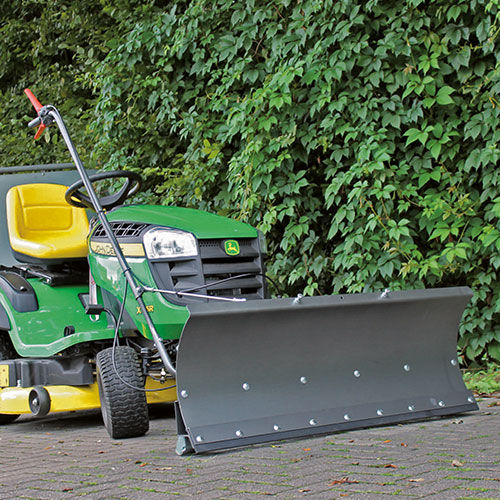 Vehicle-specific kits
SCHN45 ride-on mower kits
Complete mounting packages for selected John Deere, Kubota and Iseki ride-on mowers, with manual or hydraulic lift-and-angle configurations.
- Typically 125 cm wide
- Manual or hydraulic control
- Vehicle-specific subframes
- Replaceable urethane cutting edge
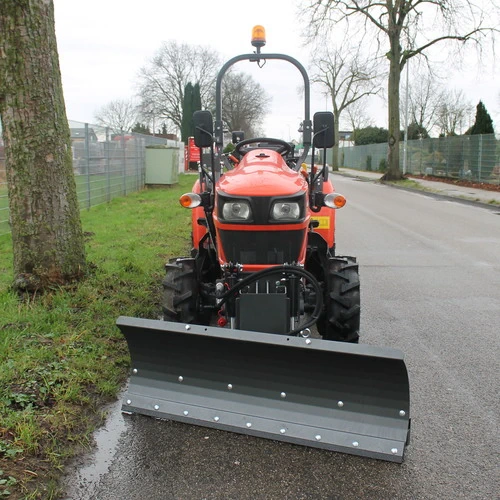 FKDR and ABR mounting
SCHN45 compact-carrier blades
Spring break-back blades for front linkages, front-mounted mowers and compact carriers where route width and low carrier weight limit blade size.
- 110–135 cm published widths
- 45 cm blade height
- FKDR or ABR mounting routes
- Manual or hydraulic operation by configuration
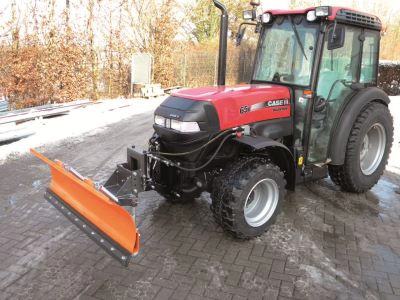 Regular winter rounds
SCHN60 professional tractor range
Higher-capacity 60 cm-high blades for compact tractors, municipal carriers, campuses, estates, roads and commercial car parks.
- 130–200 cm working widths
- 60 cm blade height
- Hydraulic stepless angling
- Spring protection, skids and surface-protecting edge
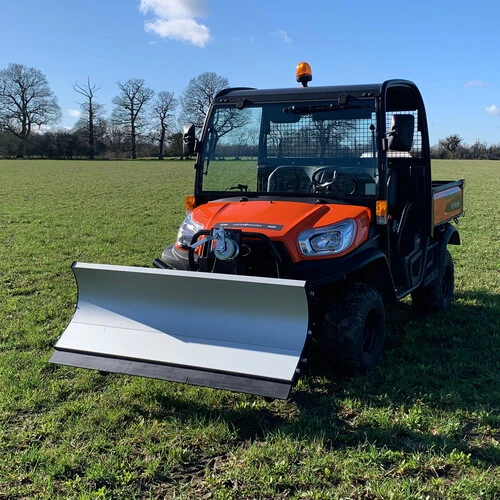 Mobile multi-site clearing
Faulkner Brothers UTV range
Purpose-built 1.5 m and 1.8 m ploughs using a structural extruded-aluminium mouldboard to combine professional blade stiffness with the low front-mounted weight required by UTVs and electric utility vehicles.
- Anodised, corrosion-resistant aluminium profile
- Integrated battery on electric-lift versions
- One-pin 2-inch receiver attachment
- Spring trip protection and urethane wear edge
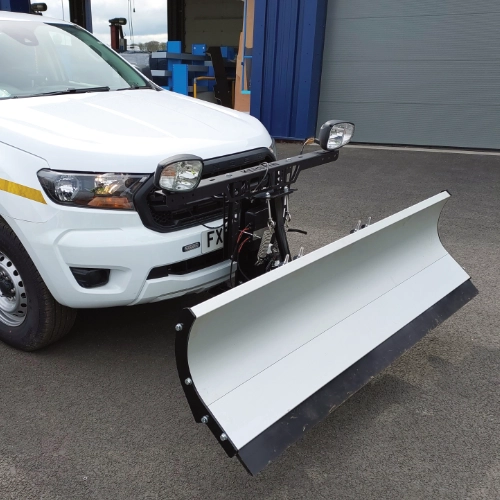 Fully electric control
Faulkner Brothers 4x4 and pickup range
A 2.0 m road-vehicle plough with an anodised extruded-aluminium mouldboard, marine-grade stainless components and fully electric in-cab lift, lower and angling.
- 65° attack angle; 200 cm straight width
- Low-current 12 V electric actuation
- Tool-free receiver connection with one retaining pin
- Heavy-duty spring trip and replaceable urethane edge
Why Kersten plough systems are different
Engineered to clear snow without treating the carrier as an afterthought
Blade shape, protection, wear components, controls and the mounting route are developed as one system. That matters when the blade meets hidden kerbs, compacted snow or repeated professional use.
The mouldboard is formed as a structural aluminium profile. Internal shape and reinforcing sections create stiffness without relying on a thick, uniformly heavy plate.
The aluminium profile is anodised for corrosion resistance and a harder surface finish, with stainless-steel components selected for repeated exposure to wet snow and de-icing environments.
Lower blade mass reduces the load hanging ahead of a UTV or pickup and makes attachment, transport and storage easier. It is especially valuable on lighter and electric utility vehicles.
When the cutting edge meets a concealed solid obstacle, the blade can break back against its springs rather than transferring the full impact into the plough frame and vehicle chassis.
The resilient edge follows the surface, reduces harsh metal-to-surface contact and is replaced as a wear component instead of sacrificing the mouldboard.
The height-adjustable 2-inch receiver arrangement allows compatible UTV and 4x4 systems to connect with a single retaining pin, simplifying fitting and removal between events.
UTV electric-lift models use an integrated rechargeable battery. The 4x4 system uses efficient electric actuators rather than a high-current electro-hydraulic power pack.
Kersten blades use a steep attack angle and curved mouldboard to lift and roll snow away from the route rather than simply bulldozing it into a compacted mass.
Why extruded aluminium is more than a weight-saving claim
Extrusion allows the mouldboard section itself to perform as the structure. The result is a blade that remains tall and rigid enough to roll snow, yet light enough for carriers whose front axle, chassis and electrical system cannot sensibly support a traditional pickup-style electro-hydraulic steel plough.
Cerruti snow blower ranges
Choose intake capacity and drive system for deep snow
Cerruti two-stage machines break and gather snow with the front auger, then accelerate it through an adjustable chute with a second-stage impeller. Carrier power, front linkage, PTO or hydraulic services must be specified together.
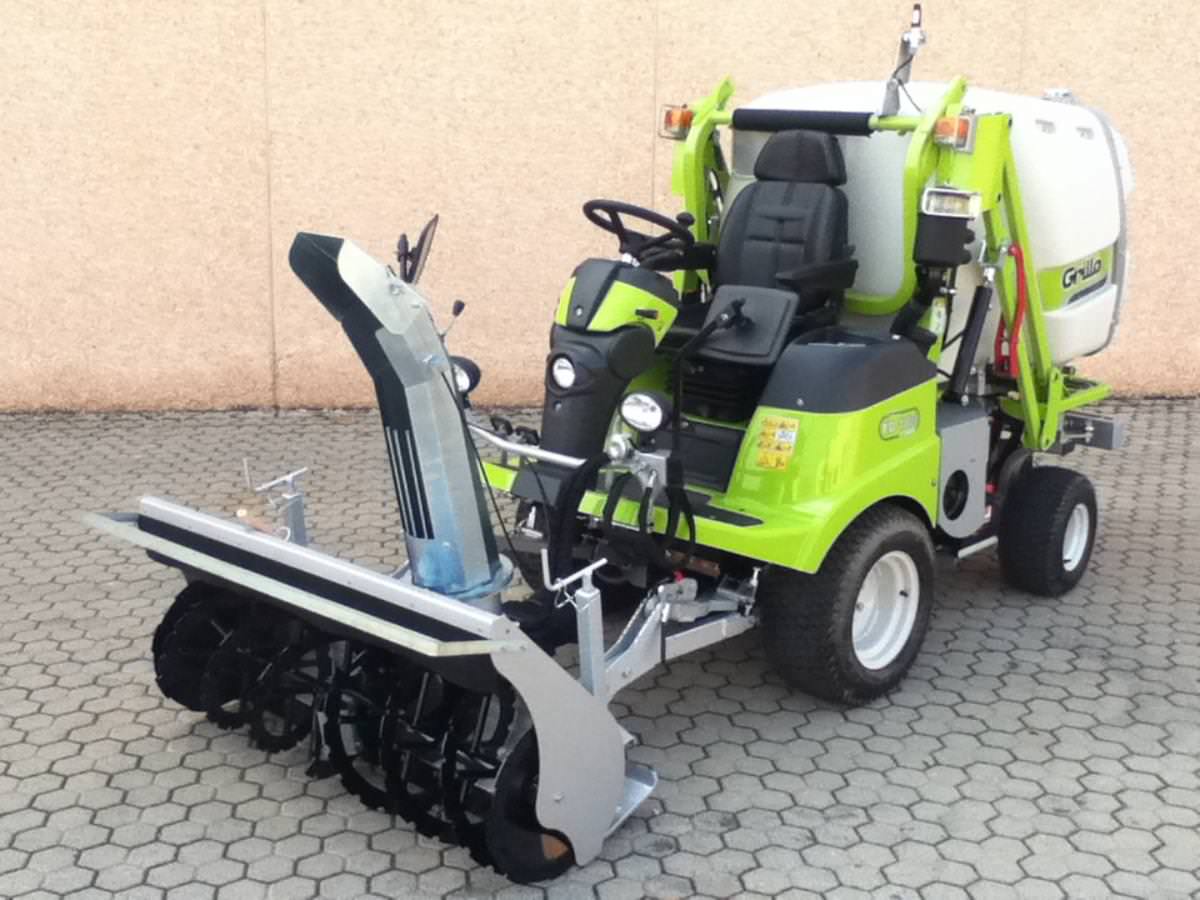 14–40 hp tractors
Cerruti Basic
Entry compact-tractor family for deep snow where a plough cannot leave a windrow. Mechanical-drive models cover narrow estate and out-front mower routes.
- Published widths from 900–1400 mm
- 650 mm intake height on larger models
- 400 mm auger and second-stage impeller
- Front linkage/PTO or compatible connector
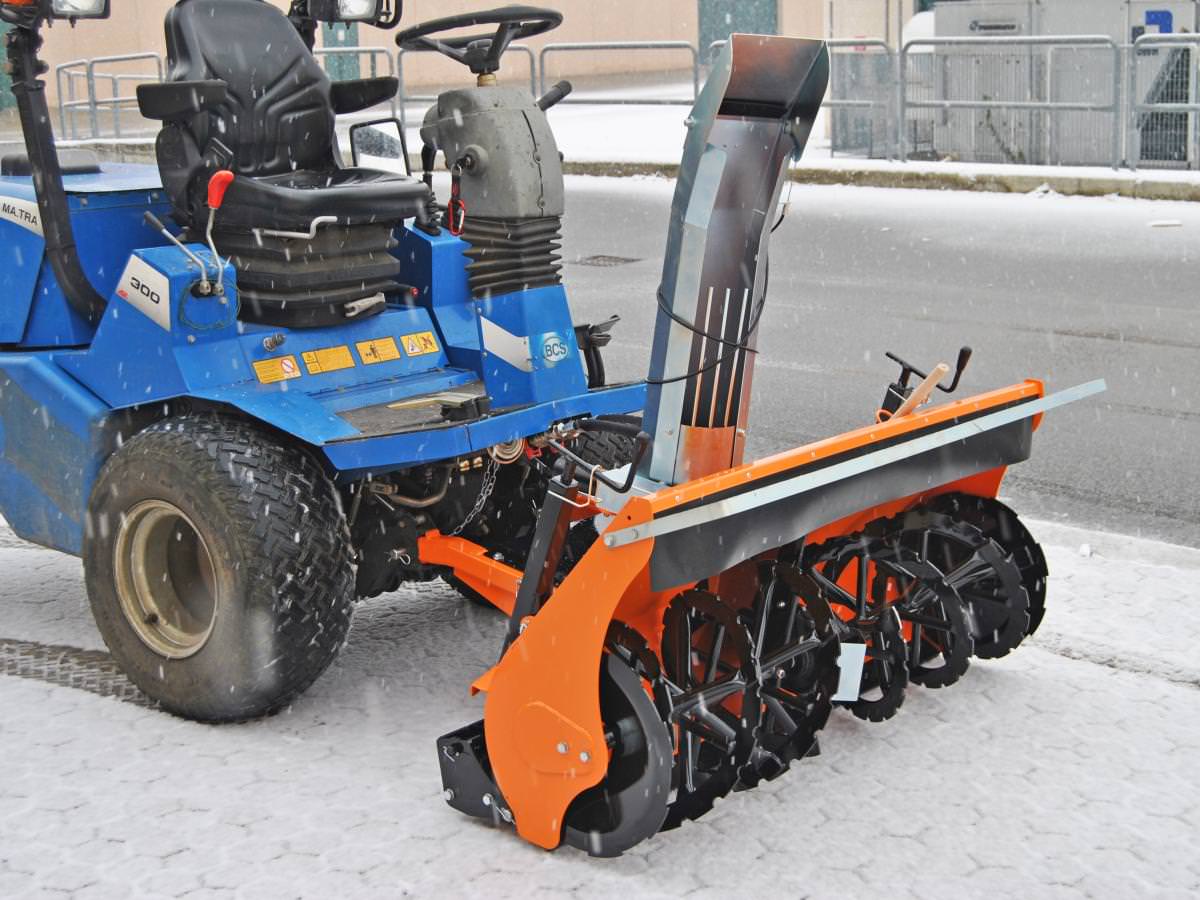 26–55 hp tractors
Cerruti Intermediate
Higher-intake machines for professional routes and larger drifts, adding greater working height and controlled discharge placement.
- Published widths from 1300–1600 mm
- 700 mm intake height
- 400 mm ice-breaker auger and impeller
- Hydraulic chute rotation and deflector
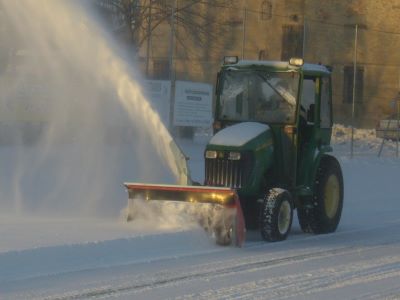 30–55 hp tractors
Cerruti Profy
Heavy professional mechanical-drive family for deeper, denser accumulations and high-output winter contractors.
- Published widths from 1400 mm
- 760 mm intake height
- 450 mm auger and second-stage impeller
- Hand-crank skids and hydraulic chute controls
 Loaders and specialist carriers
Cerruti hydraulic-drive systems
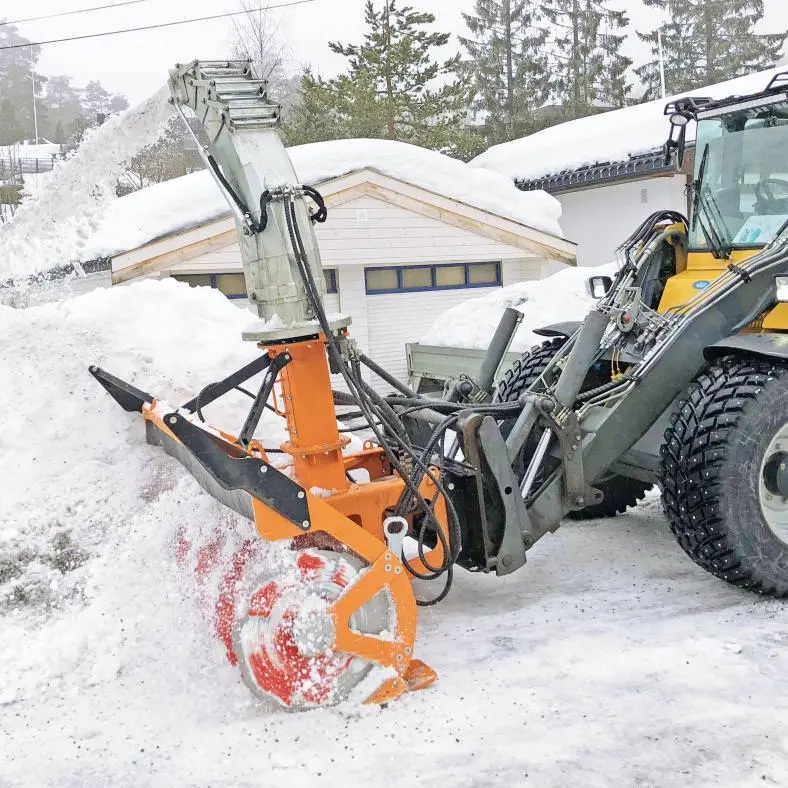
Hydraulic-drive configurations for loaders, telehandlers and carriers where PTO drive is unavailable but hydraulic power and flow are suitable.
- Carrier hydraulic flow must be confirmed
- Two-stage collection and discharge
- Useful where snow storage is restricted
- Specify couplings, pressure, flow and return route
Kersten Fitment Wizard
Check the established winter mounting route
Select the carrier make and model. The wizard uses the winter data from the shared Kersten fitment script to identify the closest plough, bracket and supporting infrastructure route.
Before ordering
Four checks protect the carrier and improve clearance
Complete the winter route
Supporting systems after primary snow clearance
These ranges support the plough or blower rather than replacing the primary method decision.
%20(1).webp)
Snow sweeping
Angled sweepers can windrow shallow fresh snow, clean residual material and expose the surface so it dries more quickly.
Explore sweeper ranges →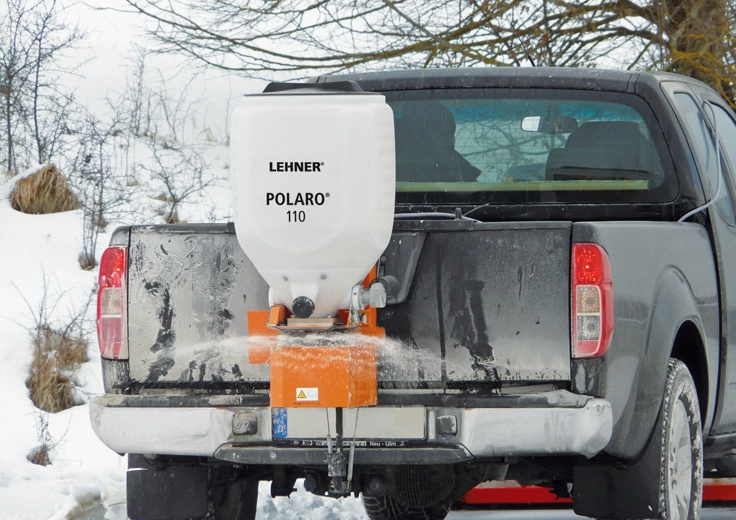
Salt and grit spreading
Use controlled application before an event or after clearance to reduce bonding and manage refreezing on priority routes.
Explore spreader ranges →Operational planning
Prepare the site before the forecast becomes an event
Map the priority routes
Define entrances, pedestrian links, emergency access, loading areas and the order in which they must reopen.
Mark hidden hazards
Identify kerbs, drains, speed bumps, bollards, gravel edges and street furniture before snow covers them.
Allocate snow storage
Choose windrow and discharge areas that will not block drainage, visibility, disabled bays or later operations.
Inspect the complete system
Check carrier, mounting, controls, wear edges, skids, springs, PTO, hydraulics, lighting and de-icing stock.
Frequently asked questions
Snow-plough and blower selection
When should a site use a plough rather than a snow blower?
Use a plough where snow can be pushed into a safe windrow or storage area and the route can be cleared in repeated passes. Use a blower where accumulations are deep, banks restrict the route or snow must be discharged over or away from an obstruction.
How wide should the plough be?
Check both straight and angled working width. When angled, the blade must still cover the carrier tyre track without becoming too wide for gates, paths or parked vehicles.
What is the difference between SCHN45 and SCHN60?
SCHN45 is the compact 45 cm-high family for pedestrian machines, ride-on mowers and light compact carriers. SCHN60 is the 60 cm-high professional family for compact tractors, municipal carriers and regular higher-capacity winter rounds.
Why do the Faulkner Brothers ploughs use an extruded aluminium mouldboard?
The extrusion forms reinforcing geometry into the mouldboard itself, providing stiffness while limiting weight ahead of the vehicle. The anodised marine-grade aluminium also resists corrosion, while the spring trip system and replaceable urethane edge handle impacts and wear as separate serviceable elements.
Why is the exact carrier model important?
The mounting frame, receiver height, front axle capacity, lifting system, hydraulic services and electrical supply vary by machine. A blade described for a general carrier class is not automatically compatible with every model in that class.
Do snow blowers work on a light dusting?
Blowers need enough material for the auger and impeller to collect and discharge. For fresh shallow snowfall, an angled sweeper or plough is generally the more effective first tool.
Can Cerruti blowers handle wet or compacted snow?
The two-stage design uses an ice-breaker auger to break up and feed material into a second-stage impeller. Machine family, intake height, tractor power and forward speed still need to match the snow condition.
What should be checked before the first winter event?
Inspect cutting edges, skids, springs, fasteners, hydraulics, PTO shafts, electrical connections, receiver hardware, lighting and controls. Mark hidden obstacles and decide where windrows or discharged snow can safely remain.
Where do sweepers and spreaders fit into the plan?
Sweepers can finish light fresh snow and expose the surface, while controlled salt or grit application helps prevent refreezing after mechanical clearance. They complement rather than replace the primary plough or blower decision.
Winter equipment support
Specify the carrier and the route together
Send the machine make, model and year, front mounting details, hydraulic or electrical services, route width, surface and typical snow conditions. Kersten UK can then confirm the most suitable range and fitment route.