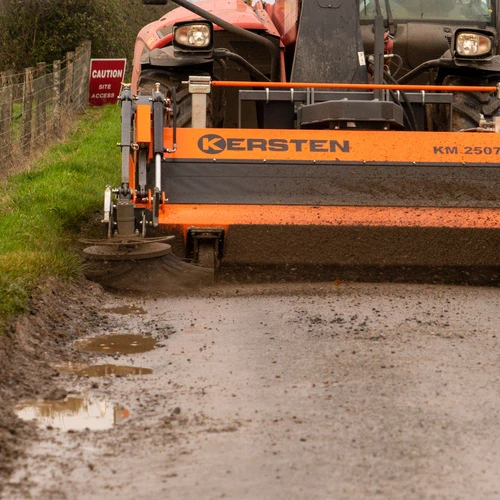
Mud and slurry management
Shift the mud.
Finish the job.
Sweep loose wet deposits, loosen driven-in clay and collect the material that needs to leave the surface. Find a working setup for paths, yards, farm roads, site entrances and suitable slipways.
Choose the first operation
What condition is the mud in?
Sweep and collect
Use a roller sweeper for damp deposits that can be lifted, with a matched collector where the finish must be clear.
Compare sweepers → Driven in or bondedLoosen it first
A compatible scraper or surface-appropriate remedial brush can break the deposit before the cleanup pass.
See scraper and collection options → Loose bulk in a yardGather for pickup
A push broom can move loose bulk material to a planned collection point. Allow for the next handling operation.
See the push-broom route →Selected equipment
From pedestrian access to heavy-duty road work.
Choose around the deposit, available space and carrier. Five examples below are attachments; the Weedo II is a dedicated machine. Collector boxes, mounting brackets and selected controls are additional unless included explicitly.
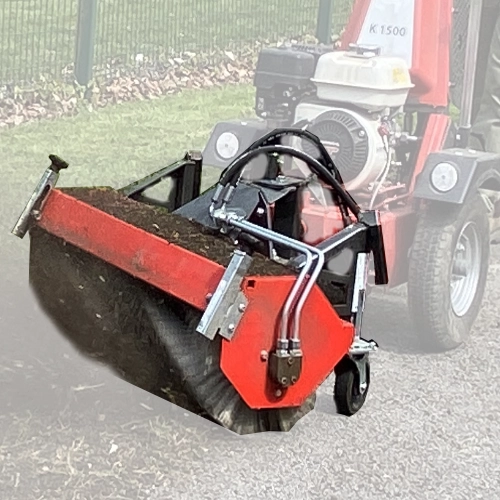
Pedestrian · narrow-access work
EFKM 09032 H-K 35
A hydraulic roller attachment for routine removal of loose damp sediment on suitable hard surfaces. Add the matched collector when the material needs taking away.
Choose it when: Paths, access routes or a suitable slipway need a compact machine with a compatible pedestrian power unit.
- 90 cm working width · 32 cm roller
- Hydraulic drive · K35 mounting included
- Listed for K820 / K820 Pro / K1500
- Power unit and collector supplied separately
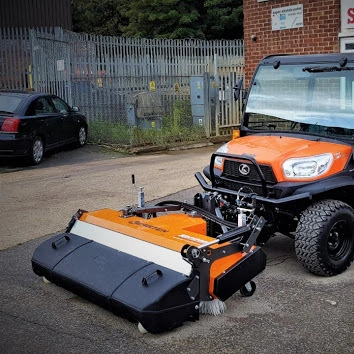
Compact tractor · front mounted
KM 15045 H
The five-row spiral roller leaves space for wet soil and mixed debris to move through the brush. Adjustable gauge wheels set the working contact.
Choose it when: A compact carrier has the correct mounting and hydraulic supply for routine sweeping and optional collection.
- 150 cm working width · 45 cm roller
- 20 L/min listed hydraulic requirement
- ABR 45 bracket required
- Collector and hydraulic angling optional
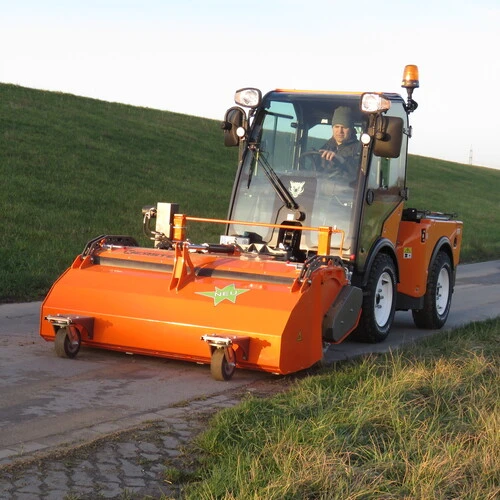
Tractors and loaders · 60 cm roller
FKM 19060 H
A larger front sweeper for yard and site maintenance. The supporting frame, gauge wheels and adjustable brush height help control the working setup.
Choose it when: A larger carrier needs a 190 cm brush for loose wet deposits and mixed site debris, with collection specified separately.
- 190 cm working width · 60 cm roller
- 50 L/min listed hydraulic requirement
- 325 kg listed sweeper weight
- ABR 60 mounting required
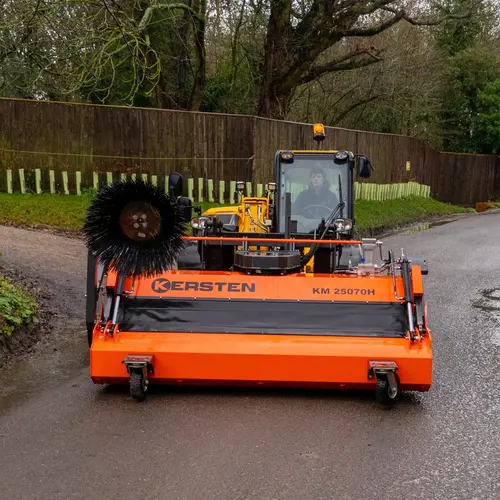
Heavy-duty road and yard sweeping
KM 25070 H
The 70 cm roller, pendulum suspension and optional floating collection suit larger-volume work. This model was used in Kersten’s Manitou MT835 farm-road installation.
Choose it when: A correctly rated tractor or loader needs broad coverage on farm roads, site access or industrial hard-standing.
- 250 cm working width · 70 cm roller
- 50 L/min listed hydraulic requirement
- 550 kg listed sweeper weight
- ABR 70 required · collector supplied separately
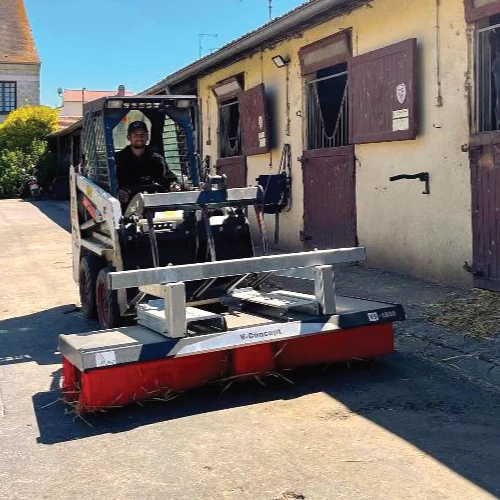
Gather loose bulk material
ActiSweep V9 1800
A V-shaped polypropylene brush arrangement gathers material using the carrier’s movement. It does not need a hydraulic brush motor or PTO drive.
Choose it when: Loose mud, soil or yard debris can be pushed to a controlled pickup point, with collection handled afterwards.
- 180 cm working width
- Nine-row polypropylene brush arrangement
- Carrier-specific mounting required
- Windrows material · no integrated collector
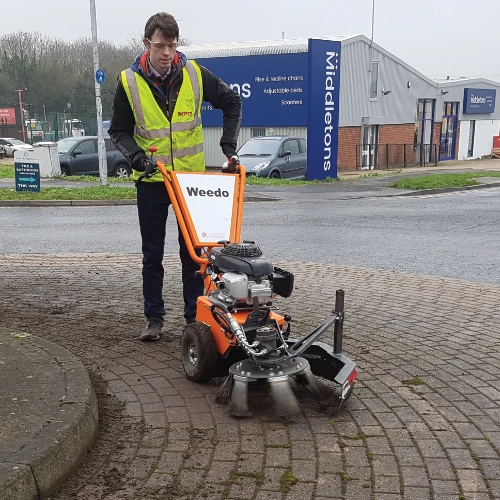
Remedial brushing · bonded deposits
Weedo II
The dedicated pedestrian brush can loosen stubborn deposits and established growth on suitable hard surfaces. Follow the remedial pass with sweeping and collection.
Choose it when: Compacted material or rooted growth needs breaking up before a roller sweeper can finish the removal.
- 50 cm working width · six-tool plate
- Hydraulically driven, reversible brush
- Adjustable brush position and splash guard
- Confirm brush tools for the surface
Specify the complete working combination. Photographs show installations and may include optional collectors, brackets or carriers. Confirm the carrier, brush, mounting, controls and full operating weight together. Check compatibility or request a complete quotation.
Loosen and collect
Two different jobs. Two specific accessories.
A scraper loosens material that a brush cannot readily shift. A collector receives the material lifted by the roller. Both must be specified for the exact sweeper and operating arrangement.
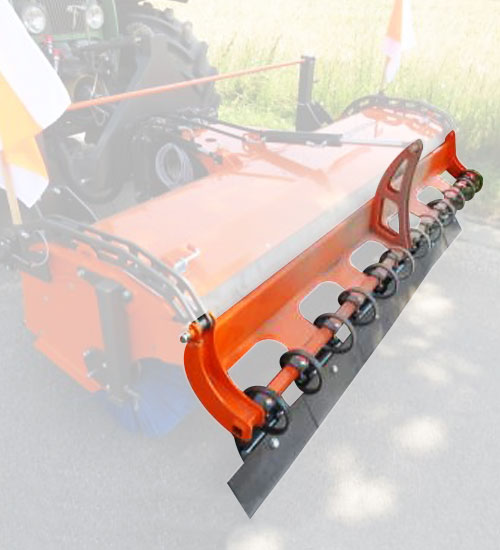
For the KM 25070 · loosen driven-in material
AKL 25070 scraper bar
The sprung scraper arrangement is designed to loosen driven-in mud and clay before the sweeping operation. Hydraulic lift and lower brings the scraper into and out of work.
Choose it when: A normal brush pass leaves firmly attached material and the KM25070 installation can support the correct scraper configuration.
- 250 cm scraper bar
- Hydraulic lift and lower
- Specific to the matched KM25070 setup
- Confirm hydraulic services and collection arrangement
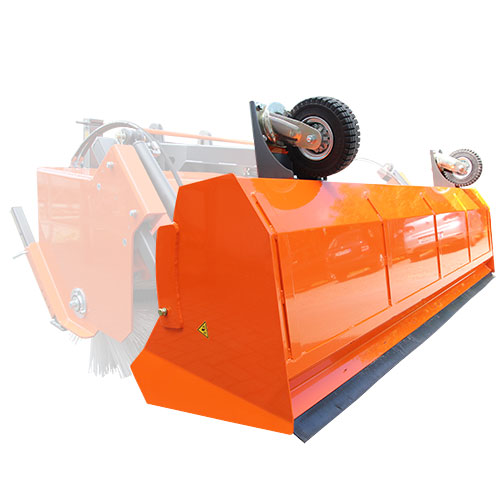
For the KM 25070 · collect the arisings
SSB 25070 floating collector
The floating collector follows surface contours independently of the brush. Gauge wheels support the box and dual cylinders provide hydraulic emptying.
Choose it when: Mud and debris must leave the road or yard, with a collector matched to the KM25070 and carrier.
- 250 cm collector listing
- Fully floating arrangement
- Gauge wheels · dual-cylinder hydraulic emptying
- Check the full wet working load
Confirm how scraping and collection fit together. Some scraper configurations replace the collector. Ask whether your specified setup can carry out both operations together or needs separate passes. The AKL image shows the scraper fitted to a sweeper; the sweeper is separate.
Cambered roads and loader work
Keep the brush and collector following the ground.
A telehandler boom can apply substantial force to an attachment. A matched floating installation lets the sweeper work with changes in surface level rather than relying on extra downward pressure.
Floating carrier connection
A correctly specified mounting allows the sweeper to follow the road profile. The MT835 case study used an ABR70 TELE floating hitch for its KM25070 installation.
Independent floating collection
On the KM70 system, the collector and brush follow contours independently, helping the box maintain its clearance as brush height is set for the surface.
Controlled brush contact
Gauge-wheel adjustment establishes the working height. Optional KM Control on suitable larger sweepers makes automatic height adjustments to maintain the selected brush contact.
Choose the working method
Match the material, then plan the finish.
| Condition | First operation | Finish to plan |
|---|---|---|
| Loose damp soil and sediment | Powered cylindrical sweeper with appropriate brush contact. | Collect it or form a controlled windrow for pickup. |
| Sticky deposits and driven-in clay | Compatible scraper or suitable remedial brushing to break the bond. | Sweep and remove the loosened material; confirm the scraper/collector configuration. |
| Loose bulk material in a yard | Push broom or larger roller sweeper matched to the carrier. | Provide loading or collection after gathering. |
| Very watery slurry or standing liquid | Assess a suitable liquid-recovery method before selecting a brush. | A sweeper collector is not a liquid-recovery tanker or slurry pump. |
| Slipway deposits or a slippery surface film | Surface-specific inspection and a demonstration with the appropriate brush. | Confirm access, traction, operating conditions and material recovery. |
Work while the deposit is manageable. Fresh damp material can be easier to move before it dries or becomes compacted by traffic. The right timing depends on the actual consistency: a watery layer and a brushable damp deposit are different jobs.
Build the complete setup
Carrier, mounting, hydraulics and collection.
Start with the carrier
Check the exact model, front interface or loader carriage, working space and load limits. Include the wet contents of a collector in the operating load.
Supply the working functions
Confirm continuous hydraulic flow, pressure and return requirements for the brush, plus the services for angling, emptying or scraper lift where fitted.
Match the attachment bracket
Most mounted Kersten attachments need an interface bracket, frequently beginning ABR. On a tractor, specify the front linkage, power route, bracket and sweeper together.
Reduce the returning mud
Keep less material crossing onto the clean route.
Manage the transfer points
Identify where tyres, footwear and runoff carry soil onto hard-standing. Brush stations and suitable catchment arrangements can reduce the material reaching the route.
Schedule around site activity
Plan sweeping around harvesting, earthworks, vehicle movements and wet-weather deposits. Clear recurring accumulations before repeated traffic compacts them.
Plan unloading before starting
Choose where collected or windrowed material will go. A clean route needs the sediment removed from the working area, with sensible emptying access for the carrier.
Kersten case studies and guidance
See the equipment working on real sites.
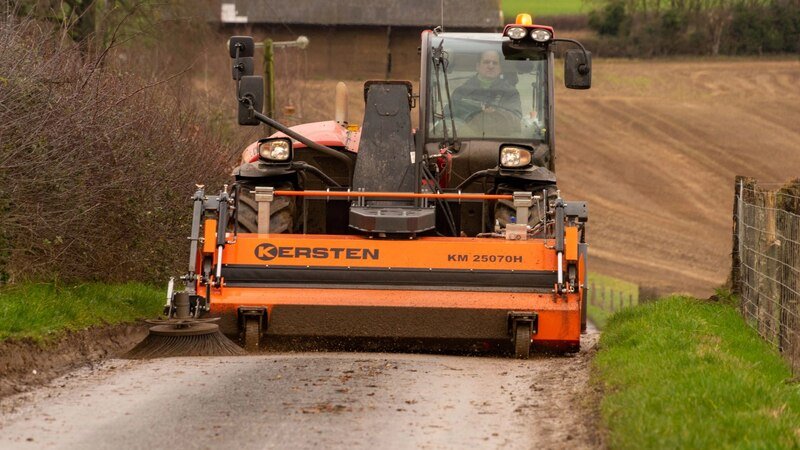
Farm-road mud · Manitou MT835
Follow the camber while collecting
A KM25070, ABR70 TELE floating hitch, floating collector and gully brush were specified for a farm road with undulations and camber.
Read the Kersten article →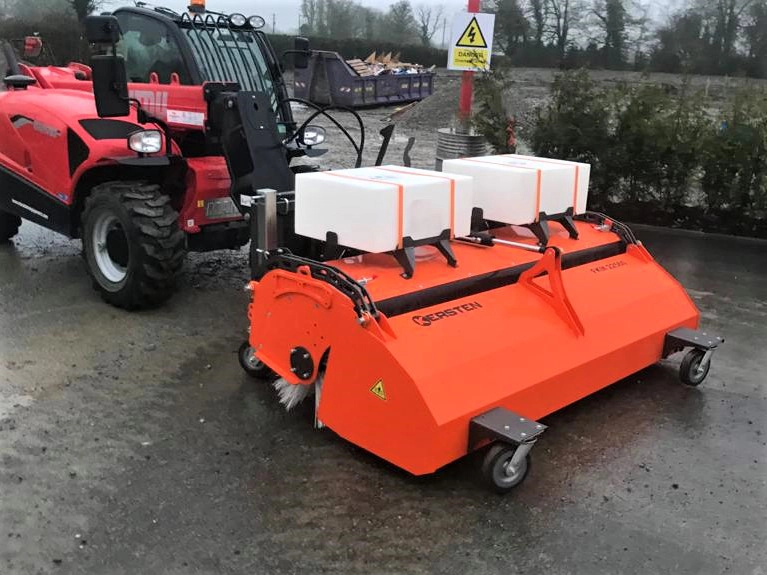
Building-site traffic · Manitou MT625H
Handle mud now and dust later
This installation used an FKM22560 H, floating hitch and collector, plus water suppression for the site’s dry summer conditions.
Read the Kersten article →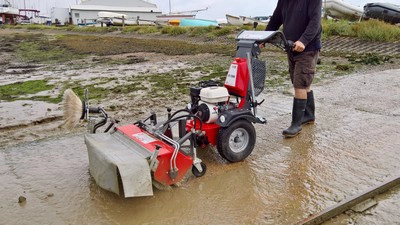
Slipways and harbour infrastructure
Choose the brush around the surface
Kersten discusses mechanical sweeping on damp slipways and other marine infrastructure, with pedestrian and mounted equipment options.
Read the Kersten article →Related maintenance routes
What else is mixed into the deposit?
Common questions
Mud and slurry equipment questions
Should I sweep mud while it is wet?
Damp, brushable deposits can often be moved before they harden or become compacted. Very watery slurry is different and may need liquid recovery. Choose the method around the actual consistency and a trial on the surface.
When do I need a scraper rather than a sweeper alone?
Consider a compatible scraper when driven-in clay or bonded mud remains after normal brushing. A surface-appropriate weed brush can also loosen stubborn deposits. Follow with sweeping and removal of the arisings.
Can I fit a scraper to every Kersten sweeper?
No. Scrapers are matched to specific sweeper families and widths. The AKL25070 shown here is listed for the KM25070. Confirm fitting, hydraulic controls and whether the collector is replaced or collection requires another pass.
Why does floating collection matter on a telehandler?
Road camber and undulations change the relationship between the carrier, roller and collector. A matched floating hitch and collector help the components follow the ground without forcing the box or brush into the surface.
Can these machines pump or vacuum liquid slurry?
The equipment shown is for sweeping, gathering or loosening sediment and semi-solid material. It is not a liquid-recovery tanker or slurry pump. Describe the material to Kersten before selecting a setup for very fluid deposits.
Is a push broom a collecting machine?
No. It gathers or pushes loose material using the carrier’s movement. Plan subsequent pickup, or specify a roller sweeper with a matched collector where material must be removed during the sweeping operation.
Can I use the same setup on a slipway or timber deck?
Check the surface material, condition, brush choice and operating access first. Kersten’s slipway article describes damp-surface sweeping, but the actual installation and method need to suit your site. Request a demonstration before choosing equipment for a vulnerable or slippery surface.
Are these complete installed-system prices?
Most prices shown are for individual attachments or accessories, excluding VAT. The Weedo II is a dedicated machine listing. Carriers, ABR brackets, controls, fitting and additional options may be separate. Request a quotation for the complete working setup.
Start with your material and carrier
Show us the mud. We’ll help specify the setup.
Send the surface, deposit condition, area, carrier model and access details. Tell us whether the material can be windrowed or needs collecting, and where it will be unloaded.