
Compact tractor attachments
One tractor.
More useful work.
Clean paths, tackle weeds, restore gravel and prepare for winter. Match the working tool to your tractor’s mounting and power, and keep it earning its place throughout the year.
Start with the surface
What does your site need?
Choose the working tool
Attachments that earn their place.
Compare selected models below, then match the mounting and drive to your exact tractor. The tractor, fitting, brackets, controls and optional working equipment are not automatically included in an attachment price.
18 selected attachments. Select a task to compare the relevant tools.
Sweep loose material. Collect what needs removing.
Compare front hydraulic, front PTO and rear PTO options. Add the appropriate collector, side brush or guard around the required result.

Rear PTO sweeper
HKM 12540 M
A rear-mounted roller makes use of the tractor’s rear linkage and PTO. Add a matched collector when debris needs to leave the surface.
Choose it when: You want a compact rear-PTO installation without adding a front linkage.
- 125 cm working width
- 40 cm roller diameter
- 540 rpm rear PTO
- Category 1 rear mounting
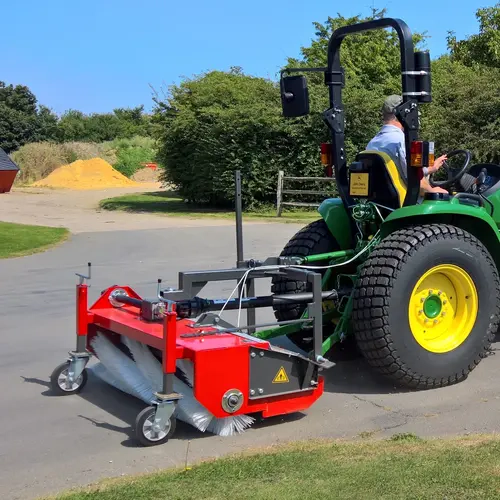
Wider rear PTO sweeping
HKM 15040 M
The wider HKM 40 covers more open routes per pass. Allow for the collector, side brush and complete working load when checking access and capacity.
Choose it when: The tractor and site have room for a wider rear-mounted sweeping package.
- 150 cm working width
- 40 cm roller diameter
- 540 rpm rear PTO
- 140 kg basic sweeper
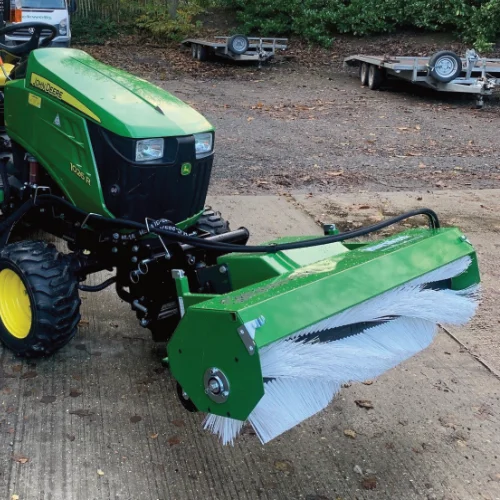
Compact front hydraulic sweeper
FKM 12537 H
A smaller-diameter roller for compact front installations. Tractor hydraulics drive the brush; mounting and lift need their own matched arrangement.
Choose it when: Your carrier has a suitable continuous hydraulic supply and an approved ABR 37 installation.
- 125 cm working width
- 37 cm roller diameter
- 8 L/min listed hydraulic flow
- ABR 37 bracket required

Compact front PTO sweeper
FKM 12537 M
Mechanical PTO drive provides an alternative to powering the roller from the tractor’s hydraulic circuit. Specify the shaft, drive direction and bracket together.
Choose it when: A matched front PTO gives the right drive for your tractor and working tool.
- 125 cm working width
- 37 cm roller diameter
- Mechanical PTO brush drive
- ABR 37 bracket required

Front hydraulic sweeping
KM 13045 H
A 45 cm roller offers a different brush size and installation from the FKM 37. Collection and gully-brush options can turn loose-material sweeping into a removal job.
Choose it when: You need a front hydraulic sweeper and can meet the stated flow and mounting requirements.
- 130 cm working width
- 45 cm roller diameter
- 20 L/min listed hydraulic flow
- ABR 45 mounting system
John Deere 1026 hydraulic installation pictured.

Larger hydraulic roller
KM 15052 H
A 52 cm roller for a larger working installation. Match the mounting position, hydraulic flow and full operating weight to the exact tractor.
Choose it when: The carrier can support a larger brush and the complete collection package.
- 150 cm working width
- 52 cm roller diameter
- Hydraulic brush drive
- ABR 52; confirm required flow
Choose how the brush gets its power.
H, MK and MH describe different brush-drive arrangements. Match the mounting, positioning controls and brush plate as well as the working power.

Hydraulic weedbrush drive
UB 6080 H
The tractor’s hydraulic supply powers the brush. Specify flow, pressure, hydraulic positioning and controls for the quoted configuration. Brush plates are additional.
Choose it when: Suitable continuous hydraulic power is available for the working brush.
- 60 / 80 cm brush-plate options
- Hydraulically driven brush
- ABR UB mounting required
- Select plate and controls separately
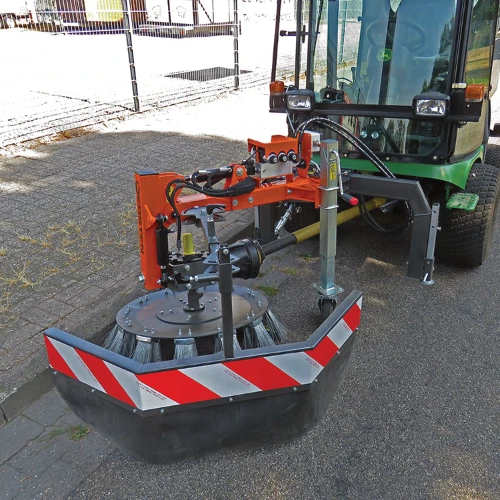
Mechanical PTO brush drive
UB 6080 MK
A mechanical shaft drives the brush. Specify the required positioning hydraulics and controls as part of the installation; mechanical brush drive does not describe every adjustment function.
Choose it when: You want mechanical front-PTO drive with a matched positioning and control package.
- Mechanical front-PTO drive
- 80 cm brush-plate option
- ABR UB mounting required
- Brush plate supplied separately
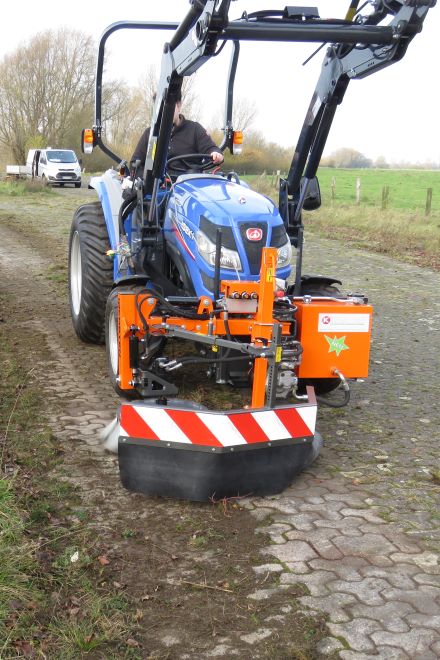
PTO-powered hydraulic brush system
UB 6080 MH
The front PTO powers an integrated hydraulic system, which drives the working brush. Agree the lift, positioning and control connections for your tractor.
Choose it when: The PTO-powered hydraulic arrangement suits your carrier and required brush control.
- Front PTO powers hydraulic system
- 60 / 80 cm brush-plate options
- ABR UB mounting required
- Select plate and controls separately

Hot-air and infrared treatment
HOAF TWB 100 ABR
A hooded propane-powered tool treats vegetation with heat. It does not brush away deposits or collect debris; plan repeat treatment and the correct gas equipment.
Choose it when: Thermal treatment suits the surface and your maintenance programme.
- 100 cm working width
- Liquid-withdrawal propane supply
- ABR TWB attachment frame required
- Specify gas equipment and controls
Move leaves to a planned collection point.
Mechanical and hydraulic LBV versions use different tractor power sources. Both move material; plan the collection step.

PTO-powered leaf clearance
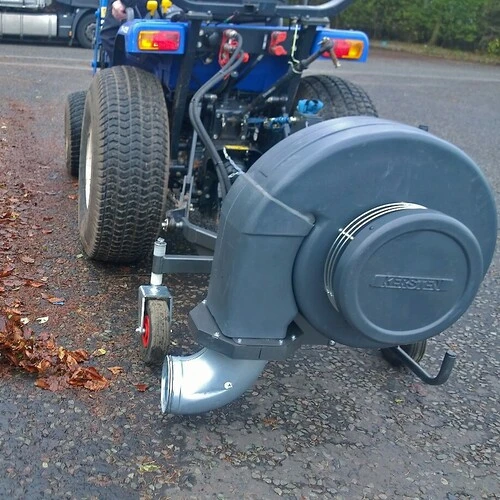
LBV 6900 — mechanical
Move loose leaves and light debris towards a planned collection point. The tractor PTO powers the fan, so the shaft and drive arrangement must match.
Choose it when: A suitable PTO installation is available and leaf clearance justifies a mounted blower.
- Mechanical PTO fan drive
- 140 m³/min theoretical air output
- Approx. 12 m listed blowing range
- ABR LBV bracket additional
Hydraulic leaf clearance
LBV 6900 — hydraulic
The tractor’s hydraulic supply drives the fan. Check continuous flow and pressure rather than choosing by tractor horsepower alone.
Choose it when: The tractor has the hydraulic capacity for sustained blower operation.
- Hydraulic fan drive
- 40 L/min recommended flow
- 140 m³/min theoretical air output
- ABR LBV bracket additional
Loosen the surface or restore its profile.
Powered renovation and grading solve different problems. Select around compaction, growth, available material and the profile you need.
Powered gravel-path renovation
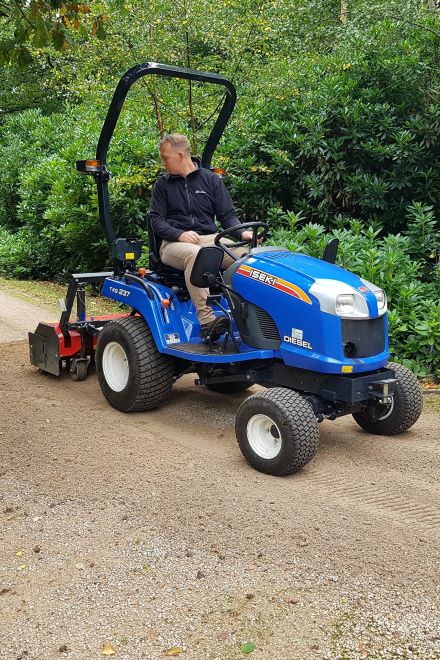
WE 1100 M-DP
Counter-rotating working tools loosen compacted material and disturb growth. Select the working tools for the surface, then confirm the PTO and mounting arrangement.
Choose it when: The path needs active loosening and renovation rather than simply moving loose gravel.
- 110 cm working width
- PTO-powered working tools
- Category 1 three-point mounting
- Working tools selected separately

Grading and redistribution
PH 130 Mini
A rear-mounted grader redistributes existing material and helps restore the path profile. Specify the optional ripper and shield around the condition of the route.
Choose it when: Loose material needs levelling, redistribution or profile correction.
- 130 cm working width
- Rear Category 1 mounting
- 35 hp minimum listed
- Optional ripper and grading shield
Push, spread or remove the snow.
Choose the winter tool around snow placement, route width, traction and the complete loaded installation.
Spring-back snow blade
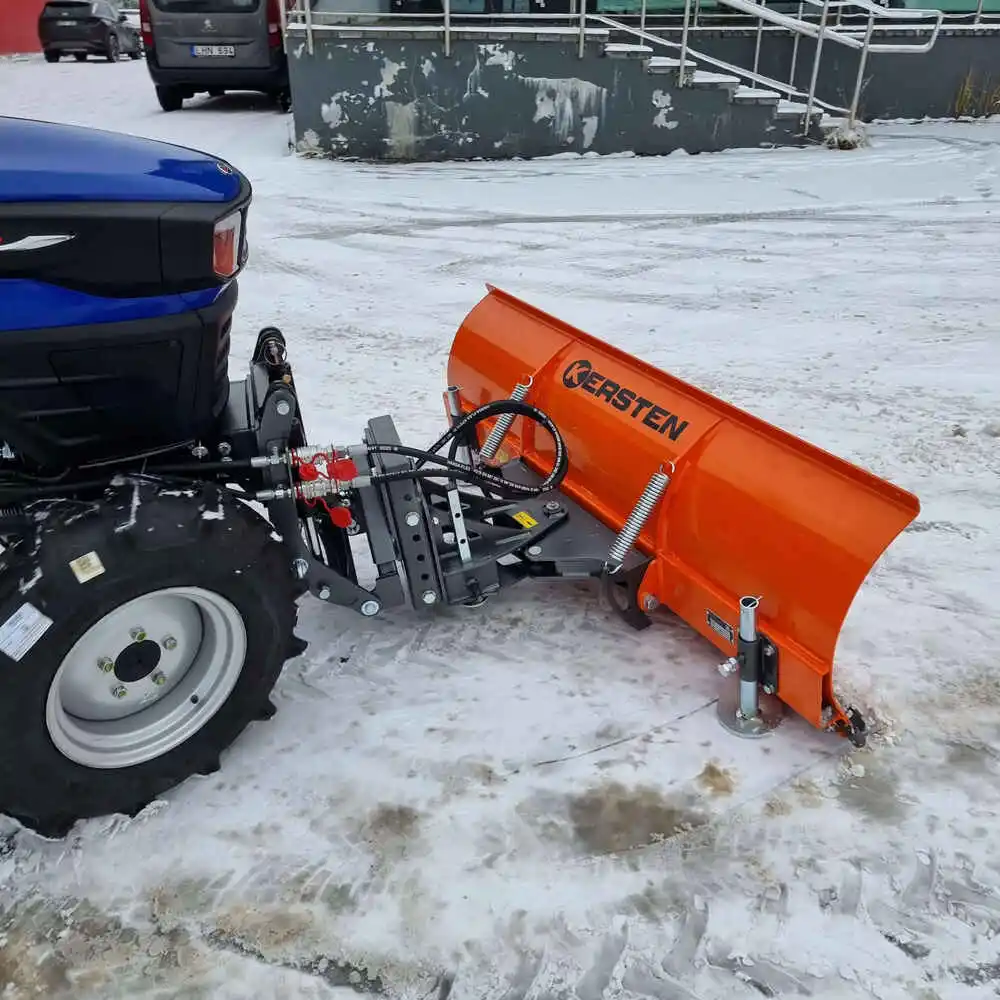
SCHN 14060 FK-ABR
The tractor pushes snow aside; the matched lift and angling arrangement positions the blade. Check width when angled, traction and the full front mounting load.
Choose it when: The route and tractor suit a 140 cm, 60 cm-high blade installation.
- 140 cm blade width
- 60 cm blade height
- 107 kg basic blade
- Specify matched ABR mounting

Fixed-width box spreading
Matev SPR-BX 80
A box spreader lays material in a controlled strip instead of broadcasting it widely. Choose the mechanical or hydraulic rotor-drive kit and dosing controls separately.
Choose it when: Precise spreading over paths matters more than a wide broadcast pattern.
- 80 cm spreading width
- 150 litre hopper
- 133 kg empty spreader
- Drive kit and dosing setup additional

Two-stage snow removal
Cerruti L1200 Basic
A blower gathers and throws snow where pushing it aside would leave insufficient space. Gearbox and shaft selection must match PTO speed, direction and height.
Choose it when: Snow must be removed from the route rather than accumulated alongside it.
- 120 cm working width
- Two-stage snow blower
- 20–40 hp manufacturer model band
- Approx. 1,000 rpm input; verify drive
Product-listing photograph shows an out-front mower installation; tractor mounting is specified separately.
Put the cut ahead of the tractor.
A front mower deck needs an exact match between the tractor, frame and mechanical drive. Compare alternative decks and carrier arrangements in the full range.

Front-mounted rotary mowing
Matev MOW — 140 cm fixed frame
A front deck places the cut ahead of the tractor. Match the frame, shaft and drive kit to the carrier, and specify the discharge or mulching configuration.
Choose it when: A verified front-deck installation suits the grass areas you maintain.
- 137 cm actual cutting width
- 15–135 mm cutting-height range
- Fixed mounting frame
- Listed drive: 1,000 rpm clockwise
Choose by the complete installation. Engine horsepower alone does not confirm fitment. Allow for hydraulic capacity, PTO specification, lift geometry, axle loads, traction and the attachment’s full working load. Photos illustrate particular installations.
Front or rear?
Put the tool where it works best.
Front hydraulic attachments
Keep the tool in view and work ahead of the tractor. Check continuous hydraulic flow, pressure, return arrangement and available controls, then match the front mounting bracket.
Front PTO attachments
Use a matched mechanical drive for the working tool. PTO speed, rotation, shaft height and driveline geometry must match; a front linkage alone does not provide power.
Rear linkage and PTO
Use the existing rear installation where it suits the job. HKM 40 sweepers offer a rear Category 1, 540 rpm route; other tools need their own drive and hitch checks.
Specify the whole front-mounted chain.
Most front attachments do not bolt directly to the linkage. A carrier-to-attachment bracket is normally required, frequently with an ABR code. The exact bracket connects the chosen linkage or carrier interface to the working tool.
| Part of the system | Check the actual installation |
|---|---|
| Tractor and linkage | Exact make, model, year and existing front equipment; linkage category, lift geometry, clearance and working capacity. |
| PTO power | Speed, direction, shaft dimensions, shaft height, gearbox and guarding. Do not assume front PTO equipment accepts the rear 540 rpm specification. |
| Hydraulic power | Continuous available flow and pressure, return requirements, couplings, cooling and services required by lift, angle, emptying and positioning. |
| Attachment bracket | Correct carrier interface and attachment system: for example ABR 37, ABR 45, ABR 52, ABR UB, ABR LBV or ABR TWB. These are not interchangeable approvals. |
| Working tool and options | Brush plate, collector, drive kit, gas equipment and controls as applicable. Check the complete supplied-items list and loaded operating weight. |
A better result from each pass
Choose the process, as well as the machine.
Remove growth, then collect
A weedbrush lifts established growth and deposits. Follow with collection so loosened soil and organic material leave the surface. A sweeper collector removes material; a blower moves it.
Renovate or redistribute
Powered path tools loosen the compacted surface. A grader moves available gravel and helps restore the profile. Choose around the path condition rather than working width alone.
Plan where the snow goes
A plough pushes snow to the side; a blower throws it away from the route. Where a narrow treatment strip matters, a box spreader helps place material within the intended width.
Complete the working package
The details change the result.
Sweeping options
Choose a matching collector to remove material, a guard for windrowing and a gully brush to bring edge debris into the main roller. Confirm collector emptying and extra hydraulic services.
Weedbrush working tools
The brush plate affects contact and aggressiveness. Specify the surface, growth and required finish, then select the plate, positioning controls and bracket for the exact UB version.
Loaded carrier capacity
Collected debris, hopper contents, gas equipment and any water system add working weight. Assess stability, axle loading, steering, traction and transport with the complete setup.
Keeping an existing mower deck? Check the exact tractor installation. A front PTO conversion or attachment may affect deck use, clearance or changeover. The John Deere 1026 hydraulic sweeper case below shows one model-specific solution; it is not a rule for every compact tractor.
Kersten installations in practice
See how the tractor and attachment fit together.
John Deere 1026 · front hydraulic
A hydraulic front-sweeper route
See the KM 13045 H, matched Quick-Tach bracket and collector installation, and why hydraulic drive suited this tractor’s existing mower setup.
Read the case study →
Kubota BX261 · rear PTO
Use the rear linkage and PTO
See why a rear HKM 12540 M with collector and hydraulic emptying was selected for a BX261 installation with limited available front hydraulic flow.
Read the case study →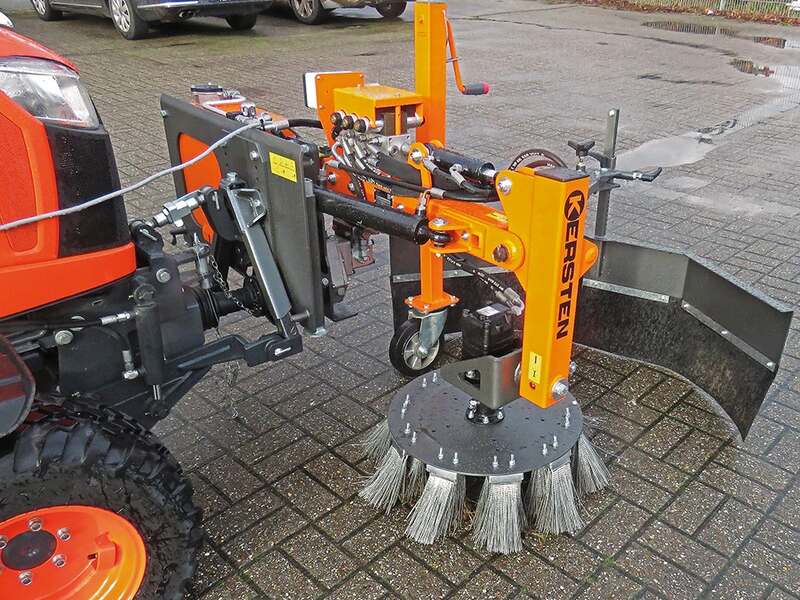
Kubota B3150 · paired attachments
Brush at the front. Collect at the rear.
A UB 6080 MH and rear HKM sweeper were paired for an Edinburgh installation. Explore the front linkage, PTO, ABR bracket, brush plate and controls behind the working system.
Read the case study →Start with your carrier
Find the right route for your tractor.
Brand guides provide useful installation examples. Fitment still depends on the exact model, existing equipment, power connections and chosen attachment.
Before choosing
Your compact tractor questions answered.
Will these attachments fit any compact tractor?
No. Confirm the exact model, linkage, mounting geometry, working capacity and power connections. A horsepower band or brand name provides a starting point, not a complete fitment approval.
Should I mount a sweeper at the front or rear?
Front mounting puts the working tool ahead of the tractor and in view. Rear mounting can use an existing linkage and PTO. Choose around power availability, manoeuvring, collection, access and any other equipment you need to retain.
Does a front linkage include PTO power?
Not automatically. Linkage carries and lifts the tool. A separate matched front PTO or hydraulic supply provides working power, and an attachment bracket normally completes the connection.
Can I use the same PTO specification at the front and rear?
Do not assume that. Speed, direction, shaft dimensions and driveline geometry vary. Check the exact tool: rear HKM 40 sweepers use 540 rpm, while the listed Matev mower package uses 1,000 rpm clockwise drive.
What is the difference between UB H, MK and MH?
H uses tractor hydraulic power to drive the brush. MK mechanically drives the brush from the front PTO. MH uses the front PTO to power an integrated hydraulic system that drives the brush. Specify positioning hydraulics, controls, plate and mounting for the exact configuration.
Are weedbrush plates and spreader drive kits included?
Check the individual supplied-items list. The UB listings require the brush plate to be selected separately. The SPR-BX 80 listing requires an appropriate rotor-drive kit; dosing controls are another specification decision.
Will a gravel grader do the same job as a powered renovator?
No. A powered renovator actively loosens the surface with working tools. A grader redistributes material and restores the profile, with optional ripping equipment where specified. Choose around the actual path condition.
Are the prices complete fitted-system prices?
No. Prices are individual listings excluding VAT. Fitting, linkage, brackets, shafts, controls, collectors and other options may be additional. Request a current quotation confirming the complete supplied-items list and fitting scope.
What should I send for a fitment check?
Send tractor make, model, year and serial details; photographs of front and rear mounting; PTO specifications; available hydraulic flow and pressure; intended jobs; access widths; existing mower or loader equipment; and planned working loads.
Build a complete working system
What should your tractor do next?
Tell us the tractor, the site and the jobs. We’ll help match the linkage, power, bracket and attachment, and arrange a demonstration around your working conditions.