Start with the machine you already own.Find the attachment that fits.
Use the Kersten fitment finder to identify established attachment routes for tractors, mowers, utility vehicles, telehandlers, forklifts, 4x4s and Kersten pedestrian power units.
- Choose sweeping, winter service or weed brushing
- Check front and rear mounting options
- See brackets, drive systems and supporting parts
- Send the proposed setup for final confirmation
My model is in the finder
Select the application, manufacturer, model and mounting position to see the established attachment route and required components.
Open the fitment finderMy model is not listed
Send the machine details, linkage, PTO, hydraulics, coupler and intended job so Kersten can assess the configuration.
Request an assisted checkI want to test the setup
Confirm the fitment first, then arrange a demonstration or short hire on the real surface and with the intended operator.
Plan a site demonstrationInteractive fitment finder
Match the application to your carrier
The finder uses Kersten's current fitment logic to show the proposed bracket, attachment, accessories and supporting equipment for listed machines. Final compatibility should be confirmed before ordering because model variants and existing equipment can differ.
What decides compatibility
Fitment is more than matching a brand name
Two machines with similar badges can have different linkages, hydraulic services, PTO arrangements, electrical connections, axle capacities or couplers. These are the details that turn a promising match into a workable setup.
Mounting interface
Front linkage, rear three-point linkage, quick attach, receiver, fork pockets or a dedicated carrier bracket.
Drive method
Mechanical PTO, hydraulic drive, carrier-powered hydraulics or a separate power pack.
Hydraulic services
Available flow, pressure, return line, connection type and the functions required for lift, angle or drive.
PTO details
Front or rear PTO, speed, direction of rotation, shaft arrangement and driveline geometry.
Vehicle capacity
Lift capacity, axle loading, attachment weight, overhang, ballast and counterbalance requirements.
Controls and electrics
In-cab controls, solenoids, lighting, electrical supply and safe routing of hoses or cables.
Working width
The attachment should suit the carrier track, route width, gateways, paths, storage and transport constraints.
Task and accessories
Collector boxes, gully brushes, support wheels, cutting edges, spread controls and surface conditions affect the final specification.
Browse by carrier type
Explore the wider attachment ranges
Use these routes when you want to compare the broader range for a carrier type, or when you are still deciding which application to add to the machine.
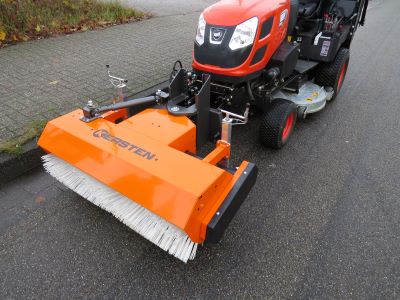
Compact tractors and Front Mowers
Front and rear attachment routes for sweeping, weed brushing, path work, mowing and winter maintenance.
Browse compact tractor and Front Mower attachments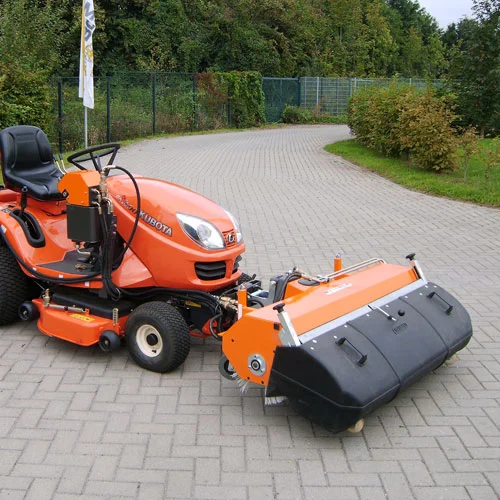
Ride-on mowers
Keep existing mower carriers working through sweeping, weed control, leaf and winter applications.
Browse mower attachments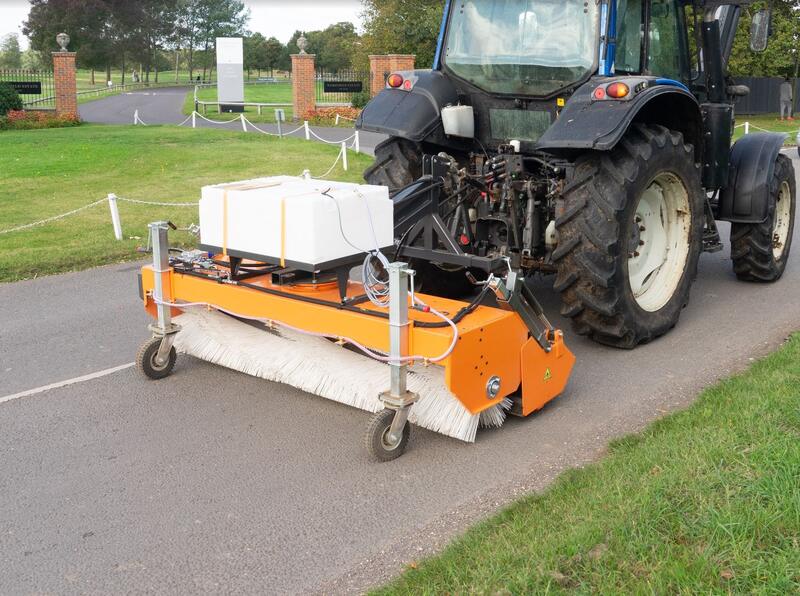
Agricultural tractors
Heavy-duty front and rear options for wider machines, larger sites and demanding material.
Browse agricultural tractor attachments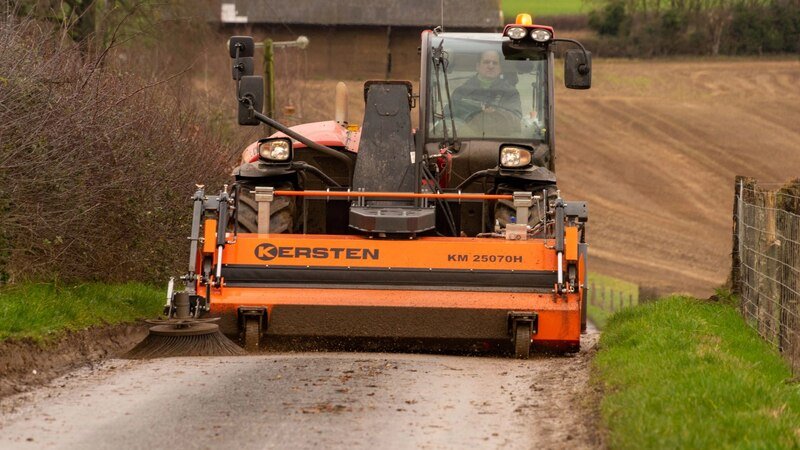
Telehandlers and loaders
Robust sweeper and attachment routes using suitable couplers, hydraulic services and floating geometry.
Browse telehandler attachments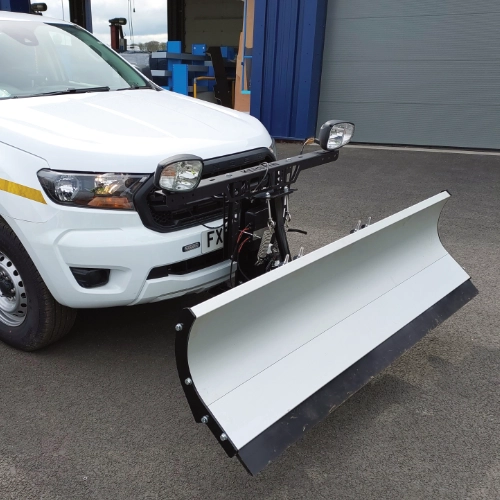
Utility and highway vehicles
Ploughs, spreaders and other seasonal attachments for UTVs, pickups, 4x4s and suitable highway vehicles.
Browse highway vehicle attachments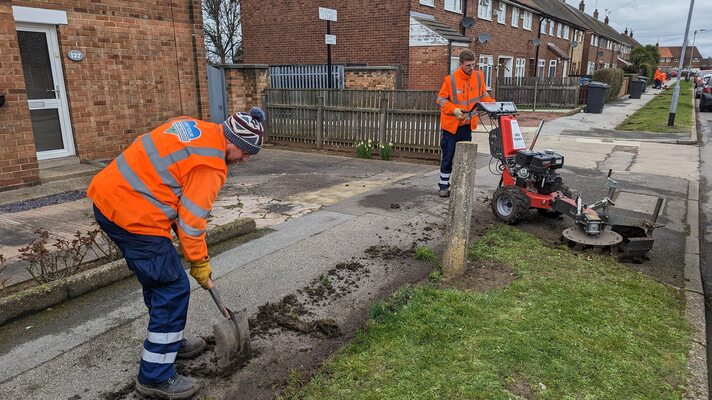
Pedestrian power units
Dedicated Kersten power units and multi-attachment systems for paths, estates and restricted access.
Browse pedestrian machinesAssisted compatibility check
Not listed, modified or unsure what is fitted?
Give Kersten the information available. The form will build a structured enquiry so the fitment can be reviewed without starting from a blank contact message.
From fitment to working machine
Confirm the setup, then prove it on the real job
A correct mounting and drive system is the first step. A demonstration or short hire then lets you check access, productivity, finish, operator controls and the attachment options needed for the actual site.
Confirm fitment
Check the exact carrier variant, mounting components, drive requirements and attachment specification.
Request confirmationDemonstrate on site
Test the machine on the intended surface with the people, material and access restrictions that matter.
Book a demonstrationHire before purchase
Use a short hire when a longer working trial is more useful than a single demonstration visit.
View machinery hireCompatibility questions
Before you order an attachment
Does the fitment finder provide final order confirmation?
The finder identifies the established fitment route recorded for the selected carrier and application. Kersten should still confirm the exact model variant, existing linkage, PTO or hydraulic specification, vehicle capacity, controls and optional equipment before an order is placed.
What should I do when my exact model is not listed?
Use the assisted compatibility form with the make, model, year, mounting system, PTO or hydraulic details and the intended application. Kersten can then identify whether an existing fitment applies or whether further measurements and photographs are needed.
Can Kersten add a front linkage or hydraulic power system?
Some attachment routes use dedicated front linkages, PTO kits, hydraulic power packs or carrier-specific brackets. The available option depends on the machine and model, so include the existing equipment in the fitment request.
Why does mounting position change the recommended attachment?
Front and rear mounting can change visibility, manoeuvrability, drive direction, weight distribution, collector options and the bracket or linkage required. The finder separates these routes where the current fitment data supports both positions.
What information is most useful for a telehandler, loader or forklift?
Provide the exact carrier model, coupler or fork dimensions, hydraulic flow and pressure, attachment lift capacity, intended material, surface and working width. Photographs of the carriage and hydraulic connections are often useful after the initial enquiry.
Can I arrange a demonstration after the fitment is confirmed?
Yes. A demonstration request can include the confirmed carrier, attachment, site surface, material, access constraints and the result you want to assess. Demonstration availability and suitability are confirmed for each request.
Turn an existing carrier into a more useful working machine
Start with the fitment finder, or send Kersten the carrier details for an assisted compatibility check and practical next step.