Professional non-chemical weed control
Thermal Weed Management
Compare hot air, hot water and electric systems according to weed maturity, root structure, surface construction, access, utilities, carrier availability and the output required.
Choose the heat-transfer method
Three ways to create damaging heat in the plant
All three methods rely on heat damage, but the heat reaches the plant differently: externally through hot air or hot water, or internally when electrical current passes through plant tissue. The practical choice depends on root depth, surface, access, safety controls and route logistics.
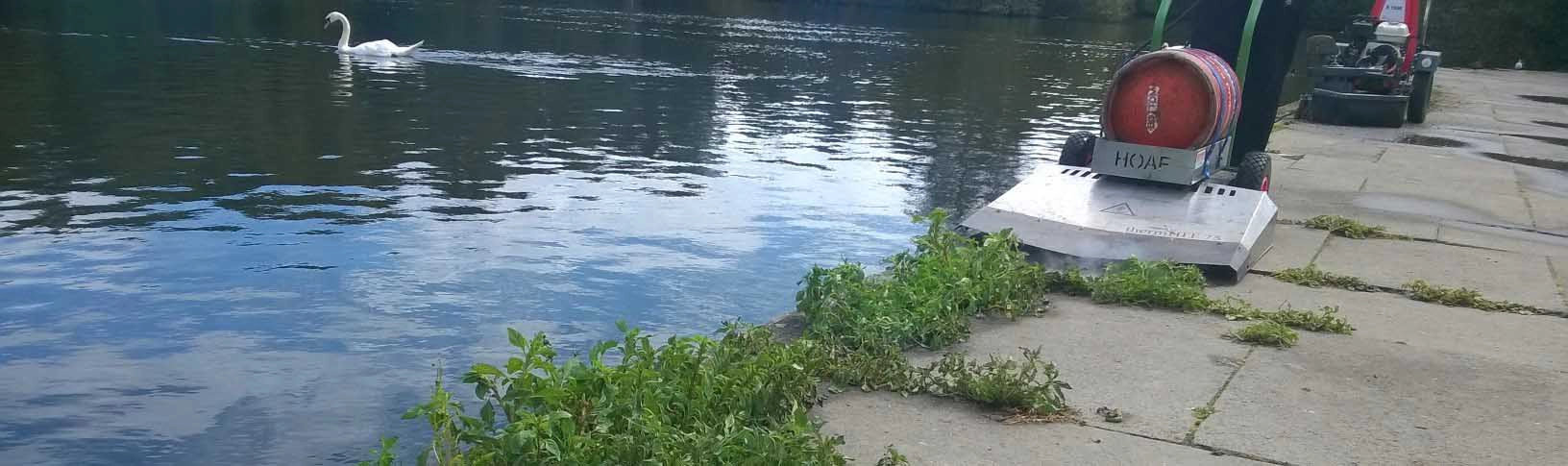
Directed hot air
A fast, water-free route for young annual weeds, moss, path edges, street furniture, bunkers and other targeted work.
- Portable lance, wheeled hood and vehicle-mounted formats.
- Propane supplies the heat; Ripagreen mixes approximately 94% ambient air with 6% gas.
- Most effective when growth is young and detritus has already been removed.
- Less heat penetration below the surface than hot water.
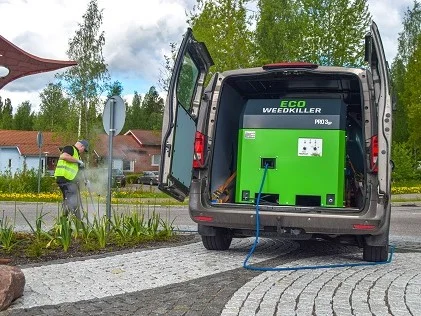
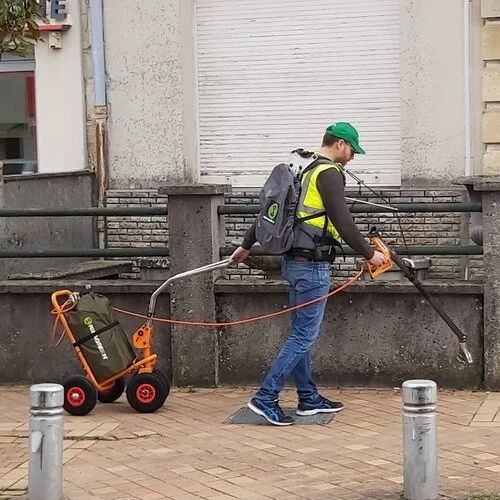
Hot water
A contact treatment that transfers heat into plant tissue and the upper soil profile, with stored-energy and on-demand systems for different work patterns.
- 25, 150, 300 and 600 litre stored-water systems are available.
- Pro SP models are nearly silent during treatment because the water is heated before use.
- On-demand Pro systems support continuous refilling and higher daily output.
- Typical planning allowance is 2–2.5 litres per square metre at full vegetation cover.
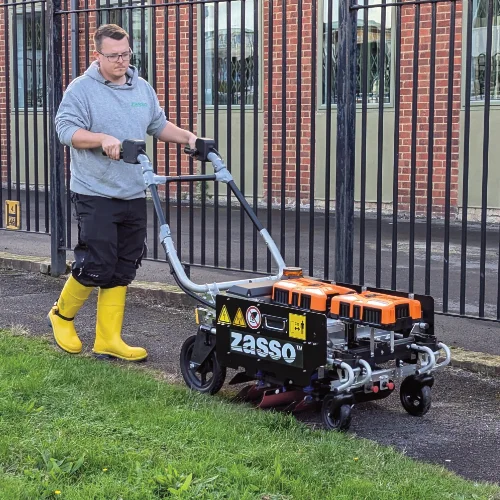
Electro-thermal treatment
Electrical current passes through the plant and creates resistive heat inside the tissue, damaging the vascular structure from within rather than heating only the exposed surface.
- Walk-behind surface-contact, handheld lance and tractor-mounted formats.
- Useful where heat needs to act through the plant structure and toward the root zone.
- No flame, hot-air plume or water tank at the treatment point.
- Requires trained operators, controlled exclusion zones and electrical safety procedures.
Hot-air ranges
Portable lances, pedestrian hoods and vehicle systems
Select the range around access, working width, gas-cylinder logistics and whether the operator works independently or from a support vehicle.
 660.jpg) Handheld hot air
Handheld hot airRipagreen Mobility range
Backpack-supported thermal lance systems for steps, narrow paths, beds, graves, street corners and uneven ground.
- Mobility Kit
- Combo lance with removable extension
Pedestrian hot airRipagreen Easy and Easy+ range
Trolley-based lance systems for longer pedestrian routes, with Easy+ adding a backpack option for mixed-access sites.
- Easy Kit
- Easy+ trolley and backpack kit
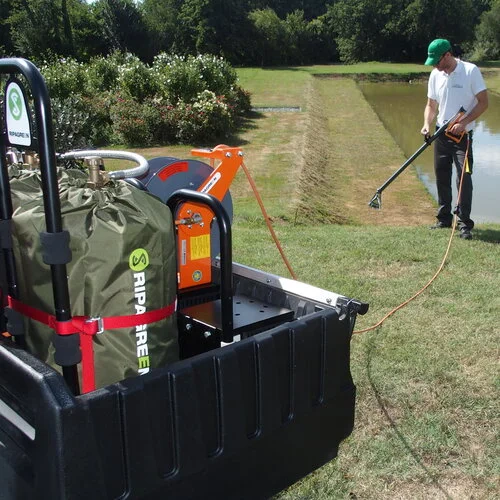 Vehicle-supported hot air
Ripagreen Autonomy range
Vehicle frames, automatic hose reels and lightweight lances for larger routes without sacrificing targeted application.
- Autonomy
- Autonomy+
- Autonomy Duo
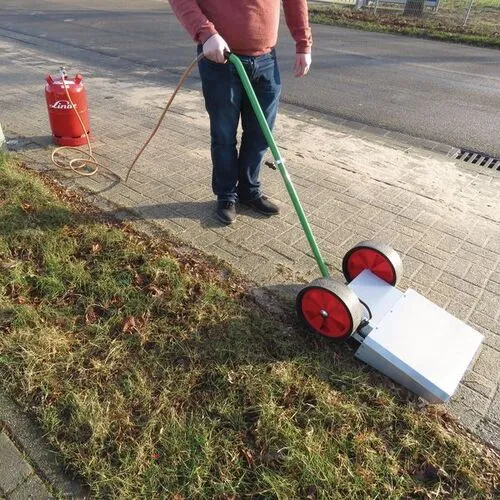 Handheld infrared + hot air
HOAF ThermHit range
Shielded handheld and wheeled burners using infrared radiation with hot air for controlled treatment close to obstacles.
- ThermHit 15, 25 and 45
- ThermHit 75
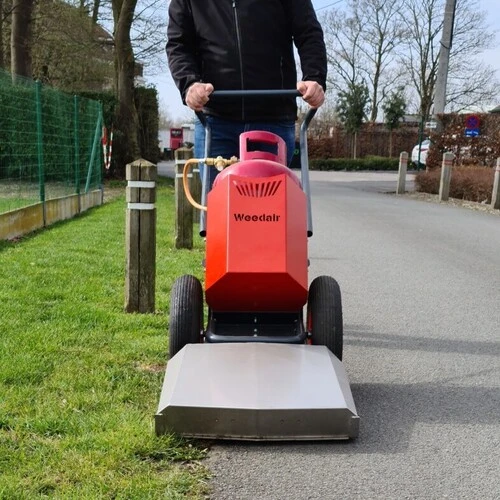 Pedestrian hooded hot air
HOAF WeedAir pedestrian range
Wheeled hooded systems for paths, car parks and public spaces where a contained treatment zone and consistent working width are useful.
- WeedAir 50iB
- WeedAir 75iB and 75iBE
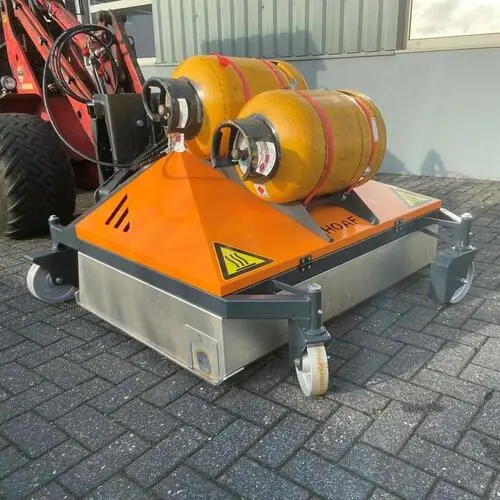 Mounted hot air
HOAF mounted WeedAir and TWB range
Carrier-mounted hooded systems for highways, estates and large hard-surface routes, with access under benches and close to edges.
- TWB 75, 100 and 125
- WeedAir 100 and 125
- WeedAir 1002 IB
Hot-water ranges
Stored-energy and on-demand water systems
Select the family around tank capacity, available charging supply, route length, refill strategy, operator count and whether pressure washing is also required.
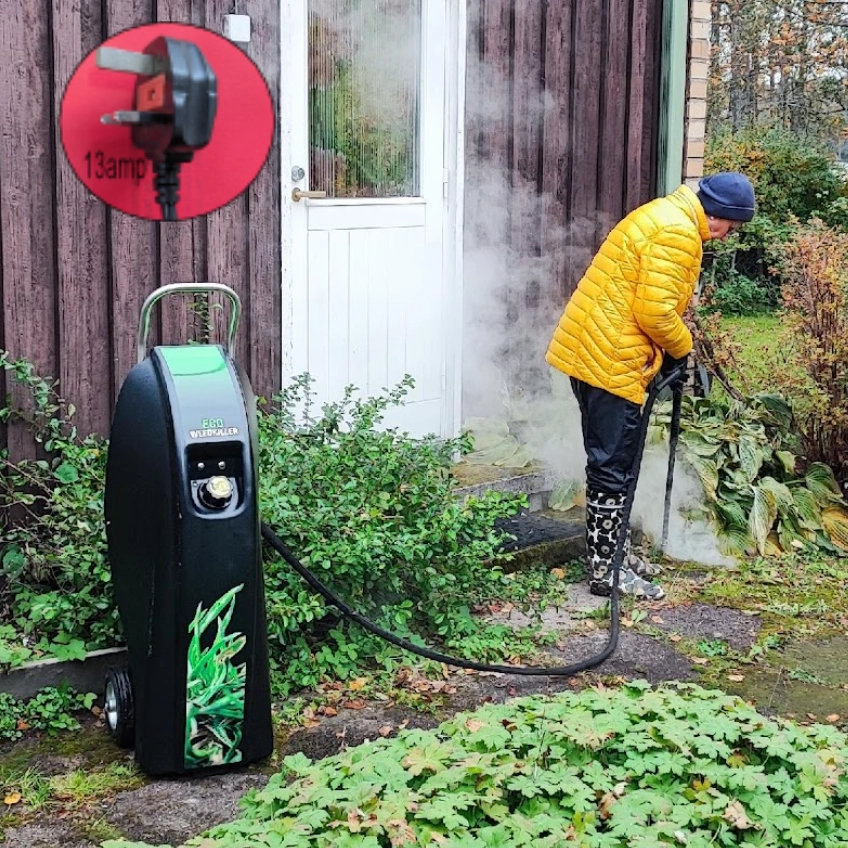 Compact stored hot water
Eco Weedkiller Garden range
Compact wheeled water-battery machines for gardens, small landscapes, courtyards and localised treatments.
- Garden 2 kW: UK 13 A supply
- Garden 3 kW: 16 A industrial supply
Professional stored hot waterEco Weedkiller Pro SP range
Pre-heated water-battery systems for quiet treatment routes, stop-start work and sites where combustion at the treatment point is undesirable.
- Pro SP Mini: 60–75 m²
- Pro SP 3: 100–150 m²
- Pro SP 6: 240–300 m²
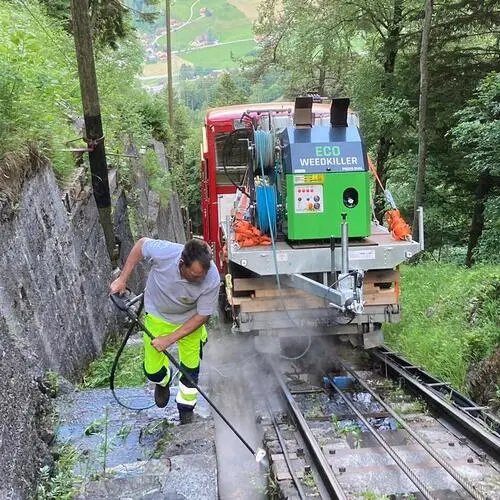 On-demand hot water
Eco Weedkiller Pro range
High-output systems that heat water continuously for long routes, rapid refilling and combined weed control, pressure washing and cleaning work.
- Pro 10
- Pro 20 Dual
- Pro 30H hydraulic vehicle system
Electro-thermal ranges
Surface-contact, lance and tractor-mounted electrical systems
Select the range around treatment width, root depth, access, carrier capacity, generator output and the level of reach required. Electrical current is the delivery mechanism; heat generated inside the plant is the mode of action.
Walk-behind electro-thermalZasso Zap Weeder range
Surface-contact walk-behind systems for weeds in paving joints, paths, kerbs and other hard-surface routes where a consistent treatment width is required.
- Close electrode spacing for shallow-rooted hard-surface growth
- Pedestrian format for paths and public-realm routes
.webp) Targeted electro-thermal
Targeted electro-thermalKersten Electric Lance range
Hand-directed treatment for isolated plants, beds, fence lines, awkward corners and species that need precise contact rather than a full-width electrode array.
- Targeted plant-to-root current path
- Suitable for selective work around obstacles
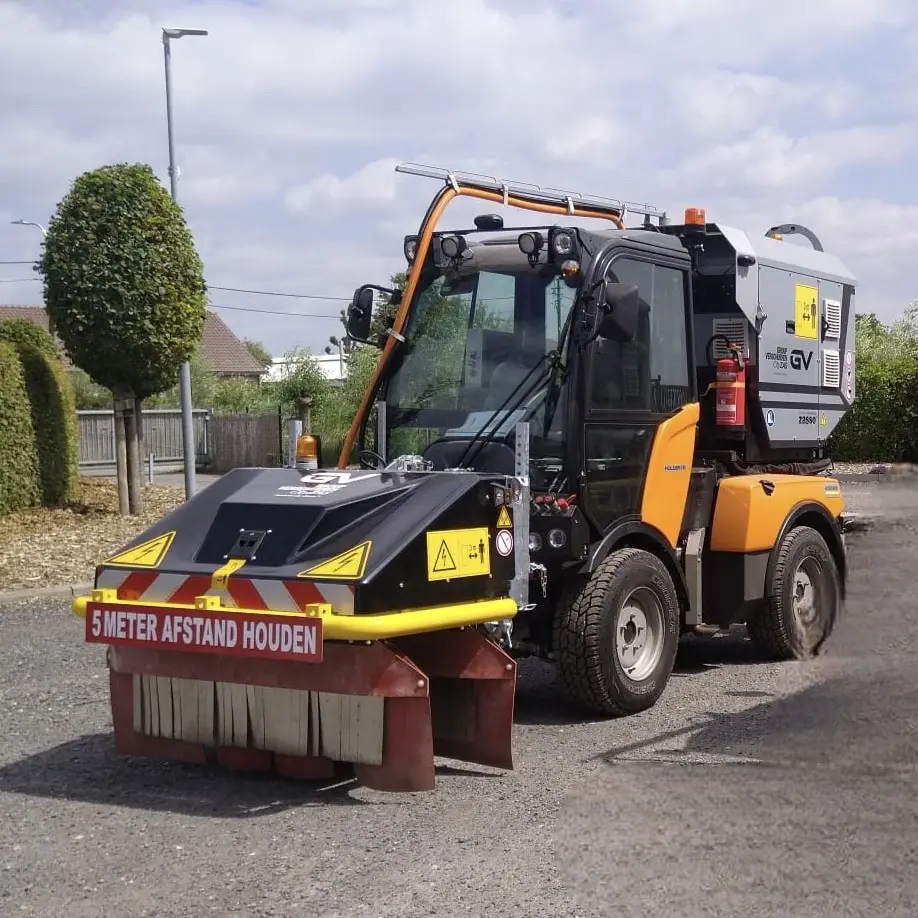 Compact tractor electro-thermal
Zasso CityZas range
Compact tractor-mounted systems for repeatable full-width treatment on paths, verges and municipal routes where a smaller carrier and straightforward forward working pattern are preferred.
- Compact route-treatment platform
- Front treatment module with generator package
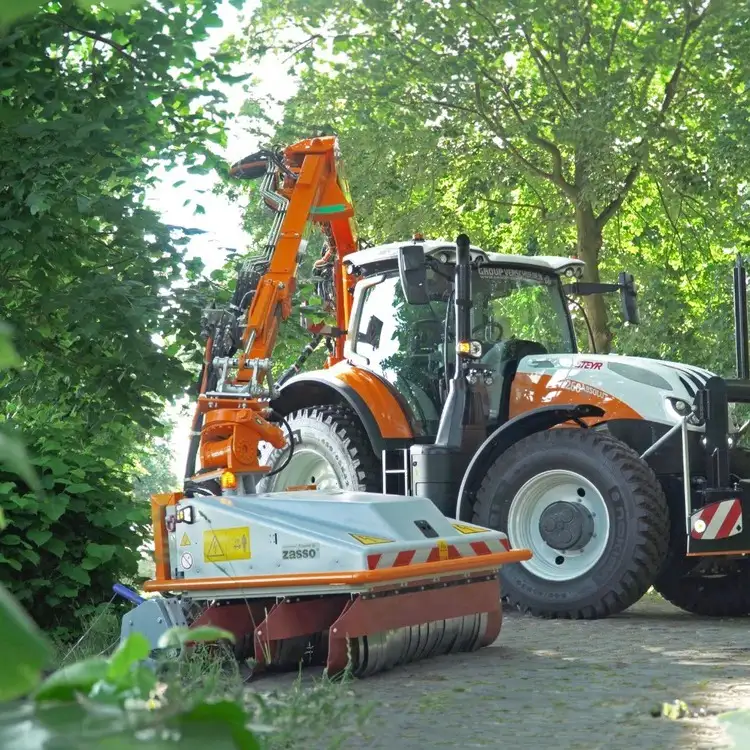 Reach-arm electro-thermal
Zasso Urban XPA range
High-capacity tractor systems with hydraulic reach for verges, barriers, banks, roadside furniture and areas that cannot be treated directly in front of the carrier.
- Hydraulic arm for offset and variable-height work
- Professional high-output route system
Technical planning factors
Thermal output depends on preparation and timing
The machine is only one part of the programme. These operating factors have a direct effect on treatment speed, repeat visits and consumable use.
Soil, leaf litter and organic debris support new germination and can shield plant tissue. Sweeping or mechanical removal improves visibility and reduces fire risk before hot-air work.
Young, fleshy plants have less stored energy and normally require less heat than mature woody growth. Plan repeat visits around emergence rather than waiting for full establishment.
The target is rapid heat transfer into plant tissue, not burning the leaf black. Excess dwell time reduces output and can increase surface or fire risk.
For hot water, estimate the actively vegetated square metres rather than the total route area. Full-cover treatment typically requires about 2–2.5 litres per square metre.
Stored hot water suits stop-start and noise-sensitive work. On-demand systems suit long shifts and refilling. Hot air avoids water transport, while electric systems require generator capacity, electrical controls and trained operators.
Assess dry combustible material, LPG handling, scalding, electrical exclusion distances, buried or overhead services, public access, thin plastics and reflected heat. Use trained operators and the controls required by the site assessment.
Integrated Weed Management
Thermal treatment works best after the growth medium is addressed
Use sweeping, edging or renovation to remove accumulated soil and detritus, then use thermal systems on the smaller annual weeds and moss that re-emerge. This changes the workload from repeated clearance of established growth to planned treatment of early growth.
Range and support links
Move from method selection to a working specification
Frequently asked questions
Thermal treatment in practice
Does the weed need to turn brown or char during treatment?
No. The objective is to transfer enough heat to damage the plant cells and stop photosynthesis. Visible charring usually indicates unnecessary dwell time.
Which thermal method has more effect below the surface?
Hot water conducts heat into the upper soil profile, while electrical current can generate heat through the plant structure and toward the root zone. Hot air is strongest on exposed young annual growth and moss, especially after soil and detritus have been removed.
Why is electric weeding included as thermal weed management?
The electrical current is the delivery mechanism, but its practical mode of action is heat generated inside the plant. That internal heating damages chlorophyll, vascular tissue and plant structure without applying an external flame or water jet.
Can thermal systems be used in wet or windy weather?
They are not affected by spray drift in the same way as herbicides and can remain useful in wet weather. Operators must still control the hot-air plume or water jet safely and stop work when site conditions make that impractical.
How should I choose between stored and on-demand hot water?
Stored-energy Pro SP systems suit quiet, stop-start routes and can retain working temperature for many hours. On-demand Pro systems suit longer shifts, continuous refilling, multiple operators and combined cleaning tasks.
How much hot water should be allowed for treatment?
A practical planning allowance is around 2–2.5 litres per square metre where vegetation covers the complete surface. Actual use varies with plant size, density, weather and operator technique.
Is thermal treatment a one-pass permanent solution?
No weed-control method removes the need for monitoring. Thermal treatment is most efficient when used early and repeated as required within an integrated programme that also reduces the soil and detritus available for new weeds.
Specify the route before the machine
Bring the surface, weed mix and logistics to a demonstration
Kersten can compare hot air, hot water and electro-thermal treatment on a representative area and help define tank capacity, gas or electrical supply, voltage, working width, hose or arm reach, carrier and treatment frequency.