Infrared weed control from footpath to tractor route
A scalable range of push-operated, powered pedestrian and vehicle-mounted thermal weeders for organisations reducing routine herbicide use across paths, public spaces and larger maintenance routes.
Why organisations choose HOAF
One thermal method, three practical ways to deploy it.
The best starting point depends on access, daily route length, available carrier equipment and how much operator effort the programme can support.
Targeted thermal treatment
Infrared radiation and hot air are directed at unwanted vegetation without applying a chemical spray.
Works across site types
Choose a format for narrow paths, formal grounds, public spaces, estates or larger municipal routes.
Start small and scale
An unpowered pedestrian machine offers a lower-investment route into thermal weed management.
Use existing carriers
Powered and mounted systems can integrate weed control into established Kersten or tractor-based maintenance fleets.
Fifteen current product destinations
Choose the operating format, then the exact HOAF product.
Use the selector as a starting point, then confirm working width, carrier compatibility, fuel arrangements and site conditions in a measured demonstration.
 Push-operated
Pedestrian standalone weeders
For narrow access and flexible pedestrian routes
Choose handheld, push or self-propelled formats from 15 to 75 cm working width. These machines carry their own LPG supply and do not require a separate power unit.
- Seven handheld and walk-behind choices
- Working widths from 15 to 75 cm
- Manual and electrically driven options
Standalone pedestrian products
Start with access and route width, then decide whether manual push operation or electric wheel drive is appropriate.
Handheld precision
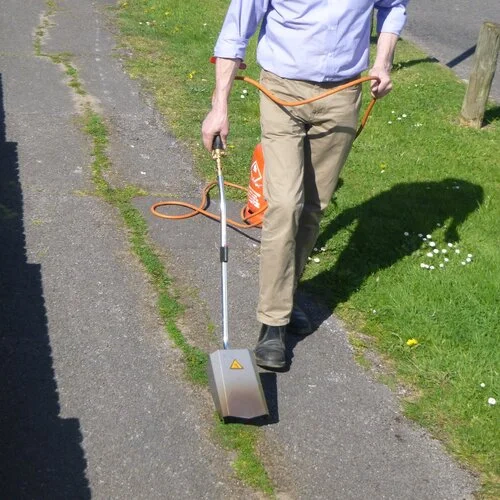
HOAF ThermHit 15
A compact thermal lance for edges, beds, street furniture and other areas where a wider hood cannot reach.
 Roller-supported handheld
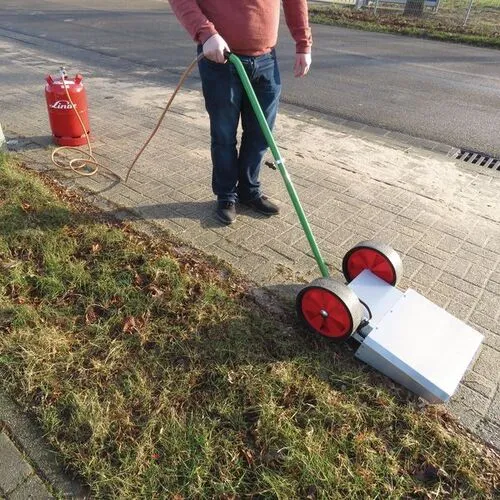
HOAF ThermHit 25
A 25 cm treatment head with support rollers for controlled work beneath benches, along corners and around planted areas.
 Compact walk-behind
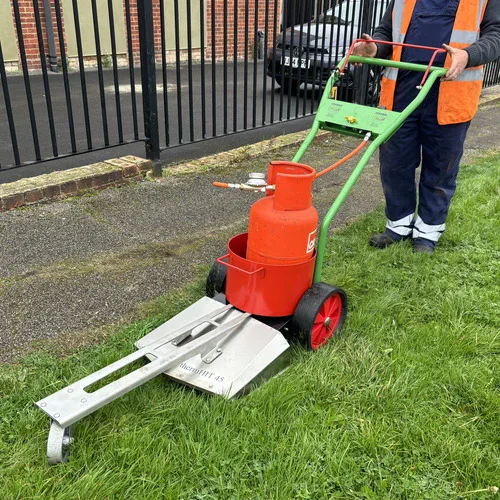
HOAF ThermHit 45
A narrower walk-behind machine for paths and open areas where 45 cm offers a useful balance of access and output.
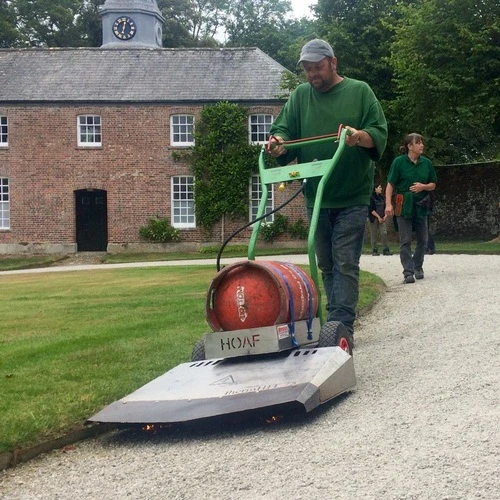 Broad pedestrian coverage
HOAF ThermHit 75
A 75 cm push machine for wider paths and larger open areas using a stainless-steel protected treatment hood.
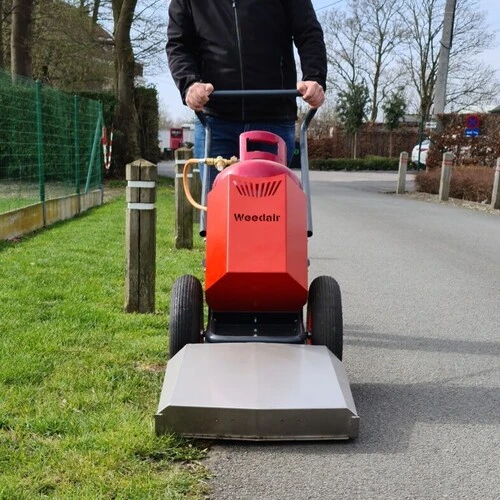 Temperature-monitored
HOAF WeedAir 50iB
A manoeuvrable 50 cm WeedAir machine with battery ignition, temperature display and adjustable handlebars.
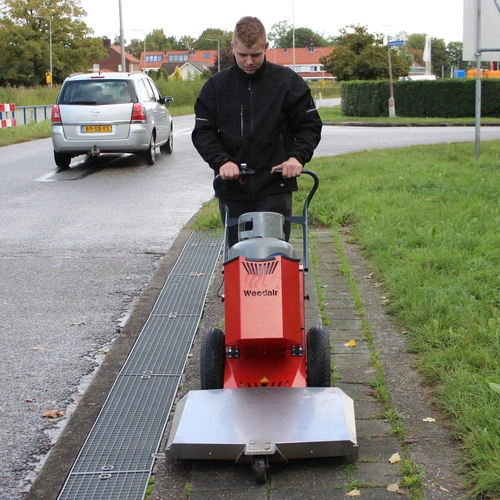 High-output walk-behind
HOAF WeedAir 75iB
A 75 cm WeedAir model for repeat treatment of larger pedestrian routes and open hard-surface areas.
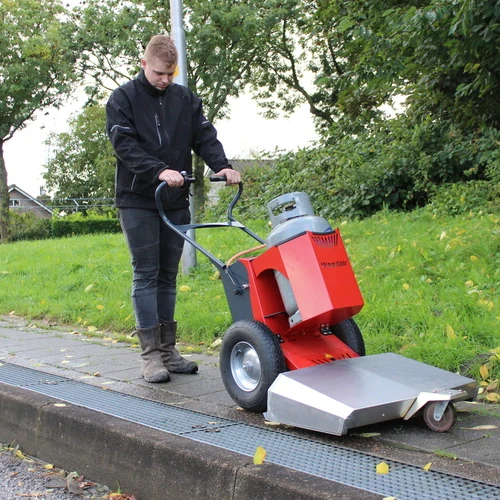 Electric wheel drive
HOAF WeedAir 75iBE
A self-propelled 75 cm machine for operators covering longer pedestrian routes or working on demanding gradients.
 Powered pedestrian
Powered Kersten attachments
For repeat routes using an existing pedestrian power unit
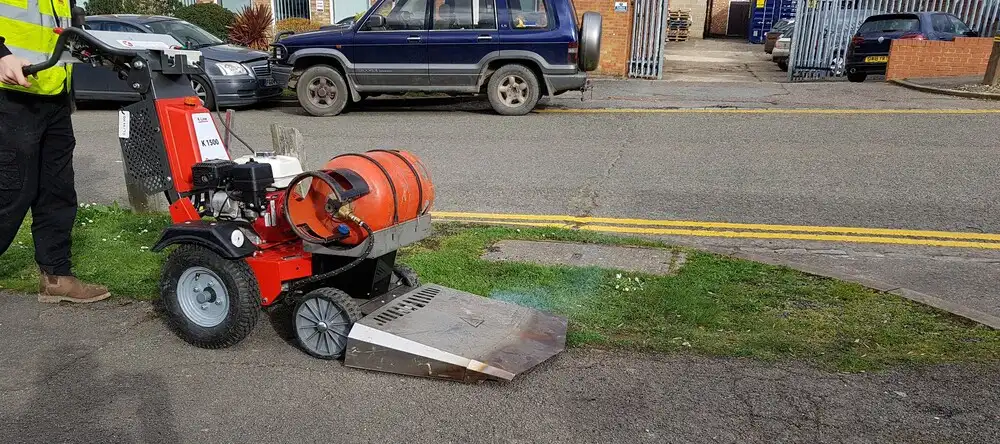
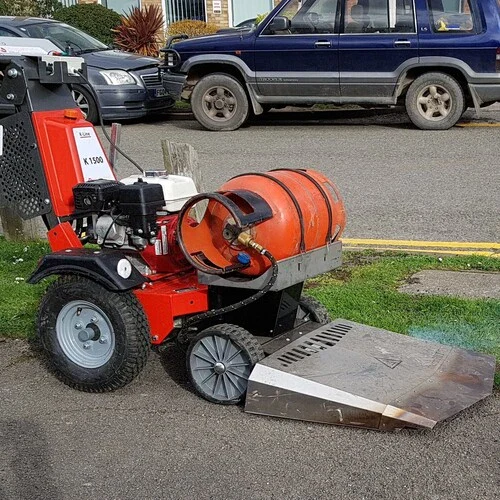
Match the burner to the exact Kersten carrier. The K-series options use a 75 cm hood, while the UBS configuration increases working width to one metre.
- Specific K 820 Pro, K 1500 and K 2100 versions
- One-metre UBS-series option
- Carrier compatibility must be confirmed before ordering
Powered Kersten attachment products
Select the product route that matches the power unit already in the fleet; the mounting interface is not universal.
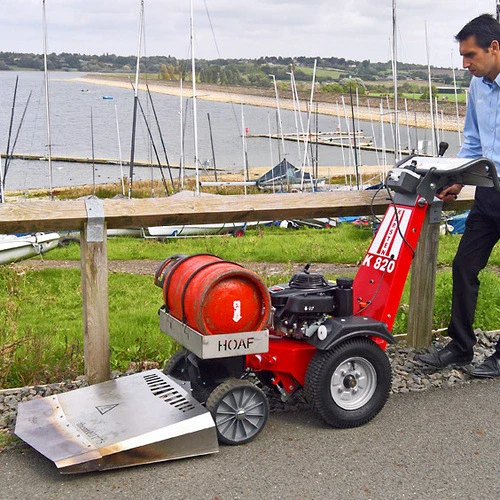 K 820 Pro attachment
TWB 75 K — K 820 Pro
A 75 cm thermal attachment configured for Kersten K 820 Pro and K 820 Pro E pedestrian power units.
K 1500 attachment
TWB 75 K — K 1500
The same professional 75 cm burner architecture paired with the Kersten K 1500 hydraulic power unit.
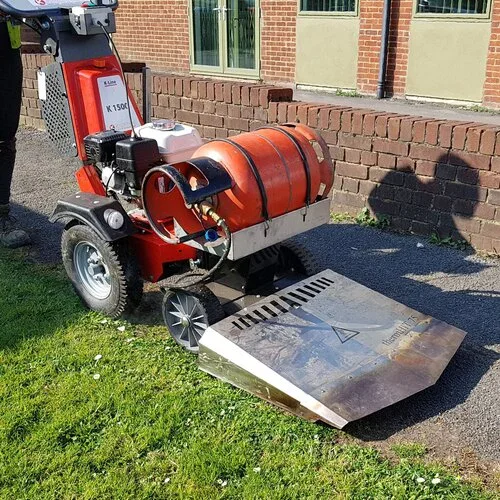 K 2100 attachment
TWB 75 K — K 2100
A 75 cm powered attachment for the larger Kersten K 2100 platform and regular professional thermal routes.
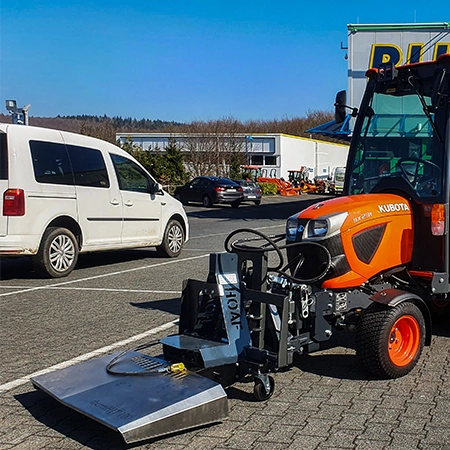 UBS-series attachment
TWB 100 K — UBS
A one-metre burner for compatible Kersten UBS machines where route width and forward speed justify greater output.
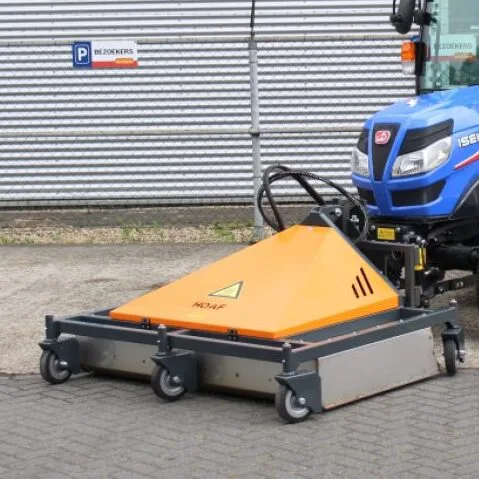 Ride-on and tractor mounted
Mounted weeders
For longer public-realm and estate routes
Move from compact ride-on mower integration to forced-hot-air tractor systems with side treatment for kerbs, walls and obstacles.
- FKDR ride-on mower option
- 100 and 120 cm tractor-mounted WeedAir machines
- Specialist multi-burner option for edge treatment
Ride-on and tractor-mounted products
Carrier linkage, payload, LPG storage, electrical supply and front geometry all need confirming before specification.
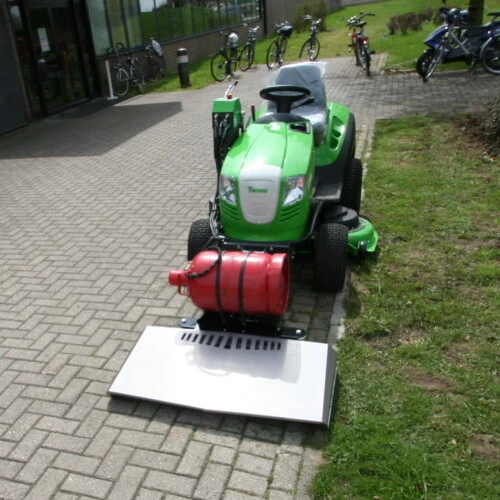 Ride-on mower attachment
TWB 75 — FKDR
A 75 cm front-mounted burner for ride-on mowers equipped with the Kersten FKDR hydraulic linkage system.
100 cm forced hot air
HOAF WeedAir 100M
A front-mounted one-metre system with an integrated side burner for larger tractor and carrier routes.
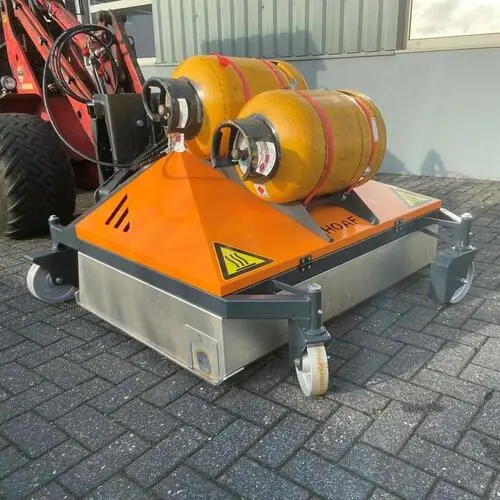 120 cm route machine
HOAF WeedAir 120M
The wider forced-hot-air option for high-output estate, infrastructure and public-realm treatment programmes.
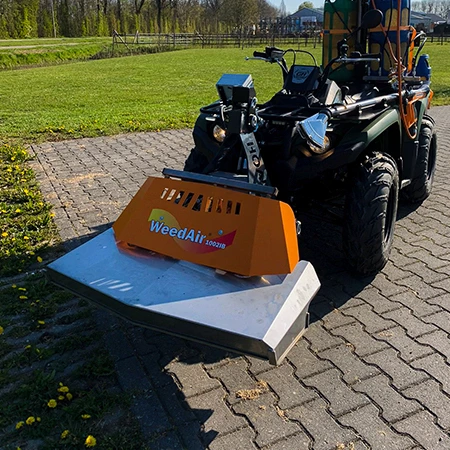 Independent side burners
HOAF WeedAir 1002 IB
A Cat I mounted machine with three main burners and two independently controlled side burners for edges and obstacles.
How the Infra Plus process works
Heat the plant tissue—do not try to burn it away.
The HOAF system combines infrared radiation with hot air. The objective is to transfer enough thermal energy to disrupt the plant’s cells, after which the vegetation wilts and dies back.
Prepare the route
Remove heavy litter, dry combustible material and excessive detritus so the treatment can reach the target safely and consistently.
Apply controlled heat
Pass the treatment head over the vegetation long enough to heat the tissue; visible charring is not the operating objective.
Plan repeat visits
Return according to species, growth stage and regrowth, combining thermal treatment with prevention and surface cleaning.
Where HOAF fits best
Match the carrier to the route, not simply the total site area.
Access, surface layout, public occupancy and daily travel between treatment zones often determine the right machine more accurately than acreage alone.
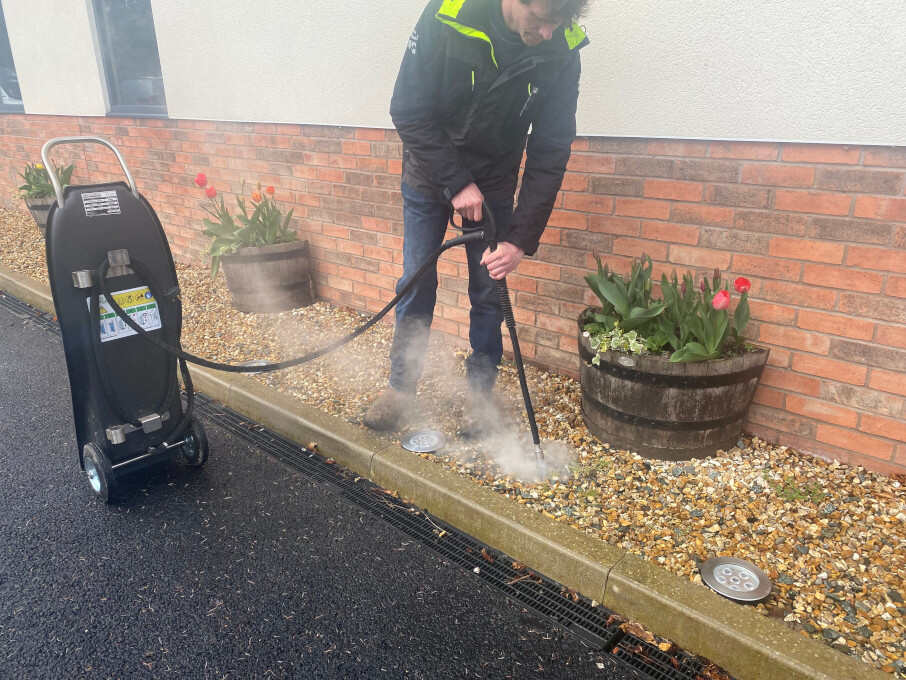 Education
Schools and campuses
Paths, entrances, courtyards and boundary routes with planned access controls.
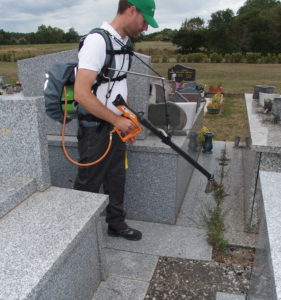 Heritage
Historic and sensitive sites
Targeted work around paving, gravel, cobbles, cemeteries and formal grounds.
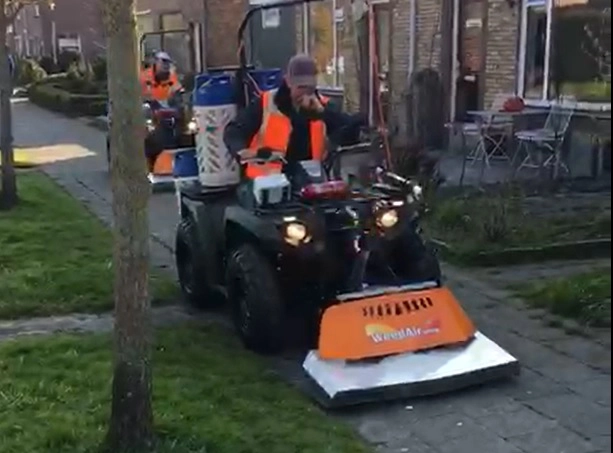 Estates
Estates and visitor destinations
Move between pedestrian areas and longer routes using the appropriate carrier format.
Public realmCouncils and contractors
Build thermal treatment into a documented, route-based Integrated Weed Management plan.
Responsible thermal operation
High heat requires disciplined site preparation.
HOAF equipment should be used by trained operators working to the current manual and a task-specific assessment covering people, surfaces, fuel, weather and combustible material.
- Remove or control dry litter, leaves and other combustible material before treatment.
- Maintain an exclusion zone around visitors, pupils, residents, vehicles and vulnerable planting.
- Inspect the machine, fuel system and safety devices before each working period.
- Test unfamiliar or heat-sensitive surfaces before treating a wider area.
- Stop when wind, drought, access or surrounding material makes controlled thermal work unsuitable.
Other weed-management methods
Use HOAF as one tool within a wider programme.
Thermal treatment is strongest when it is supported by prevention, sweeping, mechanical removal and a clear plan for different surfaces and weed types.
Ripagreen
Portable and vehicle-supported pulsed hot-air systems for precise spot treatment.
Compare Ripagreen kits → Hot waterEco Weedkiller
Water-based thermal treatment for sensitive sites, joints and multifunction cleaning work.
Explore hot-water systems → MechanicalWeed brushes and removal
Physically remove growth and accumulated growing medium from robust hard surfaces.
Explore mechanical methods → Range guideAll thermal methods
Compare infrared, hot air and hot water around access, route length and surface needs.
View thermal weed management → PreventionReduce the growing medium
Limit the detritus, silt and surface conditions that allow repeated establishment.
Read the prevention guide → Programme planningIntegrated Weed Management
Place each treatment method inside a preventative-first, documented site strategy.
Open the council IWM guide →Practical reading
Plan output, carrier choice and treatment timing.
Energy consumption of thermal weeders
Understand the role of treatment method, working pace and route conditions.
Read the article → Carrier integrationUsing thermal weed control on a quad bike
See how vehicle-supported treatment can replace parts of a spray-based route.
Read the application article → Treatment practiceGet the best from thermal weed management
Improve results through timing, route preparation and repeat-treatment planning.
Read the practical guide →Frequently asked questions
What buyers usually need to decide first.
How does the HOAF Infra Plus system affect weeds?+
The system combines infrared radiation with hot air. Heating the vegetation to around 80°C disrupts proteins and moisture cells, causing the plant to wilt and die back.
Which HOAF range should I start with?+
Start with a push-operated machine for narrow access and shorter routes, a powered Kersten attachment for regular pedestrian work, or a tractor and vehicle-mounted system for longer and wider programmes.
Does the weed need to be visibly burned?+
No. The operating objective is controlled heat transfer into the plant tissue, not charring or burning the vegetation away.
Will one treatment permanently remove every weed?+
No thermal method should be selected on that assumption. Results vary by species, growth stage, stored root reserves, route preparation and repeat-treatment timing.
Can HOAF be used around the public?+
Work must be planned around site occupancy, with trained operators, suitable exclusion controls and a risk assessment for heat, fuel, surfaces, weather and combustible material.
Why arrange a demonstration before choosing a machine?+
A measured demonstration reveals real access constraints, treatment pace, carrier suitability and the difference between theoretical site area and the route an operator must actually complete.
Choose the HOAF format around your real route.
Share the surfaces, access points, daily route, current method and available carrier equipment. Kersten can then recommend the most useful machine to demonstrate on site.