UK Pesticides National Action Plan 2025 A practical council implementation guide
Move from reactive treatment schedules towards a documented Integrated Weed Management programme that combines prevention, appropriate non-chemical methods and justified targeted pesticide use.
- Separate policy from legal duty
- Prioritise preventative management
- Classify surface condition consistently
- Build an auditable improvement plan
Understand the direction
The NAP promotes Integrated Pest Management, lower dependency and reduced risks and impacts from pesticides.
Connect cleansing and weeds
In England, the 2026 litter and refuse code confirms that keeping certain roads clean includes detritus removal.
Classify before treating
Detritus depth, anchorage and surface condition help distinguish routine maintenance from emerging asset failure.
Record improvement
Track condition, interventions, pesticide use and outcomes so decisions can be explained and reviewed.
What the national plan sets out
A direction of travel, not an overnight pesticide ban
The UK Pesticides National Action Plan 2025 is a UK-wide policy framework. It promotes Integrated Pest Management and alternative approaches while recognising that targeted pesticide use may remain justified where alternatives are ineffective or unavailable.
Encourage uptake of IPM
Use a holistic approach that considers prevention, physical methods, biological processes and precision treatment before defaulting to routine pesticide use.
Reduce risks and impacts
The NAP includes national targets and monitoring designed to reduce the potential pressure pesticides place on human health and the environment.
Strengthen safe practice
Training, equipment checks, appropriate storage, professional competence and targeted use remain central to lawful and responsible pesticide management.
Important compliance distinction
NAP 2025 does not itself create a universal annual Defra reporting return for every council, nor does it impose a blanket prohibition on amenity pesticide use. Councils should confirm the legal, contractual, registration and record-keeping requirements that apply to their activities and jurisdiction.
The cleansing connection
In England, highway cleanliness and detritus management belong in the same conversation
Section 89 of the Environmental Protection Act 1990 and the Code of Practice on Litter and Refuse provide a separate legal context from the NAP. Together, they show why street cleansing, surface condition and weed-management planning should not be treated as isolated service areas.
Keep legal duty and strategic benefit clearly separated
The 2026 Code of Practice applies to England. It states that certain duty bodies must, so far as practicable, keep relevant land clear of litter and refuse and keep certain roads clean. For the highway-cleanliness duty, this includes removing detritus.
Mechanical detritus management may therefore support both highway-cleanliness outcomes and an Integrated Weed Management strategy.
That does not mean every weed automatically proves a breach, or that one intervention guarantees compliance. Land type, practicability, responsibility and the current statutory code all need to be considered.
Cleanliness grades as an operational lens
Simplified interpretation for planning discussions. Always refer to the current statutory code for the full standard.
Kersten research framework
Pavement Ecological Succession turns surface condition into an intervention decision
The Bracknell baseline study recorded 502 species-depth pairs across six sites. Kersten's proposed framework combines detritus depth, root anchorage and surface condition to identify when mechanical extraction may still be viable.
Prevention
Up to 10mmEarly accumulation with no confirmed structural anchorage.
- Root condition
- Surface-level growth with limited anchorage.
- Operational focus
- Routine sweeping, cleansing and preventative reset.
Window Open
11 to 25mmRoots remain within the detritus matrix and the complete mass may still be extractable.
- Kick Test
- The complete mass moves or lifts as one unit.
- Operational focus
- Prioritised mechanical extraction and follow-up prevention.
Window Closed
11 to 25mmRoots have anchored into joints, cracks or defects even though measured depth may match Stage 2.
- Kick Test
- Growth breaks at substrate level and leaves roots behind.
- Operational focus
- Defect management, suppression and repair planning.
Structural Failure
More than 25mmWoody or lignified roots are associated with advanced accumulation and possible sub-base involvement.
- Kick Test
- The plant snaps above the surface and the root remains.
- Operational focus
- Engineering inspection, capital repair and recurrence prevention.
Research framework, not a statutory classification
The four-stage model, Kick Test and indicative cost ranges are Kersten research and planning tools. They are not legal standards, engineering specifications or replacements for competent inspection and local asset-management procedures.
Quick field screening
Use depth and root behaviour together
This educational tool demonstrates why two sites with the same measured depth may require very different responses.
The key distinction is anchorage
Above-ground weed height is a poor proxy for what is happening within the surface. Record the accumulation depth, then observe how the root and detritus mass behaves.
- Measure at several representative points.
- Record whether the surface is intact or already damaged.
- Apply only controlled pressure and follow site safety procedures.
- Escalate suspected structural defects for competent inspection.
Indicative surface diagnostic
Select the measured depth and observed root response.
Educational guidance only. Do not use this tool as a substitute for a site-specific risk assessment, engineering inspection or legal advice.
The implementation hierarchy
Prevention first, suppression second, targeted pesticide use where justified
Integrated Weed Management is not the replacement of one treatment product with another. It is a documented hierarchy that starts by reducing the conditions that allow unwanted vegetation to establish.
Prevention and extraction
Manage detritus, edges, joints and drainage before a stable growth medium develops.
- Mechanical sweeping and collection
- Weed brushing on suitable surfaces
- Planned cleansing cycles
- Stage 2 extraction before anchorage
Non-chemical suppression
Select thermal, electric or other physical methods around the surface, access, scale and treatment objective.
- Hot-water treatment
- Hot-air and targeted thermal systems
- Electric treatment
- Combination with mechanical reset
Targeted pesticide use
Where pesticide use remains necessary, justify the decision, use the least-risk suitable approach and keep appropriate records.
- Targeted rather than routine broadcast use
- Invasive-species plans where required
- Competent operators and lawful products
- Treatment records and review
A 12-month implementation roadmap
Turn policy ambition into an operational programme
A phased approach allows councils to establish a baseline, test methods, train staff and build credible evidence before wider rollout.
Monitoring and evidence
Record enough to explain what changed and why
A useful monitoring system supports operational learning, procurement decisions, public communication and internal governance without becoming a separate administrative project.
Suggested site-level record
- Location, surface type and responsible service
- Detritus depth and surface-condition observations
- Indicative stage and root-response observation
- Indicator species and invasive-species concerns
- Intervention, date, labour and equipment used
- Pesticide product and quantity where applicable
- Follow-up condition and recolonisation
Suggested programme-level indicators
Choose indicators that reflect your policy, contracts and operational priorities. Avoid promising a national reporting return unless one has actually been confirmed for your organisation.
- Percentage of sampled sites by condition or stage
- Sites moving towards prevention versus further deterioration
- Pesticide use and treatment frequency against baseline
- Mechanical cleansing and extraction coverage
- Complaints, defects and repeat visits
- Cost per site or treatment cycle
- Training, competence and equipment-inspection status
Training, research and official guidance
Build the programme from recognised guidance and field evidence
These resources support policy development, staff training, surface diagnosis and practical implementation.

Bracknell IWM Trial
Explore the 502-measurement baseline, four-stage diagnostic framework and first-season findings.
View the research →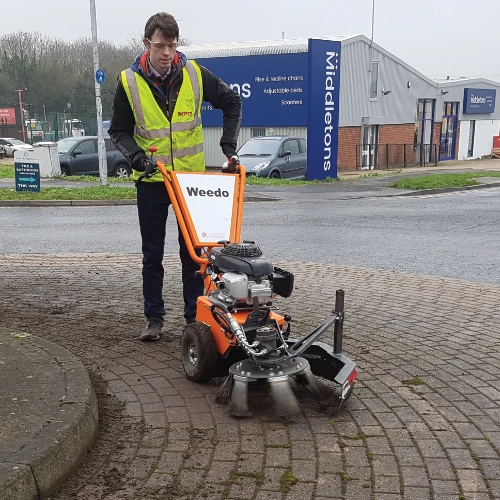
Kersten IWM Workshop
Apply surface diagnosis, method selection and machine operation in a small practical workshop.
View workshop dates →
The Weeds Are Not the Problem
Read the wider argument for treating surface condition, succession and stewardship rather than symptoms alone.
Explore the book →UK Pesticides National Action Plan 2025
Official UK government policy documents and target explainer.
Open GOV.UK →Code of Practice on Litter and Refuse
Current England-only statutory guidance, updated March 2026.
Open the code →Parks for London IWM Reference Guide
Reference guide and templates for amenity and public-realm IWM.
Open the guide →Lantra Awareness of IWM
Training with assessment covering legislation, methods and planning.
View the course →Strategy review enquiry
Start with your current programme and the surfaces you manage
Build a pre-filled enquiry for a council, housing association, contractor or large estate seeking an Integrated Weed Management review.
Potential review scope
Turn a broad policy objective into a prioritised plan
A review can focus on a representative sample rather than attempting to inspect the whole network at once.
- Current policy and treatment review
- Representative surface-condition sampling
- Method and machinery options
- Pilot and monitoring design
- Procurement and specification considerations
- Training and implementation priorities
Build your strategy-review enquiry
The button opens the normal Kersten contact page with your information already included for review before sending.
This guide is general information and does not constitute legal, procurement or engineering advice.
Frequently asked questions
Common questions about NAP 2025 and council weed management
Does NAP 2025 ban pesticide use in public spaces?
Does every council have to submit an annual pesticide return to Defra?
Why connect weed management with detritus and cleansing?
What if non-chemical methods have previously underperformed?
Is the four-stage model an official government standard?
Where should a council begin?
A credible pesticide-reduction plan starts with better surface information
Review the policy, inspect representative sites, choose methods around the actual condition and record enough evidence to improve the programme over time.