Moss, algae and weed management
Choose the treatment by what is growing—and what must happen afterwards.
Remove the organic layer that feeds moss, mechanically reset established growth, or use hot water, hot air or electricity to treat living weeds. Kersten helps you match the method to the surface, access, workload and operating constraints.
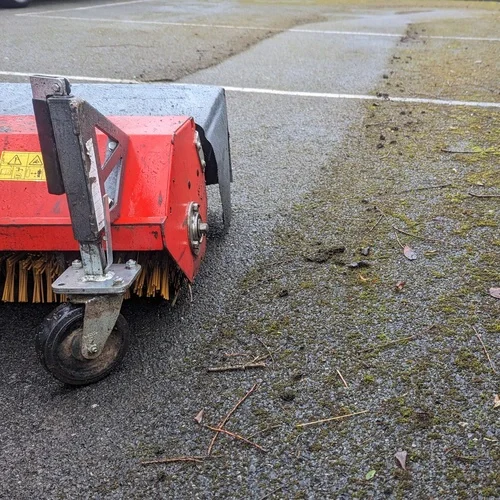
A treatment method does not automatically remove the dead plant, loosened moss or soil. Plan the clean-up and collection stage at the same time.
Start with the site problem
Which route fits the growth in front of you?
Moss and algae are usually a surface-condition problem; rooted weeds need a treatment or disruptive mechanical action. The right answer may be a sequence rather than one pass.
De-moss and sweep
For moss, algae, leaf mould and organic material on hard or suitable artificial surfaces.
See de-moss sweepers → 2Mechanically reset
For rooted weeds, compacted growth, joints, kerbs and heavily neglected hard surfaces.
See weed brushes → 3Treat with hot water
For repeatable thermal treatment without routine liquid herbicide, from gardens to municipal routes.
Compare hot-water systems → 4Treat with hot air
For young, actively growing weeds where propane logistics and fire controls are acceptable.
Compare hot-air systems → 5Treat electrically
For trained professional teams needing targeted or full-width electro-physical treatment.
See electric systems →| What you have | Best starting route | What the method does | Plan for |
|---|---|---|---|
| Loose detritus and early moss | General sweep, then de-moss if needed | Removes the moisture-retaining organic layer and lifts surface growth | Collector capacity and disposal |
| Established moss mat | Dedicated de-moss brush | Five rows of stiff nylon work the surface without relying on wire | Dry enough conditions to avoid smearing; inspect delicate surfaces |
| Rooted weeds and compacted joints | Weed brush | Disrupts growth and growing medium mechanically | Surface wear, flying debris and collection of arisings |
| Recurring weeds on public-facing routes | Hot water | Transfers thermal energy into the plant and shallow root environment | Water, heating/charging, refill time and repeat visits |
| Young weeds over defined paved areas | Hot air | Thermally shocks exposed plant tissue | Propane, combustible material, weather and fire controls |
| Selective plants or professional programmes | Electric treatment | Passes controlled high-voltage energy through plant tissue | Training, PPE, power package and exclusion zones |
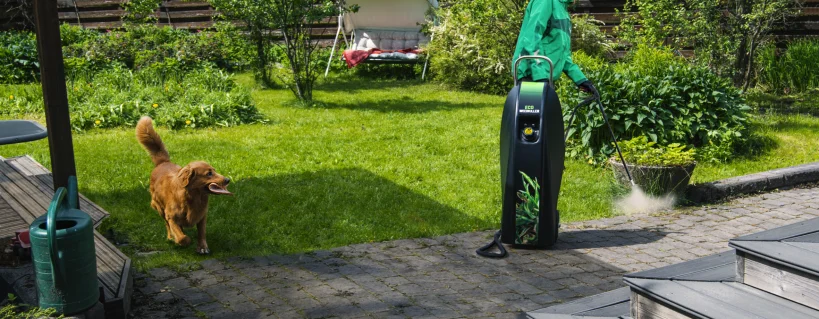
Hot water: the broadest thermal route
From a 25-litre garden unit to two-operator municipal systems.
Eco Weedkiller applies controlled water above 100°C. Stored-hot-water machines suit quiet planned routes; PRO systems heat on demand for longer professional programmes. Hot water can reach weeds in joints and shallow growing media, but results still depend on species, growth stage, technique and repeat timing.
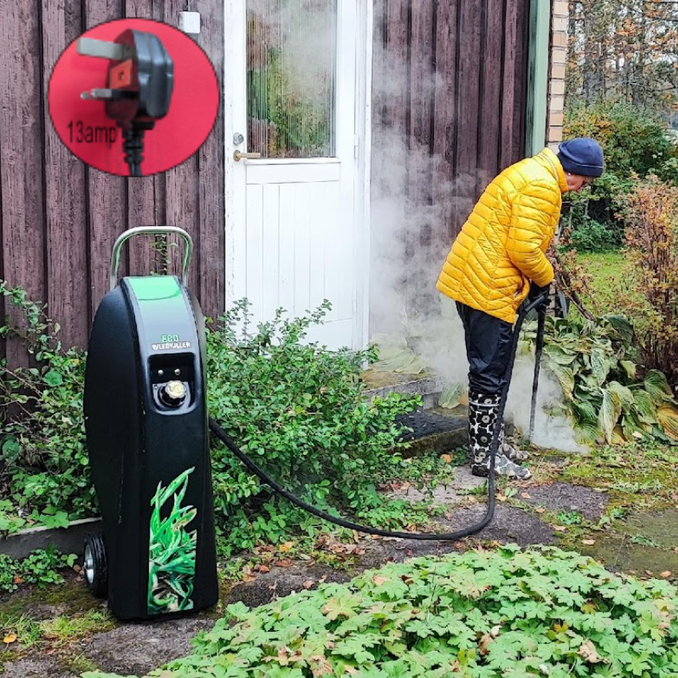
Compact stored hot water
EWK Garden 2 kW
Plug-in 25-litre unit for gardens, courtyards, small estates and detailed work close to a standard power supply.
Choose it when: the work is compact and access to an ordinary 13 A socket matters.
Checking current price…Live price from product page
View EWK Garden 2 kW →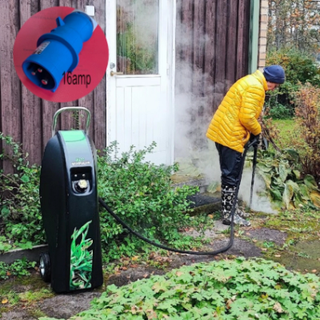
Faster compact heating
EWK Garden 3 kW
The same mobile 25-litre format with a higher-output supply for teams wanting shorter heat-up between treatments.
Choose it when: compact work remains the priority but a 16 A supply is available for faster heating.
Checking current price…Live price from product page
View EWK Garden 3 kW →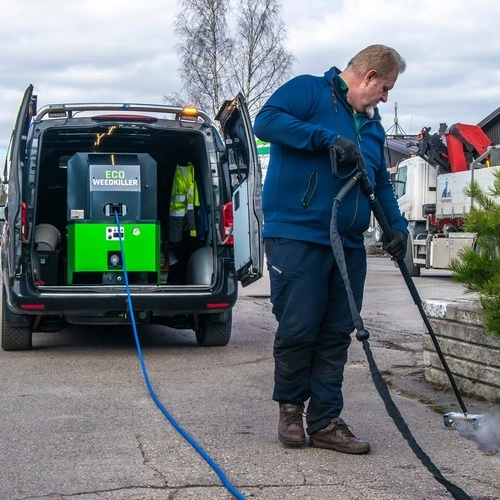
Professional pedestrian
EWK SP Pro Mini
A 150-litre stored-hot-water machine that bridges compact garden units and vehicle-mounted route equipment.
Choose it when: an operator needs professional capacity without dedicating a vehicle to the treatment unit.
Checking current price…Live price from product page
View EWK SP Pro Mini →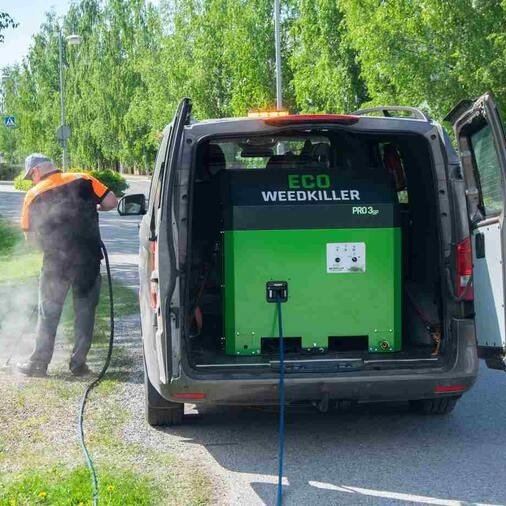
Vehicle-mounted stored water
EWK SP3
A 300-litre stored-hot-water system with automatic hose reel for planned estate and local-authority routes.
Choose it when: quiet pre-heated operation and a compact vehicle installation suit a scheduled route.
Checking current price…Live price from product page
View EWK SP3 →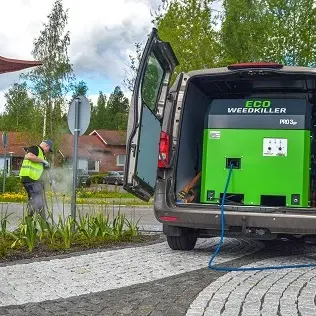
Higher-capacity stored water
EWK SP6
A larger 600-litre stored-hot-water unit for longer routes and fewer refill interruptions.
Choose it when: route capacity is more important than the compact footprint of the SP3.
Checking current price…Live price from product page
View EWK SP6 →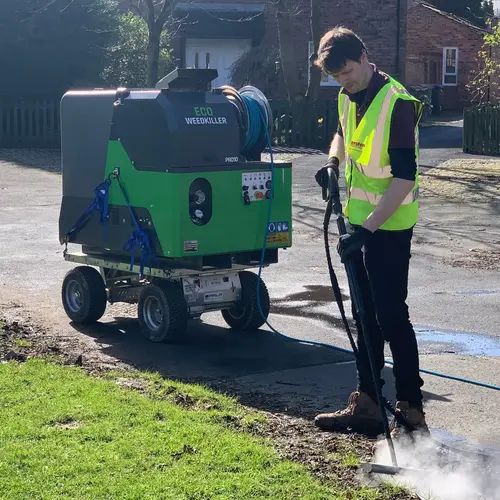
On-demand professional
EWK PRO10
Diesel-fired on-demand heating with a long hose for continuous professional weed treatment and cleaning work.
Choose it when: long hose reach and continuous on-route production justify an engine-driven system.
Checking current price…Live price from product page
View EWK PRO10 →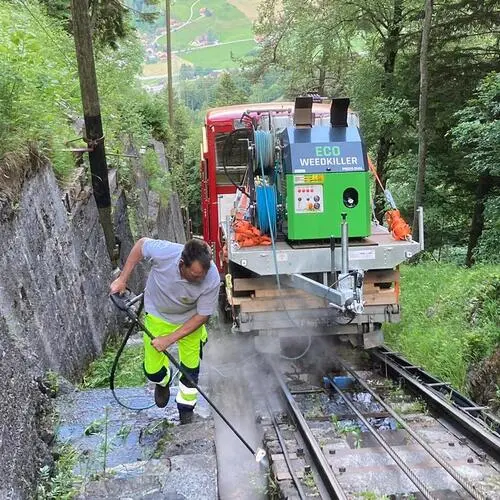
Two-operator output
EWK PRO20 Dual
An integrated on-demand system that can supply one or two operators for high-output route work.
Choose it when: two operators need to work opposite sides of a street, path or site from one vehicle.
Checking current price…Live price from product page
View EWK PRO20 Dual →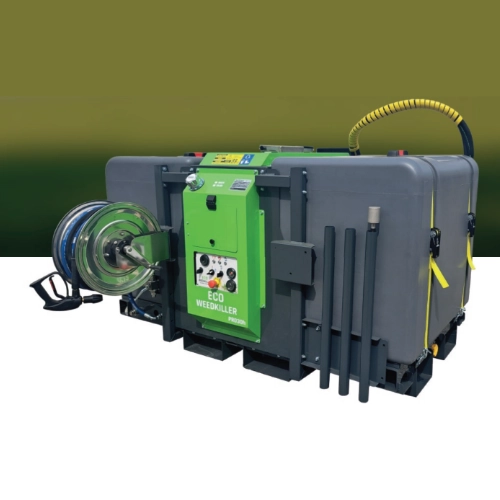
Hydraulic high output
EWK PRO30H
High-flow hydraulic-powered hot-water equipment for suitably equipped professional carriers and intensive programmes.
Choose it when: the carrier, water logistics and workload all support a high-output hydraulic installation.
Checking current price…Live price from product page
View EWK PRO30H →Hot-water planning: remove excessive soil, leaves and bulky growth before treatment so energy reaches the target plant. Allow for safe hot-water handling, PPE, drainage and runoff control, surface testing, water supply and repeat visits.
Moss removal and prevention
Use a de-moss brush for the mat; use a weed brush when growth is rooted or compacted.
A dedicated five-row nylon de-moss brush is less aggressive than wire and works across the full sweeping width. A weed brush concentrates force into joints and established growth, then the loosened material must be collected.
Hydraulic de-moss sweeper
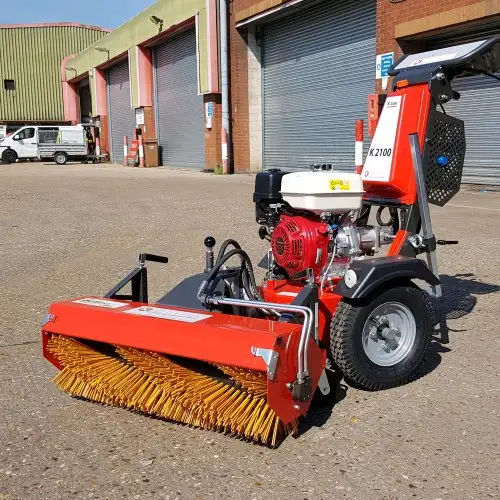
EFKM 90 DE-MOSS
Compact 90 cm attachment using a five-row patented nylon brush for stubborn moss on hard and suitable artificial surfaces.
Choose it when: you have a compatible K2100 carrier and want compact remedial moss removal with optional collection.
Checking current price…Attachment price; carrier and options separate
View EFKM 90 DE-MOSS →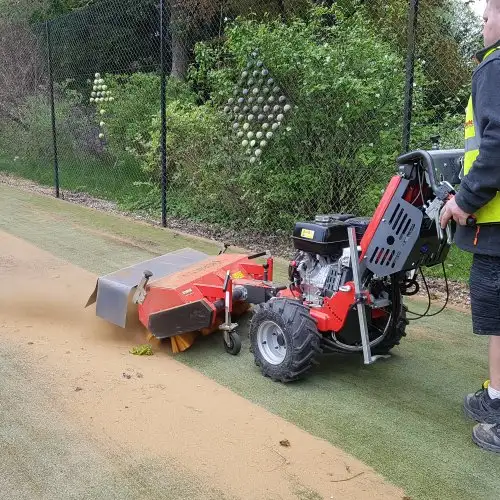
Mechanical de-moss sweeper
EFKM 100 DE-MOSS
Wider mechanical-drive attachment for UBS Hydro power units, with 30° swivel and five-row nylon brush.
Choose it when: a compatible UBS Hydro 9, 13 or 16 is available and a full metre of de-moss coverage suits the route.
Checking current price…Attachment price; carrier and options separate
View EFKM 100 DE-MOSS →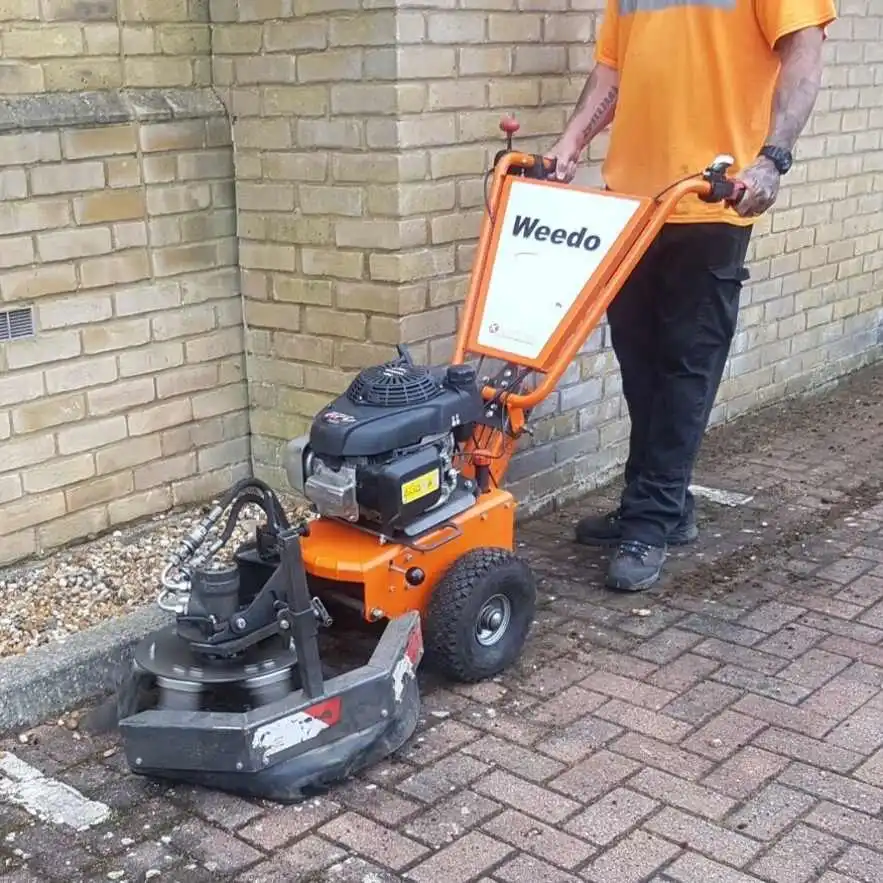
Dedicated pedestrian weed brush
Weedo II
Self-contained compact machine for repeated mechanical clearance of weeds, moss and growth along paths and hard areas.
Choose it when: one compact machine must tackle established weeds without a separate Kersten power unit.
Checking current price…Live price from product page
View Weedo II →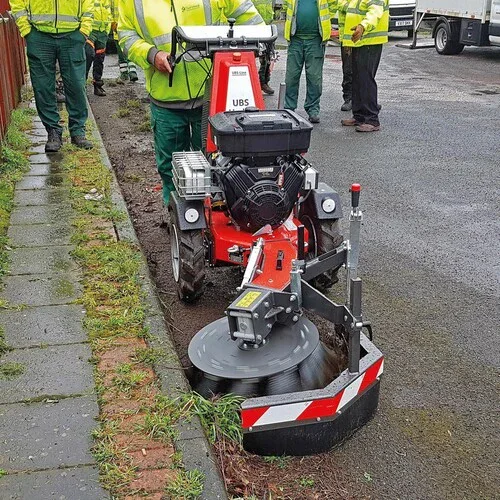
Pedestrian attachment
WKB 60 M-U 70
Mechanical 60 cm weed-brush attachment for compatible UBS, Alpin and M-Trac carriers.
Choose it when: an existing compatible multi-attachment power unit should handle remedial weed and moss work.
Checking current price…Attachment price; carrier separate
View WKB 60 →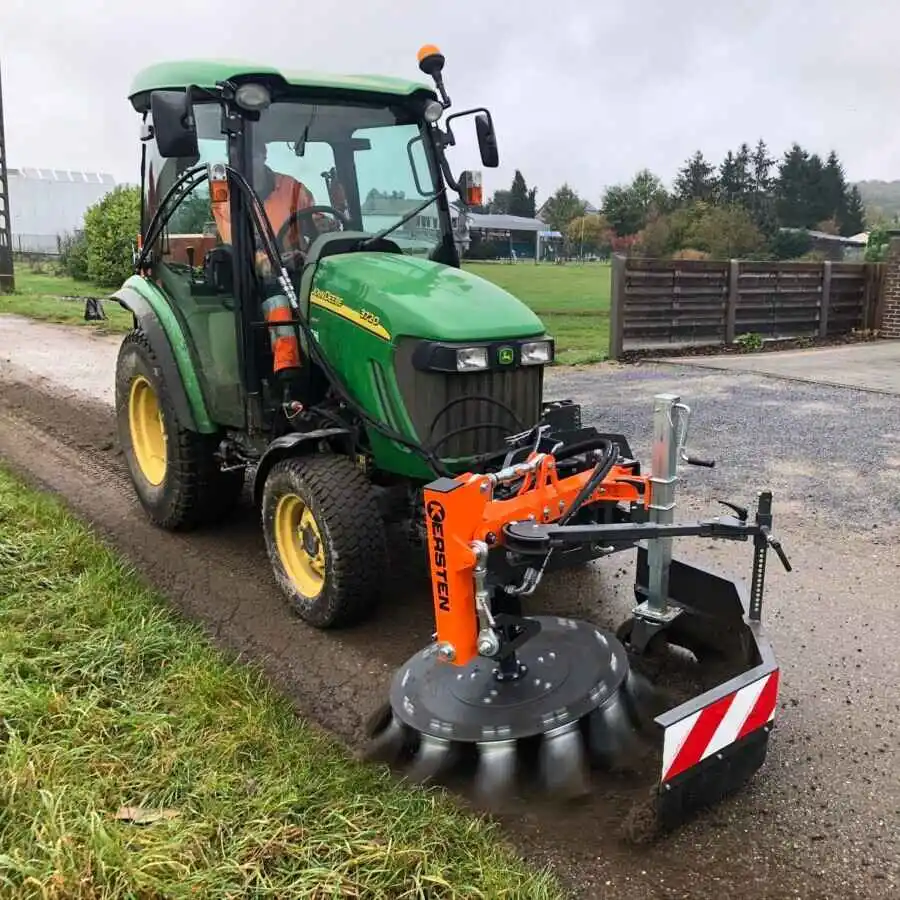
Compact tractor hydraulics
UB 6080 H
Professional hydraulic weed-brush head for compatible compact tractors and municipal carriers.
Choose it when: larger hard areas require a front-mounted hydraulic solution and the carrier specification can be confirmed.
Checking current price…Base unit; plate, controls and bracket separate
View UB 6080 H →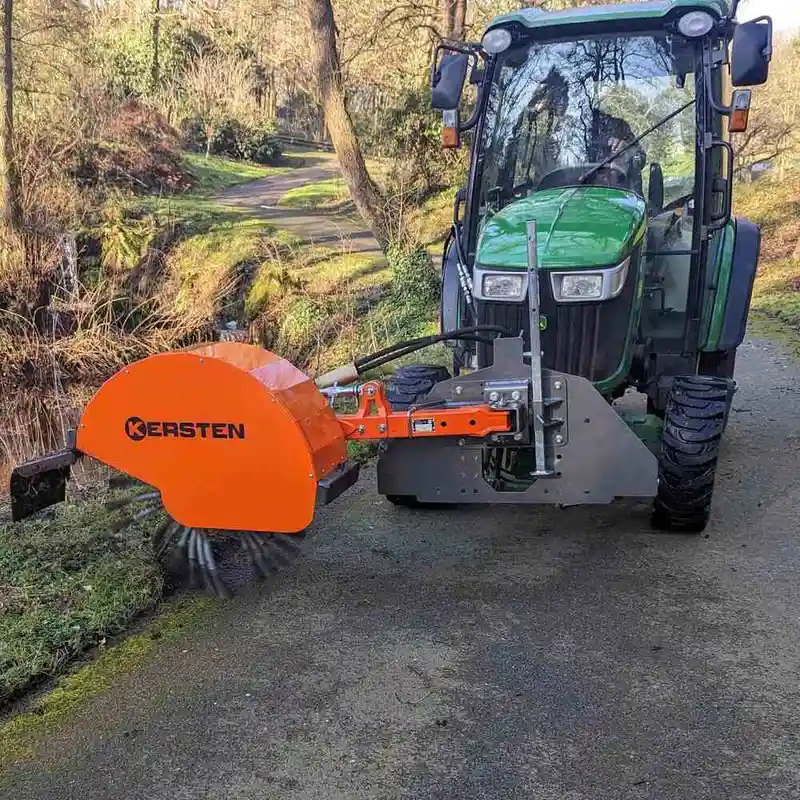
Loader and tool carrier
UB EASY PAK DS
Heavy-duty 80 cm hydraulic package with plastic-coated flat-wire braids for high-output surface work.
Choose it when: a loader or tool carrier must recover large neglected paved areas and robust productivity is the priority.
Checking current price…Attachment package; carrier frame separate
View UB EASY PAK DS →See the method working
Watch moss removal on a real surface.
These original Kersten videos show a powered sweeper working on an artificial tennis court and explain how to choose between the available moss-removal tools.
K2100 removing moss from an artificial tennis court
See how the powered sweeper lifts and moves established moss from a sports surface so the working pattern and resulting arisings are clear.
Choosing the right moss-removal product
Compare the practical roles of sweeping, dedicated de-moss brushing and more aggressive weed-brush treatment before choosing a machine.
Hot air and controlled flame
Fast thermal treatment for young weeds—with fire risk designed into the job.
Hot-air equipment is most effective when growth is young and active. Clear leaves and combustible detritus first; assess wind, dryness, nearby materials, public access and local operating restrictions.
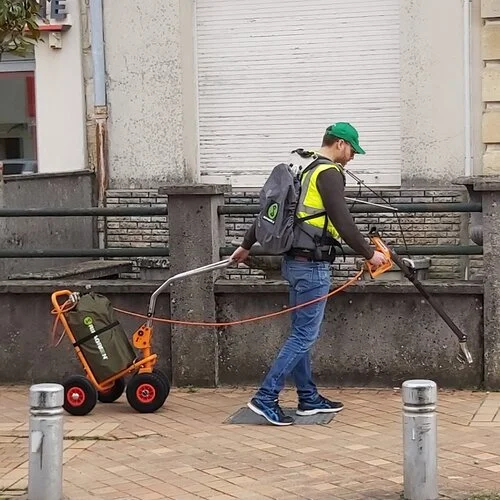
Flexible lance kit
Ripagreen Easy+ Kit
Combines trolley and backpack configurations so one team can switch between open paths and awkward access.
Choose it when: a handheld treatment head must cover both continuous routes and steps or fragmented sites.
Checking current price…Live price from product page
View Ripagreen Easy+ →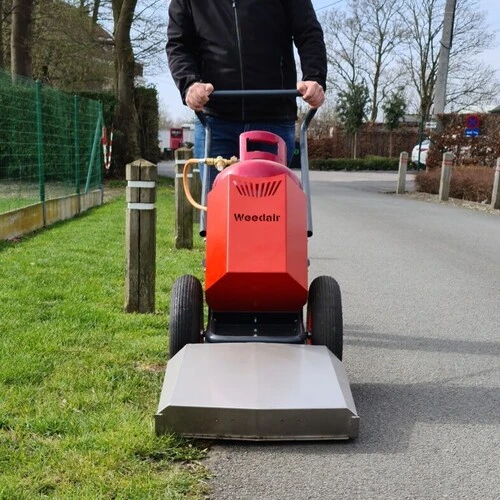
Defined pedestrian route
HOAF WeedAir 50iB
Walk-behind system with battery ignition and digital monitoring for repeatable treatment across defined hard-surface routes.
Choose it when: paths and paved areas suit a contained walk-behind treatment pattern rather than a lance.
Checking current price…Live price from product page
View WeedAir 50iB →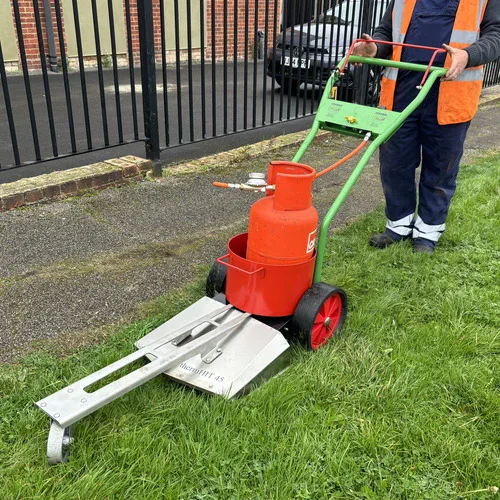
Hooded thermal treatment
HOAF ThermHit 45
A compact hooded 45 cm machine for pavements, paths and repeated professional pedestrian work.
Choose it when: a compact enclosed treatment zone is preferable on regular pedestrian routes.
Checking current price…Live price from product page
View ThermHit 45 →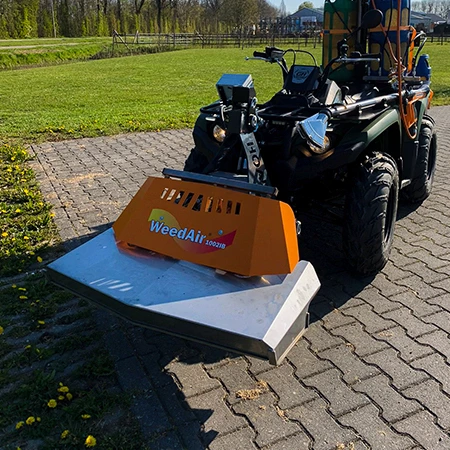
Tractor-mounted hot air
HOAF WeedAir 1002 IB
Front-mounted 100 cm system with three main and two side burners for wider routes and work around edges.
Choose it when: a compatible compact tractor must cover longer, wider hard-surface routes.
Checking current price…Attachment price; integration may be separate
View WeedAir 1002 IB →Professional electric weed control
Target individual plants or treat a full pedestrian strip.
Electric systems pass controlled high-voltage energy through the plant. They require trained operators, the specified power package and safety equipment, controlled access and dry-weather operating discipline.
Full-width pedestrian electric
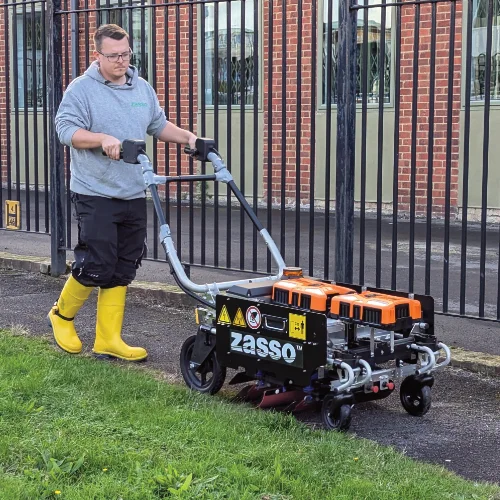
Zasso Zap Weeder 5.3
Battery-powered walk-behind system whose flexible electrodes treat vegetation across a continuous surface strip.
Choose it when: a trained team needs repeatable full-width electric treatment on hard-surface routes.
Checking current price…Batteries, charger and PPE may be separate
View Zap Weeder 5.3 →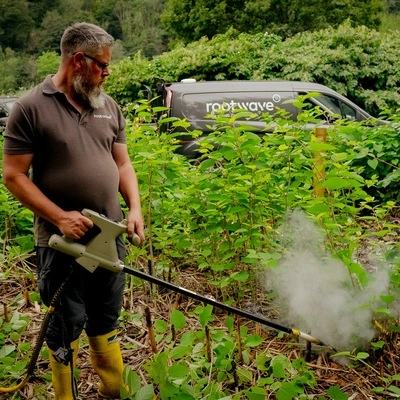
Selective electric treatment
Kersten Electric Weedkiller Lance
A long treatment lance for individual weeds and difficult invasive plants where selective contact is required.
Choose it when: selective treatment matters more than surface-area output, including difficult individual plants.
Checking current price…Generator, PPE and training may be separate
View Electric Weedkiller Lance →Integrated maintenance
A four-stage programme keeps the surface cleaner for longer.
The most economical method is often to prevent new growing medium accumulating, then reserve disruptive or thermal work for the areas that need it.
Remove the food source
Sweep leaves, soil and detritus before it decomposes, holds moisture and supports moss or weed establishment.
Reset neglected areas
Use a de-moss or weed brush to lift mats, loosen compacted material and reopen joints or surface texture.
Treat active regrowth
Select hot water, hot air or electricity according to target plant, surface, route logistics and safety controls.
Collect and inspect
Remove arisings, check drainage and shade, record regrowth and schedule follow-up before the problem rebuilds.
Mounted equipment is a system, not just an attachment.
For tractors and specialist carriers, confirm linkage, PTO or hydraulic flow, interface bracket, weight and controls. A typical Kersten chain is tractor → front linkage → PTO/hydraulic power → ABR bracket → attachment.
Practical Kersten guidance
See how the methods behave on real surfaces.
These guides explain brush choice, surface risk, sports-surface recovery and professional non-chemical treatment.
Brush selection
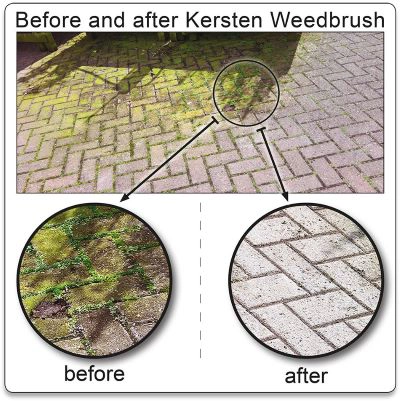
Moss brush, weed brush or weed ripper?
Understand the difference between broad nylon brushing and concentrated mechanical disruption.
Read the guide →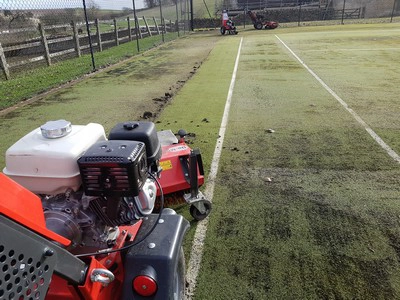
Sports surfaces
How to remove moss from a tennis court
A practical example of recovering a slippery neglected surface through mechanical maintenance.
Read the case study →
Hard surfaces
Preventative and remedial tarmac maintenance
See why sweeping and timely remedial work protect tarmac and concrete over the longer term.
Read the guide →
Electric treatment
Treating hard surfaces and soil with electricity
Compare the contact pattern and treatment logic required on different sites and surfaces.
Read the guide →Frequently asked questions
Choosing and operating the right system
Final selection should reflect the target growth, surface sensitivity, access, available carrier or utilities and safe operating method.
Is hot water suitable for moss as well as weeds?
Hot water is a useful thermal treatment route for living moss and weeds, particularly in joints and awkward areas, but it does not replace physical removal of thick mats, soil or dead material. For established moss across a surface, a de-moss sweeper may provide the faster reset; hot water can then support follow-up treatment where appropriate.
What is the difference between a de-moss brush and a weed brush?
A de-moss brush uses five rows of stiff nylon across the full sweeping width to work surface moss. A weed brush uses concentrated replaceable tool sections to disrupt rooted weeds, compacted growth and material in joints. It is more aggressive, so surface condition and brush choice matter.
Which method is least disruptive on a public-facing site?
There is no universal answer. Stored-hot-water units can be quiet and avoid routine liquid herbicide, while electric systems avoid spray drift but require strict high-voltage controls. Hot-air work requires propane and fire precautions. Mechanical brushing creates arisings and may need an exclusion zone. Assess the actual route and operating window.
Will one treatment permanently stop weeds returning?
No method removes the maintenance cycle. Results vary with species, growth stage, soil and moisture, technique and timing. Repeat treatment is normally required, while sweeping, drainage improvement and removal of accumulated growing medium reduce the conditions that support regrowth.
Can these systems be used on artificial sports surfaces?
Kersten de-moss sweepers and appropriate sweepers can be used on suitable artificial surfaces, but brush, pressure and technique must match the construction and infill. Do not assume that a thermal or aggressive wire-brush method is suitable: obtain surface-specific advice and test carefully.
Do mounted weed brushes and hot-air units fit directly onto any tractor?
No. Linkage, PTO or hydraulic power, flow and pressure, controls, interface bracket, weight and geometry must all match. Many Kersten installations use an ABR interface bracket between the tractor linkage and attachment. Check the complete system before ordering.
Not sure whether to sweep, brush or treat?
Tell Kersten what is growing, the surface, approximate area, access, current carrier and how quickly the material must be removed. The team can help build the method—and the clean-up stage—around the site.