Sweep, lift and collect leaves and debris in one pass
Matev’s 120 cm vacuum sweepers combine a powered rotor brush with controlled suction, helping compact tractors collect leaves, grass cuttings, litter and packed surface debris across parks, paths, estates and municipal sites.
- 120 cm standard working width
- Up to 210 cm with two side brooms
- Cat. 0 and Cat. 1 mounting options
- Standard and active-suction systems
 (1).webp)
Two ways to build a tractor-mounted sweep-and-collect system
The working nozzle is similar in both systems. The key decision is where the suction is created: the MRM-120 must be paired with a compatible collection system that provides the airflow, while the MRM-120 AS generates its own suction at the front and is especially well suited to trailer-based collection.
.jpg) Requires suction from the collection system
Requires suction from the collection system
Matev MRM-120
Choose the MRM-120 when the tractor already works with a suction collector or a complete collection system that creates the airflow and receives the material. The front nozzle does the pickup work, but the suction must come from the rest of the system.
.webp)
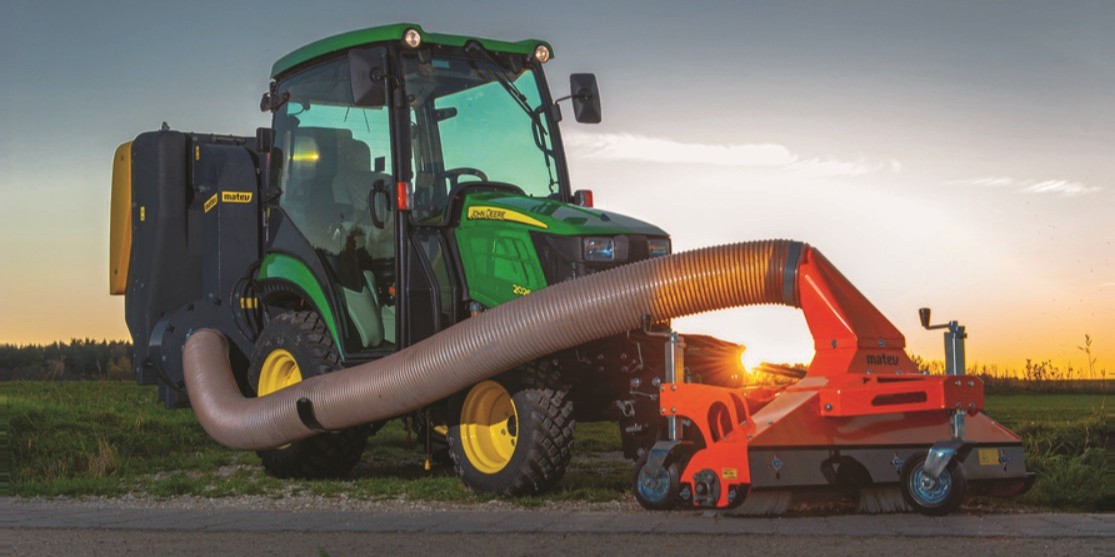
A lighter multifunction suction nozzle for operators who want the front pickup head and already have the collection side of the system covered. The rotor brush loosens wet and compacted debris before the collector draws it through the hose.
- Works with the suction generated by a collector or complete collection system
- Tool-free caster adjustment and 2D pendulum ground following
- Adjustable air gap for leaves, fine material and heavier debris
- Side brooms, pressure roller and hand-suction options
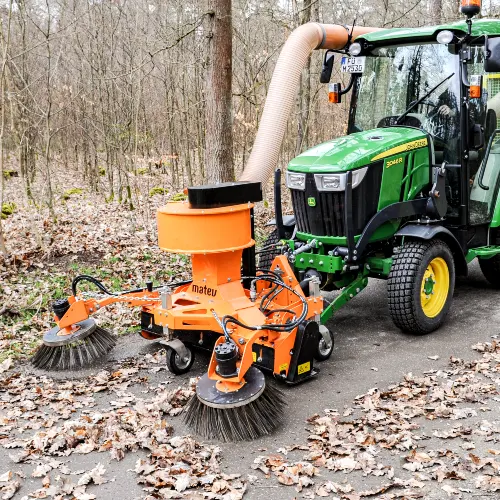 Built-in turbine for trailer-based collection
Matev MRM-120 AS
The MRM-120 AS creates suction at the nozzle with its own turbine, making it a strong choice when you want to discharge into a trailer or simpler receiving container instead of relying on a rear collector to pull material through.
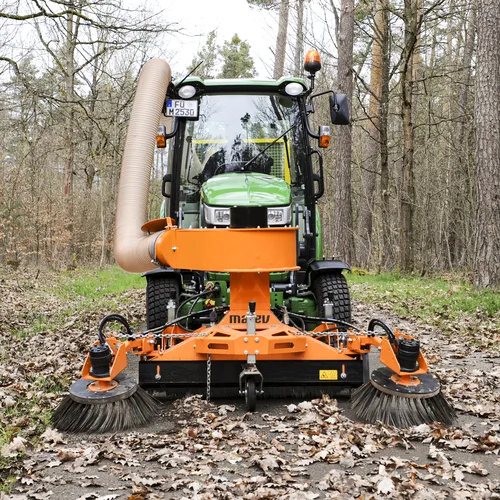
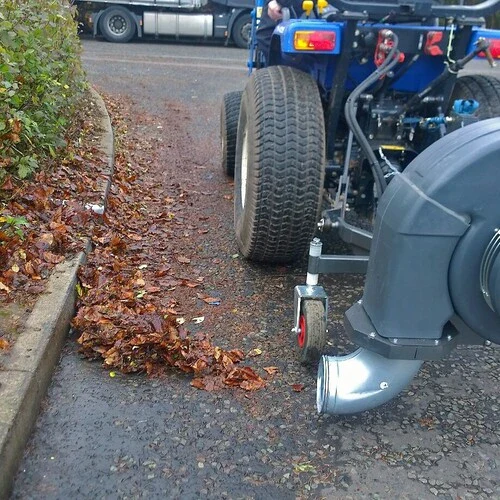
The active-suction version adds a turbine directly above the nozzle. That front-mounted fan conveys material into a trailer or collection system, allowing the tractor to use a larger or simpler receiving container without depending on a rear collector for suction.
- Integrated 51.5 cm active-suction turbine
- Hydraulic rotor brush lifts wet or embedded sweepings
- Especially effective in trailer-based or high-volume leaf work
- Optional over-cab hose routing for suitable tractor layouts
Standard suction nozzle or active-suction turbine?
Both units share the same 120 cm pickup width, brush direction, mounting categories and accessory concept. The active-suction model is heavier because the conveying turbine is built into the front unit.
| Decision point | MRM-120 | MRM-120 AS |
|---|---|---|
| Best starting point | A tractor already paired with a suitable suction collection system. | A trailer-led setup where the front nozzle needs to generate its own conveying suction. |
| Front-unit weight | 105 kg without accessories. | 185 kg without accessories. |
| Suction source | Provided by the compatible collector or complete suction arrangement. | Integrated 51.5 cm turbine running at 2,650 rpm. |
| What you must provide | A collector or suction system that creates the airflow and receives the debris. | A trailer or receiving container for the material; the nozzle’s own turbine supplies the suction. |
| Receiving container | Matev collector or another suitably configured suction collection setup. | Particularly well suited to a trailer, while also being able to feed a collection system where the hose route and guarding are correct. |
| Standard width | 120 cm; 165 cm with one side broom; 210 cm with two. | 120 cm; 165 cm with one side broom; 210 cm with two. |
| Core pickup | Hydraulically driven rotor brush working against travel direction. | Hydraulically driven rotor brush plus active material-conveying turbine. |
| Mounting | Cat. 0 or Cat. 1, with tractor-specific bracket and hose. | Cat. 0 or Cat. 1, with tractor-specific bracket, hose and routing components. |
Features that keep material moving rather than piling up
The useful detail is not simply suction power. Brush action, air-gap adjustment, ground following and hose flow all affect how reliably leaves and debris enter the system.
Counter-rotating rotor brush
The hydraulic brush rotates against the direction of travel, lifting wet leaves, grass and compacted sweepings from the surface before they reach the suction opening.
Height-adjustable air gap
The opening can be tuned to the material. A controlled gap helps balance airflow, pickup and power demand when conditions change from dry litter to heavy leaf build-up.
2D pendulum compensation
Tool-free height-adjustable casters and pendulum levelling help the nozzle follow uneven ground instead of relying on the tractor linkage to hold a fixed clearance.
Side brooms for edges
One 50 cm side broom increases reach to 165 cm; two extend it to 210 cm. Steel or steel/Perlon options can be selected for the surface and edge-cleaning duty.
Pressure roller for leaf volume
The optional pressure roller controls light material before it reaches the nozzle, reducing the tendency for leaves to roll or heap ahead of the intake.
Hand-suction changeover
An optional manual suction nozzle reaches around benches, trees, corners and obstacles where the tractor-mounted pickup cannot travel.
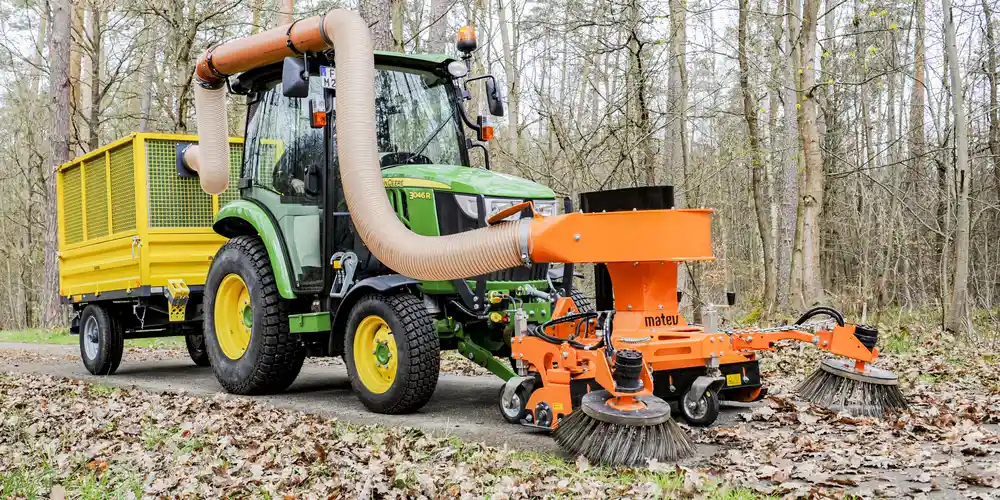
The nozzle is only one part of the specification
A reliable installation needs the pickup, mounting, hydraulic service, hose route and receiving container to work as one system.
Pick up and loosen
The front rotor brush releases material and feeds it evenly towards the adjustable suction opening.
Maintain hose flow
A 20 cm hose and suitable bends transfer material. Cab height, roof clearance and hose support determine whether standard or over-cab routing is required.
Generate suction
The MRM-120 relies on the chosen suction collection system; the MRM-120 AS creates active suction at the nozzle with its integrated turbine.
Collect and empty
Select a Matev low- or high-dump collector, or specify an appropriate trailer arrangement around the site’s capacity and unloading method.
Check the tractor, hose and collection arrangement together
Final supply is fitment-led. The front attachment can only perform correctly when the tractor services, bracket, hose route and receiving container have all been confirmed.
Tractor and front mounting
- Exact make, model, cab and tyre configuration
- Cat. 0, Cat. 1 or A-frame interface
- Front lift capacity and axle loading with 105 or 185 kg base attachment
- Clearance through steering and full linkage movement
Hydraulic service
- Rotor brush requires more than 11 L/min at 100 bar
- Confirm coupler type, pressure and return arrangement
- Add services for side-broom control where selected
- Check operating temperature and continuous-duty capability
Hose and cab route
- 20 cm transfer hose length
- Cab roof height and rear connection position
- Over-cab pipes where the layout requires them
- Support, bend radius and protection from contact points
Collection and site duty
- Matev collector, suction trailer or standard trailer arrangement
- Material type, moisture and expected volume
- Low-dump, high-dump or trailer unloading method
- Side-broom, pressure-roller and hand-suction requirements
Choose a vacuum-sweeper starting point
This guide narrows the system choice and accessory list. Kersten UK will still verify the tractor, hydraulic services, bracket, hose route and collection arrangement before quotation.
Matev vacuum system finder
Tell us how you plan to create suction and where the material needs to go.
This is a selection guide, not a fitment approval. Hydraulic flow, return arrangement, linkage geometry, hose routing, front axle loading and the collection container must be checked for the exact tractor.
Why active suction can make a compact tractor more useful in autumn
With the conveying fan mounted on the nozzle, the MRM-120 AS can send material into a larger conventional trailer. That can avoid the cost, storage requirement and capacity limit of a dedicated all-in-one vacuum collector.
John Deere 2026R vacuum-sweeper case study
Kersten’s installation paired the active-suction nozzle with a trailer so the compact tractor could collect a larger volume of leaves without carrying a dedicated rear vacuum hopper. The case study also highlights a 25 hp starting point for that specific installation.
.webp)
Specifying a Matev vacuum sweeper
What is the main difference between the MRM-120 and MRM-120 AS?
The MRM-120 is the lighter pickup nozzle and is intended to work with a compatible suction collection arrangement. The MRM-120 AS adds a 51.5 cm turbine above the nozzle, so the front attachment actively conveys material into a trailer or collection system.
Can the working width be increased?
Yes. The base width is 120 cm. One optional 50 cm side broom increases the working width to 165 cm, and two side brooms increase it to 210 cm.
Will it collect wet leaves and packed debris?
The hydraulically driven rotor brush is designed to loosen wet or compacted sweepings before suction. The pressure roller and adjustable air gap can further improve feed where leaf volume is high.
What hydraulic service is required?
The published requirement for the rotor brush is more than 11 L/min at 100 bar. The complete tractor service, couplers, return path and any additional side-broom controls still need to be checked during fitment.
Can it clean around benches, trees and corners?
An optional hand-suction nozzle allows the operator to change over from the main pickup and clean locations the tractor cannot reach directly.
Build the vacuum system around your tractor and collection method
Send the tractor model, linkage, hydraulic flow, cab height and intended collector or trailer. Kersten UK can then confirm the nozzle, bracket, hose route and accessory package.