Professional hot-air and infrared weed control
Use controlled heat to interrupt young weed growth without liquid herbicide or treatment water
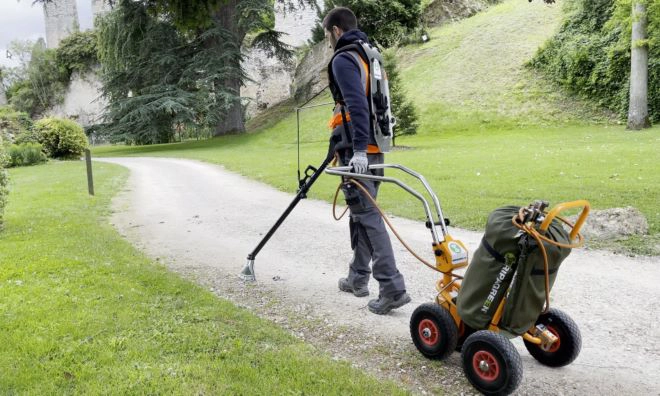
Kersten supplies two complementary professional ranges. Ripagreen uses a mobile lance and pulsed hot-air diffuser for precise work. HOAF concentrates hot air and infrared energy beneath handheld, walk-behind and mounted hoods for defined working widths and larger routes.
Products and working patterns
Start with the products, then compare how Ripagreen, WeedAir and ThermHit fit the route.
Ripagreen provides precision lance mobility. HOAF WeedAir covers forced-air pedestrian and vehicle-mounted work. ThermHit and TWB then provide shielded infrared-and-hot-air treatment in handheld, walk-behind and Kersten-carrier formats.
Ripagreen pulsed hot-air kits
A modular lance system using a high-velocity hot-air stream and rotating diffuser. Choose a backpack for maximum access, a trolley for comfortable linear work, or a vehicle-supported hose reel for larger routes.
Ripagreen kits
 660.jpg)
341063 UK
Ripagreen Mobility Kit
Lightweight backpack configuration for steps, cemeteries, courtyards and fragmented restricted-access sites.
Checking current price...
View product →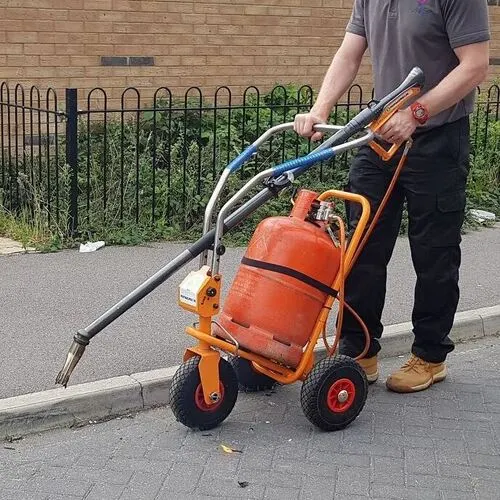
341040
Ripagreen Easy Kit
Trolley-supported 40 cm lance system for comfortable route work on paths, campuses and formal grounds.
Checking current price...
View product →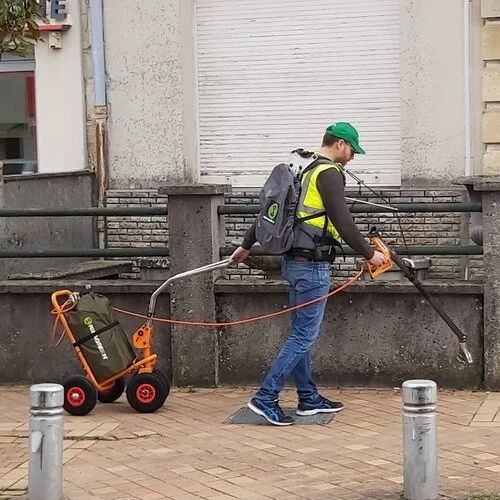
341058
Ripagreen Easy+ Kit
Combines the trolley and ergonomic backpack so one team can switch between open routes and difficult access.
Checking current price...
View product →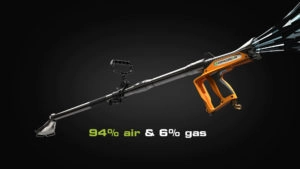
Ripagreen air-to-gas feature
94% ambient air. Only 6% propane gas.
Ripagreen draws in ambient air and mixes it with a controlled propane input to create a high-velocity blade of hot air. The system is designed to deliver a brief thermal shock across a 40 cm treatment width without carrying treatment water.
The 94/6 figures describe the stated air-and-gas mixture used by the Ripagreen lance, not a comparison with the energy content of other treatment methods.
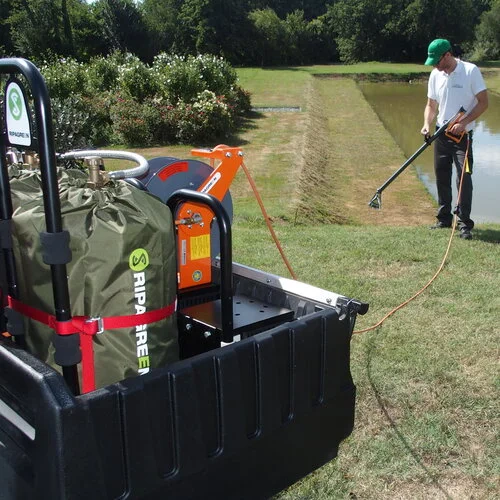
341068
Ripagreen Autonomy Kit
Vehicle-mounted cylinder frame, automatic 15 m hose reel and lance for estates, routes and municipal work.
Checking current price...
View product →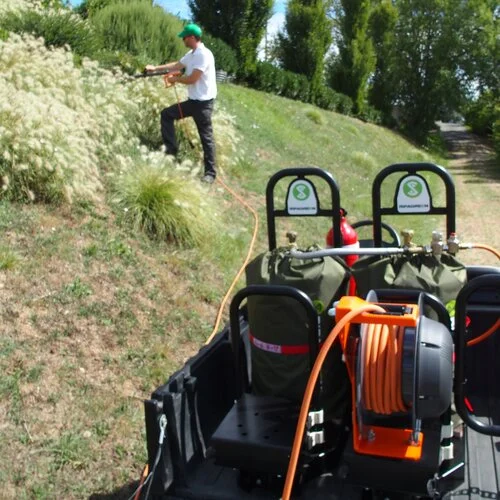
341073
Ripagreen Autonomy+ Kit
Adds a second cylinder-holder frame to extend working time and reduce interruptions on longer routes.
Checking current price...
View product →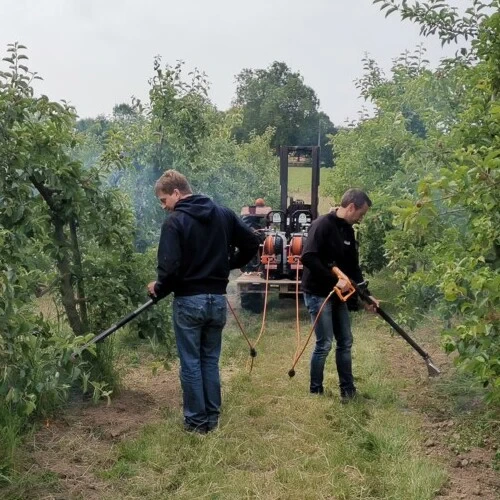
341078
Ripagreen Autonomy Duo
Two lances, two hose reels and two frames for simultaneous two-operator route productivity.
Checking current price...
View product →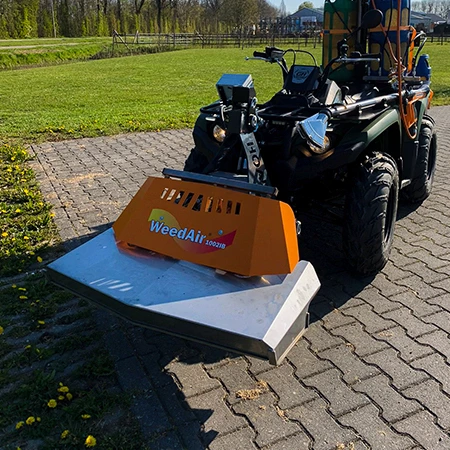
HOAF WeedAir systems
WeedAir products form a distinct HOAF pathway for controlled forced-air coverage. The range moves from monitored pedestrian systems to vehicle-mounted units for continuous routes, edges and larger open areas.
HOAF WeedAir products
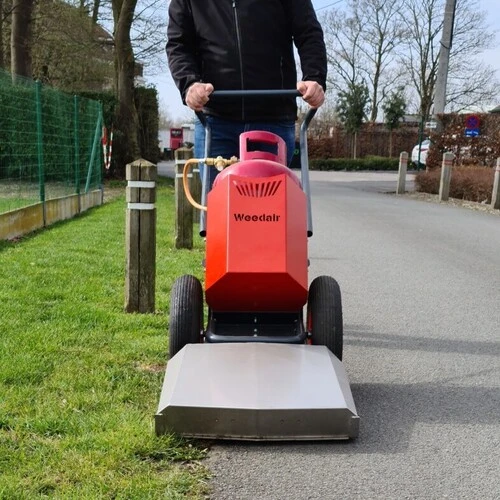
HF20000477
HOAF WeedAir 50iB
A 50 cm pedestrian unit with battery ignition and digital temperature monitoring for defined route work.
Checking current price...
View product →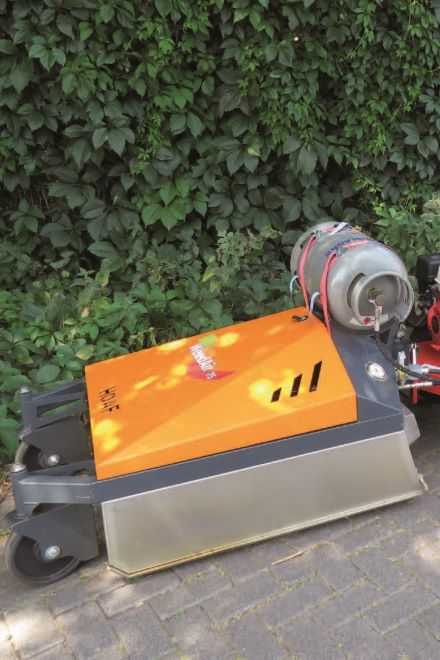
WeedAir 75 K
HOAF WeedAir 75 K
A wider pedestrian WeedAir system for continuous paths, paved areas and predictable linear treatment.
Checking current price...
View product →HFWA 1002 IB
HOAF WeedAir 1002 IB
A 100 cm front-mounted system with main and side burners for larger routes, edges and obstacles.
Checking current price...
View product →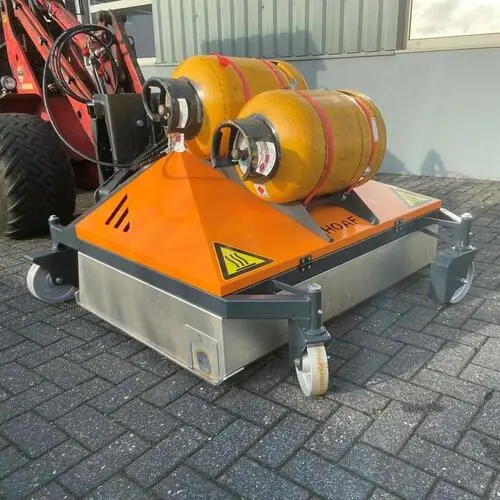
HFWA120M
HOAF WeedAir 120 M
A 120 cm forced-hot-air system for compact tractors and higher-output path, gravel and open-area work.
Checking current price...
View product →The thermal principle
Heat the plant briefly; do not waste time trying to burn it away.
Hot-air treatment damages leaf cells and interrupts photosynthesis. The result depends more on plant stage, treatment timing and follow-up frequency than on producing visible charring.
Strongest fit: young, active growth
Seedlings, fresh annual growth and fleshy leaves have less stored energy and respond more readily to a short, controlled thermal shock.
- Start before stems become woody or deeply anchored
- Look for a leaf response rather than blackening
- Plan repeat passes around actual regrowth
- Use precision around joints, edges and obstacles
Know when heat is not the whole answer
Hot air targets vegetation; it does not remove compacted soil, moss mats or the growth medium accumulated in paving joints and path edges.
- Sweep loose detritus and combustible material first
- Use weed brushing where soil and moss are established
- Expect repeated treatment for deep-rooted perennials
- Repair defects where roots are anchored into the asset
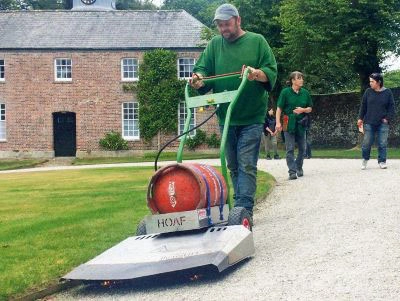
HOAF ThermHit and TWB systems
ThermHit machines concentrate infrared and hot-air energy beneath a shielded hood. The related TWB attachments transfer the same defined-width working approach onto Kersten pedestrian power units.
HOAF ThermHit and TWB products
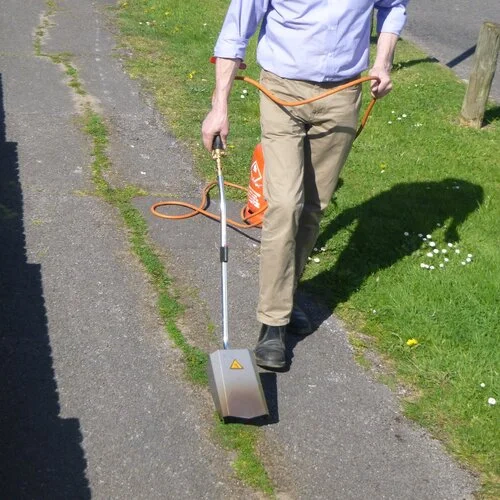
HFTH015
HOAF ThermHit 15
Compact 15 cm handheld unit with a shielded treatment zone for joints, edges, street furniture and detailed work.
Checking current price...
View product →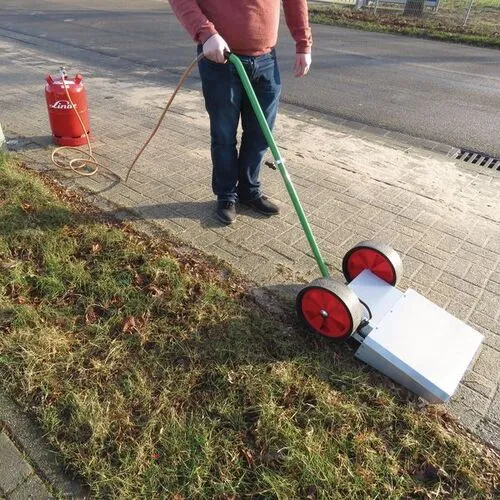
HFTH025
HOAF ThermHit 25
Compact 25 cm tool for corners, beds, street furniture and other small or difficult-to-reach areas.
Checking current price...
View product →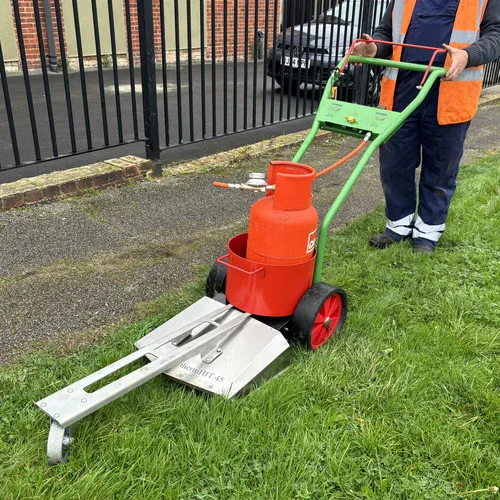
HFTH045
HOAF ThermHit 45
Professional 45 cm walk-behind system for pavements, paths and repeated urban route work.
Checking current price...
View product →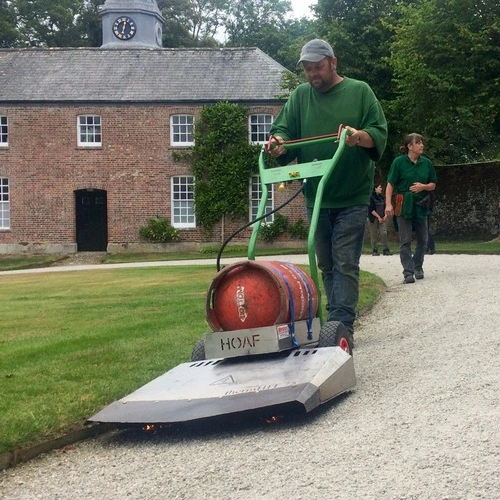
HFTH075
HOAF ThermHit 75
A 75 cm enclosed walk-behind burner for larger paved areas, paths and open pedestrian routes.
Checking current price...
View product →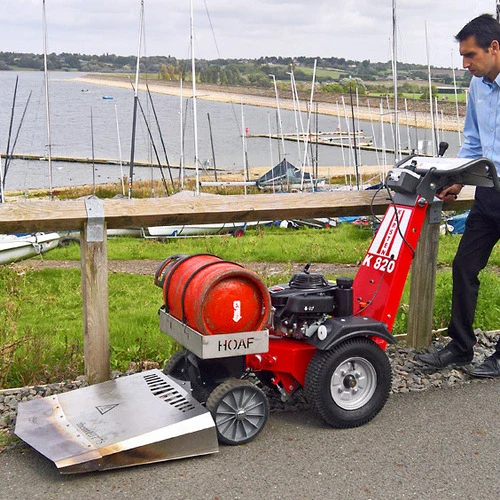
TWB 75 K - K 820PRO
TWB 75 K for K820 Pro
A 75 cm powered hot-air attachment configured for the compact Kersten K820 Pro carrier.
Checking current price...
View product →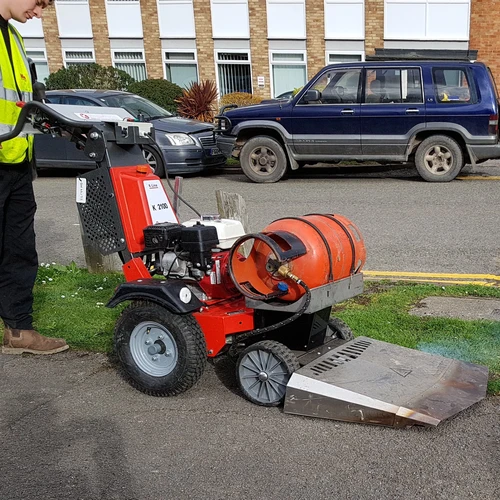
TWB 75 K - K 1500
TWB 75 K for K1500
Carrier-specific 75 cm HOAF attachment for Kersten K1500 professional route work.
Checking current price...
View product →TWB 75 K - K 2100
TWB 75 K for K2100
A 75 cm hot-air attachment matched to the K2100 professional two-wheel tractor.
Checking current price...
View product →TWB 100 K
HOAF TWB 100 K
A 100 cm powered attachment for compatible Kersten UBS pedestrian power units and wider routes.
Checking current price...
View product →Hot air inside IWM
The best programme removes the seedbed, treats the right growth stage and returns before recovery.
Thermal systems work most effectively when operators can see the true surface, reach the target safely and revisit young regrowth at the right interval. Cleansing, edging, surface repair and tolerance standards all influence the result.
The objective is not one dramatic pass. It is a repeatable route that steadily reduces plant vigour while protecting people, surfaces and surrounding vegetation.
Diagnose
Check plant stage, surface, root anchorage, access and site sensitivity.
Prepare
Remove loose dry material, identify hazards and establish the working zone.
Treat
Apply a brief, controlled pass using the correct distance, speed and width.
Repeat
Inspect regrowth and return before plants rebuild reserves or set seed.
Selection factors
The machine must fit the route as well as the weed.
Compare access, width, working pattern, gas logistics, public occupancy and the maturity of the vegetation before selecting a brand or kit.
Plant stage
Young, fleshy growth is the strongest thermal target; mature perennials demand more repeat work.
Access
Backpacks and lances reach steps and obstacles; hooded machines suit continuous open routes.
Working width
Use narrow tools for precision and wider hoods where consistent coverage drives productivity.
Gas logistics
Plan cylinder type, change intervals, transport, storage and vehicle support around the working day.
Site risk
Assess public exclusion, combustible material, wind, drought, surface sensitivity and fire control.
Range selector
Start with how the operator needs to move through the site.
This guide identifies a likely starting route. Final selection still requires a site demonstration, current product instructions and a task-specific risk assessment.
At-a-glance comparison
Ripagreen, WeedAir and ThermHit/TWB cover three distinct operating patterns with the same thermal objective.
All three routes use LPG heat and require trained, risk-assessed operation. The distinction is how the heat is delivered, contained and moved through the site.
| Range | Heat delivery | Best fit | Platform pathway |
|---|---|---|---|
| Ripagreen | High-velocity hot-air lance with rotating diffuser | Precision treatment, obstacles, fragmented sites and flexible vehicle-supported work | Backpack, trolley, combined kit, single- or two-operator vehicle systems |
| HOAF WeedAir | Controlled forced-hot-air delivery | Monitored pedestrian coverage and higher-output vehicle-mounted routes | WeedAir 50/75 pedestrian units and 100-120 cm mounted systems |
| HOAF ThermHit / TWB | Infrared and hot air concentrated beneath a shielded hood | Detailed handheld work, defined pedestrian widths and Kersten carrier attachments | ThermHit 15-75 plus TWB 75 and 100 carrier-mounted systems |
Responsible professional use Hot-air weeders are professional LPG-powered heat tools. Product safety features support controlled operation but do not replace training, supervision, current manufacturer instructions or a site-specific assessment.Plan the heat, the fuel, the public and the surface together.
Thermal weed-management reading These existing Kersten articles add practical detail on energy use, vehicle-supported treatment, equipment care and achieving a stronger result from thermal work. Energy and method Understand the operating logic and energy demand behind professional hot-air treatment. Vehicle-supported work Explore a mobile route for replacing quad-mounted spray work with thermal treatment. Equipment care Keep the lance, connections and ignition system ready for reliable professional use. Operating technique Use plant stage, treatment speed and repeat timing to improve efficiency and outcomes.Improve timing, weather planning, maintenance and method selection.

Energy Consumption of Thermal Weeders
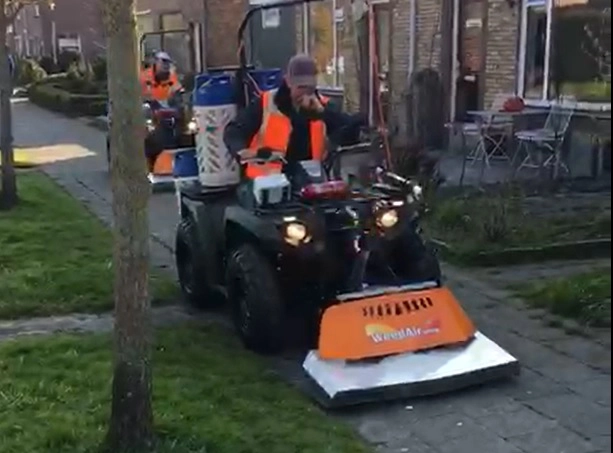
Using Thermal Weed Control on a Quad Bike
Maintaining Your Ripagreen Thermal Lance
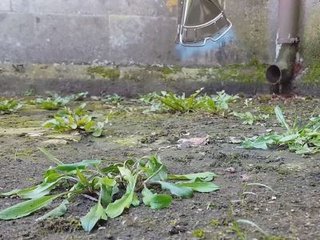
How to Get the Best from Thermal Weed Management
Frequently asked questions The product manual, operator training and site risk assessment remain the controlling documents for use. No. The objective is a brief thermal shock that damages leaf cells and interrupts photosynthesis. Prolonged burning wastes time and fuel and can increase surface or fire risk. Young annual weeds and fresh, fleshy growth are the strongest fit. Established woody or deep-rooted plants may need repeated passes, mechanical removal or another targeted method. Ripagreen is a modular precision-lance system. HOAF WeedAir provides forced-air pedestrian and vehicle-mounted coverage. HOAF ThermHit and TWB machines use shielded infrared-and-hot-air treatment zones in handheld, walk-behind and Kersten-carrier formats. Heat-based treatment can be less dependent on dry leaf conditions than liquid spraying, but the current manufacturer instructions, surface conditions, wind, visibility and site risk assessment still govern operation. No. It treats vegetation but does not physically remove established growth medium. Use sweeping for loose material and a weed brush where moss, roots and compacted soil need mechanical extraction. Start with access, working width, route length, plant stage, cylinder logistics and public occupancy. Then demonstrate the likely system on the actual surfaces before confirming the configuration.Hot-air weed-control essentials
Do weeds need to be burnt or blackened?
Which weeds respond best?
What is the difference between Ripagreen, WeedAir and ThermHit?
Can hot-air weeders be used in wet weather?
Does hot air remove soil and moss from paving joints?
How should a first machine be selected?
Prove the method on your own route Kersten can compare Ripagreen, HOAF WeedAir and HOAF ThermHit/TWB on access, surface sensitivity, route length, plant stage, cylinder logistics, public risk and the preventative work that should sit around thermal treatment.Match the brand, working pattern and treatment width to the surfaces you actually manage.