Chemical-free weed control
Understand the surface.
Choose the method.
Manage the regrowth.
A practical guide to mechanical, electrical, hot-water and hot-air weed control—with equipment for small awkward spaces, pedestrian routes and larger tractor-based work.
Choose a route into the guide
Four methods. Different jobs.
Chemical-free weed control means managing unwanted vegetation without applying herbicides. It can involve physical removal or treatment with heat or electricity. Each method has a place, but none replaces understanding why the weeds are growing there.
Need the evidence or practical training? Explore the book, Bracknell trial and workshops. Looking for technical reading? Browse nine selected Kersten articles.
Sweep · extract · renovate
Mechanical prevention and removal
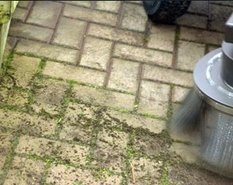
Remove the plant—and the material it is growing in.
Dust, leaf litter, grass clippings and silt gradually collect in joints and along kerbs. As that material becomes a growing medium, a clean hard surface becomes a place where vegetation can establish. Killing the visible leaves leaves that material behind.
Routine sweeping removes loose deposits. A weed brush tackles more established growth and compacted material. On suitable gravel, a renovator works through the surface layer rather than brushing over it. These are different actions, with different effects on the construction below.
Collection completes the operation: leaving loosened soil and vegetation in place can simply redistribute the problem.
Loose deposits
Sweep before they consolidate into a deeper soil layer. Match the roller and collection arrangement to the material.
Established growth
Use brush tools suited to the construction and rooting. Check joints, edges and defects before aggressive work.
A complete working setup
A mounted brush needs a suitable carrier, drive, mounting bracket and controls. Plan collection and disposal too.
Equipment to consider
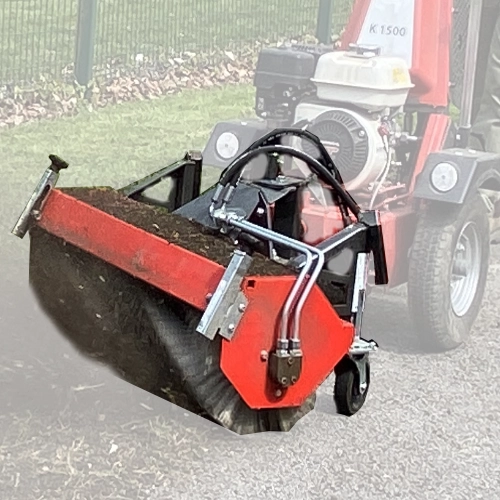
Sweep and collect
EFKM 09032 H-K 35
Remove loose soil, leaves and grit before they become a stable growing medium. Also collect material released by remedial work.
Choose it when: Routine cleansing is the main task and you have a compatible K35 carrier.
90 cm working width · 32 cm roller · hydraulic drive
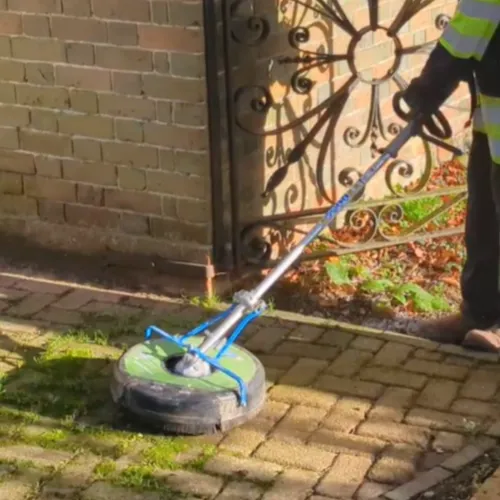
Brushcutter attachment
WeedGo QuickPro kit
Convert a compatible professional brushcutter for small patches and awkward areas around street furniture.
Choose it when: Access rules out a larger machine and the existing brushcutter is suitable.
Linked kit: Stihl FS360–FS460 · brushcutter not included
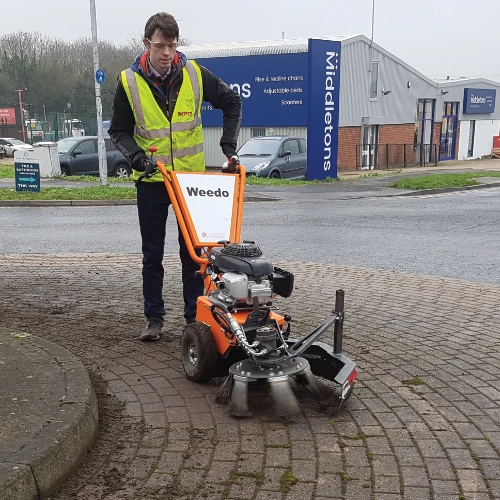
Dedicated pedestrian brush
Weedo II
A compact weed brush for lifting established moss, weeds and accumulated material on suitable paving.
Choose it when: You cover smaller sites and want a dedicated machine with adjustable brush action.
50 cm brush · six tools · hydraulic brush drive · operator-guided
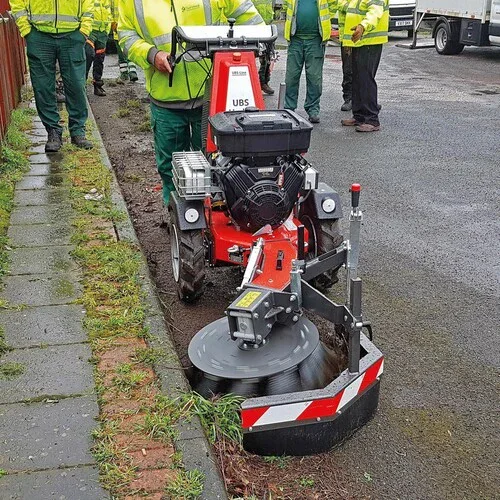
UBS brush attachment
WKB 60 M-U 70
Mechanically driven attachment with adjustable brush angle and replaceable Hausa or Versa tools.
Choose it when: A compatible UBS carrier can alternate between extraction and other maintenance tools.
60 cm plate · ten tools · 70 mm attachment system
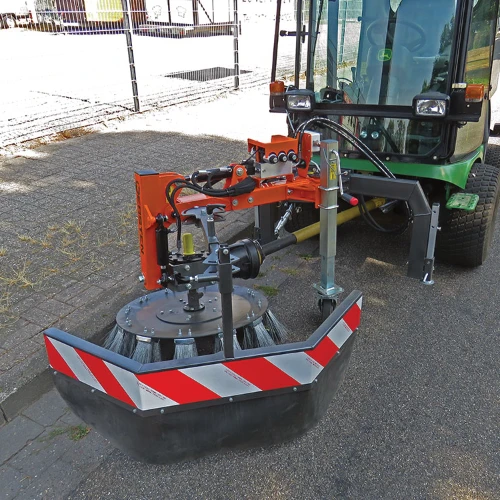
Tractor-mounted weed brush
UB 6080 MK
A PTO-driven platform for more demanding edge restoration and larger hard-surface routes.
Choose it when: A suitable tractor can provide the drive, positioning and carrying capacity required.
80 cm brush configuration · PTO drive · ABR mounting system
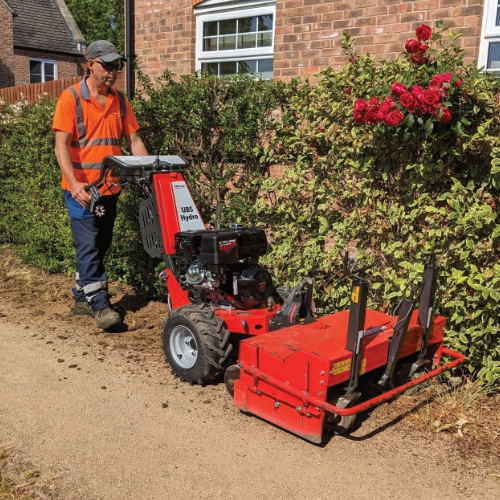
Gravel renovation
WE 090 M-U 70
Counter-rotating tools loosen suitable unbound gravel and work below surface growth. Set depth to the construction.
Choose it when: A gravel path needs renovation and the carrier and working tools are correctly matched.
90 cm working width · adjustable depth · UBS mounting
Lance · pedestrian · tractor
Electrical weed control
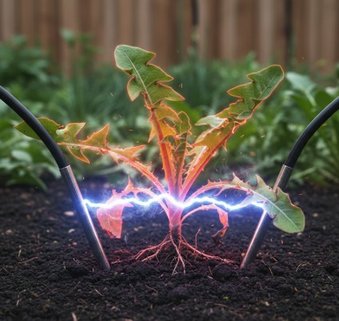
Generate heat inside the plant through electrical contact.
Electrical weed-treatment equipment establishes a controlled circuit through vegetation and the prescribed return path. Resistance within the plant generates heat, damaging tissue. This differs from a hot-air or hot-water applicator, which delivers heat from outside.
The applicator and circuit matter. A targeted lance, a pedestrian electrode array and a tractor-mounted head are designed for different jobs. Do not choose solely by voltage or assume every system treats the same rooting depth.
Surface deposits, moisture, species and plant contact influence the result. Assess the conditions and prepare the surface as appropriate; persistent perennial or invasive plants need a monitored treatment plan.
A different kind of electric tool
A battery weed brush removes growth mechanically. An electrical weedkiller applies energy through plant-contact electrodes.
Preparation and contact
Remove obstructing deposits where appropriate and establish the contact required by the particular system.
Operator and site requirements
Allow for trained operation, the prescribed working area, power supply and restrictions around people and site features.
Equipment to consider
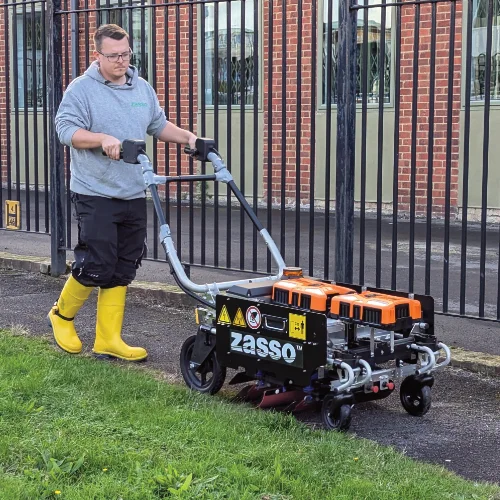
Battery walk-behind
Zasso Zap Weeder 5.3
Flexible contact electrodes provide electrical treatment across a pedestrian working width.
Choose it when: Hard-surface route work suits a continuous pass and the prescribed operating conditions.
60 cm treatment width · two Pellenc ULIB 1500 batteries required
.webp)
Targeted electrical contact
Kersten Electric Weeding Lance
A lance, power module and generator system for selected plants, using the prescribed return circuit.
Choose it when: Individual plants or defined patches require targeted treatment and a suitable working area.
170 cm lance · 20 m treatment cable · two-hand controls
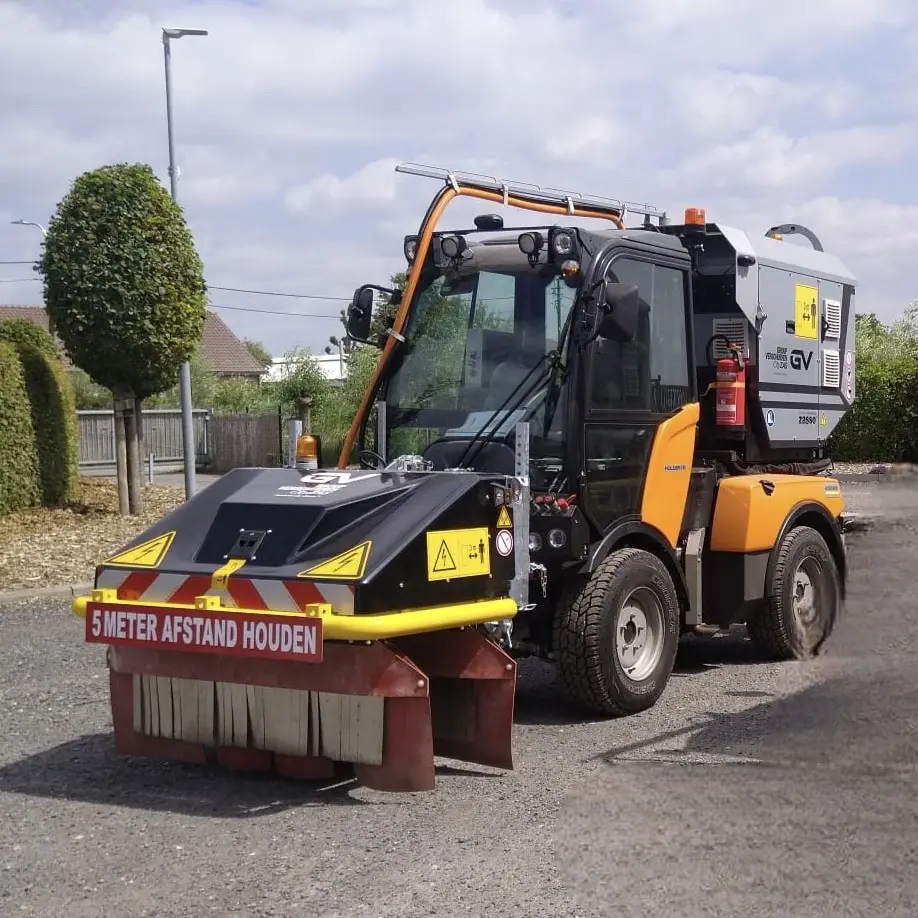
Compact tractor system
Zasso CityZas
An offsettable urban applicator brings electrical treatment to longer routes and wider working areas.
Choose it when: You have a suitable tractor and want a mounted system for municipal route work.
1.2 m working width · 18 kW generator · listed for tractors over 65 hp
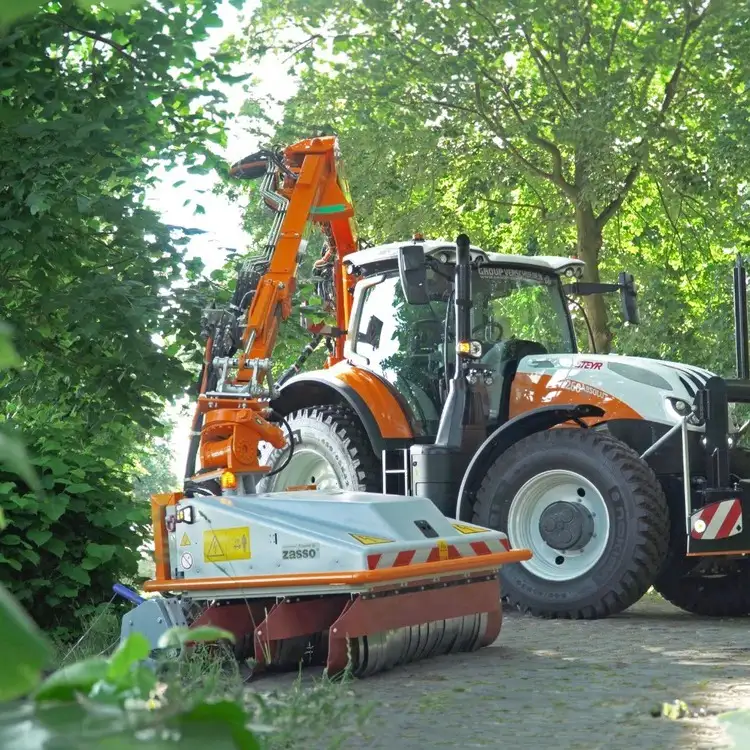
Hydraulic-arm system
Zasso Urban XPA
An articulated arm positions the electrical head on banks, edges and other difficult-to-reach vegetation.
Choose it when: Reach is the limiting factor and a suitable large tractor can support the complete system.
Up to 7.2 m reach · levelling head · listed for tractors from 200 hp
Stored hot water · on-demand heating
Hot-water weed control
.gif)
Deliver thermal energy with water—not just a quick wetting of the leaves.
Hot water transfers heat into the treated vegetation. Where the treatment is intended to reach the plant base and rooting zone, application volume, contact and the growing medium matter alongside temperature. A brief pass over the foliage is a different operation from deliberate treatment at the base.
Pre-heated systems store hot water prepared using an electrical supply. They suit planned spot work and quieter treatment rounds, but the available hot-water volume is finite. On-demand systems heat during operation, making fuel, water supply and refill access part of the daily workflow.
Match the system to actual vegetation, travel and refill time. Tank volume alone is not a reliable measure of daily area covered.
Pre-heated storage
Garden and SP devices heat a stored volume before treatment. Plan the heating supply, route and usable water capacity.
On-demand heating
PRO machines heat during use. Plan the water supply, fuel, hose access and carrier payload for the working day.
Treatment and cleaning modes
Some PRO systems also offer cleaning functions. Use the correct mode and accessories; weeding is not pressure washing.
Equipment to consider
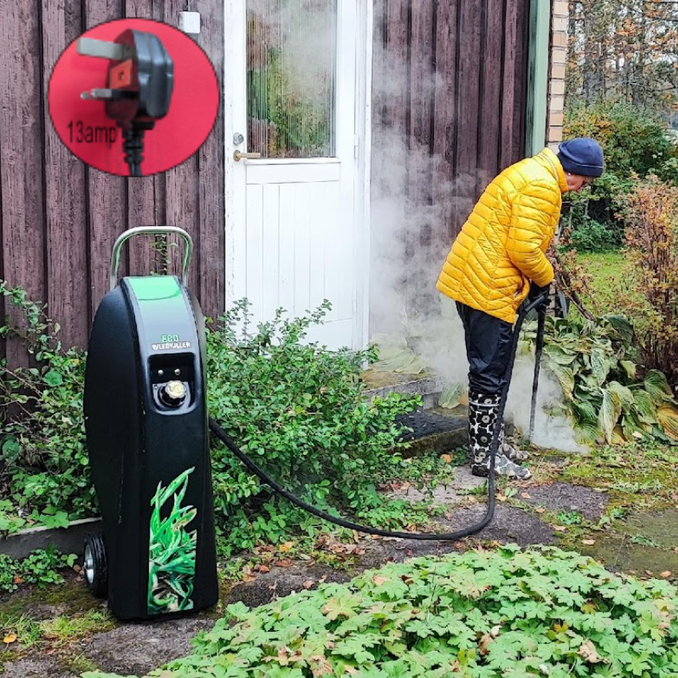
Small-area hot water
Eco Weedkiller Garden 2 kW
Fill and heat the tank before moving the unit to the work area for targeted treatment.
Choose it when: Small gardens or limited spot work suit a compact pre-heated device.
25 L tank · 3 m treatment hose · electric pre-heating
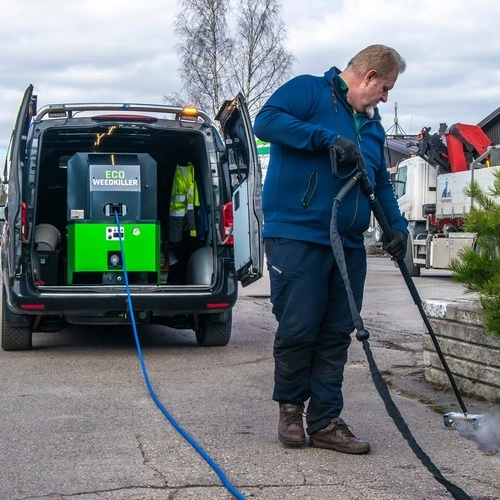
Compact professional storage
Eco Weedkiller SP Pro Mini
A larger pre-heated water store for professional spot treatment without a burner running at the point of work.
Choose it when: A compact carrier and a planned heating cycle suit your daily treatment pattern.
150 L tank · 20 m hose · electric pre-heating
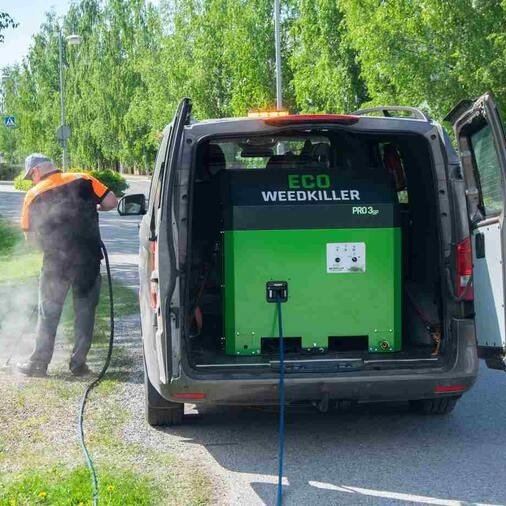
Professional stored hot water
Eco Weedkiller SP3
Heat the tank from an electrical supply, then disconnect and take the stored hot water onto the site.
Choose it when: Quiet treatment and depot charging fit the route and available payload.
300 L tank · 20 m automatic hose reel · pre-heated system
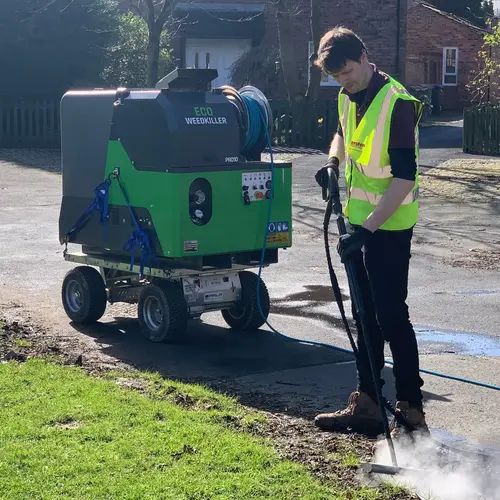
On-demand hot water
Eco Weedkiller PRO10
Heat water during operation for sustained treatment, with separate cleaning modes for appropriate tasks.
Choose it when: Longer working periods suit an on-demand system and water can be replenished.
Linked package: 400 L · 80 m hose · 14 L/min weeding output
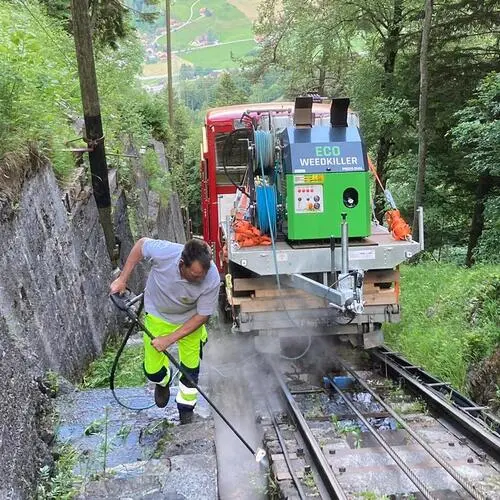
Two-operator hot water
Eco Weedkiller PRO20 Dual
Two hoses and heaters allow a crew to treat separate edges or areas from one system.
Choose it when: Two operators can work productively together and the carrier and water plan support them.
Linked listing: 310 L · two 80 m hoses · Hatz engine
Backpack · trolley · vehicle support
Hot-air and thermal weed control
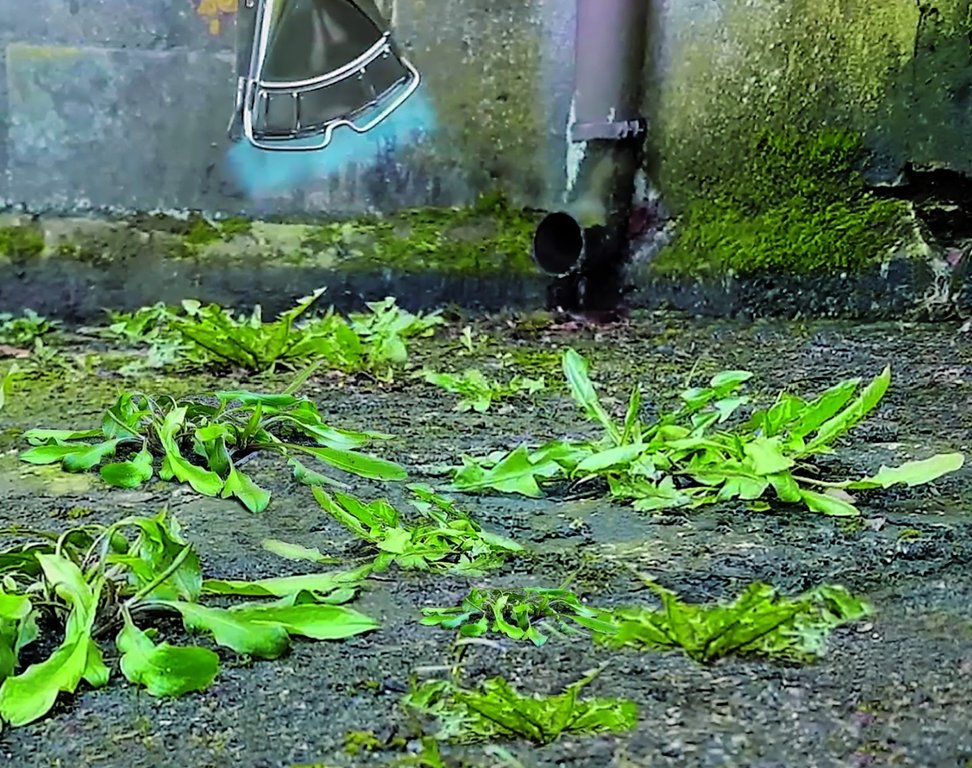
Apply a controlled heat dose, rather than burning everything away.
Hot-air and flame-based thermal tools damage plant tissue by applying heat externally. On suitable young growth, the aim is a controlled thermal shock, not prolonged charring. Established perennials may recover from surviving growing points and require repeat treatment.
The cylinder and applicator arrangement can be as important as the treatment width. Backpacks suit difficult access, trolleys carry the cylinder along a pedestrian route, and vehicle-supported hose reels serve work around a parked carrier.
Hooded or defined-width units offer a different rhythm from hand-directed spot treatment. Check the precise burner design and operating instructions: products grouped under thermal control do not all deliver heat in the same way.
Treat at the right stage
Young growth is generally a more manageable thermal target than mature, well-established perennial vegetation.
Choose how to carry the fuel
Compare access, weight carried by the operator, cylinder transport, hose handling and working time.
Plan for heat
Check dry vegetation, combustible materials, nearby planting and heat-sensitive surfaces before starting.
Equipment to consider
%20660.jpg)
Backpack-supported lance
Ripagreen Mobility Kit
A portable propane-based thermal lance arrangement for spot work, steps and constrained access.
Choose it when: Moving through the site matters more than carrying a cylinder on a trolley.
40 cm nominal treatment width · backpack harness · rotating diffuser
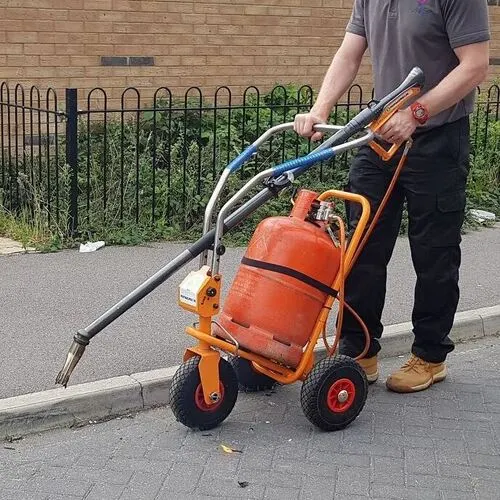
Trolley-supported lance
Ripagreen Easy Kit
The trolley carries the cylinder while the operator directs the thermal lance around the route.
Choose it when: Longer pedestrian rounds suit a wheeled cylinder arrangement.
40 cm nominal treatment width · cylinder trolley · rotating diffuser
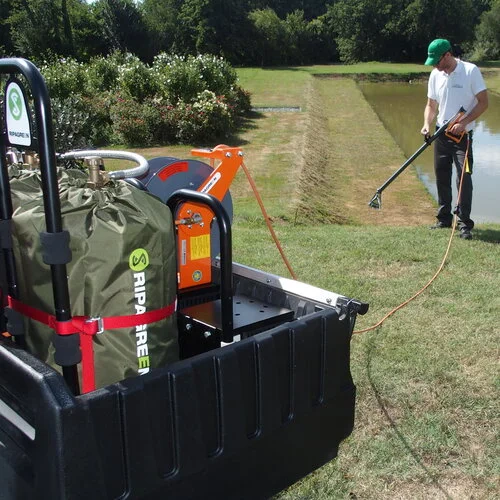
Vehicle-supported lance
Ripagreen Autonomy Kit
A vehicle-mounted cylinder frame and hose reel support treatment around a parked carrier.
Choose it when: Hose reach from a vehicle suits the route better than transporting a cylinder on foot.
One lance · 15 m hose · reel and vehicle bottle frame
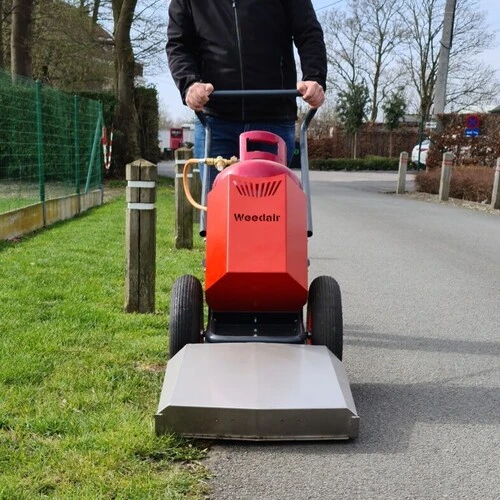
Pedestrian hot-air unit
HOAF WeedAir 50iB
A defined-width walk-behind unit offers a different working format from a hand-directed lance.
Choose it when: Repeated passes over suitable paths and open areas favour a wheeled thermal unit.
50 cm working width · battery ignition · digital temperature display
Why combining methods matters
Treating the weed does not automatically restore the surface.
1. Reduce the growing medium
Sweep loose deposits and remove established accumulations where the surface allows it. Re-expose edges, joints and drainage features for inspection.
2. Treat the remaining targets
Choose electrical or thermal treatment for the vegetation left behind, the available access and the construction. Avoid treating large areas that do not need it.
3. Review the whole visit
Assess clearance, regrowth, operator time, transport, energy and refills. Follow-up results reveal more than the immediate appearance after treatment.
Compare the operation
Choose by the condition you find.
| Condition or task | Method to assess | What still needs planning |
|---|---|---|
| Loose debris and early soil accumulation | Powered sweeping and collection. | Brush setup, dust management, collector and disposal route. |
| Established moss, weeds and compacted edge deposits | Suitable weed brushing, followed by collection. | Surface finish, jointing, brush tools and any exposed defects. |
| Weed-bound or uneven unbound gravel | Renovation, grading or a combination. | Tool choice, depth, membranes, usable aggregate and final profile. |
| Young growth along a mobile route | Portable or hooded thermal equipment. | Heat-sensitive materials, dry vegetation, fuel and repeat visits. |
| Targeted hot-water work across a site | Pre-heated SP or on-demand PRO systems. | Water supply, heating, hose reach, carrier weight and treatment pattern. |
| Individual plants or suitable continuous electrical work | Targeted lance or walk-behind/tractor applicator. | Species, contact method, power supply, trained operation and working-area controls. |
Plan for the surface and the plant
The right method depends on more than weed height.
Surface construction
Paving joints, loose gravel, bonded sports coatings and exposed fabric have different limits. Check brush contact, heat, water, suction and loading against the installed system.
Growth and rooting
Young annual growth differs from mature perennial plants and rhizomes. Identify the species and rooting situation before setting the treatment, dose or follow-up plan.
Access and operation
Assess gates, steps, parked vehicles, hose routes, public access and nearby planting. Include the time for preparation, collection, transport, refills and charging.
Invasive plants need their own plan. Japanese knotweed, giant hogweed and aquatic or fragment-spreading species should not be folded into a routine sweeping or mowing pass. Identify the plant and agree treatment and material handling first. Explore invasive-plant management.
Make it a maintenance programme
Define the standard. Prevent. Treat. Review.
1. Agree where intervention matters
Set acceptable conditions for routes, civic areas, planted spaces and lower-use margins. Record access, appearance and functional needs for each area.
2. Reduce the conditions for regrowth
Remove incoming deposits, keep grass clippings off hard surfaces and repair maintainable defects. Preventative work can change what remains to be treated.
3. Choose and trial the treatment
Use the actual machine, operator and setup on representative conditions. Assess the result alongside clearance needs and the time for a complete visit.
4. Inspect and adjust
Record the condition after treatment and at follow-up. Compare repeat growth, operator time, water or fuel use, charging and collection—not only the first-day appearance.
Read. Examine. Put it into practice.
Build the understanding behind the programme.
Choosing equipment is one part of the job. Explore the thinking behind preventative maintenance, examine field research and develop practical skills for your own sites.
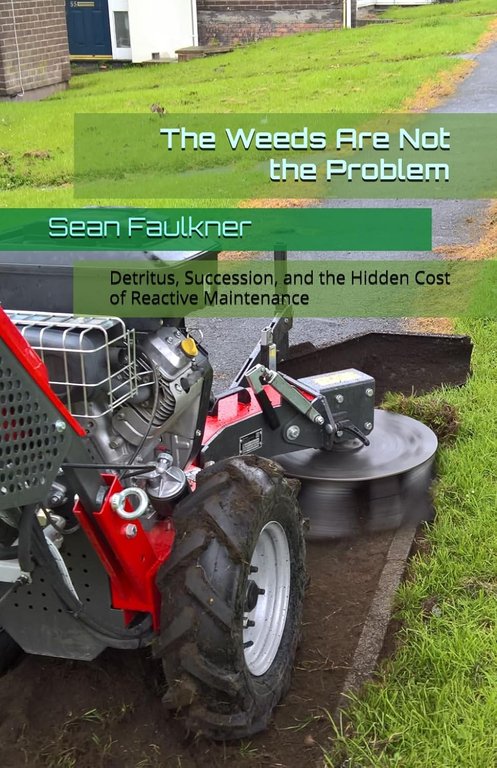
The book · Sean Faulkner
The Weeds Are Not the Problem
Understand how accumulated material and changing surface conditions support growth, and why repeated treatment can leave the cause untouched.
Start here for: a framework for planning, specifying and funding preventative maintenance.
Explore the book →
Bracknell field research
The Bracknell IWM trial
Explore the work with Bracknell Town Council and Complete Weed Control linking detritus, root anchorage and surface condition to maintenance decisions.
The trial combines mechanical extraction with precision herbicide application and investigates pesticide reduction.
Start here for: the research framework, scientific paper, Kick Test and trial updates.
Explore the Bracknell trial →
Practical training · Pierces Farm
Integrated Weed Management workshops
Join Sean Faulkner for surface diagnosis, method selection and hands-on machinery sessions covering mechanical, hot-air, hot-water and electrical methods.
Start here for: operator skills, programme planning and the business case for preventative work.
View workshop dates and details →Technical reading and site experience
Go deeper with Kersten’s practical guides.
Explore diagnosis, working technique and real maintenance settings. These articles help connect the machinery to the conditions you are managing.
.jpeg)
Surface diagnosis
The Kick Test
Understand why root anchorage can change the maintenance decision even when weeds look similar.
Read the article →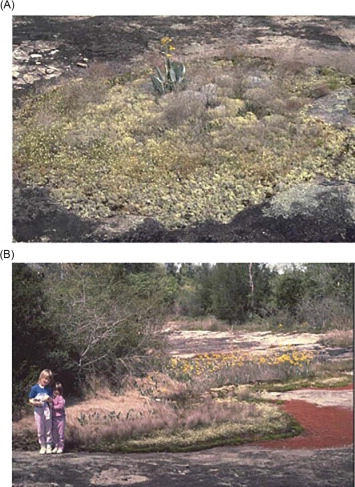
Prevention
Why soil build-up matters
Explore the relationship between accumulated soil and the types of vegetation that establish.
Read the article →%20(1).jpg)
Council and contractor example
First steps towards IWM
Follow a practical demonstration comparing mechanical removal, hot water, electricity and hot air.
Read the article →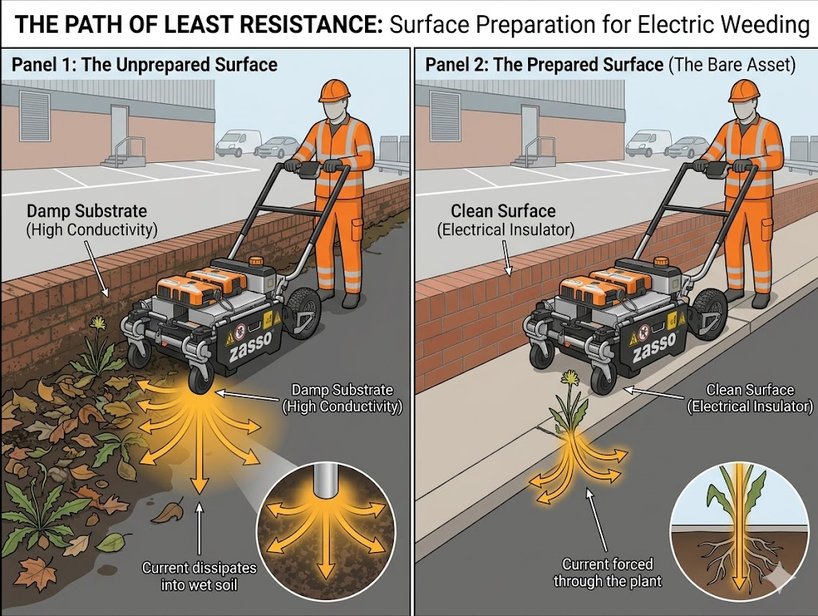
Electrical method
Sweeping before electrical treatment
Read Kersten’s explanation of how surface deposits influence electrical treatment conditions.
Read the article →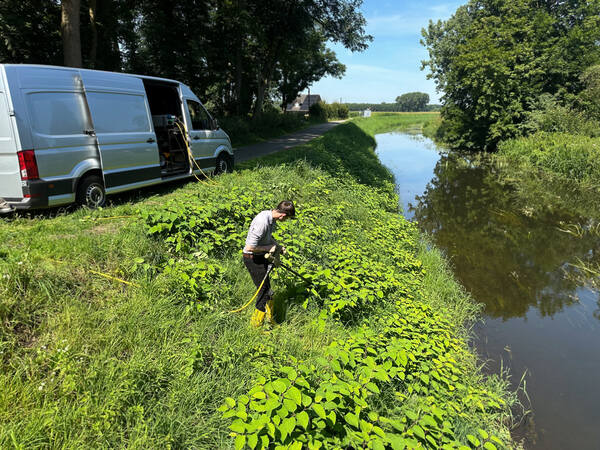
Electrical equipment selection
Electricity on hard surfaces and soil
Compare the treatment arrangements used for pavement growth and more targeted soil-based work.
Read the article →_page-0001%20(1).jpg)
Hot-water technique
Hot water: why the growing medium matters
Explore Kersten’s discussion of water volume, application at the plant base and heat delivery.
Read the article →.jpg)
Access and workflow
The pavement and parked-car challenge
Consider how preparation, hose access and two-operator working fit an obstructed urban route.
Read the article →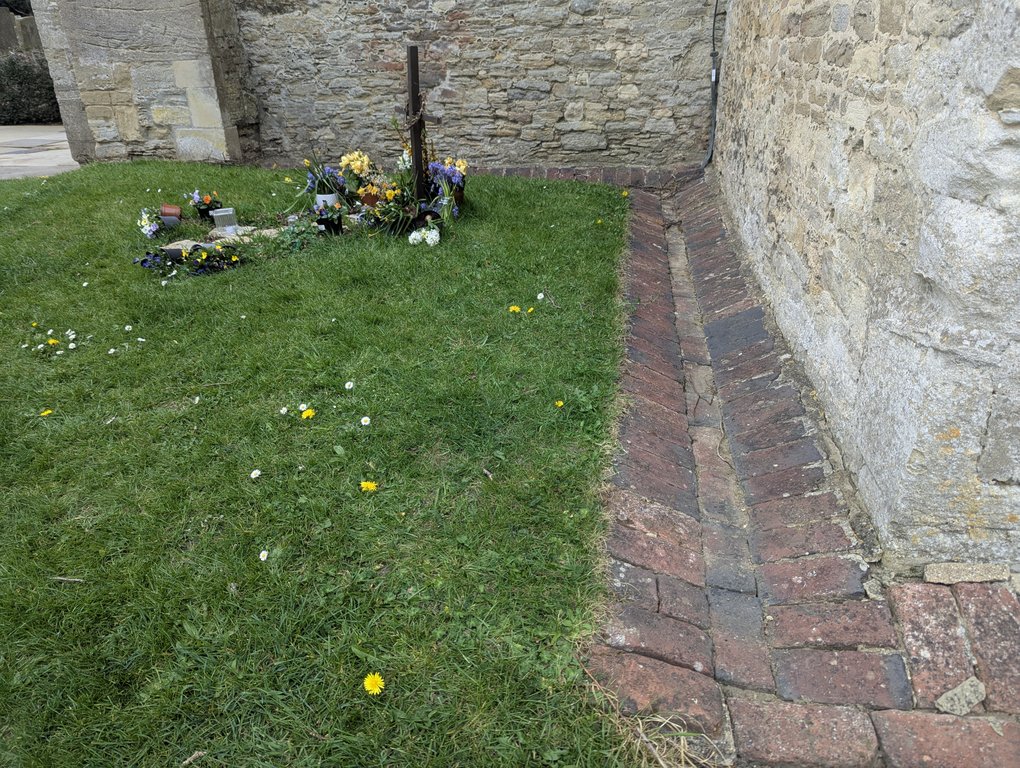
Hot-air site example
Ripagreen in a churchyard
Read a real-site account of early treatment and repeat visits around paths and brick gullies.
Read the article →.jpg)
Hot-water site example
PRO10 at a plant nursery
See how one nursery assessed weed treatment and additional cleaning tasks with the PRO10.
Read the article →Choose the next route
Start with the surface or the material.
Common questions
Choosing chemical-free weed-control equipment
What is the difference between pre-heated and on-demand hot water?
Pre-heated devices store a volume of water heated before the treatment round. On-demand machines heat during operation. Compare heating access, refill arrangements, treatment pattern and the complete daily workflow rather than tank size alone.
Do I need one machine or a combination?
Some sites need a combination: collection for loose deposits, a suitable brush for established material, then targeted thermal or electrical work where appropriate. One carrier with compatible attachments can also cover several mechanical tasks. Choose around your surfaces and maintenance programme.
Which method is best for replacing herbicide use?
There is no single answer for every site. Start with the surface and condition: remove loose material, release established deposits where needed, then assess the thermal or electrical method for the vegetation that remains. Build the choice around the whole maintenance visit.
Can a sweeper remove established weeds?
A sweeper handles loose material and some releasable surface growth. Rooted weeds and compacted deposits may need a suitable weed brush or another remedial operation first. Collect what is loosened afterwards.
Is a battery weed brush an electrical weedkiller?
No. A battery-powered weed brush uses rotating tools to physically remove growth. An electrical weed-treatment system applies electrical energy through plant contact and a prescribed circuit. Power source and treatment mechanism are different choices.
Does hot-air treatment need to burn the plant away?
The intended action is a controlled thermal shock at the specified working rate, not prolonged scorching. Match the applicator and technique to the equipment instructions and site, then inspect the result and plan repeat visits.
Does electrical treatment permanently kill every root?
No blanket result should be assumed. Effectiveness depends on the equipment, contact, plant condition, species and root system. Persistent perennial or invasive growth may need repeated treatment and a specialist management plan.
What remains after hot-water or electrical treatment?
Dead vegetation and supporting deposits may remain in place. Treatment does not substitute for collection where a clean surface or reduced growing medium is required. Plan the timing and method of removal around the surface and plant species.
How should I compare running costs?
Include operator time for preparation, treatment, clearance, transport, refills and charging, plus consumables and repeat visits. Test representative sites over a useful follow-up period rather than relying only on purchase price or nominal working width.
What should I send for a recommendation?
Send photographs, surface construction, area or route length, narrowest access, main plants and deposits, and existing carrier details. Explain the required finish, available water and power, staffing and collection equipment.
Choose the working method and the complete setup
Show us the site you want to manage.
Send photographs, surfaces, growth and access details. We’ll help compare practical mechanical, thermal and electrical options and arrange a suitable demonstration.