The weeds are not the problem. The surface is.
Detritus, Succession, and the Hidden Cost of Reactive Maintenance
Britain's pavements are being sprayed, strimmed and mown more than ever, yet many continue to shrink beneath moss, soil and vegetation. Sean Faulkner explains why reactive maintenance keeps failing and presents a diagnostic approach that addresses the cause rather than repeatedly treating the symptom.
Paperback · First published 2026 · Printed in the UK
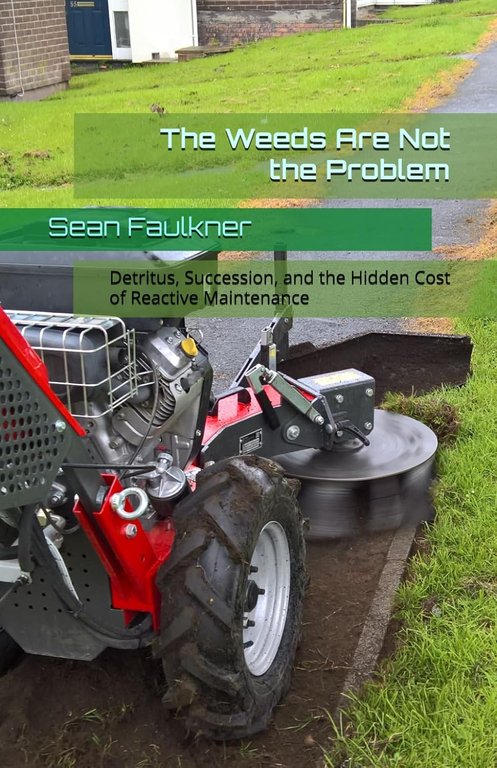
by Sean
Faulkner
A new diagnosis
Understand weeds as indicators of changing surface conditions rather than an isolated maintenance problem.
A practical framework
Move from repeated reaction towards inspection, prevention, intervention and long-term stewardship.
Built on field evidence
Connect the argument to surface surveys, operational experience and the Bracknell IWM trial.
From book to practice
Take the ideas further through Kersten's monthly Integrated Weed Management workshop.
The central argument
What appears to be a weed problem is often a surface problem
Vegetation becomes established where detritus, moisture, compaction and deferred maintenance have changed the conditions of the pavement, kerb line or path.
The familiar response is to remove the visible growth. Spray it, strim it, burn it or brush it. The surface may look cleaner for a short period, but the material that allowed the plants to establish often remains.
The result is an expensive loop in which the symptom is repeatedly treated while the cause becomes more deeply embedded.
The book reframes maintenance around surface condition, succession stage, drainage, accumulated material and function. The first question is no longer simply "How do we kill this weed?" It becomes "What has changed here, and what intervention will restore the intended surface?"
This approach does not promote one machine, one chemical or one universal method. It provides a way to decide which response is appropriate, when it should be used and what must happen afterwards.
Bracknell field research
The Bracknell Integrated Weed Management Trial links species, detritus depth, surface condition and maintenance intervention across working sites.
Written for the current transition
The argument supports organisations moving from treatment-led maintenance towards a planned, evidence-based Integrated Weed Management programme.
Beyond spray versus sweep
The real choice is not between two tools. It is between repeated firefighting and active stewardship of the surface.

Read the condition before selecting the tool
Surface width, accumulated material, edge loss, drainage and vegetation stage all influence the correct maintenance response.
How a surface changes
Neglect is gradual, which is why it becomes normal
The book follows the progression from a functioning hard surface to one that increasingly behaves like soil.
Exposed surface
The intended pavement, joint and edge remain visible, free-draining and easy to inspect.
Material accumulates
Dust, leaf matter, silt and organic debris begin to settle in joints, kerbs and low points.
Pioneer growth
Mosses and tolerant plants exploit moisture and the emerging substrate.
Established vegetation
Rooted plants, lost edges and retained material make the altered condition feel permanent.
“Nobody intended the pavement to become this way. The danger accumulated gradually until the altered condition began to feel ordinary.”From the Prologue: The Pavement Outside the School
Inside the book
Twelve chapters, one shift in thinking
The book moves from diagnosis to practice, ending with audits, evidence and an operational sequence that maintenance teams can adapt to their own networks.
The myth of the weed-free city
Why the war on weeds was never winnable and why the goal itself needs to be reconsidered.
The Steward and the Firefighter
Two models of maintenance and how reactive systems quietly lock organisations into paying for repeated failure.
Reading the surface
Detritus depth, drainage, species composition and the ecology that develops when a surface is left to change.
Interrupting succession
The fragmented state of responsibility and practical ways to reset a surface before growth becomes established.
The right plant in the right place
Where vegetation belongs, where it creates risk and why residents and operatives often notice deterioration first.
Ecological debt and the transition
What deferred maintenance really costs and how organisations can move realistically out of the reactive cycle.
From the page to the pavement
Put the book's diagnostic approach into practice
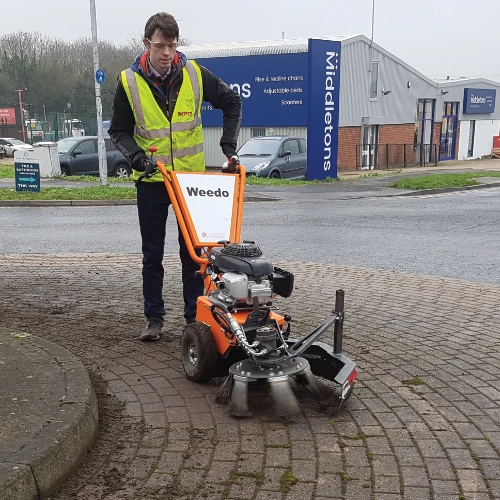
The monthly Integrated Weed Management Workshop combines the thinking in the book with practical surface diagnosis, method selection and hands-on machinery sessions.
Integrated Weed Management Workshop
Learn to read the surface, choose the method and build the case
Join Sean Faulkner at Pierces Farm for a practical day covering mechanical, thermal and electric weed control, surface succession, programme planning and the financial case for preventative maintenance.
- First Wednesday each month
- Starting October 2026
- Maximum 10 attendees
- £150 + VAT per person
- Hands-on machine sessions
- Lunch and resources included
About the author
Machinery, surfaces and the spaces between them
Who it is for
Written for people responsible for the network
The book is aimed at the people planning, funding, specifying, delivering and living with public-realm maintenance.
- Local authority highways, streetscene and grounds teams
- Grounds maintenance and weed-control contractors
- Parks, estates and facilities managers
- Councillors and officers planning herbicide reduction
- People writing maintenance policies and specifications
- Operators responsible for practical surface care
- Procurement teams assessing methods and machinery
- Residents who have noticed their pavement disappearing
Go deeper on Kersten UK
Continue from diagnosis into evidence and practice
The book provides the framework. These Kersten resources support training, site assessment, field evidence and practical implementation.
Integrated Weed Management Workshop
Join a small monthly group for surface diagnosis, programme planning and hands-on experience with mechanical, thermal and electric methods.
View dates and places →
The Bracknell IWM Trial
Explore research connecting detritus depth, species, surface condition and preventative maintenance across working public sites.
Explore the trial →
Free IWM Assessment
Start examining your network, current treatment programme, surface conditions and priorities through Kersten's Integrated Weed Management assessment.
Take the assessment →Integrated Weed Management for Amenity
A practical introduction to the framework, objectives and methods used in an IWM programme.
Learn about IWM →Mechanical Weed Management
Explore brushes, sweepers and renovation equipment for removing growth and accumulated material.
Browse methods →Thermal and Electric Weed Control
Compare hot air, hot water and electric methods for sites where mechanical intervention is not appropriate.
Browse methods →Bracknell Research Update
Read the latest reporting from the trial and examine its operational findings.
Read the update →Trial Machinery on Your Site
Hire selected machinery to test practical methods on your own surfaces before making a purchase decision.
View hire options →Discuss Your Network
Speak to Kersten about a surface-management challenge, IWM strategy or practical equipment requirement.
Talk to the team →
Stop managing symptoms. Start reading the surface.
The Weeds Are Not the Problem is available now in paperback. Continue into practical training through the monthly Integrated Weed Management Workshop.