The Kick Test
A five-second check with the toe of your boot decides whether a surface costs £10 or £150 a square metre to put right
Integrated Weed Management
The Kick Test
A five-second check with the toe of your boot decides whether a surface costs £10 or £150 a square metre to put right.
Two weeds. Same pavement. Same detritus depth on the gauge, fifteen millimetres to the hard surface.
By the rules of thumb the sector normally uses, they are the same problem. Same species above ground, same untidy edge, same complaint, same urgency from any inspection built around what a weed looks like from standing height.
Then you pull them.
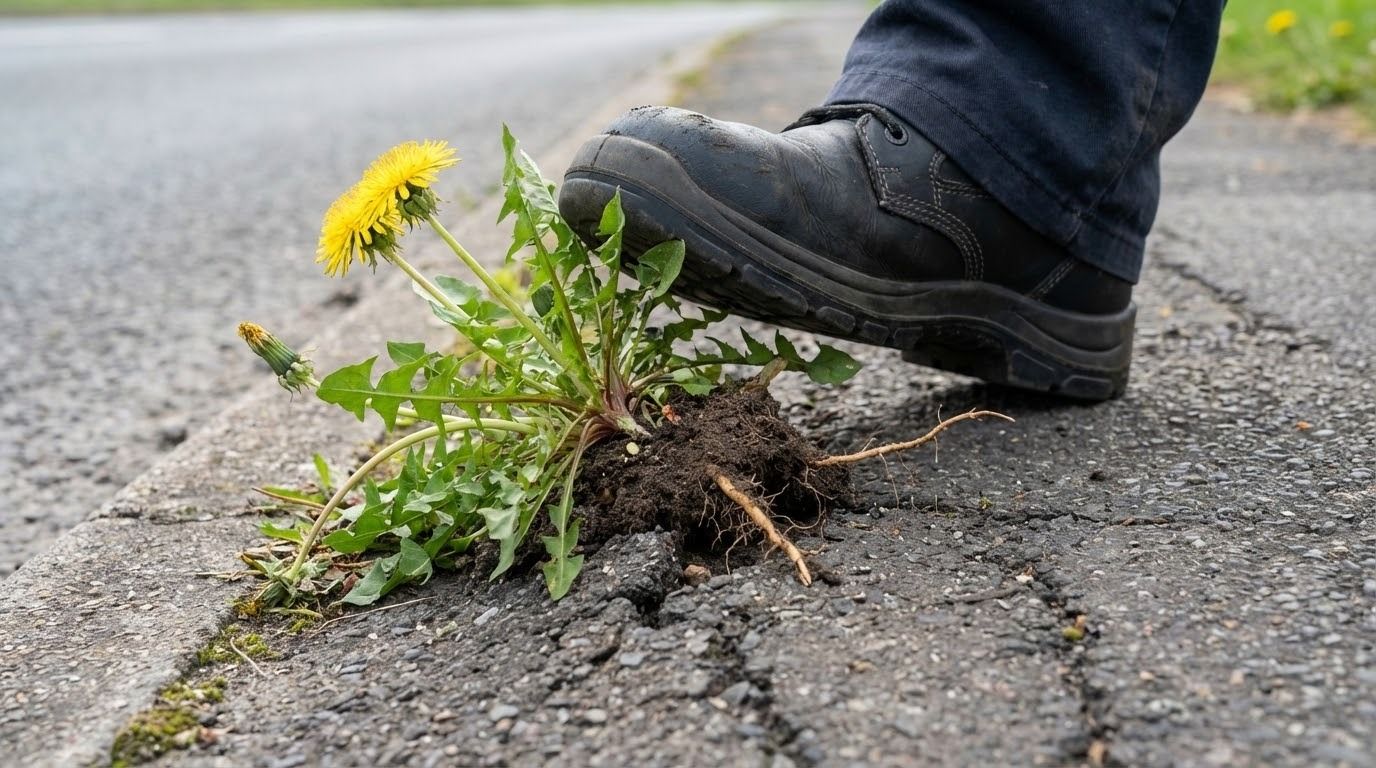
The first lifts almost cleanly, the root mass coming away with the surrounding material like something that was only ever sitting on top of the pavement. The second snaps at the surface and leaves its roots behind, locked into the cracks and joints of the asphalt beneath.
The gauge wasn’t wrong. It just missed the single most important thing about the surface: whether the ecology is still sitting on the infrastructure, or has begun bonding itself into it. That distinction is the difference between a job under £10 a square metre and one that costs £75 to £150 or more, and you can tell which in about five seconds.
Why depth alone isn’t enough
The working assumption has always been simple: shallow detritus means a manageable surface, deep means trouble. Broadly, that holds. The Bracknell trial, measuring detritus depth against species across six ordinary local-authority sites, confirmed depth drives roughly a quarter of the variation in what grows, a strong result for noisy field ecology.
But the most consequential finding was in the middle ground, where two areas at the same eleven-to-twenty-five-millimetre depth behaved completely differently the moment they were disturbed. This is where the open window and the closed window come from.
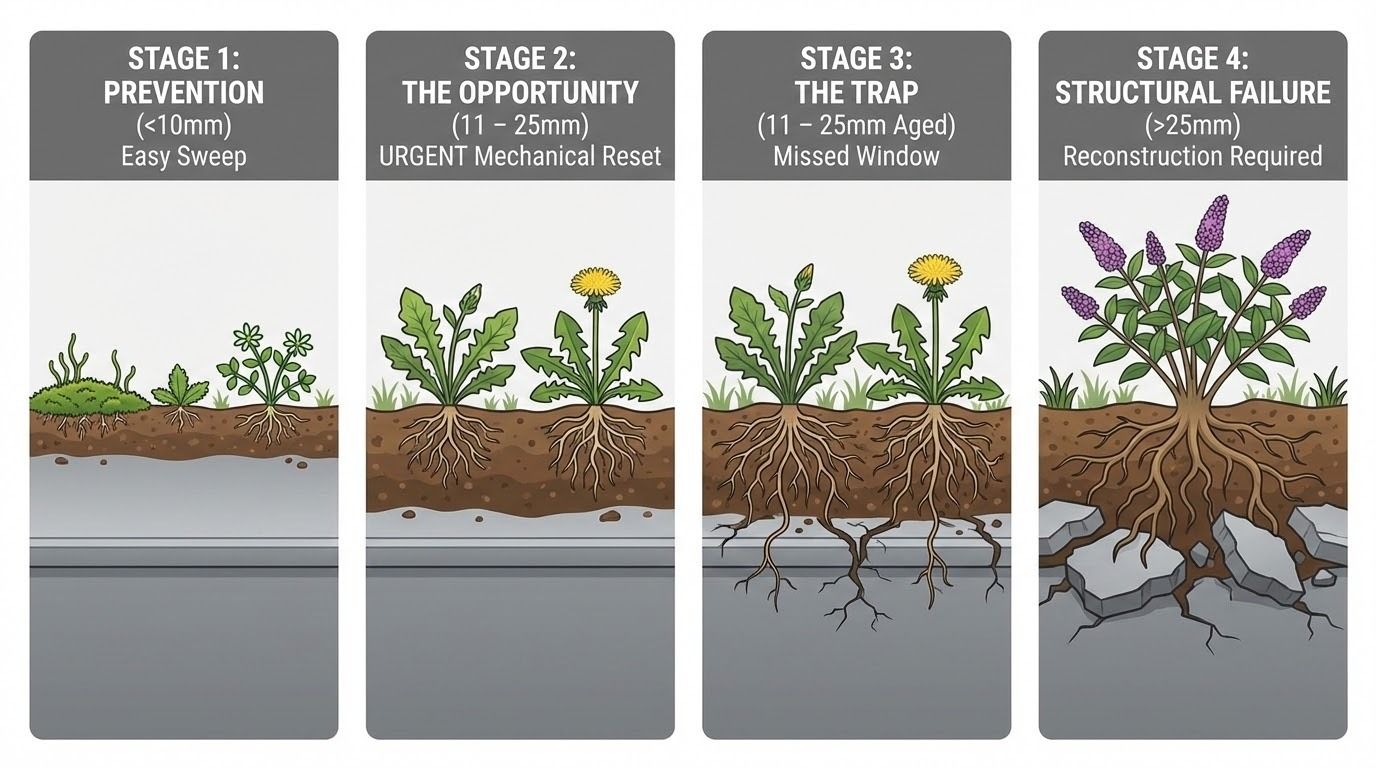
Stage 2 is the open window. The substrate has built up, but the roots are still floating within the loose detritus rather than bonded into the structure. Mechanical extraction lifts the material and much of the root system cleanly, and the surface resets. Including sealing the edge, that can stay below £10 a square metre.
Stage 3 is the closed window. The depth reads the same, but time has changed the condition. Roots have anchored into cracks and joints, and the material has begun integrating with the surface. Disturb it and the plant breaks away while the roots stay held below, so the intervention no longer removes the problem. It exposes the fact that the problem has moved beneath the visible layer. Costs here run from £75 to £150 a square metre, and by Stage 4, where woody roots reach the sub-base, reconstruction pushes them higher still.
Same fifteen millimetres, a ten- to fifteen-fold difference in cost. That is the gap between maintenance and repair. It is the same logic behind Tracy’s Law: why losing the edge means losing the road, and why mechanical path edging can work out cheaper than hand weeding.
You often can’t see the difference
Stage 2 and Stage 3 look almost identical from above. Same vegetation, same untidiness, same complaint. A reactive inspection built around weed height or public reports sees two scruffy edges and treats them as equals, when one is cheaply recoverable and the other already holds embedded roots, freeze-thaw damage and the start of edge failure. The most important factor on that surface is invisible, unless you know how to make it visible.
The test itself
The Kick Test came out of a frustrating moment at Bracknell, kneeling on cold tarmac looking at two patches that measured the same and behaved nothing alike. Almost instinctively, I pressed my boot against the base of the next weed before pulling it. The whole mass shifted. That small movement changed how I read the surface.
Press the toe of a boot against the base of the weed mass and apply steady pressure.
- If the whole mass moves with the detritus, the roots are still floating. The surface is likely still in the recoverable Stage 2 window, and mechanical extraction can probably reset it.
- If the growth snaps away or resists firmly while the root stays embedded, the surface has crossed into Stage 3. The ecology has locked into the infrastructure, and you may be managing a structural defect rather than a weed.
No laboratory, no instrumentation. It turns a judgement that used to depend on years of instinct into something any trained operator can check on the spot, which is exactly what the Lantra-certified Integrated Weed Management training is built around: not a change of product, but a change in how you read a surface.
When the window is still open
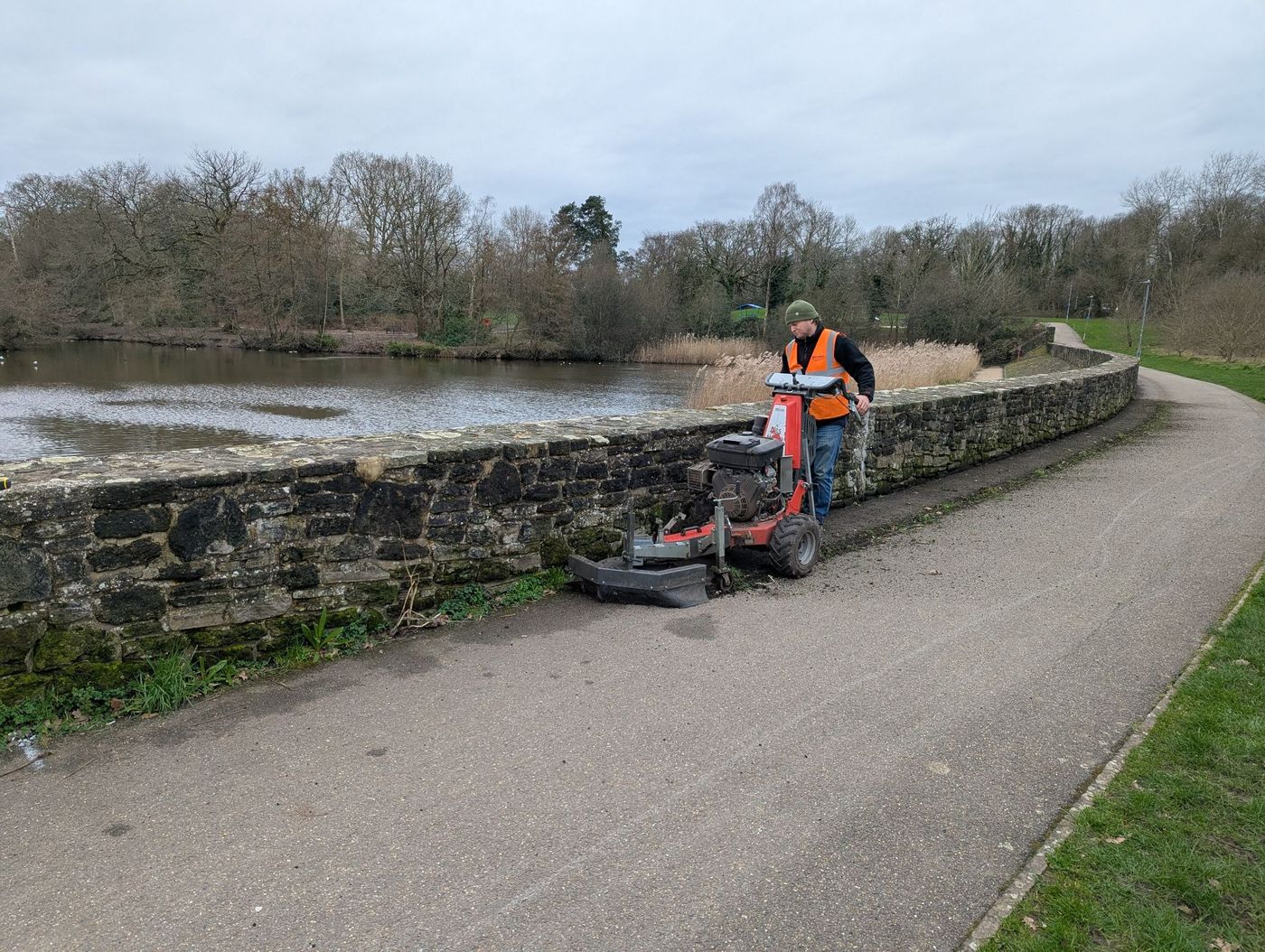
Catch a surface at Stage 2 and the response is straightforward. Mechanical brushing lifts the substrate and the floating roots together, restoring the edge and the drainage line before succession embeds itself. Remove the growth medium and you remove the thing that lets weeds keep coming back.
The equipment sits within a sequence rather than replacing one spray with one machine. Mechanical weed removal and substrate extraction handles the physical foundation at Stages 1 and 2; thermal and hot water methods handle early annual growth and treatment into crowns and root zones. Each tool belongs at a different point on the curve, which is why the right question is never “what replaces glyphosate” but “what condition is this surface in, and what will move it back toward resilience.”
Why it matters beyond the individual weed
Choose extraction on a Stage 2 surface and you reset it before deterioration compounds. Miss it, or keep suppressing the growth chemically while the substrate accumulates underneath, and you don’t remove the problem. You bank it. Left through a few more cycles, the same location can eventually need excavation, structural repair, drainage intervention and resurfacing, at hundreds of times the cost of the early pass.
That is the whole argument in miniature. The weeds are rarely the problem. They are the visible signal of a physical condition developing beneath the surface, and timing matters far more than force. A five-second check with your boot is one of the cheapest ways to find out how much time you have left before the window closes.
Go further
The Kick Test came out of the Bracknell trial and is one of several diagnostic ideas in Sean Faulkner’s book, The Weeds Are Not the Problem.
Prefer to get hands on? Our monthly Practical Integrated Weed Management Workshops near Reading, limited to ten people, let you try the Kick Test on real surfaces and compare the equipment side by side.
Or if you want to understand your own network before deciding what to buy, talk to us about a surface condition audit.

No comments yet. Login to start a new discussion Start a new discussion