The Path of Least Resistance: Why Sweeping is the Secret to Electric Weed Control
Electricity; "Does it actually kill the root?" The short answer is yes. The longer, much more important answer is: It depends entirely on what the weed is sitting in.
The Path of Least Resistance: Why Sweeping is the Secret to Electric Weed Control
If you have been following the conversation around Integrated Weed Management (IWM), you have probably heard the industry debate about electrical weed control. The most common question skeptics ask is: "Does it actually kill the root?" The short answer is yes. The longer, much more important answer is: It depends entirely on what the weed is sitting in. Electric weeding is not magic; it relies on physics. And if you want to get the most out of next-generation tools like the Zasso Zap Weeder, you have to understand how to manipulate the physics of the pavement to your advantage.
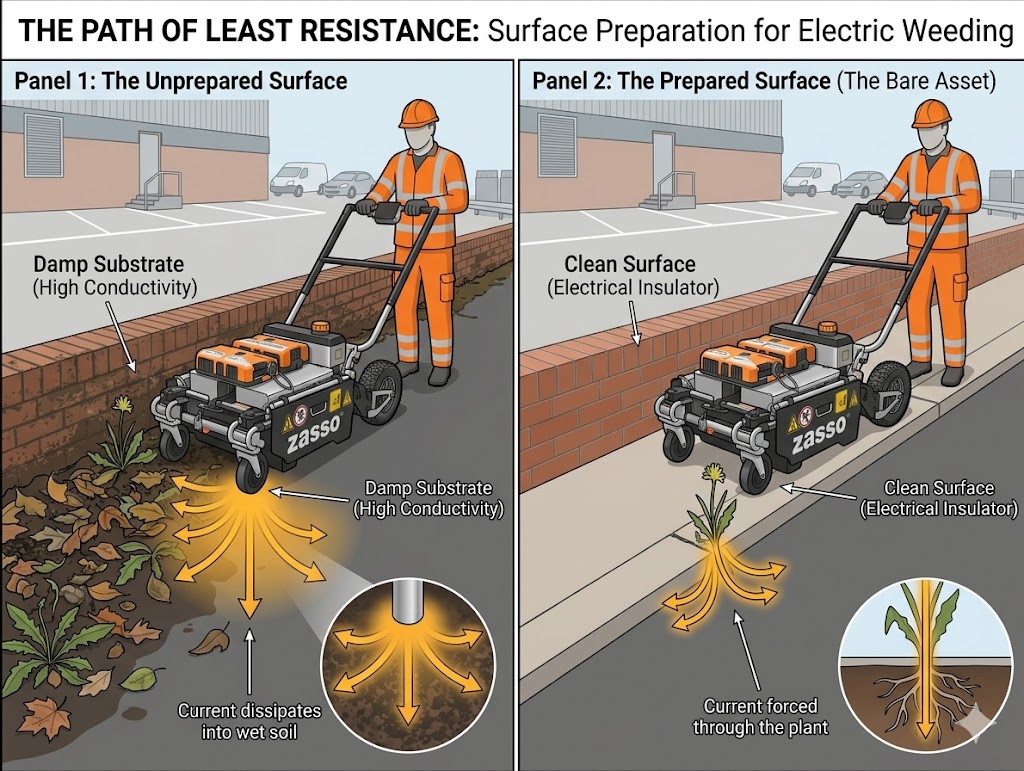
The Physics of the Pavement
Electricity will always take the path of least resistance.
If a weed is sitting in a thick, damp layer of accumulated substrate (the mix of decomposed leaves, grass clippings, and soil that builds up in neglected kerb edges), that environment is highly conductive. When you apply high-voltage electricity to a weed in those conditions, a significant portion of the current simply dissipates sideways into the wet soil to complete the circuit. You end up wasting energy boiling the mud, and the deeper root structures often survive.
But what happens when you brush that accumulated detritus away first?
When you remove the soil burden, the plant is left sitting isolated on a bare asset like tarmac, concrete, or stone. Hard infrastructure materials are natural electrical insulators. By removing the conductive soil, you eliminate the alternative pathways. The only remaining path of least resistance to the ground is the moisture-rich vascular system of the weed itself.
The high-voltage current is forced straight down the stem. The plant’s natural resistance generates intense heat, rapidly boiling the water inside its cells from the inside out and completely destroying its structural integrity.
This is why mechanical brushing isn't just a cosmetic exercise. It is the mandatory surface preparation that makes systemic electrical weed control possible.
Meet the Tech: The Zasso Zap Weeder
Once the surface is reset and the detritus is gone, you need a tool designed specifically for the unique environment of hard infrastructure. This is where the Zasso Zap Weeder comes into its own.
As the world's first battery-powered, walk-behind electric weeding device, it is designed to replace the traditional chemical knapsack in urban and amenity spaces: https://kerstenuk.com/electric-weeders/pedestrian-electric-weeder/walk-behind-electric-weeder-sunpc
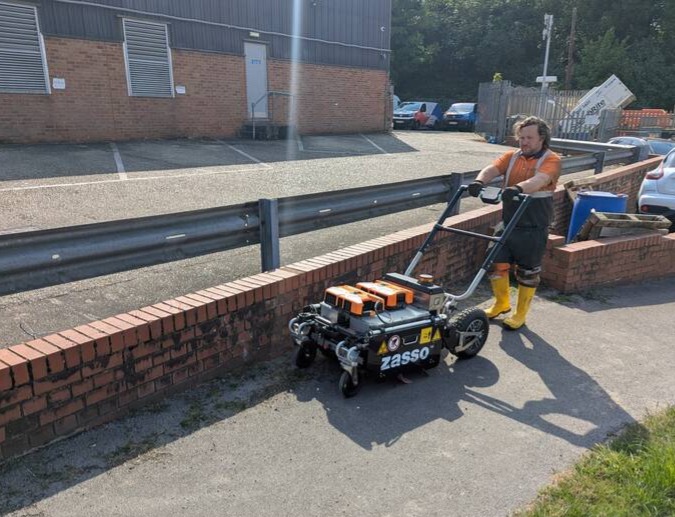
- Targeted Hard-Surface Design: Unlike heavy agricultural electric weeders designed for deep soil, the Zap Weeder features electrodes placed closer together. This creates a shallower, highly concentrated electrical loop perfectly calibrated for the root systems of plants growing in pavement joints and hard surfaces.
- Systemic Root Kill: It delivers up to 10kV of high-voltage energy directly through the plant. You don't need to scorch the weed to ash; the current boils the plant cells internally, leading to a systemic breakdown where the plant naturally decays and decomposes within a couple of weeks.
- Precision Edge Control: Weeds don't grow in the middle of the path; they hug the boundaries. The Zap Weeder features flexible stainless-steel electrodes with a 5cm proprietary side-shift function, allowing the operator to zap weeds right up against kerb edges, walls, and obstacles with total precision.
- Zero Emissions and Silent Operation: Powered by two Pellenc ULIB 1500 Lithium-ion batteries, it provides up to 4 hours of continuous weeding. Because it operates under 80 decibels and has zero emissions, it is ideal for noise-sensitive areas like hospitals, schools, and early-morning residential rounds.
Sequence is Everything
We cannot expect modern technology to solve decades of ecological neglect on its own. If you try to zap a weed buried in two inches of wet substrate, you are fighting the environment. But if you sweep the surface first, you turn the pavement into an insulator and force the plant to take the full force of the current.
Electricity is the future of sustainable, systemic weed control. But the brush will always be the tool that paves the way.

No comments yet. Login to start a new discussion Start a new discussion