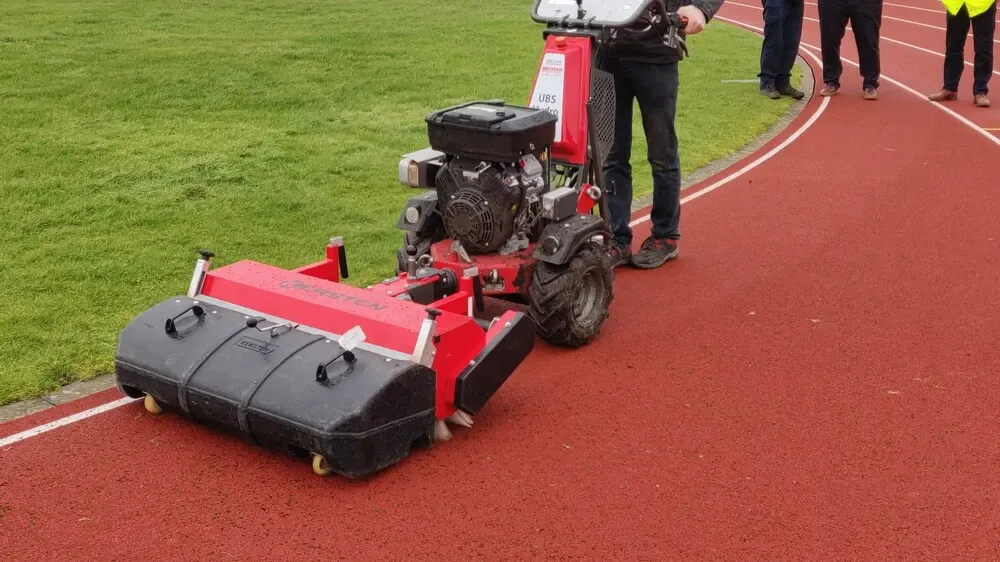
Polymeric courts, tracks and sports surfaces
Clear the debris.
Care for the playing surface.
Remove leaves, grit and organic deposits before they become a bigger cleaning job. Match the sweeper, brush contact and collection method to the bonded surface beneath your feet.
Choose around the problem
Routine clearing or a deeper clean?
Loose leaves and litter
Remove promptly with suitable sweeping, vacuum collection or controlled blowing to a collection point.
Deposits that resist a normal pass
Trial the approved brush setup. Persistent embedded dirt may need a planned wet clean rather than more pressure.
Loose granules, cracks or worn coating
Assess the surface before continuing. Repair, resurfacing and drainage faults need a different response from debris removal.
Pedestrian sweeping attachments
Choose the sweeper for your carrier.
These EFKM models offer adjustable brush height and optional collection. The standard poly roller still needs surface-specific approval and a trial: material, contact and machine loading must suit the installed system.
90 cm · K35 hydraulic
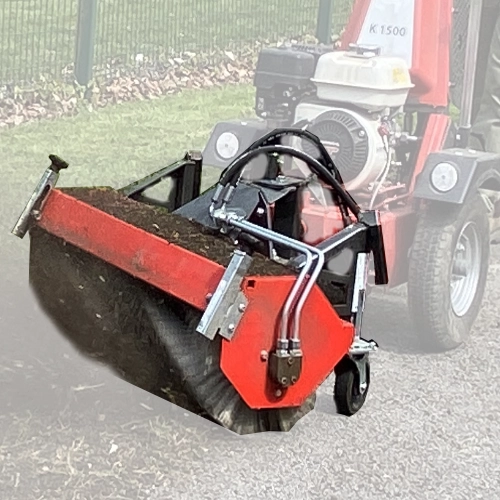
EFKM 09032 H-K 35
A compact front sweeper with finely adjustable brush height. Its 90 cm roller suits smaller pedestrian working combinations.
Choose it when: You have a compatible K820, K820 Pro or K1500 and want sweeping with optional collection.
- 90 cm working width · 32 cm roller
- Hydraulic implement drive
- K35 mounting bracket
- Standard five-row poly brush
100 cm · K70 hydraulic
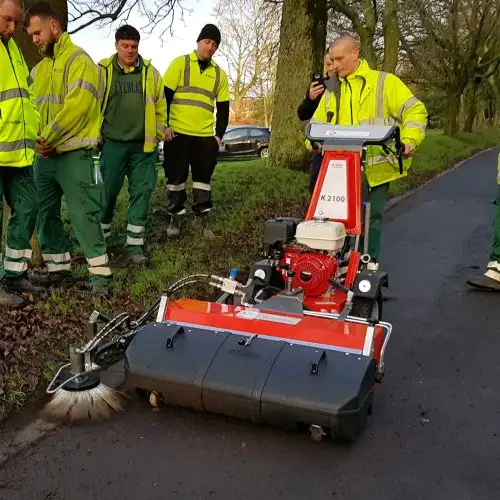
EFKM 10037 H-KU 70
The wider hydraulic EFKM attachment for the K2100, with a larger roller and adjustable contact height.
Choose it when: A compatible K2100 suits the site and a 100 cm pass fits the access.
- 100 cm working width · 37 cm roller
- Hydraulic implement drive
- K70 mounting · listed for K2100
- Standard five-row poly brush
100 cm · UBS mechanical
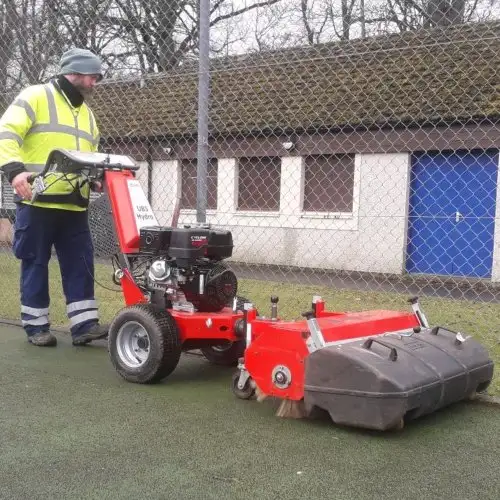
EFKM 10037 M-U 70
A mechanical-PTO EFKM attachment for compatible UBS carriers. Its working width matches the 100 cm hydraulic model, but the drive system differs.
Choose it when: You have a matched UBS Hydro 9, 13 or 16 and need a mechanical-drive sweeping attachment.
- 100 cm working width · 37 cm roller
- Mechanical implement drive
- 70 mm mounting · confirm carrier model
- Standard five-row poly brush
Attachment prices are not complete-machine prices. Add a suitable power unit, matched collector and any required equipment. A 70 mm mounting connection does not make the hydraulic and mechanical versions interchangeable.
Finish the collection setup
Lift the deposits—and take them away.
A collector keeps loosened material out of the next cleaning pass. Match the box to the exact sweeper, then set its tracking and clearances as instructed.
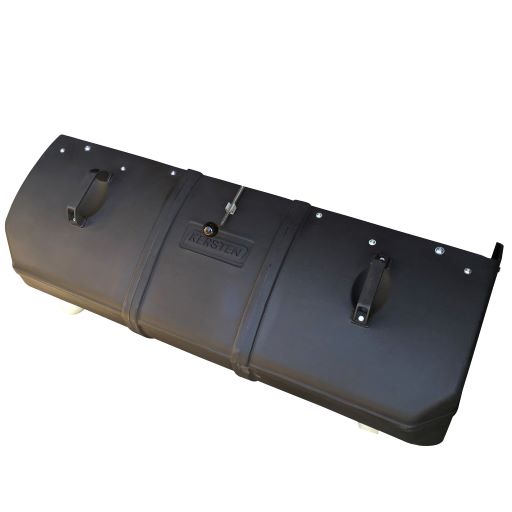
SSB 090 K
90 cm collector listed for the EFKM 09032 H-K 35. The listing includes adjusting brackets.
SSB 100 K
100 cm collector listed with the EFKM 10037 hydraulic and mechanical attachments.
Bonded rubber is different from loose rubber infill. A polymeric surface is not an artificial-grass carpet to groom or redistribute. Do not select an infill-separation collector simply because the surface contains rubber. If the material being collected includes loose surface granules, investigate the surface condition.
Understand the surface first
The rubber is bonded into the surface.
Polymeric sports systems use rubber and binder to form a continuous playing layer. Some constructions allow water through; others rely on surface runoff. Confirm the installed system before choosing a cleaning or drainage remedy.
Care for the playing layer
Use suitable non-metallic bristles and controlled contact. Protect the coating and painted lines; aggressive steel or cable weed-brush tools are not a routine cleaning choice.
Keep contaminants moving out
Leaves, grit and organic matter should be removed rather than repeatedly redistributed. Pay particular attention to shaded edges, fence lines and low-traffic corners.
Check where water should go
Keep drainage channels and outlets clear. On permeable systems, fine contamination can affect the surface voids; persistent water may also involve the base or levels.
Set up for the installed system
Check the finish before increasing the contact.
Inspect and identify
Check surface type, coating, age, repairs and supplier instructions. Look for tears, cracks, loose granules, exposed edges and vulnerable line markings.
Trial the whole combination
Use the intended machine, bristles and collector on a representative area. Adjust brush height to obtain effective collection without unnecessary loading of the playing layer.
Keep the machine clean
Clean tyres and contact parts before entry. Check for fluid leaks, worn brushes and trapped grit, then plan turning, access and emptying away from the playing area.
Confirm the surface loading as well as the brush. Gate width, ramps, tyre pressure, wheel loading and turning space can decide whether a pedestrian or tractor-based combination is appropriate. The brush working width is not the machine’s overall access width.
When ordinary sweeping is not enough
Separate routine collection from intensive cleaning.
Routine sweeping
Remove loose and releasable material with the approved setup. Kersten describes working on a dry-ish or slightly damp surface, with finely adjusted brush contact and subsequent collection.
Controlled wet cleaning
Where embedded deposits remain, agree a method with the surface supplier or specialist. The objective is to lift contamination and collect it, without damaging the bonded layer or driving dirty water into another problem area.
Kersten’s wet-sweeping example
Kersten describes removing the collector and angling the sweeper to work with a small bow wave of water. This can bring trapped material onto the surface for later collection. Treat it as a method to assess and demonstrate on the specific system—not a blanket instruction to flood a court.
Plan the water supply, flow path, containment and final pickup. If a trial does not release the deposits, consult a specialist rather than repeatedly increasing brush pressure.
Moss, algae and persistent films
Assess the deposit and surface before selecting treatment. Use only products and methods permitted for that installed system, then remove loosened or dead material as part of the clean.
Hot water, steam and pressure
Do not transfer a hard-paving recipe to a bonded sports surface. Confirm permitted temperature, pressure and chemicals with the supplier before considering any washing equipment.
Other collection routes
Match access, material and site scale.
A practical maintenance programme
Inspect. Remove. Review.
| When | What to do | What to record |
|---|---|---|
| Routine inspections | Remove litter, leaves, grass clippings and tracked-in grit. Check edges and drainage openings. | Material load, wet patches, damage and areas needing attention. |
| After leaf fall, storms or nearby work | Inspect the whole area and remove incoming contamination using the agreed method. | Where the material came from and whether the prevention plan needs changing. |
| When the normal pass leaves deposits | Assess the deposit, review setup and arrange the permitted deeper clean if needed. | Trial method, cleaning result and any change to coating, lines or granules. |
| Before returning to use | Remove arisings and equipment. Check the finish and follow the facility’s reopening procedure. | Outstanding defects and any further inspection or specialist work required. |
Prevention starts outside the boundary. Keep adjoining paths clean, prevent mowing debris from reaching the surface and manage leaf traps. Check entrance mats, nearby beds and runoff routes that carry soil onto the playing area.
Kersten guidance and demonstrations
See the working method before choosing.

Polymeric-surface guide
Maintaining a polymeric sports surface
Kersten discusses debris removal, brush-height adjustment and a controlled wet-sweeping approach for more persistent material.
Read the Kersten article →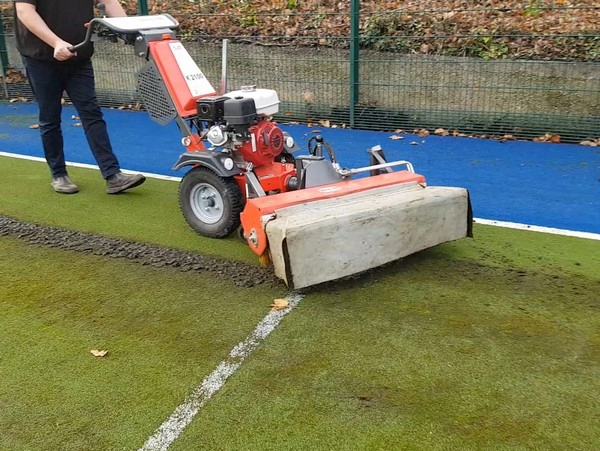
Wider sports-surface guidance
Synthetic surfaces need different operations
Understand the broader sweeping applications while keeping bonded polymeric surfaces separate from artificial-turf infill maintenance.
Read the Kersten article →Use the installed system’s care instructions. SAPCA and surface manufacturers provide further maintenance guidance. This supports a site-specific plan rather than a single cleaning recipe for every polymeric surface.
Related surface and material routes
Find the guide for the actual construction.
Common questions
Maintaining polymeric sports surfaces
Is polymeric rubber the same as artificial grass?
No. Polymeric rubber is bonded into a continuous surface. Artificial grass has fibres and may contain loose infill. Grooming, infill redistribution and infill-separation collection do not automatically apply to a bonded rubber surface.
Can I use a powered sweeper?
A suitable sweeper can form part of the cleaning programme. Confirm bristle material, contact, machine loading and collection with the surface supplier, then trial the actual working combination. The sweeper listing alone does not establish approval for every court or track.
Which brush should I use?
Use the surface-approved non-metallic brush and settings. The EFKM attachments shown have standard poly rollers, but their suitability still depends on the installed system and working setup. Do not substitute steel or cable tools as a routine cleaning method.
Should I use the collection box?
For routine sweep-and-collect work, use the correctly matched collector. Some planned wet-cleaning methods temporarily use the sweeper without it, followed by separate collection. The job is not finished while loosened contamination remains on the surface.
Can hot water or pressure washing damage the surface?
Temperature, pressure, chemicals and mechanical action must suit the surface, binder, coating and markings. Obtain the supplier’s permitted method before selecting washing equipment. Specialist intensive cleaning may be needed; a hard-paving method should not be assumed suitable.
Will cleaning solve standing water?
It may help where surface contamination is restricting the intended drainage path. Ponding can also involve levels, outlets or the base, and some polymeric constructions are designed to shed water rather than drain through. Establish the cause before prescribing more cleaning.
What if rubber granules are coming loose?
Stop and investigate the surface condition. Distinguish ordinary contamination from loss of the playing layer. Ask the installer or specialist to assess wear, damage and the cleaning method before continuing.
What information helps Kersten recommend equipment?
Send photographs, the surface product or installer details, area, gate width, drainage arrangement and main problem. Include existing carrier details and the supplier’s cleaning instructions if available. A demonstration can help establish the right setup.
Match the method to the playing surface
Show us your court or track.
Send photographs, surface details and access dimensions. We’ll help assess a practical sweeping and collection setup and arrange a suitable demonstration.