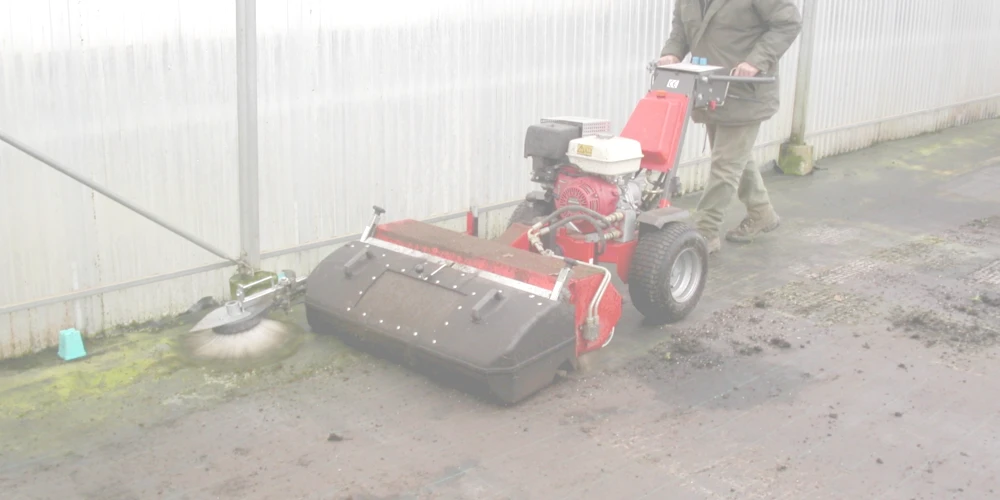
Exposed nursery and growing-area ground cover
Clear the deposits.
Protect the fabric.
Potting compost, leaves and plant debris can build a new growing layer above weed-control fabric. Remove the material, assess any established growth and keep seams, fixings and drainage in good condition.
Start with what is happening
Is it on the fabric—or coming through it?
This guide concerns exposed horticultural ground cover, including MyPex-type woven fabrics. It is not a method for cleaning buried geotextiles, membranes beneath aggregate or every type of weed-control sheet.
Loose material on top
Clear compost, leaves and plant debris before they accumulate. Choose controlled sweeping or another approved collection method around fabric condition and access.
Moss, algae or liverwort
Assess the attached growth and supporting deposits. Hot-water treatment may form part of the plan, followed by removal of the material.
Growth at a gap or tear
Identify whether roots pass through a hole, seam or planting opening. Plan weed removal and fabric repair without pulling or widening the damage.
Sweep and collect surface deposits
Adjustable contact matters on fabric.
These pedestrian attachments are starting points for a site demonstration. Match the roller, contact height, wheel loading and collection setup to the actual covering; a machine’s general sweeping capability is not approval for every fabric.
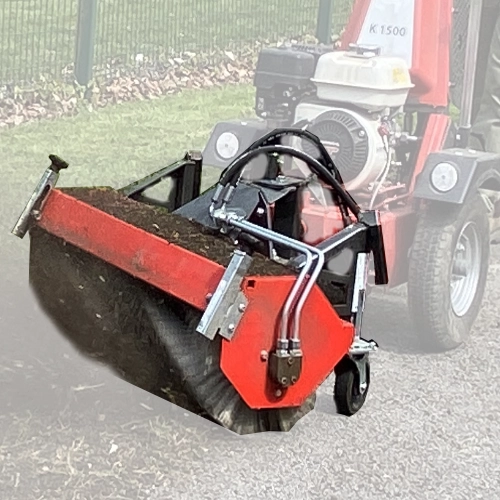
90 cm · hydraulic attachment
EFKM 09032 H-K 35
A compact roller sweeper with finely adjustable contact height. Assess the brush and complete machine on the actual fabric before a full pass.
Choose it when: A compatible K820, K820 Pro or K1500 suits the access and you need routine deposit removal.
- 90 cm working width · 32 cm roller
- Hydraulic implement drive · K35 mounting
- Standard five-row poly roller
- Carrier and collector separate
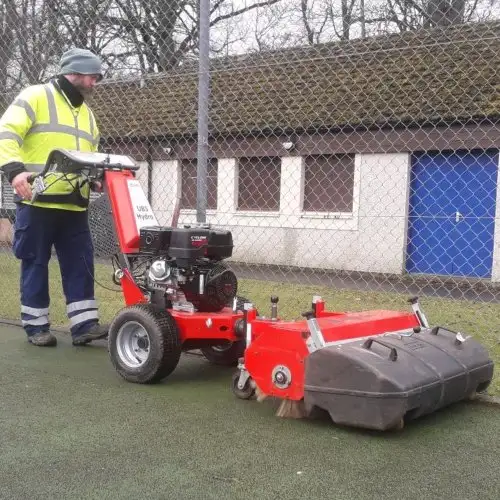
100 cm · mechanical attachment
EFKM 10037 M-U 70
A wider pedestrian sweeper for compatible UBS power units, with adjustable brush height and optional collection.
Choose it when: A matched UBS Hydro 9, 13 or 16 suits the site and a 100 cm pass is appropriate.
- 100 cm working width · 37 cm roller
- Mechanical implement drive · 70 mm mounting
- Standard five-row poly roller
- Carrier and collector separate
Specify the complete combination. Add the correct power unit and matched collector. Confirm overall width, turning space and the load the prepared ground can support. Hydraulic and mechanical attachments are not interchangeable simply because a mounting size matches.
Treat growth where the method suits the fabric
Hot-water treatment and cleaning are separate jobs.
Kersten’s nursery example describes hot-water treatment around Mypex-type fabric before sweeping or cleaning away the growth. Confirm the exact fabric and application method before use; treating vegetation does not remove its growing medium or repair the covering.
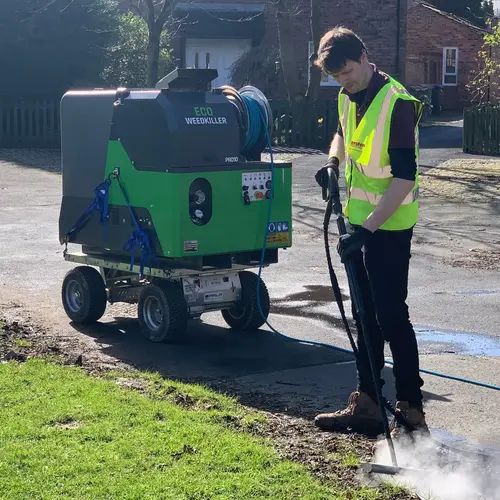
On-demand heating · 400 L package
Eco Weedkiller PRO10
A professional hot-water system with a nursery case example covering fabric-adjacent growth and other site-cleaning tasks.
Choose it when: You need sustained treatment and useful hose reach, with the fabric method assessed first.
- 400 L water tank in the linked package
- Published weeding output: 14 L/min
- 80 m outlet hose
- Kubota diesel engine · on-demand heating
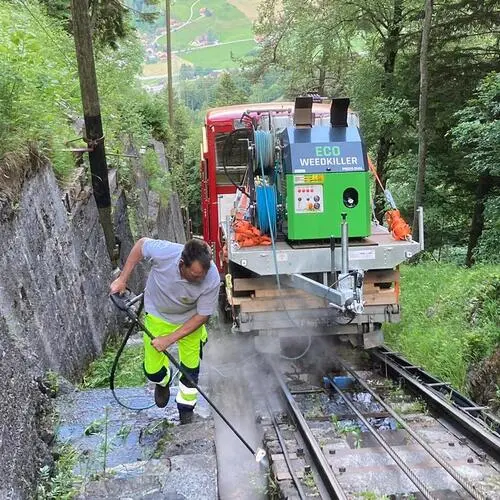
On-demand heating · dual operator
Eco Weedkiller PRO20 Dual
Two hose and heater systems support simultaneous working. Choose it around staffing, water supply and carrier capacity.
Choose it when: Two operators can work productively on a larger site with suitable access and refill planning.
- 310 L water tank in the linked listing
- Two 80 m treatment hoses
- Selectable 10 / 20 L/min weeding output
- Hatz diesel engine · dual heaters
Confirm the fabric method before selecting temperature or pressure. Low-pressure weed treatment and high-pressure washing are different operating modes. A machine with both functions does not make both suitable for an exposed fabric. Agree the nozzle, flow, exposure and follow-up cleaning with the equipment and fabric suppliers, then trial the method.
Fabric areas are not plant-pot work
Repeated short spot treatments around retained plants call for a different applicator and heating arrangement. Kersten’s nursery guidance highlights pre-heated SP systems for this stop-start pattern.
Plan water, reach and the carrier
Check hose routing around stock and irrigation, suitable refill access and full operating weight. Use the quoted hose and tank configuration when assessing how the job will run.
Why deposits matter
A weed barrier cannot prevent growth in soil left above it.
Woven ground cover suppresses growth beneath it while allowing water through. When spilled compost and organic material collect above the sheet, they create a separate place for plants to establish.
Potting and handling
Spilled growing media and plant fragments collect between pots, beneath benches and along trolley routes. Remove them during practical stock-moving windows.
Water and shelter
Irrigation and shaded pockets can keep deposits damp. Inspect persistent wet areas and check whether the restriction is surface contamination or something beneath the covering.
Edges and openings
Seams, planting cuts and perimeter details need separate attention. Weed treatment alone does not close a gap or replace missing fixings.
Before the first pass
Check the sheet, the support and the working route.
Fabric and condition
Identify the product where possible. Check wear, fraying, tears, lifted overlaps and loose edges. Repair or secure vulnerable areas using the supplier’s method before machine work.
Fixings and obstructions
Inspect pegs, staples, irrigation lines, cables, labels and plant ties. Plan the route around anything a rotating brush could catch or a wheel could load.
Support and access
Check the ground beneath the fabric, wet patches, rutting and changes in level. A covering that carries foot traffic is not automatically suitable for every loaded machine.
MyPex is a specific product name. Don & Low describes MyPex as woven polypropylene ground cover. Other exposed sheets may have different materials, installation details and limits. Use the instructions for the actual covering rather than assuming all “Mypex-type” fabric behaves identically.
Read Don & Low’s MyPex information and user-guideline resources ↗
Choose the action around the material
How should the deposits be removed?
| Condition | Working approach | What to check |
|---|---|---|
| Loose leaves and dry fragments | Controlled sweeping, collection or air movement to an agreed pickup point. | Do not lift unsecured edges or scatter material into stock and clean areas. |
| Compost, soil and heavier deposits | Collect the bulk, then assess a suitable sweeper setup for the remaining material. | Fabric wear, contact height, seams and the weight carried by the ground. |
| Attached moss, algae or liverwort | Assess treatment and a follow-up removal method. Do not simply increase brush aggression. | Fabric compatibility, surrounding stock, nozzle or brush choice and the trial result. |
| Plants rooted through openings | Identify the rooting point and plan removal together with repair or seam work. | Avoid pulling the sheet or treating a hole as though it were only surface contamination. |
| Fraying, lifted seams or damaged fixing points | Secure, repair or replace the affected section before continuing mechanical work. | The approved repair method and whether the covering remains serviceable. |
Working technique
Trial the setup, then inspect the result.
1. Prepare the area
Remove pots and movable stock where practical. Clear loose ties and obstructions, inspect the covering and choose a route that avoids vulnerable edges.
2. Test a representative patch
Use the intended brush and collector or treatment nozzle. Start with controlled contact and inspect for effective removal, movement of the fabric or damage.
3. Remove the arisings
Collect the loosened soil and growth. Keep it away from irrigation drains, clean production areas and the next section of fabric to be treated.
4. Check and maintain
Inspect seams, fixings and the finish after the pass. Revisit debris traps and repair needs, then set collection intervals around actual nursery activity.
Stop if the fabric lifts, catches or begins to fray. Reassess the condition and setup instead of using more pressure. Aggressive steel weed brushes, penetrating tools and open-flame methods are not default cleaning choices for plastic ground cover.
Reduce the next clean
Keep the growing medium where it belongs.
Manage spills promptly
Build compost and leaf collection into potting, dispatch and stock-moving routines, before deposits are tracked across a larger area.
Review water movement
Check leaking irrigation, runoff from beds and sediment traps. Recurring ponding may need changes beneath or around the covering as well as cleaning.
Keep repair work visible
Record damaged sections, lifted seams and missing fixings. Treat these as maintenance jobs rather than allowing every visit to become another weed-control pass.
Kersten nursery examples
See the tasks—and the differences between surfaces.
.jpg)
Fabric and nursery-site example
PRO10 at a plant nursery
Read the example of treating moss and liverwort around ground-cover fabric, followed by cleaning, alongside other nursery tasks.
Read the Kersten article →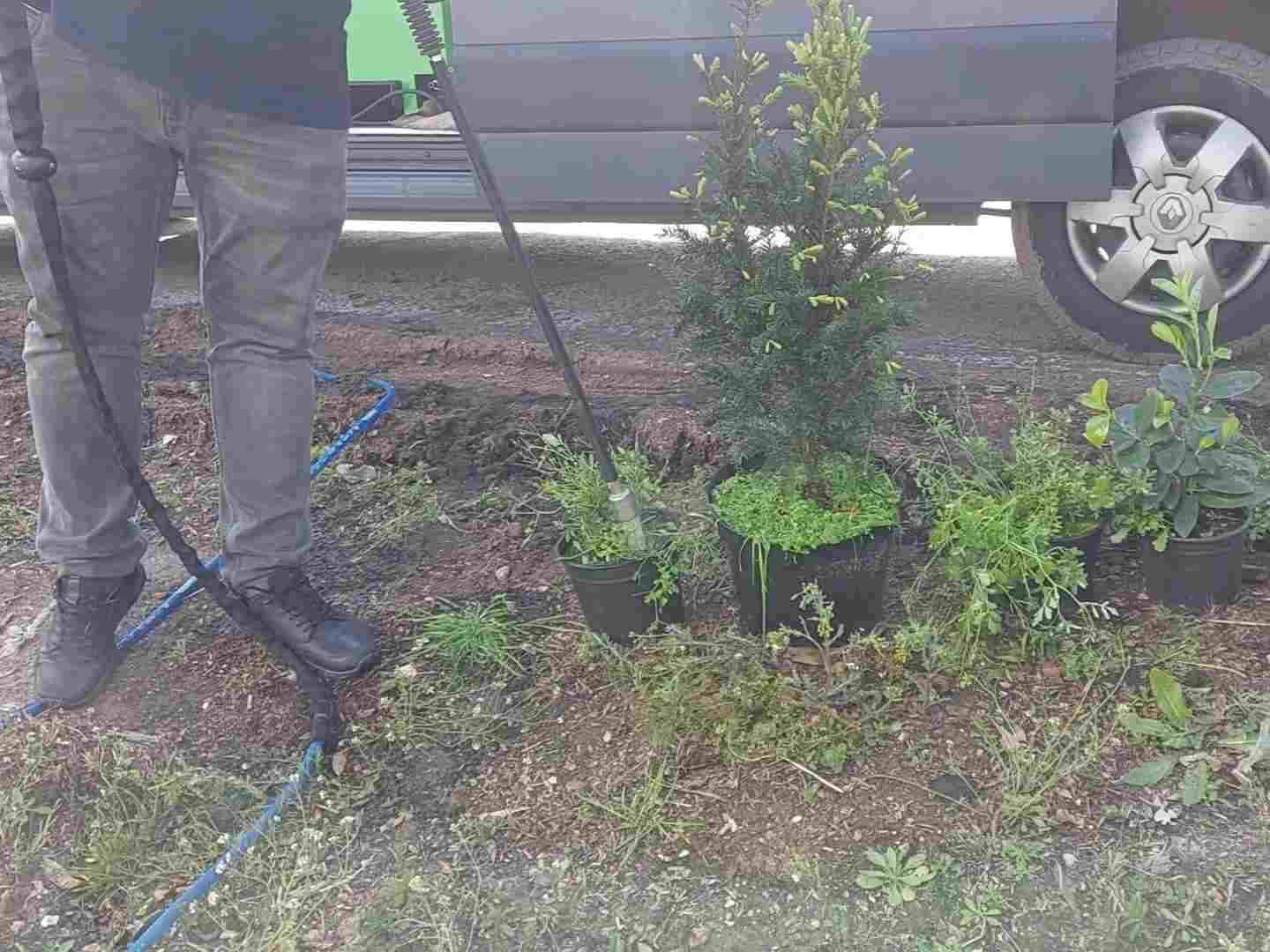
Nursery weed-management guide
Fabric areas and plant pots need different setups
Kersten explains the distinction between fabric-adjacent treatment and frequent short spot treatments around plants in pots.
Read the Kersten article →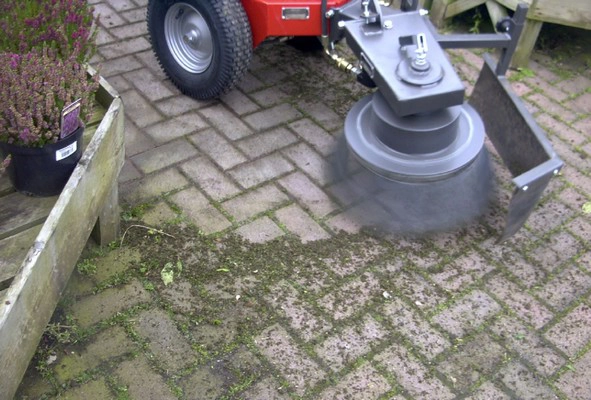
Related paving example
A different surface beneath the benches
A block-paving case shows how nursery deposits accumulate. Its weed-brush method is for the paving example, not a fabric-cleaning instruction.
Read the Kersten article →Related routes
Choose by surface, material or treatment.
Common questions
Maintaining exposed ground-cover fabric
Why are weeds growing above weed-control fabric?
Spilled compost, leaves and soil can form a growing medium above the covering. Check where the plants are rooted: growth in this upper layer needs a different response from a plant emerging through a tear or planting opening.
Can I use a powered sweeper on the fabric?
A suitable sweeper can be assessed on sound, supported and securely fixed fabric. Confirm the product’s permitted methods, roller and contact setup, then trial the actual machine. Avoid lifted seams, damaged areas and loose fixings.
Will a weed brush clean moss from any fabric?
No. A hard-surface weed-brush setup may catch, abrade or tear exposed covering. Assess the fabric and deposit, then choose the permitted treatment and removal method. Do not assume a De-Moss or wire brush is suitable merely because moss is present.
Can hot water be used near Mypex-type ground cover?
Kersten has nursery examples of hot-water treatment around this type of fabric. That does not establish universal compatibility. Confirm the exact covering, temperature, flow, nozzle and exposure, and trial the method before wider treatment. Keep retained plants and irrigation components in the assessment.
Can I pressure-wash the fabric?
Only use a method permitted for the covering and its installation. Pressure, distance and water flow can move deposits, lift an edge or affect a weak sheet. Hot-water weed treatment and pressure washing are separate modes and need separate assessment.
Will cleaning repair poor drainage?
Removing surface deposits can help where they are restricting water passage. Persistent ponding can also involve the ground beneath, levels or blocked drainage routes. Inspect the cause rather than assuming every wet patch needs a stronger cleaning pass.
Does this advice apply to buried geotextiles?
No. This page concerns exposed ground cover used in nursery and growing areas. A buried separation layer or membrane is part of the construction and should not be exposed or treated as a cleaning surface.
What information helps Kersten recommend a setup?
Send photographs, the fabric product if known, condition of seams and fixings, area, narrowest access and main deposits. Include irrigation layout, existing carrier details and whether you need loose-material collection, established-growth treatment or both.
Choose the method for the covering
Show us your ground cover and the deposits.
Send photographs, fabric details, access and existing machine information. We’ll help assess sweeping, collection or targeted treatment and a suitable demonstration.