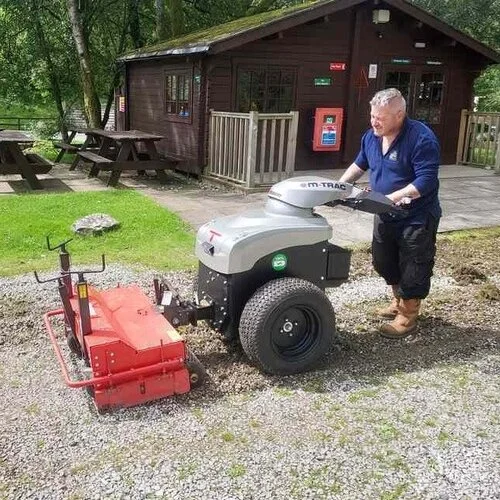
Gravel paths, drives and unbound surfaces
Recover the gravel.
Restore the route.
Compacted surface, established weeds or displaced stone? Choose the operation that addresses the cause: renovate to loosen and lift, grade to redistribute and shape, then keep incoming debris under control.
Start with the condition
Does it need loosening, levelling—or both?
A renovator and a grader overlap in some duties, but their primary working actions differ. Choose around the construction, available material and finish you need.
Compaction, moss and weeds
A WE renovator works into the suitable surface layer. Its tools loosen material and lift growth so the arisings can be removed.
Ruts, potholes and moved stone
A PH Mini grader manages loose material and the route profile. Specify the tools and distributor arrangement around the amount of loosening and reshaping required.
Leaves and isolated new growth
Remove loose debris before it breaks down into the gravel. Targeted weed treatment can supplement care where penetrating renovation is unnecessary or unsuitable.
WE gravel-path renovators
Release the surface. Lift the established growth.
Three working widths cover pedestrian and tractor-mounted routes. The tool set and depth matter as much as the machine width: confirm what is below the gravel before working into it.
Pedestrian attachment · 90 cm
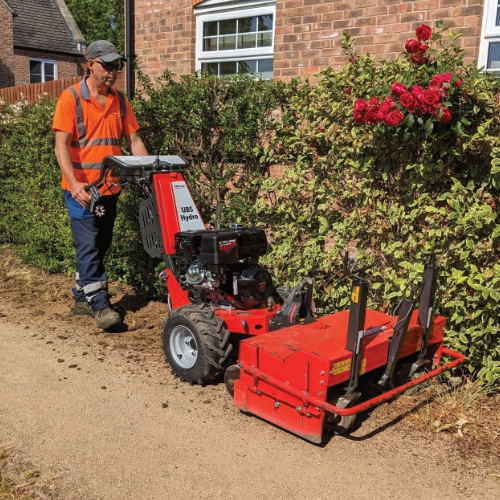
WE 090 M-U 70
A compact renovator for suitable unbound paths, with counter-rotating tools and stepless working-depth adjustment.
Choose it when: A compatible UBS power unit suits the route and tractor access is restricted.
- 90 cm working width · 70 mm system
- Mechanical implement drive
- UBS Hydro 13 / 16 and Alpin carriers: confirm model
- Listing specifies ten angled knives included
%20660.jpg)
Tractor attachment · 110 cm
WE 110 M-DP
A rear-mounted PTO renovator for narrower tractor-accessible routes and gravel areas requiring controlled surface loosening.
Choose it when: You need tractor-mounted renovation without the full 150 cm working width.
- 110 cm working width
- Mechanical PTO drive
- Rear CAT 1 / CAT 1N mounting
- Counter-rotating tools · adjustable working depth
Tractor attachment · 150 cm
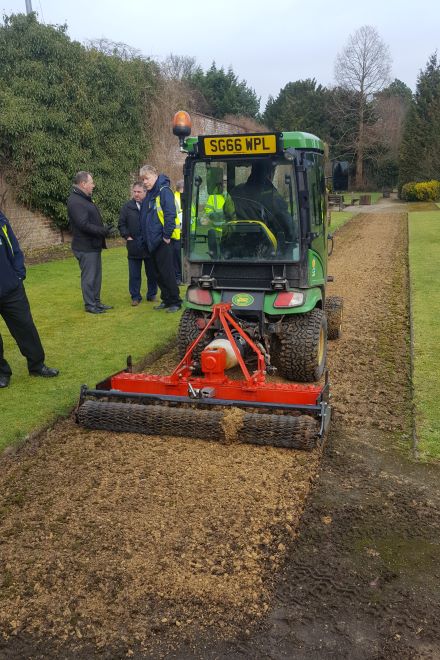
WE 150 M-DP
The wider WE option for broad paths, drives and larger gravel areas where the carrier and access suit its size.
Choose it when: A wider pass suits the site and you have a matched tractor and mounting.
- 150 cm working width
- Mechanical PTO drive
- Rear CAT 1 / CAT 1N mounting
- Tool choice and depth selected for the construction
Order the working configuration. WE 110 and WE 150 listings require a tool selection. The WE 090 listing specifies an angled-knife set; confirm the supplied configuration on the quotation. Power units and tractors are separate. Confirm actual PTO operating requirements, shaft fit and guarding for the chosen carrier.
PH Mini gravel-path graders
Move usable material back into the working surface.
A grader can recover displaced material, restore levels and consolidate the finish. Its distribution and ripping equipment determines how it handles material before the rear scraper and roller finish the pass.
Use a model-specific distributor shield where the job calls for moving material through the frame. Optional ripper bars on PH 130 and PH 150 can release more compacted material; sideshift options help position the machine nearer an edge.
Choose the width around the whole working combination. Check tractor width, access, lift capacity, ballast and attachment weight—including water in the roller.

HK 01001 · 100 cm
PH 100 Mini
Grade and redistribute suitable loose material, then consolidate the finish with the trailing roller.
Choose it when: The route needs a compact grader and the complete tractor-and-implement combination fits.
- 100 cm working width
- Rear three-point mounting
- Water-fillable trailing roller
- Specify distributor shield and other options
HK 01002 · 130 cm
PH 130 Mini
Grade and redistribute suitable loose material, then consolidate the finish with the trailing roller.
Choose it when: You want the middle working width with model-specific ripper and sideshift options.
- 130 cm working width
- Rear three-point mounting
- Water-fillable trailing roller
- Specify distributor shield and other options
HK 01003 · 150 cm
PH 150 Mini
Grade and redistribute suitable loose material, then consolidate the finish with the trailing roller.
Choose it when: Wider tracks and open areas suit a larger pass and a suitably matched tractor.
- 150 cm working width
- Rear three-point mounting
- Water-fillable trailing roller
- Specify distributor shield and other options
Specify the options for the operation. Distributor shields are model-specific options. PH 130 and PH 150 also have separately listed ripper bars and sideshift options. Confirm linkage, tractor suitability and complete operating weight; horsepower alone does not establish compatibility.
Two stages of recovery
Loosening and consolidation serve different purposes.
Renovate the affected upper layer
Release compacted, weed-bound material at a controlled depth. Angled knives work beneath suitable deposits and lift growth; collection then separates the arisings from gravel worth retaining.
Shape and settle the finish
Redistribute appropriate material, restore the intended profile and consolidate where the construction requires it. A water-bound wearing course needs its specified finished condition; leaving every surface loose is not the objective.
Some routes need both operations. Others need only local correction or routine debris removal. Persistent ponding or recurring potholes may also point to drainage, levels or base defects that surface work cannot repair.
Select tools for the construction
Loose gravel, crushed stone or gravel over a hard layer?
A stone-covered surface does not tell you the full construction. Identify the wearing material, its available depth and what lies beneath before choosing penetrating tools.
Angled knives
Suitable loose and water-bound material
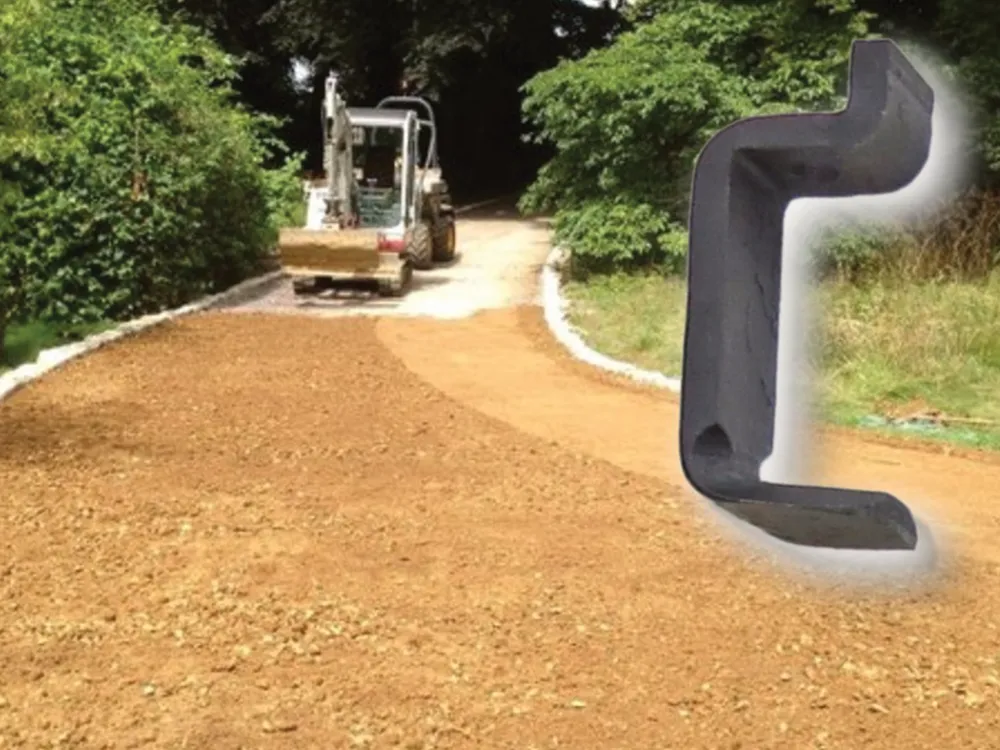
Cut beneath growth and loosen the upper material so plants and deposits can be lifted for removal. Set depth to avoid unwanted disturbance of the base or membrane.
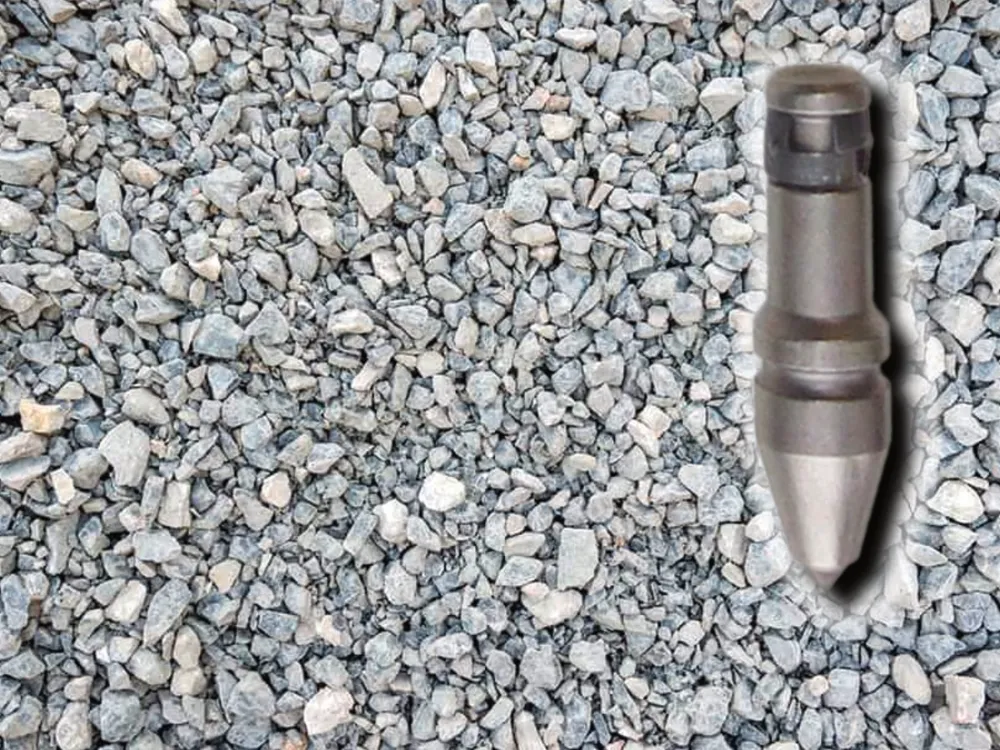
Chisel tools
More compacted crushed-stone layers
Carbide-tipped tools provide a stronger loosening action where the material and construction permit it. Assess the site rather than simply selecting the most aggressive tool.
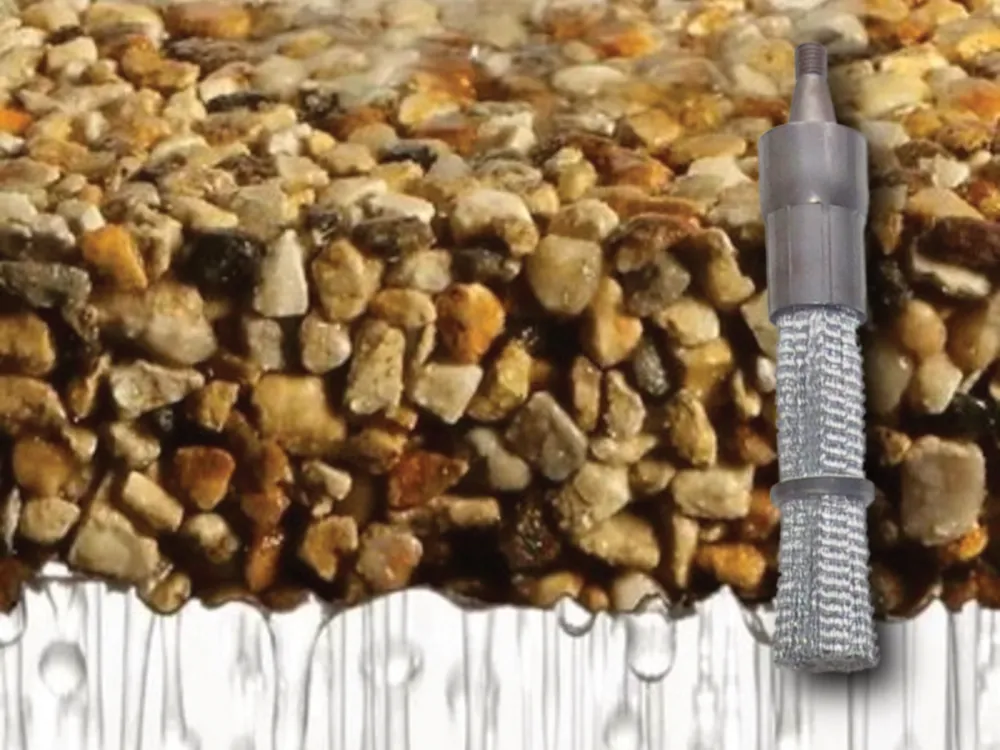
Brush tools
Gravel over a hard underlying surface
Where an underlying tarmac or concrete layer needs protection, assess a suitable brush configuration instead of assuming penetrating knives are appropriate.
Match the tool set to the exact machine. WE 090, WE 110 and WE 150 use their own listed configurations. Confirm tool type, set size, supplied equipment and the condition of wear parts before the job.
Check before working
Protect the useful layers beneath the problem.
Identify the construction
Check whether the surface is loose aggregate, a water-bound wearing course, gravel over a hard base or another system. Resin-bound and resin-bonded finishes need a different assessment.
Establish a safe working depth
Locate membranes, shallow services, drainage details, roots and edging. Trial a representative section and inspect the material before extending the operation.
Check the material balance
Determine whether enough suitable stone remains to restore the profile. Added aggregate may be needed where material has been lost; use the grading and type specified for the construction.
Do not assume every puddle means the top layer needs loosening. Blocked outlets, unsuitable levels, a failed base or insufficient material can all require separate work. Investigate repeated failure and water movement before choosing the next pass.
From assessment to reopening
Plan the clearance and the finish.
1. Inspect and select
Record the main problem, construction, available depth and access. Choose the carrier and tools, then trial the intended setup.
2. Loosen where needed
Release the affected upper material at the selected depth. Inspect progress: avoid repeatedly working the same area more deeply than the construction allows.
3. Separate and collect
Remove lifted weeds, moss and organic deposits while retaining useful gravel. Raking or controlled air movement may suit the job; do not scatter material into drains, planting or clean areas.
4. Redistribute and finish
Restore levels and the intended profile, add specified material if needed and consolidate appropriately. Check the completed route and set a condition-based inspection plan.
Unusual or invasive growth? Identify it before disturbance or moving soil and arisings. Mechanical renovation is not a blanket treatment for invasive plants. Explore invasive-plant management .
Keep the recovered route manageable
Remove incoming debris. Respond to the condition.
Keep grass clippings and soil off the gravel. Inspect leaf traps, borders and low-traffic corners. The interval for collection or local correction should follow the site’s actual debris load, use and condition.
Kersten practical examples and guidance
Understand the surface and see the working process.

Practical renovation example
Recovering a weed-covered driveway
See Kersten’s before-and-after example of loosening gravel, lifting weeds and collecting the material left on top.
Read the Kersten article →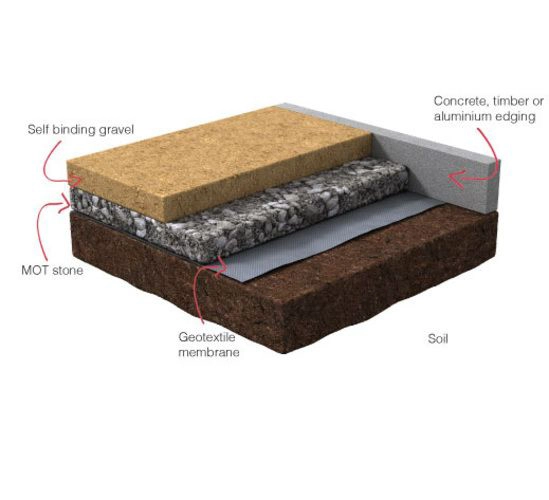
Surface-performance guide
Look beyond the visible weeds
Explore the relationship between construction, incoming debris, compaction and displacement.
Read the Kersten article →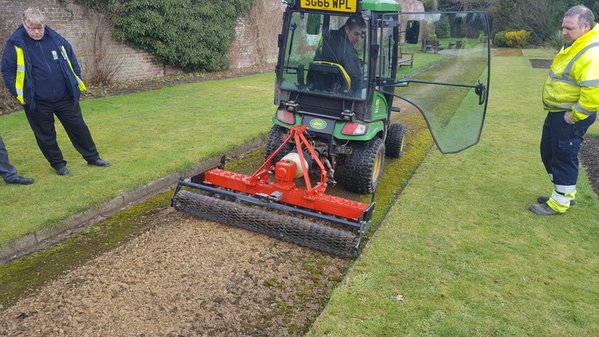
Equipment and working action
Choosing a gravel-path renovation method
Understand how the renovator releases established growth and material for a separate clearance pass.
Read the Kersten article →Related routes
Choose by surface, material or carrier.
Common questions
Maintaining gravel surfaces
What is the difference between a renovator and a grader?
A renovator primarily loosens suitable surface material and lifts growth for removal. A grader primarily redistributes material and restores the profile and finish. A grader with suitable ripping equipment can also loosen material, so select the complete configuration around the job.
Will a renovator permanently remove all weeds?
No. It can lift established growth and supporting deposits, but the result depends on the species, root system and working depth. New seed and incoming soil can support regrowth. Plan collection and follow-up maintenance; identify invasive species before disturbance.
Can the WE 090 fit any 70 mm pedestrian tractor?
No. Connection size alone is not sufficient. The WE 090 requires a compatible mechanical implement drive and suitable carrier. Confirm the exact UBS or other approved model, mounting, control setup and operating requirements before ordering.
Are the tools included in the renovator price?
The WE 090 listing specifies ten angled knives. WE 110 and WE 150 require a tool selection. Confirm the exact supplied configuration and any additional tools or accessories on the quotation.
Can I renovate gravel above a membrane or grid?
Assess the system first. Establish the material depth and position of vulnerable layers, cells or grids. Penetrating tools may be unsuitable. Ask for a site assessment and trial rather than assuming a normal gravel setup will work.
Will renovation solve poor drainage?
Loosening affected upper material can help where that layer is the restriction. It cannot repair a blocked outlet, failed base, unsuitable levels or every water-management problem. Investigate persistent ponding before prescribing further work.
Do I need to buy new gravel?
Not always. Existing usable material may be recoverable and redistributed. Replacement or additional aggregate may still be needed where stone has been lost or the material is unsuitable. Assess the quantity and required specification before deciding.
What information helps Kersten recommend a setup?
Send photographs, route dimensions, narrowest access, the main problem and known construction or membrane depth. Include carrier details, whether material must be collected, and the finish you need.
Choose the operation and the complete setup
Show us the path you want to recover.
Send photographs, access and carrier details. We’ll help assess the surface, tool choice, renovation or grading method and a suitable demonstration.