Tracy’s Law: Why Losing the Edge Means Losing the Road
Tracy’s Law states: "If you lose the edge, you lose the road". This law highlights that the stability and longevity of any paved surface is entirely dependent on the structural integrity of its bounda
In the field of highway engineering, a fundamental principle known as Tracy’s Law states: "If you lose the edge, you lose the road". This law highlights that the stability and longevity of any paved surface—from a major trunk road to a local village footpath—are entirely dependent on the structural integrity of its boundaries.
For a body like Northumberland County Council, which manages over 3,000 miles (5,000km) of highway and an extensive network of footways, neglecting these edges triggers a structural "slow-motion" collapse. This deterioration is not just a maintenance headache; it is an escalating multi-million-pound liability.
The Anatomy of "Losing the Edge"
A road or pathway is only as strong as the edge that contains it. When an edge is lost to overgrown detritus and vegetation, it compromises the asset through several mechanical failure modes:
- Loss of Lateral Support: The edge acts as a structural "brace". Without a clear edge, asphalt lacks lateral restraint, causing the surface to "unravel" and crack under the weight of traffic.
- The "Crowbar" Effect: Roots from encroaching weeds act as slow-motion crowbars. As they penetrate cracks, they physically lift and break the pavement from the outside in, rapidly weakening the structure.
- Water Ingress & Sub-base Failure: Proper edging directs water runoff away from the pavement. Without it, water is trapped, seeping into the sub-base and creating the voids that become potholes.

The "Northumberland Factor": The True Cost of Neglect
Local authorities face a relentless stream of litigation and healthcare costs arising from poorly maintained surfaces. Northumberland provides a stark case study in the financial stakes:
- The £670,000 Liability: Over a recent three-year period, Northumberland County Council paid out more than £671,000 in compensation for slips, trips, and falls on uneven pavements.
- High-Value Claims: In a single instance in 2021, the council was required to pay over £128,000 for a single pavement-related injury claim. This is more than the cost of an entire fleet of mechanical edging machines.
- The NHS Burden: Beyond direct payouts, research by Living Streets estimates that pedestrian falls cost the UK taxpayer up to £500 million annually in NHS treatment and social care.
The Insurance "Death Spiral"
As pavement conditions deteriorate, the ability of a council to successfully defend a claim—known as the "repudiation rate"—is under intense pressure.
- Rising Claims: In 2024/25, over 64,400 new public liability claims were registered in the UK.
- Budget Diversion: For councils like Northumberland, this means rising insurance premiums and a larger portion of the budget diverted away from actual maintenance to cover legal costs and settlements.
The Vulnerability Gap and the "Pedestrian Pound"
- Vulnerable Residents: Nearly 31% of older adults are put off from walking due to fear of falling. Conversely, 48% of people over 65 would walk more if pavements were better maintained.
- Economic Vitality: Living Streets' "Pedestrian Pound" research indicates that clean, safe, and well-maintained environments can boost high street footfall and retail sales by 30% or more.
Maintenance vs. Reconstruction: A Financial Choice
Proactive maintenance is significantly more cost-effective than "managed decline" followed by terminal reconstruction.
| Maintenance Phase | Strategy | Estimated Cost Impact | Long-term Asset Impact |
| Preventative | Mechanical Edging (UBS-Hydro) | Lowest: Pays for itself in 81 miles | Extends structural life by 10+ years. |
| Reactive | Pothole Repair / Patching | Moderate: Average claim payout is 13x higher for cyclists than motorists. | Temporary fix; fails to address the root cause. |
| Terminal | Full Resurfacing | Highest: National repair backlog exceeds £16 billion. | Necessary once the "edge is lost". |
The Mechanical Solution: 9-Week ROI
Data from a Veolia trial in West Berkshire serves as a blueprint for success in Northumberland. Manual hand-edging is a "workout" that takes up to three times longer than a mechanical approach.
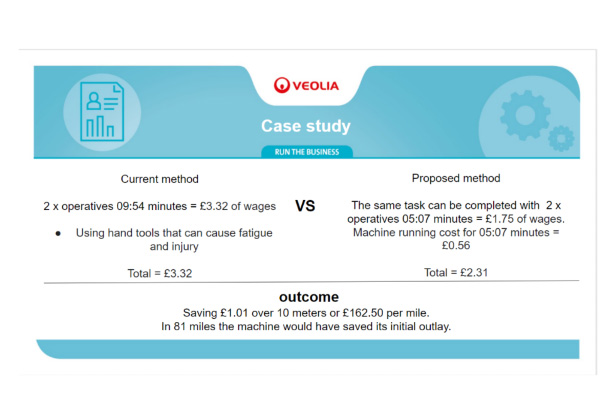
- The 81-Mile Milestone: A professional Kersten mechanical edging unit offsets its own purchase cost after just 81 miles of maintenance.
- Rapid Payback: At a pace of 2 miles per day, the machine pays for itself in approximately 9 weeks.
- Regulatory Compliance: This approach fulfills the UK Pesticide National Action Plan requirements, prioritizing integrated weed management.
The Verdict for 2026
With the UK road repair backlog at record levels, authorities like Northumberland cannot rely on reactive politics. By adopting a proactive mechanical edging strategy, you fulfill your statutory duty while protecting the public purse from the escalating costs of falls, claims, and reconstruction.
Tracy's Law is a warning, but also an opportunity: save the edge today, and you save the road for the next twenty years.

No comments yet. Login to start a new discussion Start a new discussion