
Matador M-Trac 2.0 electric two-wheel tractors
Demanding site work.
Electric drive and PTO.
Bring battery power to weed brushing, mowing, gravel renovation and seasonal surface care. Choose the M-Trac battery configuration and matched tools around your working day.
Choose the configuration for your route
Four battery options. A complete system to match.
These are battery configurations of the M-Trac 2.0 platform. Select the working implement first, then match battery capacity, available power and the charging arrangement to its workload.
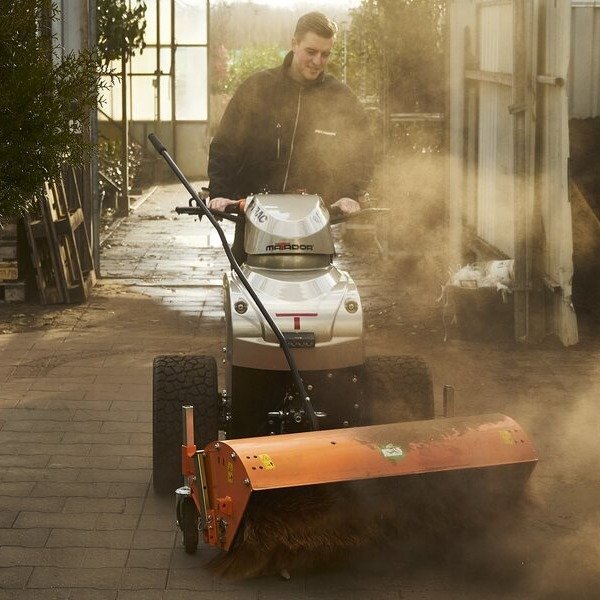
Photograph from this configuration’s listing; confirm the attachment supplied.
M-Trac 2.0 battery configuration
M-Trac 2.0 · 60 Ah
Choose it when: Your trial confirms that the smaller battery configuration covers your route, with practical charging opportunities between work periods.
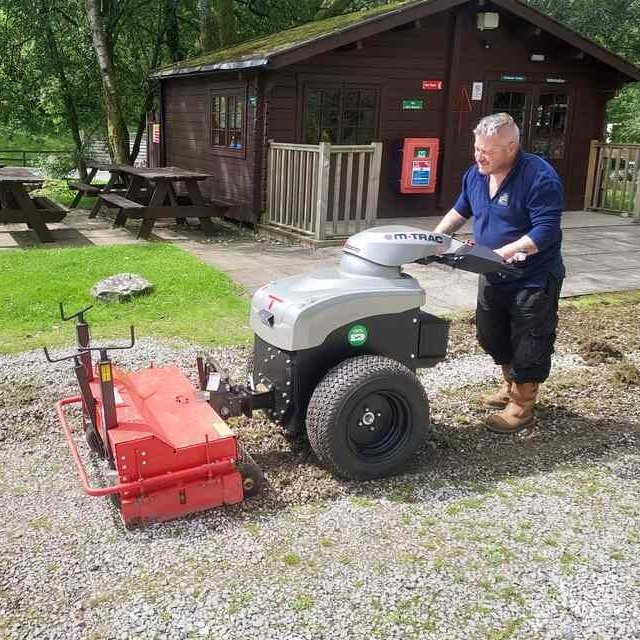
Photograph from this configuration’s listing; confirm the attachment supplied.
M-Trac 2.0 battery configuration
M-Trac 2.0 · 120 Ah
Choose it when: You need more battery capacity than the 60 Ah configuration and want to match a broader maintenance route to a verified working setup.
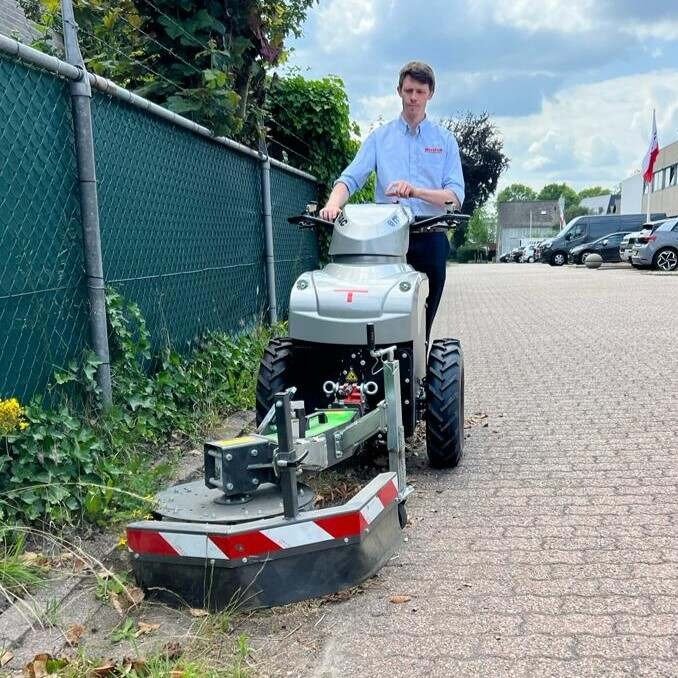
Photograph from this configuration’s listing; confirm the attachment supplied.
M-Trac 2.0 battery configuration
M-Trac 2.0 · 180 Ah
Choose it when: Longer work periods make additional battery capacity useful, subject to the chosen implement and supplied power specification.
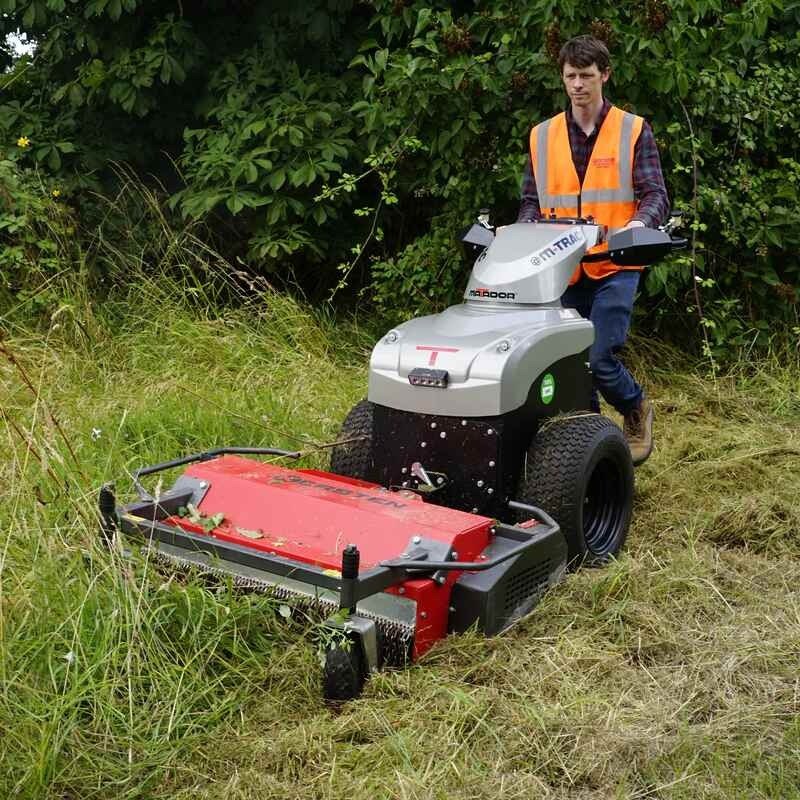
Photograph from this configuration’s listing; confirm the attachment supplied.
M-Trac 2.0 battery configuration
M-Trac 2.0 · 200 Ah
Choose it when: You want the largest battery capacity in the current UK-listed range for a demanding route, with runtime confirmed using the actual tool.
Specify the whole working system. Prices belong to the linked carrier listings. Confirm battery, charger specification, tyres, mounting adapter, implement, controls and delivery in the written quotation. A pictured attachment is not automatically part of the price.
Battery capacity and implement power are different checks. More amp-hours describe greater battery capacity; they do not by themselves establish the supplied motor’s continuous or peak output. Ask for the power specification of the quoted configuration.
The reason to choose M-Trac
Control travel speed and implement speed separately.
Set the tool’s working speed
The electric PTO provides a published adjustable range of 0–1,000 rpm. Match its setting to the attachment’s required speed and the job, rather than assuming full speed is always useful.
Work at the right travel pace
Variable electric travel and a speed limiter help the operator set a useful working pace. Slower passes can give a brush or renovator more time to act on difficult material.
Remove the engine exhaust
Battery operation removes combustion-engine exhaust at the work site. The implement still produces working noise and vibration, so assess the complete machine and tool together.
Match the tool to the result
Useful working attachments for M-Trac.
Kersten lists these tools alongside M-Trac. They are examples to specify with the carrier’s PTO, power and mounting adapter; the 70 mm connection alone does not prove compatibility.
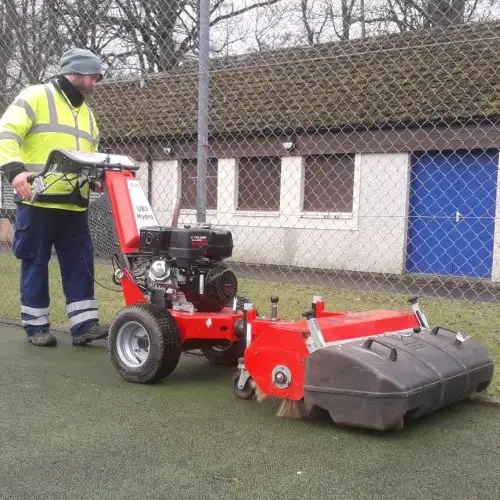
100 cm PTO-driven sweeper
EFKM 10037 M-U 70
Choose it when: Loose debris, contamination and suitable artificial-surface care need a powered roller brush.
Specify brush roller, collector and gully-brush options.
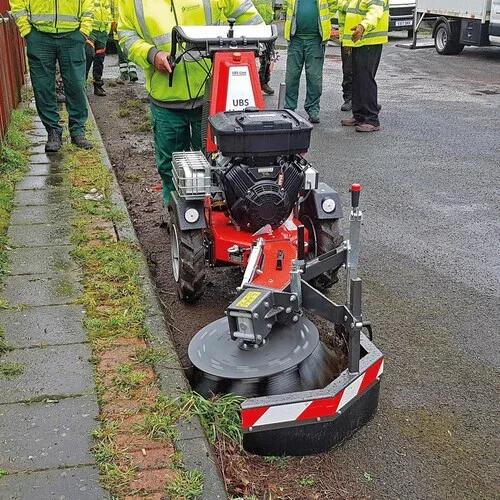
60 cm mechanical weedbrush
WKB 60 M-U 70
Choose it when: Established moss, weeds and path-edge deposits need active loosening before clearance.
Confirm brush tools, working angle and any optional edge cutter.

92 cm PTO-driven flail
Zanon TSM 900
Choose it when: Grass, pruning waste and light scrub should be cut and mulched.
Match blade set, coupling and implement power requirement.
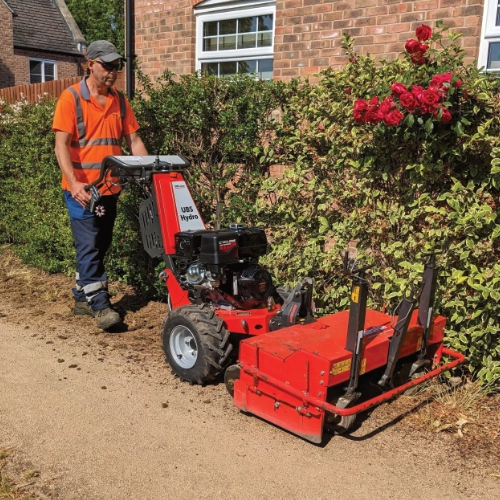
90 cm gravel-path renovator
WE 090 M-U 70
Choose it when: Suitable gravel paths need weeds and compacted material loosened and the working pass levelled.
Select tools and working depth for the surface; plan removal of loosened vegetation.

70 litre PTO-driven spreader
SLDST 70 M-U 70
Choose it when: Salt, sand or grit needs controlled distribution on pedestrian routes.
Published spreading width 0.5–4.0 m; match settings to material and route.
Choose the drive version as well as the tool. These PTO-driven examples are distinct from hydraulic K-series attachments. Confirm the M-Trac adapter, PTO speed, rotation and complete mounting arrangement. Some attachment photographs show UBS carriers.
Make a demanding route easier to manage
Controls, steering and operator position.
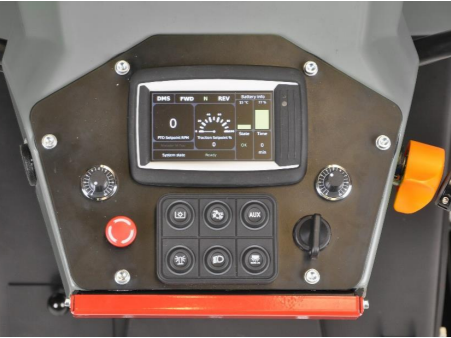
A dashboard for the working system
The digital display presents operating information such as battery status and machine settings. Travel and PTO controls let you tune movement and tool speed to the task.
Adjustable handlebars, steering assistance and a vibration-damped operator interface help position the operator around the work.
Adjust the handlebar
The published side positions are −45°, 0° and +45°, with height adjustment. Set the operator position around the attachment and working conditions.
Match tyres and terrain
The published carrier slope rating is up to 35°. Confirm permitted gradients, direction of use and traction for the complete supplied machine, tyres and attachment.
Understand the controls
The documented protections include a deadman control, emergency stop and reverse entrapment switch. Get familiar with the supplied machine’s controls before work.
Plan the working day
Choose capacity around measured work, not a promised number of hours.
Trial the demanding task
Working load, implement speed, travel, surface and battery condition affect runtime. Test the attachment that puts the greatest demand on your chosen configuration.
Confirm the charging setup
The battery and charger are onboard. Confirm charger rating, electrical supply, charging time and the planned overnight or between-shift charging window.
Keep capacity in reserve
Allow for transit, difficult patches and battery protection limits. Plan the whole route, including material collection and tool changes, before choosing battery capacity.
Specify carrier → adapter → implement
An electric PTO needs a matched mechanical connection.
Carrier specification
Identify the battery configuration, available continuous and peak power, serial number and installed controls.
Mounting adapter
Confirm the adapter and mounting bracket for the implement. A nominal 70 mm connection is only part of the fitment.
Drive requirements
Match required PTO speed, direction of rotation, power and loading. Check any existing UBS tool individually.
Site and transport
Check complete working width, access, turning room, weight and loading arrangements with the chosen implement fitted.
Compare the drive systems correctly. M-Trac uses electric wheel drive and an electric PTO. UBS uses hydraulic travel with a mechanical implement PTO. K-series and Kersten E-series carriers use hydraulic implement drive. Similar mounting sizes do not make these interchangeable.
Extend the maintenance plan
Plan the next job as well as the first one.
Recover, then maintain paths
Weedbrush or renovate to loosen established material, then clear it. Follow with planned sweeping rather than waiting for the same deposits to build up again.
Manage sports surfaces
Wide-area brushes suit routine grooming and infill redistribution. Powered sweepers remove contamination and work the infill more actively. Match settings to water-based, sand-filled or rubber-crumb surfaces.
Wide-area turf brushes →Prepare winter tools
Check the blade, spreader or snow blower package and tyre choice before winter. Confirm each attachment’s mounting and drive requirements.
Snow ploughs →Practical background
Electric machinery and better surface maintenance.

Introducing Matador electric equipment
Kersten’s July 2023 introduction explains the electric platform and its maintenance applications. Use it as background alongside the current configuration quotation.
Read the Kersten article →
Mechanical weed management in practice
Understand the role of removing accumulated soil and disrupting established growth. The principles help plan a complete maintenance workflow around your attachment.
Read the Kersten article →See the machine at work
M-Trac 2.0 in action.
Kersten’s M-Trac demonstration. Confirm the configuration and accessories supplied in your working package.
Use current supplied-machine documentation to confirm the build, charging requirements and operating limits.
Before you choose
Your Matador M-Trac questions answered.
What is different about the M-Trac drive system?
It uses electric wheel drive and an electric PTO to drive matched implements. Travel speed and implement speed can be adjusted separately.
Which battery configuration should I choose?
Start with the implement workload and working route. Compare the 60, 120, 180 and 200 Ah listings, then verify available power, runtime and charging with the complete proposed setup.
Does more battery capacity automatically mean more PTO power?
No. Battery capacity and delivered motor power are separate specifications. Confirm continuous and peak output for the exact quoted configuration.
Will any UBS attachment fit?
Some UBS-range tools are listed with M-Trac, but each needs a confirmed adapter, coupling, required PTO speed, rotation and power match. The shared 70 mm interface is insufficient by itself.
Is the machine silent?
The electric carrier has a low-noise drive system and no combustion-engine exhaust. The working attachment still creates noise and vibration; assess the complete combination.
Will it operate for a full day on one charge?
That depends on the configuration, implement and workload. Trial the route and confirm charging requirements rather than treating an all-day description as a guarantee for every task.
Are attachments included in the listed prices?
The displayed prices belong to the linked carrier listings. Confirm all supplied items in the quotation, including tyres, charger, adapter and any attachment shown in the photographs.
Can I use the full 35° slope rating with any tool?
Confirm the complete carrier, tyres and implement against the supplied operating instructions, including direction of travel, traction and site conditions.
Specify the complete electric working system
What does your working day demand?
Send the tasks, surfaces, access widths, working periods and details of existing tools. We’ll help match the M-Trac configuration, adapter, attachment and charging setup.