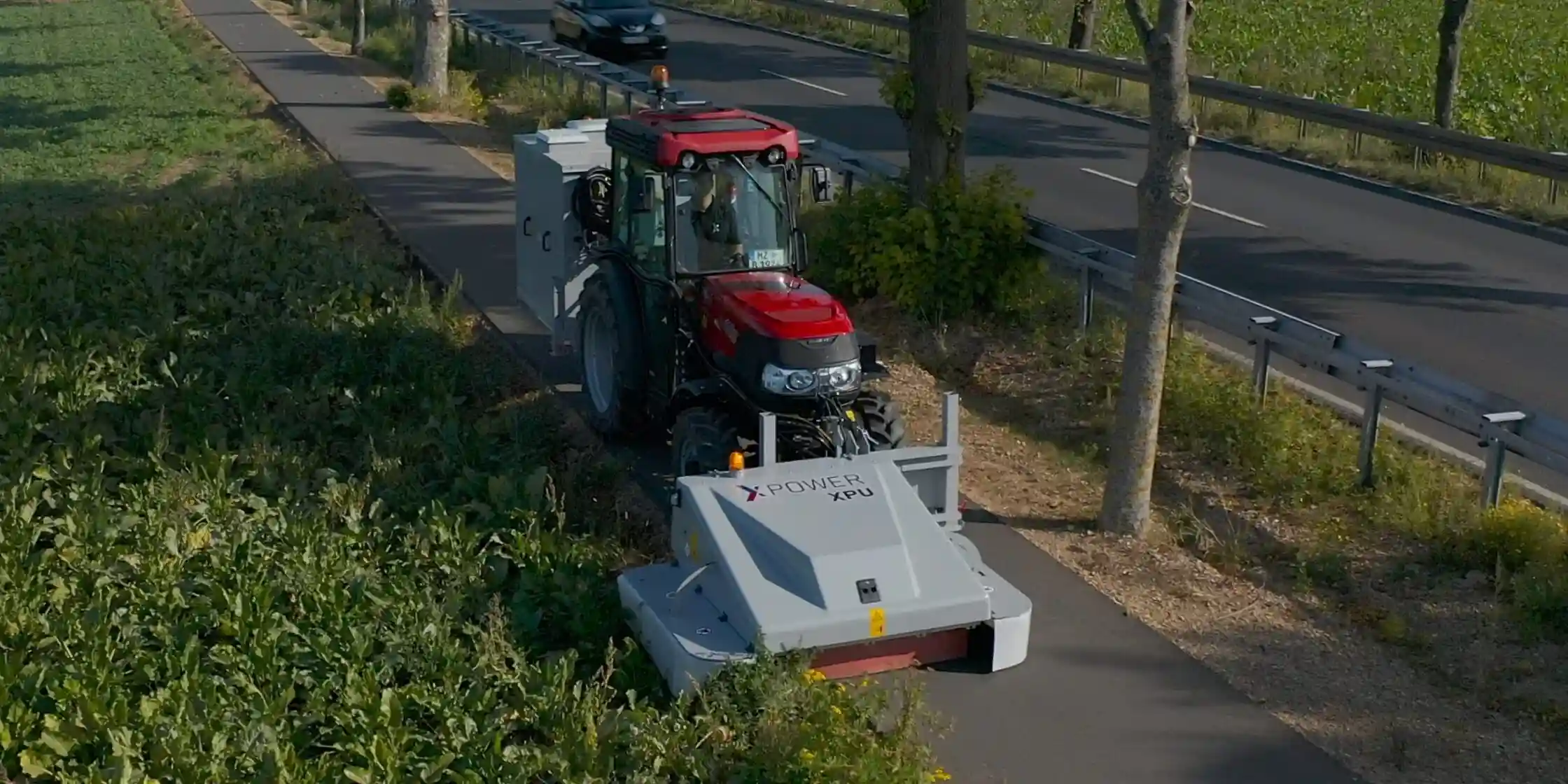
Zasso tractor-mounted electric weeders
Electric weed control.
Powered by your tractor.
Treat municipal routes and industrial sites, or reach roadside margins with a hydraulic arm. Choose the Zasso system around your carrier, access and the position of the weeds.
Choose the right machine for the job
Three systems for three working patterns.
CityZas and XPU treat in front of the carrier. XPA adds a hydraulic arm for growth away from the tractor’s travel line. Start with that working pattern, then check the complete installation.
Compact urban route system
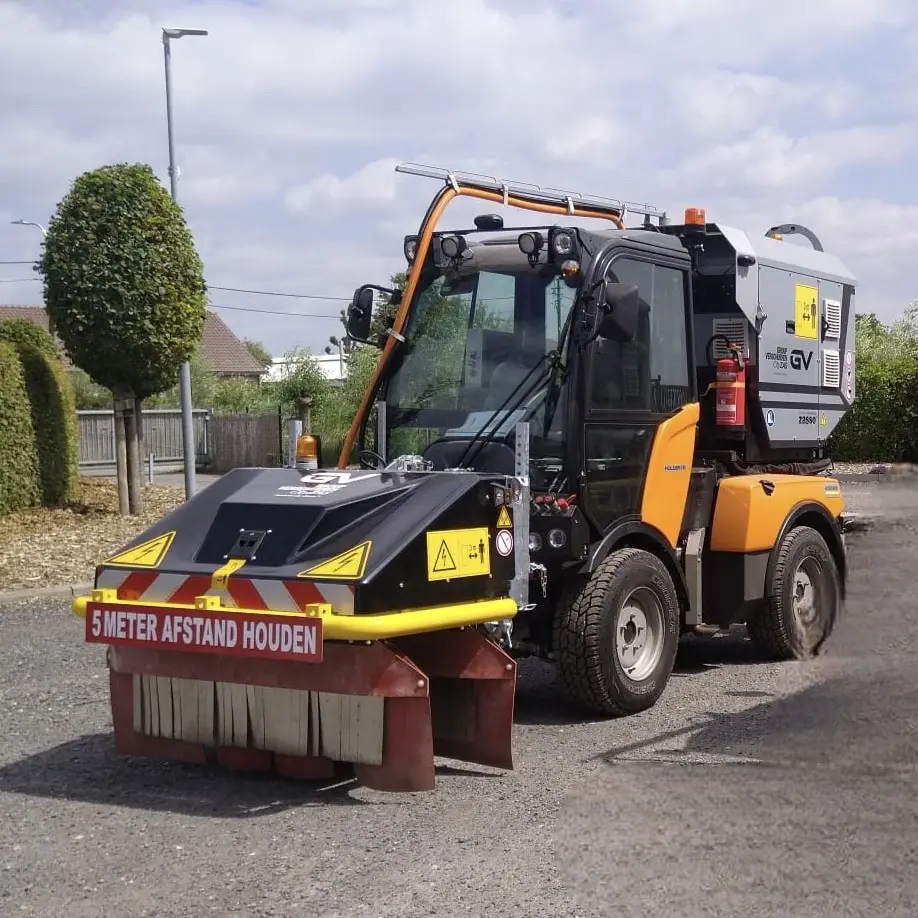
Zasso CityZas
Choose it when: Your suitable tool carrier needs a front applicator for streets, paths, courtyards and kerb lines.
An 18 kW electrical supply and a shifting front applicator combine treatment coverage with edge positioning.
CityZas is supplied as a matched carrier system. Confirm hydraulic or mechanical PTO drive, mounting, controls and the installed weight distribution.
Urban tractor route system
Zasso Urban XPU
Choose it when: You have a suitable 95–105 hp tractor and want front-mounted treatment across repeat maintenance routes.
The rear supply unit feeds a flexible-electrode applicator at the front. Side-shift helps position treatment alongside the vehicle.
*Zasso lists 24–36 kW according to configuration, including Power Boost. Confirm the supplied output and tractor integration; treatment width is not overall vehicle width.
Hydraulic-arm treatment system
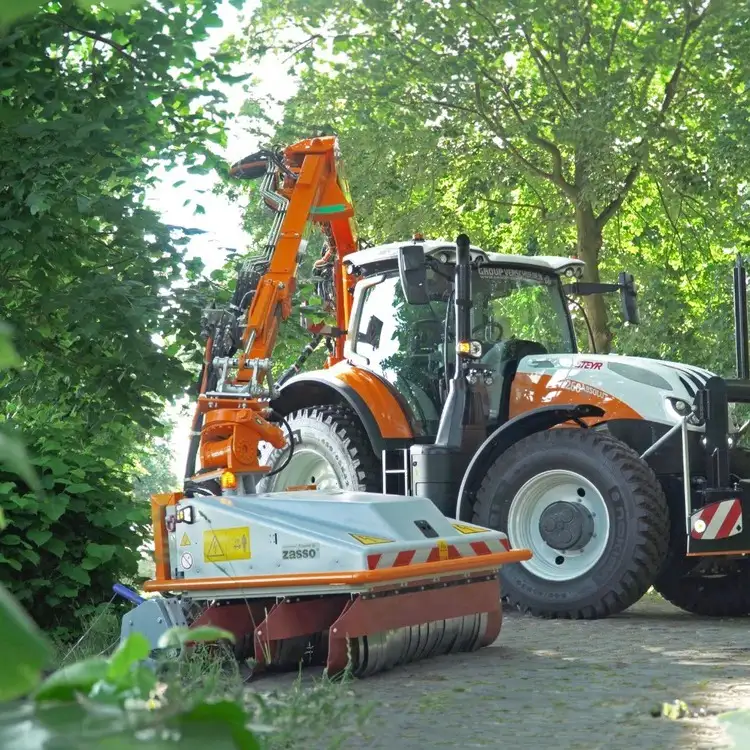
Zasso Urban XPA
Choose it when: The treatment head needs to reach banks, margins or areas alongside barriers while the tractor follows a suitable operating route.
An integrated hydraulic arm positions the treatment head away from the carrier. Proportional control and automatic levelling help the operator manage head position.
*Reach is measured from the tractor centre to the treatment-unit centre. Confirm the permitted working envelope, whole installation weight and stability for your tractor.
Horsepower is a starting point, not a fitment approval. Lift and axle capacities, chassis compatibility, drive provision, ballast, dimensions and controls must be checked together. Actual treatment speed depends on vegetation, contact and site conditions.
Why choose tractor-mounted electrical treatment?
Bring coverage, positioning and power together.
Cover a maintenance route
A 1.2 m applicator treats across a working strip as the carrier advances. It suits route-based work where access and vegetation allow sustained forward treatment.
Reach the weed’s position
Side-shift helps follow a kerb line. XPA’s hydraulic arm extends the working position to margins and banks, so the treatment head can move independently of the tractor’s path.
Use electricity as the treatment
The supply unit turns carrier power into electrical treatment energy. Current through plant tissue generates heat, offering a weed-control method without applying herbicide or carrying treatment water.
Choose around the route
Where will the carrier travel, and where are the weeds?
| Site requirement | CityZas | Urban XPU | Urban XPA |
|---|---|---|---|
| Working pattern | Front-mounted urban coverage. | Front-mounted tractor coverage. | Hydraulic-arm treatment away from the carrier. |
| Power class to investigate | Over 65 hp carrier. | 95–105 hp tractor. | 200 hp+ tractor with suitable dimensions and mass. |
| Treatment positioning | 1.2 m applicator; 50 cm left / right shift. | 1.2 m applicator; 50 cm side-shift. | 1.2 m head; up to 7.2 m centre-to-centre reach. |
| Typical application to discuss | Paths, courtyards, commercial and municipal routes. | Roadside routes, cemeteries and industrial areas. | Banks, difficult margins and areas near barriers. |
| Installation priority | Match the carrier, power drive and front/rear equipment. | Confirm the supply-unit configuration and complete tractor loading. | Confirm chassis integration, arm envelope and stability. |
Measure access for the whole vehicle. A 1.2 m treatment width does not mean the complete machine fits through a 1.2 m opening. Check tyres, cab, mirrors, attachment width, turning space and the working position of the applicator.
For gateways, steps or tight corners outside a tractor’s working envelope, compare a pedestrian electric system as part of the same maintenance plan.
Compare pedestrian electric weeders →Understand the working system
From carrier power to plant contact.
Carrier power
The specified drive powers the generator. CityZas offers hydraulic or mechanical PTO arrangements; match the complete system to the carrier.
Electrical supply unit
The generator, power modules and controls provide regulated electrical treatment energy.
Contact applicator
Flexible electrodes follow the treatment surface. Contact and head positioning matter to delivery.
Plant treatment
A controlled circuit passes current through vegetation. Resistance in the plant produces the treatment heat.
Electrical treatment does not mean an electric tractor. These systems draw power from the carrier. Fuel use, noise and overall emissions depend on the tractor and operating arrangement.
Treatment can damage roots as well as visible growth, but the response depends on species, plant size, root reserves and conditions. Plan inspection and repeat treatment where needed.
Compatibility is about the complete assembly
Which system suits your carrier?
Specify the tractor and installation
Provide the make, full model, power rating, front and rear mounting details, PTO and hydraulic provision, axle limits and intended ballast arrangement.
CityZas and XPU use front applicators and rear supply units. XPA needs a matched arm installation integrated with the tractor frame. Confirm the approved mounting hardware and controls for the specific system.
Explore the Compatibility Centre →Specify the site and working envelope
Provide route widths, surfaces, obstacles, banks, traffic and pedestrian access, target vegetation and the frequency of treatment.
For XPA, confirm the allowed reach and working positions on the actual tractor. Maximum geometric reach is not permission to operate at every position or on every slope.
Discuss the complete tractor and site setup →Prepare the team as well as the tractor
Plan training and operating provision.
Include model-specific operator training, footwear, PPE and the required site controls in your proposal. Confirm commissioning, refresher training and machine inspection arrangements with Kersten.
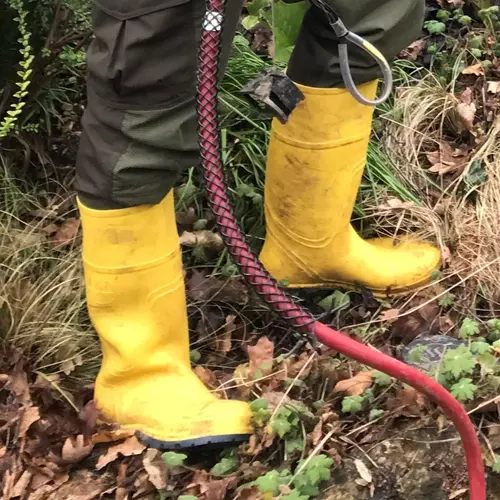
Electric-weeding safety boots
Kersten lists these boots for electric-weeding equipment including CityZas and XPA. Specify the operator’s size and confirm the complete PPE requirement for the supplied system.
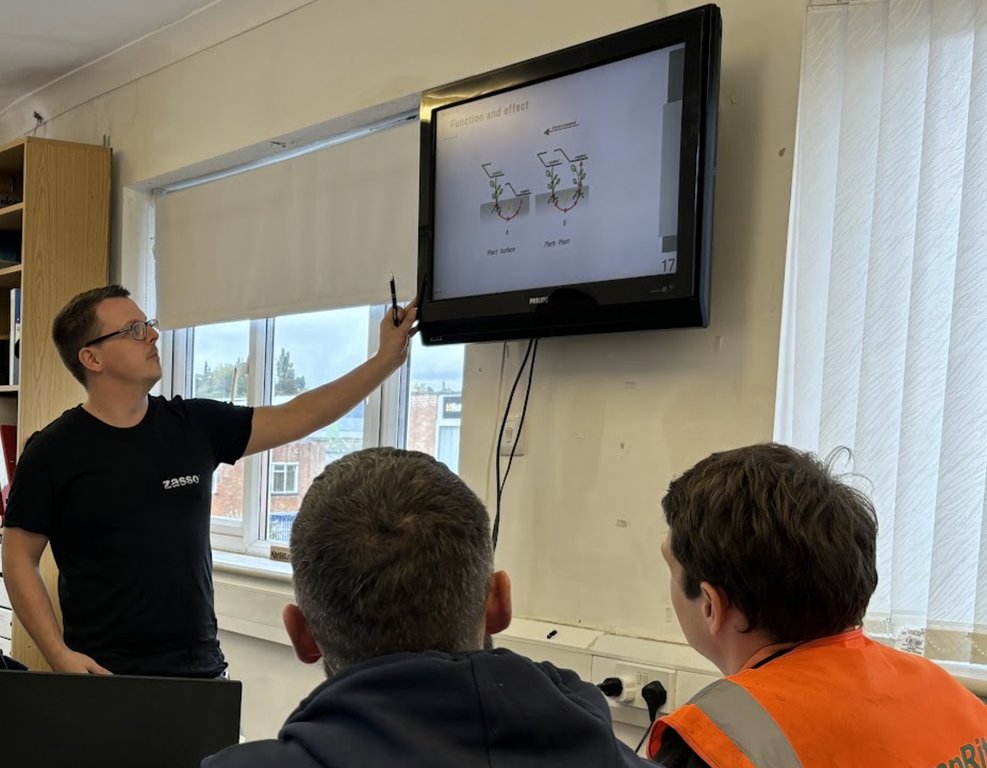
Electric-weeding operator training
Annual theory and practical training is listed per person. Trainer travel is extra; machine safety inspection and PPE checks are separate from the refresher course.
Technical reading and maintenance planning
Build the equipment into a working programme.
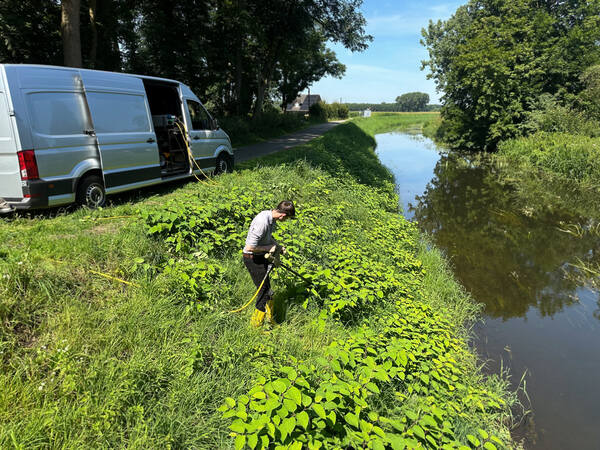
Hard surfaces and soil
Kersten explains why electrical contact, surface conditions and different treatment arrangements matter.
Read the Kersten article →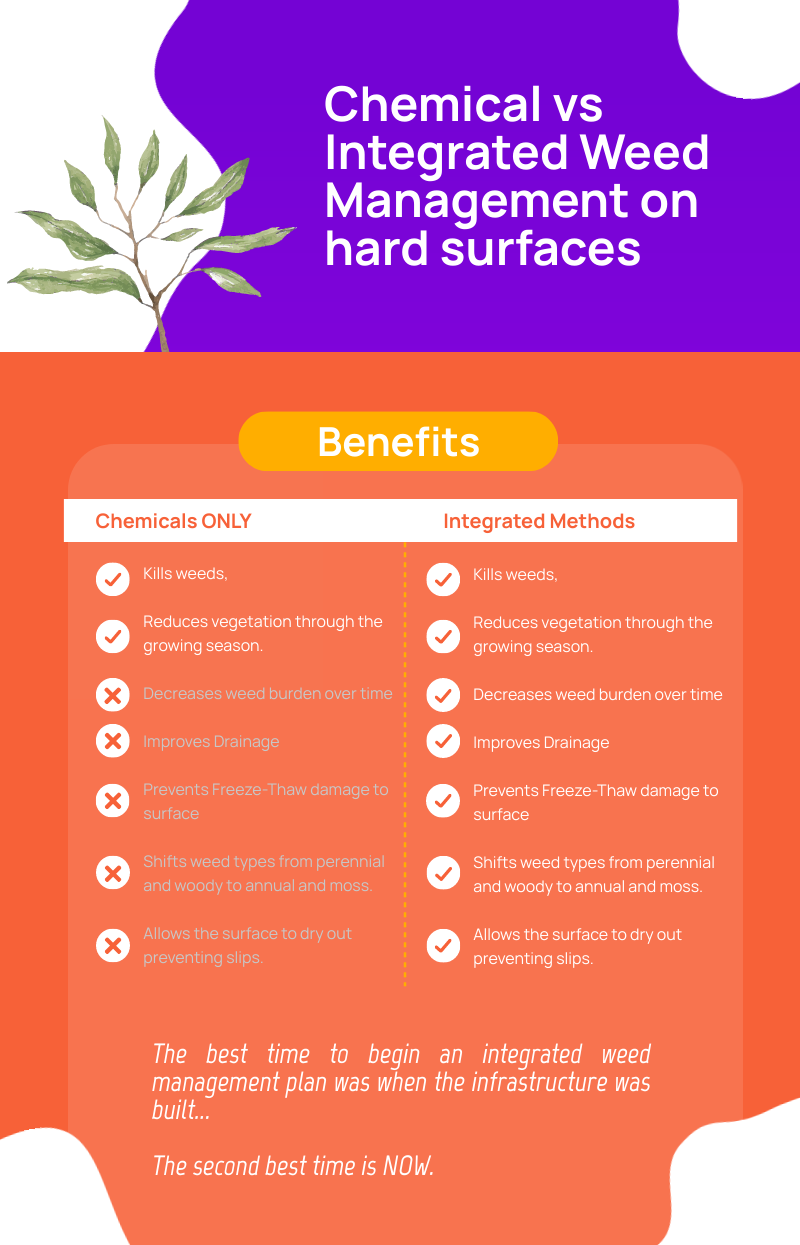
Build treatment into surface maintenance
Why removing detritus and managing the growing medium belong alongside a weed-treatment programme.
Read the Kersten article →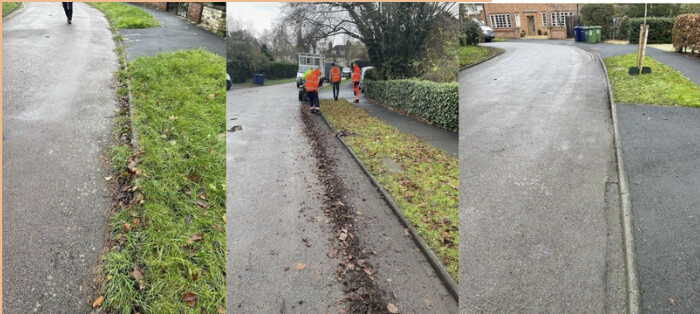
Cambridge’s herbicide-reduction plan
Kersten’s council-planning case study covers trials, surface clearance, monitoring and community involvement.
Read the Kersten article →Manufacturer technical information
Use the model documentation to confirm the configuration offered. Discuss current UK availability, integration and demonstration requirements with Kersten.
Treatment and clearance have different jobs
Complete the maintenance plan.
Before you specify
Your tractor-mounted electric-weeding questions answered.
Is 7.2 m the XPA treatment width?
No. The treatment head is 1.2 m wide. Up to 7.2 m is the arm’s reach from the tractor centre to the treatment-unit centre. Confirm the usable working envelope for the fitted tractor.
How does CityZas differ from Urban XPU?
Both use a front applicator for urban route treatment. CityZas is listed at 18 kW for carriers over 65 hp; Zasso lists XPU at 24–36 kW according to configuration, with a 95–105 hp tractor requirement.
Does a suitable horsepower rating guarantee fitment?
No. The complete assembly must meet mounting, drive, lift, axle-loading, ballast, chassis and control requirements. XPA also needs a tractor capable of supporting the arm’s working envelope.
Are these battery-powered attachments?
The tractor-mounted systems use a generator and electrical supply equipment powered from the carrier. They are different from the battery-powered pedestrian Zap Weeder.
Will the treatment remove dead weeds and soil?
Electrical treatment damages vegetation but does not collect soil, detritus or dead growth. Include mechanical clearance or sweeping where the surface also needs cleaning.
Can the machines guarantee one-pass eradication?
No universal result should be assumed. Vegetation, plant condition, root reserves, contact and site conditions affect treatment. Use a monitored programme and repeat treatment where required.
What should the system quotation include?
Ask for the carrier-specific mounting, drive and electrical configuration, controls, commissioning, training and any required PPE to be itemised. Confirm the supplied equipment and installation scope.
Choose the system around the work
Tell us about your tractor and routes.
Send the tractor model, power and mounting details, route dimensions, surfaces and target vegetation. We’ll help compare the systems and define a complete installation and demonstration proposal.