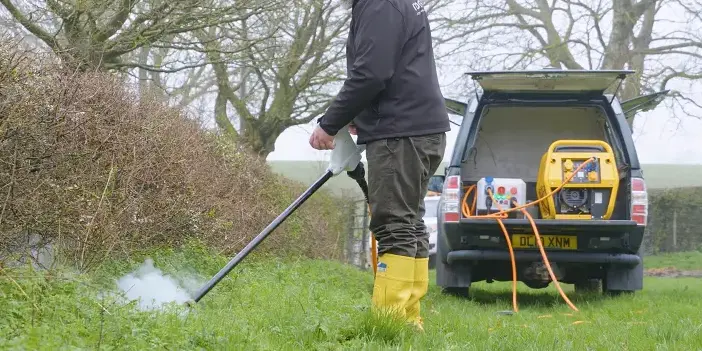
Pedestrian electric weed management
Treat the weed.
Choose the right electrical approach.
Cover paved routes with a battery-powered Zap Weeder, or target individual plants with a Kersten electric lance. Two professional systems for treating weeds with electricity, without applying herbicide.
Choose the right machine for the job
Two systems. Different working patterns.
Choose by the surface, weed type and working pattern. A pavement round and a programme for established plants in soil need different equipment.
Battery-powered surface treatment
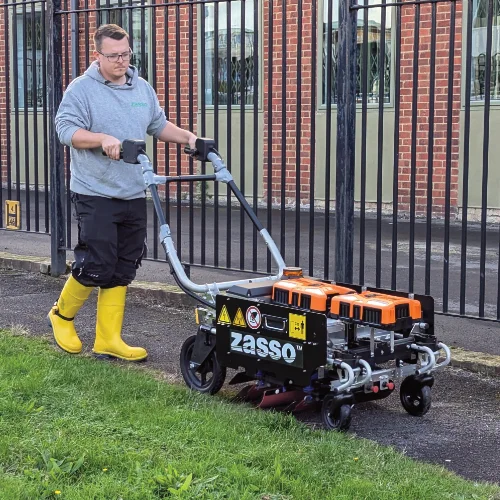
Zasso Zap Weeder 5.3
Choose it when: you need to work along pavements, paved paths, courtyards or cemetery routes, treating weeds across a defined width.
Flexible stainless-steel electrodes contact the surface as the operator guides the machine. Positive and return electrodes are carried together, and side-shift helps reach along kerbs and walls.
Battery life and effective working speed vary with the treatment conditions. The listing identifies batteries, charger and suitable boots as required accessories; confirm the supplied package.
Selective treatment · K EW001
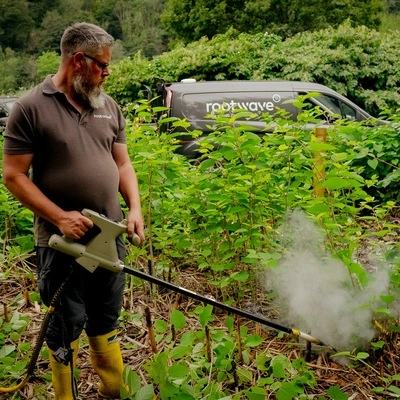
Kersten Electric Lance
Choose it when: you want to treat individual plants in soil or mixed vegetation, including an assessed programme for established invasive weeds.
The operator places the lance on the target plant. A separate return connection completes the circuit through the ground, while the power module and generator remain separate from the hand-held lance.
Confirm GEN-KEW generator inclusion, the complete return and safety-earth equipment, footwear and training in the quotation. Plan transport and positioning of the power equipment.
Why use electrical weed treatment?
Deliver treatment through the plant.
A route without herbicide
Electrical treatment offers another method where reducing herbicide use is part of the maintenance plan, without carrying a tank of hot water for the treatment itself.
Match contact to the job
The Zap puts electrodes across a working width. The lance lets a trained operator select individual plants. That difference matters more than simply comparing voltage.
Work beyond the visible shoot
Current passing through plant tissue generates heat and can damage roots as well as growth above ground. The result depends on the plant, contact and treatment conditions.
Surface, plant and working pattern
What does your site need?
| Your maintenance task | Zap Weeder 5.3 | Kersten Electric Lance |
|---|---|---|
| Regular hard-surface rounds | The principal route: 60 cm surface-contact treatment. | Useful where selective spot treatment is the priority. |
| Kerbs and walls | Side-shift brings the electrodes closer to an edge. | The operator can position the lance at individual target plants. |
| Plants among vegetation you want to retain | Non-selective within the contacted treatment area. | Individual plant targeting helps keep treatment focused. |
| Established plants in soil | Discuss suitability; its compact electrode layout is aimed at surface work. | Separate return connection and variable treatment levels offer the relevant route to investigate. |
| Power and logistics | Two rechargeable batteries; plan charging and transport. | Generator, power module, cables and return equipment; plan a suitable setup position. |
One treatment is not a universal eradication promise. Species, root mass, plant condition, electrical contact and site conditions affect the result. Established weeds may need repeat treatment and monitoring; discuss invasive plants as a managed programme.
Read Kersten’s explanation of hard surfaces and soil →Power, footwear and training
Build a package that is ready for your team.
Specify the working system, charging or generation equipment and operator provision together. Accessory prices below are individual listings; request a quotation that states exactly what is included.
Pellenc ULIB 1500 battery
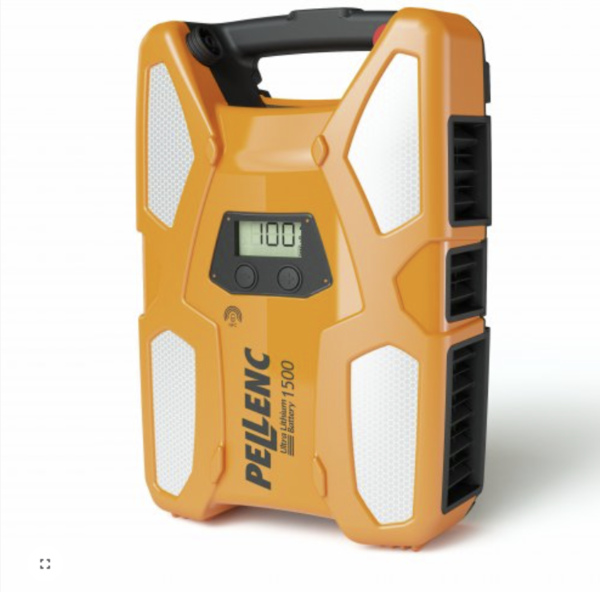
The Zap requires two batteries. This is the price for one battery, not a pair.
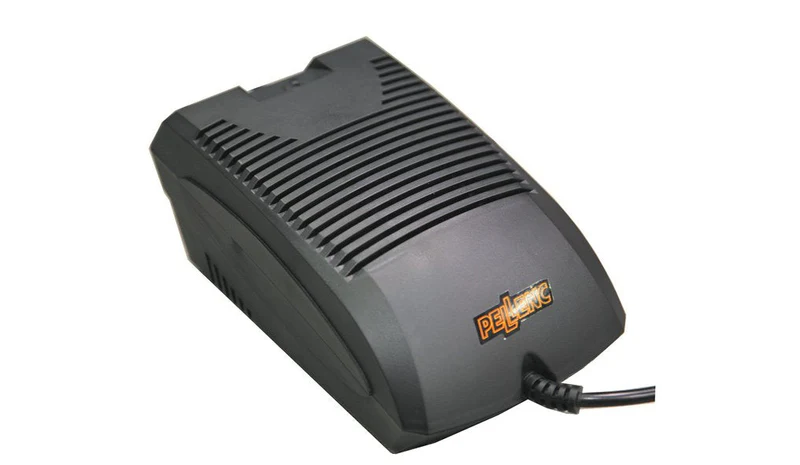
Pellenc battery charger
The Zap product page links to this CHA330 charger. Confirm the charger type, quantity and charging time for your chosen package.
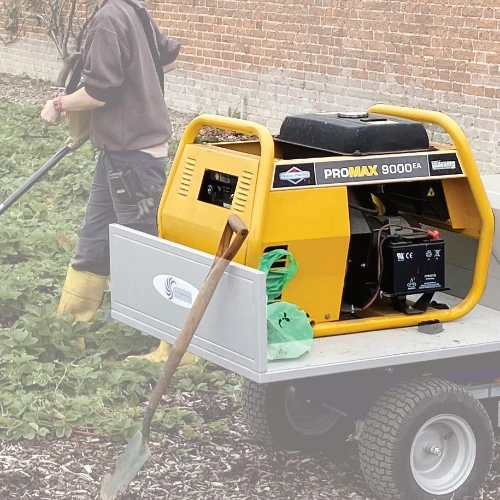
GEN-KEW generator
The generator listing is specifically linked to the Kersten lance. Confirm whether it is included in your lance package before adding it separately.
Suitable safety footwear
Both product pages list electric-weeding safety boots. Specify the operator’s size and confirm the complete PPE requirements during training.
Operator training
Kersten lists annual theory and practical training per person. Trainer travel is extra; machine inspection and PPE checks are separate from refresher training.
Make the demonstration fit the real site. Ask about the intended surfaces and plants, public access, permitted operating conditions, setup, transport, charging or fuel provision, and operator competence. Follow the instructions for the supplied system.
Request a complete system quotation →Kersten lance options
Choose the electrode for the application.
These optional electrodes are listed for the Mk3 treatment lance. Check your lance generation and the intended application before ordering.
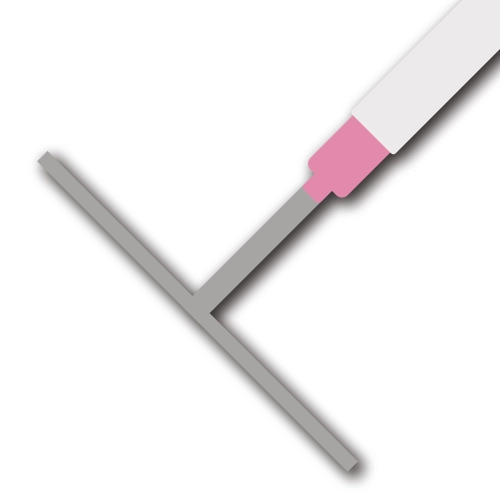
Mk3 T-bar electrode
The listing identifies gravel paths and groups of smaller plants as useful applications.
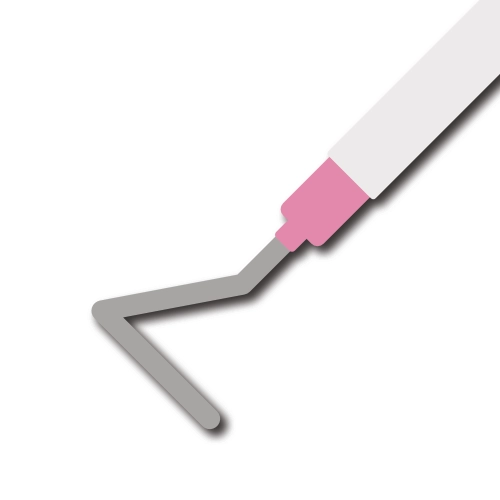
Mk3 hook electrode
An alternative electrode shape for the Mk3 lance. Ask which contact arrangement suits your intended plants.

Mk3 arrow electrode
A separate Mk3 electrode option. Confirm fitment and application with Kersten.
See the equipment at work
A closer look before you specify.
See the Zap’s working pattern.
Watch the video linked from Kersten’s Zap product page to see the walk-behind machine and surface-contact arrangement.
A demonstration on your own surfaces is the useful next step: check access, turns, edge work and the weeds you actually need to manage.
Discuss a site demonstration →Technical explanations and application experience
Useful reading for your weed-management plan.
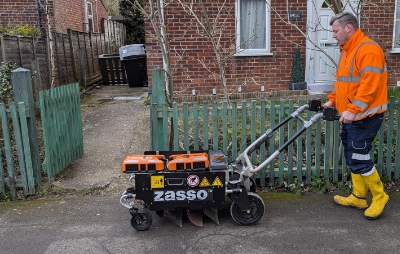
Weed control with the Zap Weeder
Kersten’s introduction to the battery-powered machine and its use on paved maintenance routes.
Read the Kersten article →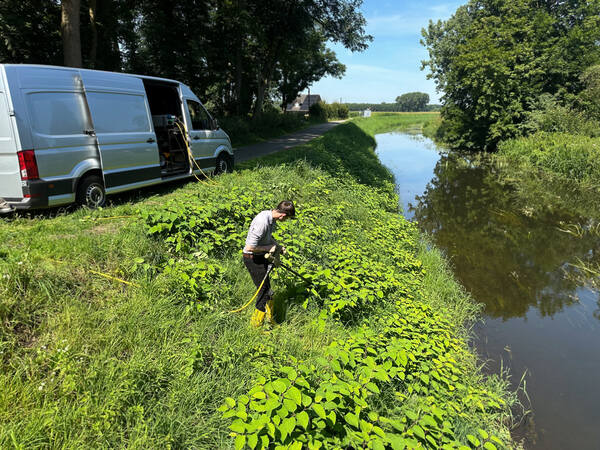
Hard surfaces or plants in soil?
Why surface conditions and electrode arrangements change the choice of electric weeding system.
Read the Kersten article →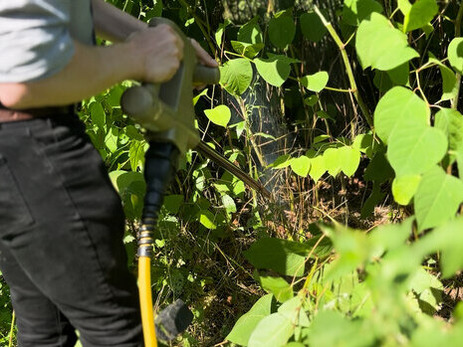
Electricity and Japanese knotweed
Explore Kersten’s lance treatment approach, including repeated treatment for established rootstocks.
Read the Kersten article →Treat weeds and manage the surface
Combine methods where the job needs it.
Before you order
Your electric-weeding questions answered.
Is this the same as a battery-powered weed brush?
No. These machines deliver electrical energy through the plant to generate heat in its tissues. A powered weed brush physically abrades or removes growth and surface material.
Does the Zap target individual plants?
The Zap treats across the contacted electrode area, so it is non-selective within that area. Choose the lance route when selecting individual plants is central to the job.
Are batteries included in the Zap price?
The product page lists two batteries, a charger and safety boots as required accessories. Request a complete quotation that states whether each item is included. The battery price shown here is for one unit.
Does the electric lance run from a battery?
This Kersten lance uses a separate power module and generator. GEN-KEW is linked as required equipment; confirm its inclusion in the package. Electrical weed treatment does not make a fuel-powered generator emission-free.
Will weeds disappear immediately?
Treatment damages plant tissue; the visible response and subsequent regrowth vary. Assess the result over time and plan follow-up treatment where required rather than judging success only by immediate appearance.
Which system should I consider for Japanese knotweed?
Discuss the Kersten lance and a site-specific treatment programme. Kersten’s article describes repeat treatment for established rootstocks; selecting electrical equipment alone does not establish that a site is eradicated.
What training and preparation are needed?
Confirm model-specific training, footwear and PPE, operating conditions and site controls with Kersten. The annual training listing covers theory and practical work; inspection and PPE checks are separate requirements.
Choose the approach for your site
Show us the surface and the weeds.
Tell us the surface type, target plants, area or route length, access and current maintenance method. We’ll help you compare the equipment and specify a complete working package.