Invasive plants · electric and hot-water treatment
Invasive growth.
Targeted electric control.
Japanese knotweed, giant hogweed and aquatic mats create different problems. Start with the species and site, use targeted electrical treatment where suitable, and compare hot water for growth that needs another approach.
Why a normal maintenance pass is not enough
What is keeping the infestation coming back?
Growth below the visible stand
Established perennials can regrow from underground structures after the shoots are removed. With knotweed, the rhizome system and treatment history matter as much as the area you can see.
Fragments and seed spread
Different species spread in different ways. Cutting, tracking through a stand or moving soil can carry viable material into clean ground. Start with identification before disturbing it.
Loss of habitat and usable space
Dense growth can displace other plants, obstruct access and complicate management of banks and water margins. The aim is controlled reduction with a plan for the site that remains.
Electric treatment first
Choose how the electricity reaches the plant.
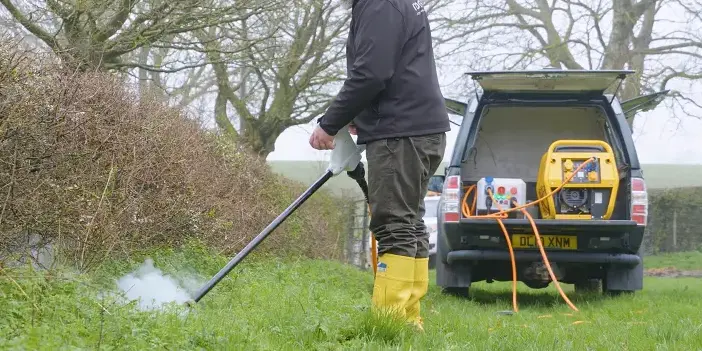
For individual invasive plants, the Electro Lance offers deliberate contact with a target. The Zap Weeder uses an electrode array for continuous surface treatment. Both use electrical energy; their application patterns and suitable jobs differ.
.webp)
Targeted electro-physical treatment
Kersten Electro Lance
A hand-held electrode applies electrical energy through the target plant and a return circuit. The treatment is specified around plant contact, site conditions and the approved operating method.
Choose it when: A trained team needs deliberate spot treatment within a species-specific invasive-plant programme.
- 170 cm lance · 20 m treatment cable
- GEN–KEW generator required separately
- Specified protective footwear required
- Operator training and controlled work zone
Continuous surface contact
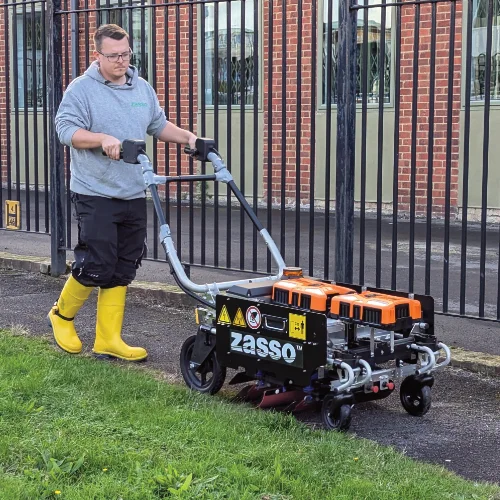
Zasso Zap Weeder
A battery-powered walk-behind system for suitable hard-surface routes. Flexible electrodes contact the vegetation across the working strip, with side-shift for edges.
Choose it when: The task calls for continuous contact across a paved route, with species and site suitability confirmed.
- 60 cm treatment width
- Two Pellenc ULIB 1500 batteries required
- 5 cm side-shift to either side
- Confirm batteries, charger, footwear and training
Specify the complete electrical system. The Electro Lance needs the separate GEN–KEW generator. The Zap Weeder requires its specified batteries. Confirm the charger, protective footwear, operator training and work-zone arrangements in the quotation.
Match the method to the species. A hard-surface application width is not an invasive-plant treatment protocol. Confirm the actual growth, contact, site conditions and permitted operating method before ordering.
Explore the full electric-weeding range → Discuss an electric-treatment demonstration →
Electrical treatment explained
Generate heat within the contacted plant.
Electrical weed control passes controlled energy through conductive plant tissue and a return circuit. Resistance converts that energy into heat, damaging tissue in the treated pathway, which can include connected roots.
Establish the treatment path
The lance contacts a selected plant and works with its return circuit. A surface-contact array places application and return electrodes across the working strip.
Deliver the correct application
Plant structure, contact and conditions affect energy delivery. Use the approved operating method. Voltage alone does not tell you how much of a root or rhizome system has been treated.
Check the response over time
Inspect the target and the wider stand after treatment. Record later shoots and new growth, then use those observations to plan the next visit.
Two methods, one site-specific decision
Electricity and hot water, side by side.
| Question | Electric treatment | Hot-water treatment |
|---|---|---|
| How is heat delivered? | Electrical energy generates heat through resistance in the contacted plant and treatment circuit. | Hot water carries thermal energy into the tissue and root environment that the applied dose reaches. |
| What controls the application? | Applicator type, plant contact, return path, conditions and the prescribed treatment method. | Water temperature, volume, contact time, nozzle choice and penetration through the growth. |
| Where does each merit assessment? | Targeted upright plants and suitable ground access for a lance; continuous vegetation contact for an appropriate surface array. | Exposed, layered growth or sites where a measured trial shows water reaches the target effectively. |
| What does the team need? | The correct generator or batteries, trained operators, specified PPE and a controlled working zone. | Water, heat and refill capacity, suitable hoses and treatment heads, trained operators and controlled access. |
| What does a good first result prove? | The response of the treated growth; follow-up is needed to assess the wider infestation. | The response of the tissue reached by the dose; later regrowth and untreated layers still need review. |
Water margins need a separate assessment. Check the exact equipment’s operating instructions, ground conditions, water levels, habitat constraints and site permissions. Do not infer approval for electrical treatment of submerged vegetation from an example on exposed growth.
A different growth form
Crassula helmsii: a mat, not a single upright stem.
Small fragments. Persistent colonies.
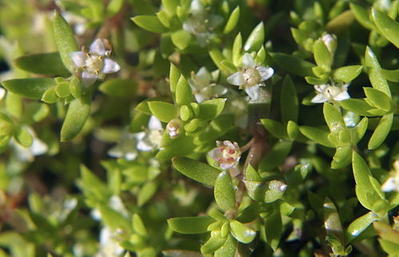
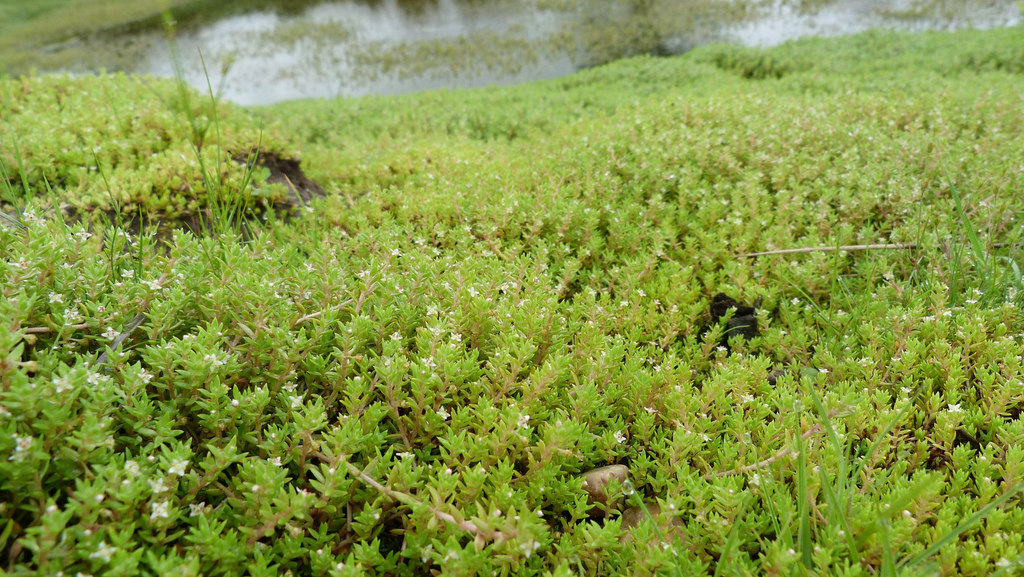
Also called New Zealand pygmyweed or Australian swamp stonecrop, this plant grows submerged, emergent and on damp ground. Dense mats can obscure surviving material below, and very small stem fragments can regenerate.
Aquatic management must account for submerged growth, other species and fragment containment. Routine brushing, strimming or excavation can make dispersal harder to control.
What Kersten’s trial observed: a small comparison on growth exposed during low water levels used the Zap Weeder, hot air and PRO10 hot water. Hot water gave the better observed result through the layered mat. The electrical system tested was the Zap Weeder; this was not an Electro Lance comparison.
The report describes short-term results and a subsequent PRO20 order. It supports a site trial and follow-up, rather than a universal eradication claim.
Read Kersten’s Crassula trial →
For habitat and fragment-management background: RAPID good-practice guide to New Zealand pygmyweed. Check current site-specific advice before work.
A complementary treatment route
Choose hot water where the growth and trial support it.
Eco Weedkiller uses approximately 100°C water to transfer heat into the target. Water volume and where it reaches matter alongside temperature. Specify the dose and treatment head around the species, rather than applying a general paving coverage rate.
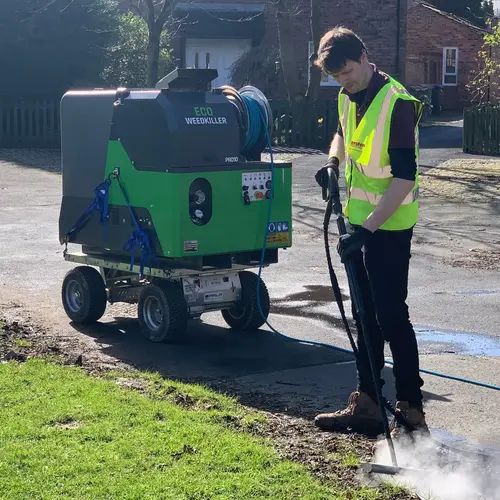
Hot water · one operator
EWK PRO10 · Kubota
A diesel-powered on-demand system for deliberate hot-water application. Kersten used a PRO10 in its exposed Crassula trial.
Choose it when: A species-specific trial supports hot water and a single operator needs a sustained treatment supply.
- 400-litre tank · 80 m treatment hose
- Listed 14 L/min at 99–101°C
- Kubota diesel engine
- Confirm nozzle and invasive-plant package
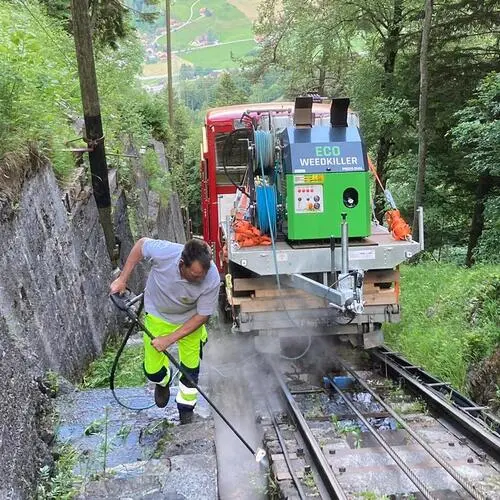
Hot water · two operators
EWK PRO20 Dual
A dual-hose platform for two-person working. Plan water replenishment and hose routes around the combined consumption.
Choose it when: A two-person treatment programme can use the additional output and working reach.
- 310-litre integrated tank
- Two 80 m hoses in the UK listing
- Selectable 10 / 20 L/min treatment output
- Hatz diesel engine
Other hot-water capacities: PRO30H, SP Mini, SP3 and SP6
| Model | Working format | Current price |
|---|---|---|
| PRO30H | 800 litres · hydraulic carrier · 30–35 L/min listed output; 60 L/min oil flow required. |
£42,500.00
Ex VAT · PRO30H machine listing · checked 15 October 2026
View machine →
|
| SP Pro Mini | 150 litres · pre-heated electric · 20 m treatment hose. |
£11,500.00
Ex VAT · SP Pro Mini machine listing · checked 15 October 2026
View machine →
|
| SP3 | 300 litres · pre-heated electric · 20 m treatment hose. |
EWK SP3 · 300 litres
£16,400.00
Ex VAT · SP3 machine listing · checked 15 October 2026
View machine →
|
| SP6 | 600 litres · pre-heated electric · 20 m treatment hose. |
£21,950.00
Ex VAT · SP6 machine listing · checked 15 October 2026
View machine →
|
Plan the water supply. The dose needed for an invasive stand can differ substantially from ordinary weed treatment. Measure consumption, refill access, carrier load and reheating requirements. SP systems store pre-heated water; PRO systems heat on demand.
Eco Weedkiller’s invasive-species guide discusses root-zone dosing and a PRO spike nozzle. Confirm the package for your machine. Its Haparanda lupin project illustrates a repeated-treatment programme.
Identify before selecting equipment
The species changes what needs controlling.
| Species | What sustains the problem? | What to plan |
|---|---|---|
| Japanese knotweed | Underground rhizomes, regrowth and movement of viable stem or rhizome fragments. | Assess targeted electric treatment and alternatives within a monitored programme. Control soil movement and review the whole stand. |
| Giant hogweed | Seed production, later emergence and exposure to hazardous sap. | Competent identification, operator protection, controlled access and a species-specific treatment sequence. |
| Himalayan balsam | Seed dispersal and reinvasion, including neighbouring or upstream sources. | Timing around seed production and coordinated follow-up. Compare suitable methods around access and the habitat. |
| Crassula helmsii | Regenerating fragments, layered mats and submerged or overlooked growth. | Aquatic habitat assessment, containment, suitable exposed-growth treatment and continued inspection. |
Keep invasive stands out of ordinary maintenance routines. Do not mow, flail, sweep or move soil through an identified stand without the agreed species-specific method. Plan equipment cleaning and handling of viable material before starting.
GOV.UK knotweed guidance for England links to the other UK nations. NetRegs provides further invasive-plant handling guidance. A treatment pass does not certify that soil or arisings are free of viable material.
From first treatment to managed reduction
Make every visit part of the programme.
Map the problem
Confirm identification, boundaries, previous treatment and access. Record public routes, water, nearby plants and any habitat restrictions.
Measure the first visit
Record the equipment, treatment method, time, energy or water use and fixed-point photographs. Review the response before scaling the programme.
Inspect beyond the treated patch
Check regrowth, newly emerged plants and clean boundaries. Adjust the return interval and address reinvasion alongside treatment.
Kersten electric-weeding guidance
Understand the applicator before choosing the system.
.jpg)
Kersten electric-weeding guidance
Electric treatment of Japanese knotweed
Kersten explains its targeted lance approach and a repeated-treatment programme.
Read the Kersten article →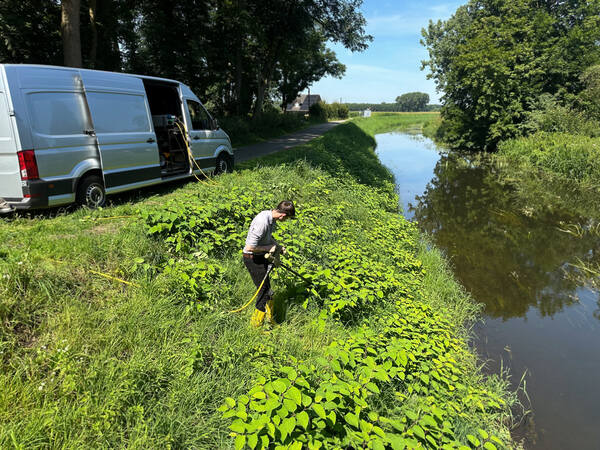
Kersten electric-weeding guidance
Lance or surface-contact system?
Explore how applicator layout, plant contact and site conditions influence the equipment choice.
Read the Kersten article →Related management routes
Choose the next step around the site.
Common questions
Electric and hot-water invasive-plant treatment
Is electricity the best starting point for invasive weeds?
It merits assessment for targeted treatment of suitable plants and sites, especially where a lance can make deliberate contact. Growth form, species, access and the operating method still determine suitability. Dense layered mats can need another approach.
Does electric treatment destroy every root in one visit?
That should not be assumed. Electrical energy can affect connected plant tissue and roots, but delivery and the extent treated vary. Assess later shoots and the whole infestation, then plan follow-up from observed results.
Are the Electro Lance and Zap Weeder interchangeable?
No. The lance treats a selected plant using a separate return circuit. The Zap Weeder maintains contact across a surface strip. Match the applicator to the intended job and do not transfer trial results between systems without assessment.
Can I electrically treat submerged Crassula?
This page does not establish suitability for submerged electrical treatment. Check the exact manufacturer’s operating limits and obtain a site-specific aquatic assessment. Kersten’s comparison concerned growth exposed during low water levels.
Why retain hot water alongside electricity?
Water can deliver heat through growth where electrical contact or the target’s form limits the chosen applicator. A measured comparison is useful. Kersten’s exposed Crassula trial is an example where hot water gave the better observed result.
What do the electrical equipment prices include?
The Electro Lance listing requires the GEN–KEW generator separately. The Zap Weeder requires its specified batteries. Confirm generator or battery supply, charger, protective footwear, training and supporting equipment in a complete quotation.
Can I cut the infestation before treatment?
Preparation and removal must follow the species-specific plan. Some invasive plants spread through fragments, contaminated soil or seeds. Confirm the handling and cleaning arrangements before disturbing the stand.
What information helps choose a method?
Send the identified or suspected species, photographs, stand size, site location, water conditions, access and treatment history. Include public-access constraints, nearby habitats and available carrier, water and power supplies.
Start with the plant and the site
Let’s assess targeted electric treatment.
Send photographs, the suspected species and the site conditions. We’ll help compare the electrical application route with hot water where appropriate, then specify the equipment and a measured trial.