Historic buildings and heritage estates
Protect the character of the estate while making maintenance more practical.
Kersten helps teams responsible for historic houses, gardens, monuments and visitor estates select professional equipment for gravel paths, low-disturbance weed management, sweeping and year-round surface care.
Relevant to the type of environments managed by organisations such as the National Trust and English Heritage, as well as local authorities, charities, universities and private estates.
- Gravel paths
- Sensitive settings
- Narrow access
- Quiet operation
- Visitor routes
- Existing fleet
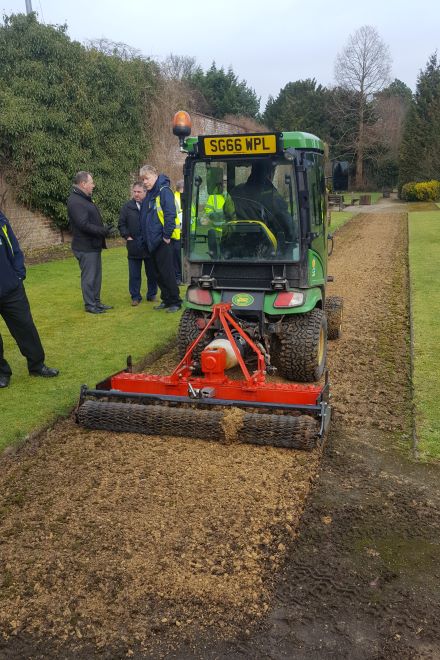
Choose the closest environment
Historic properties share constraints, but not the same working method.
Select the setting closest to your own. The examples and enquiry route will update around visitor movement, access, surface sensitivity and the maintenance team involved.
Historic houses and gardens
Maintain formal approaches, courtyards and garden routes without losing the character of the site.
Plan around opening hours, events, planted edges, varied path construction and a high standard of presentation.
- Gravel drives, paths and formal approaches
- Courtyards, joints and building edges
- Visitor presentation and safe access
- Narrow gates and restricted storage
- Seasonal leaf and detritus pressure
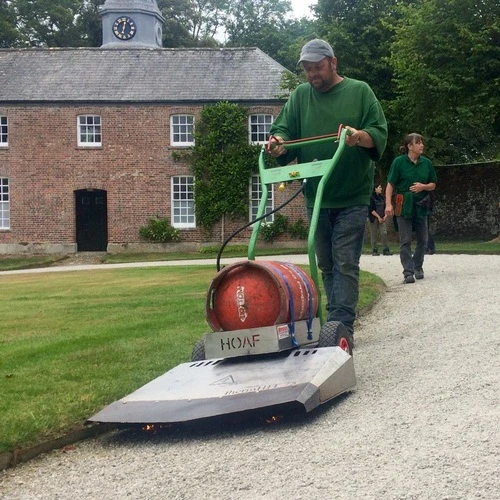
Practical estate outcomes
Move beyond isolated treatments to a repeatable maintenance plan.
Restore path structure
Loosen compacted material, disturb rooted weeds, improve drainage and prepare the surface for grading or consolidation where appropriate.
Target weeds around sensitive areas
Compare electrically heated hot water, hot air and mechanical methods around edges, joints, gravel, paths and planted settings.
Prevent the next maintenance problem
Remove leaves, silt and organic detritus before it becomes a growing medium for weeds, moss and algae.
Core equipment routes
Four technologies currently central to heritage-estate work.
The right route depends on the surface, weed growth, access, visitor conditions, available carrier and required output. More than one method may be needed across a large estate.
Gravel path renovators
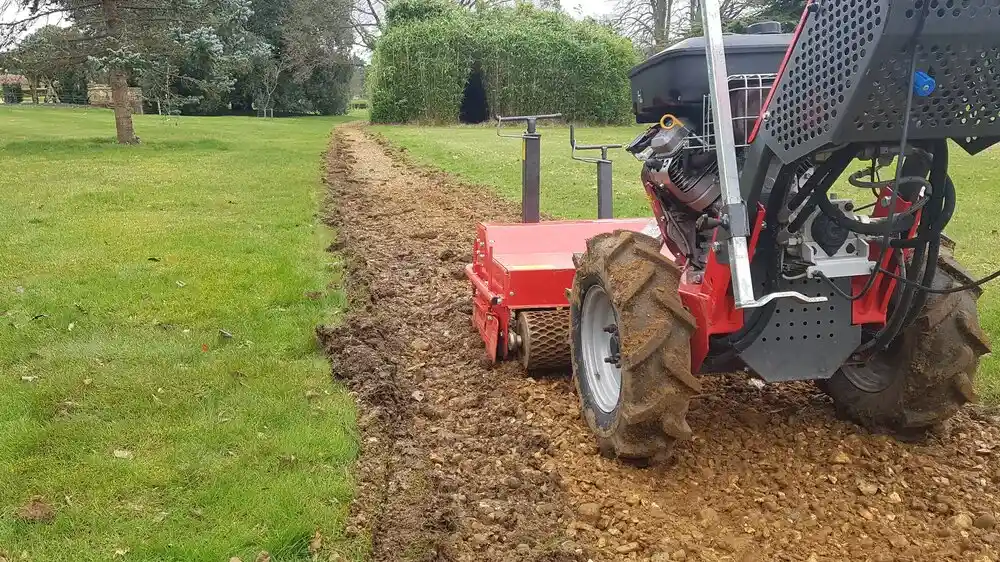
De-compact gravel and water-bound surfaces, disturb rooted weeds and bring material back into a maintainable surface profile.
Explore gravel renovation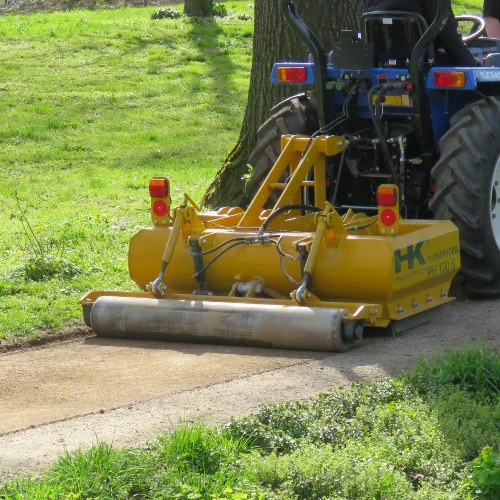
Electrically heated hot-water machines
Pre-heat insulated water using electricity, then take the machine to targeted areas without continuous engine noise during treatment.
Explore hot-water weeders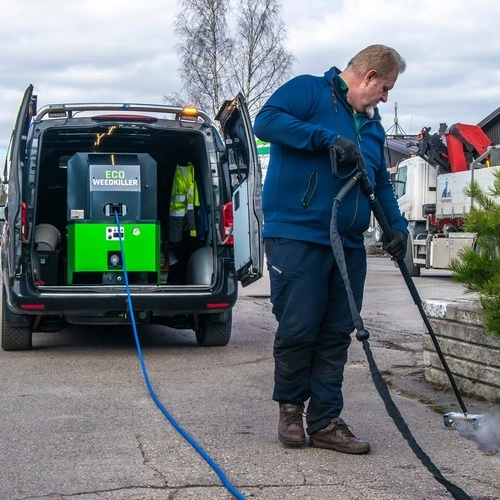
Hot-air weeders
Treat young weed growth across paths, gravel and sandy areas using pedestrian or vehicle-mounted equipment selected for the route width and output.
Explore hot-air weeders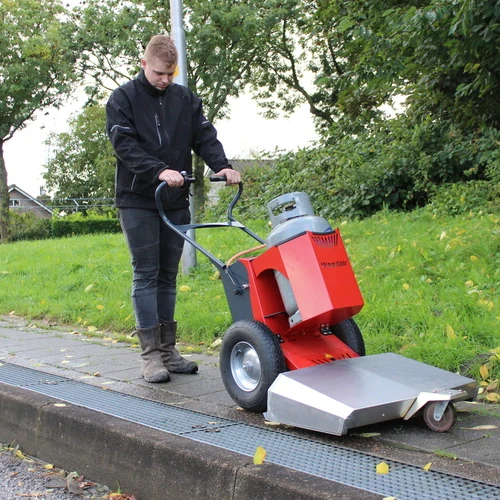
Sweepers and collection
Remove leaves, silt, loose material and detritus from paths, entrances, courtyards and estate roads before it supports further growth.
Explore Kersten sweepers
Prepare a useful first discussion
Build a heritage-estate meeting brief.
Select the site and maintenance priorities below. The page will prepare a practical briefing for a Kersten discussion or demonstration request.
Gravel path renovation and surface recovery
Confirm representative routes, opening hours, public movement, access limits and the standard of finish required.
Review compaction, drainage, material depth, rooted growth and the renovation sequence.
Confirm the working width, carrier, attachment interface, access and a suitable demonstration area.
Agree the final configuration, operator guidance, delivery, manuals, wearing parts and ongoing support.
Gravel and water-bound surfaces
Treat the structure of the path, not only the weeds visible on top.
Compaction, poor drainage and accumulated organic matter can create the conditions for repeated weed and moss growth. A suitable renovation route can loosen the surface, disturb roots and prepare the material for the required finish.
- Confirm stone type and surface construction
- Check depth and underlying structure
- Assess drainage and compaction
- Map narrow gates and turning areas
- Choose pedestrian or tractor-mounted width
- Agree grading, rolling or follow-up work
- Demonstrate on a representative section
- Plan routine sweeping and prevention
Discussion to confident purchase
A practical route for a site where the details matter.
Discuss the estate
Identify representative surfaces, access, visitor constraints, current machinery and the result the team needs.
Plan the method
Match prevention, sweeping, mechanical renovation and thermal treatment to the different areas of the site.
Demonstrate
See a proposed configuration on a suitable surface and assess access, finish, output and operator requirements.
Purchase with support
Confirm fitment, training, manuals, consumables, wearing parts and technical support before operation.
Continue with Kersten
Explore the equipment and support routes behind the plan.
Gravel path renovation
Compare pedestrian and tractor-mounted renovators for gravel and water-bound estate surfaces.
Explore path renovatorsHot-water weed control
Explore electrically heated water-battery machines and professional on-demand hot-water systems.
Explore hot-water machinesHot-air weed control
Compare pedestrian and vehicle-mounted thermal routes for paths, gravel and sandy areas.
Explore hot-air weedersKersten sweepers
Find pedestrian, compact-tractor and larger carrier options for debris removal and surface hygiene.
Explore sweepersCompatibility Centre
Check whether an existing tractor, mower, utility vehicle or other carrier can support a suitable attachment.
Check compatibilityBook a demonstration
Arrange a relevant demonstration after the surfaces, access and required outcome are understood.
View demonstration optionsFrequently asked questions
Questions before arranging the discussion.
Final suitability depends on the material, construction, condition, access, carrier, required output and the estate's risk assessment and operating procedures.
Can a gravel path renovator be used on every historic path?
No single setup suits every path. Stone type, material depth, underlying construction, drainage, edges and the required finish should be reviewed. A representative demonstration is the best route before specifying the machine and tools.
Why consider electrically heated hot-water equipment?
The professional water-battery models heat and store water before work. During treatment there is no continuously running combustion engine on the machine, which can make this route relevant where operating noise is an important consideration.
When is hot air useful?
Hot air can provide productive treatment of young weed growth on paths, gravel and sandy areas. The working width, heat source, route access, surrounding materials and safe separation from visitors must be considered.
How does sweeping support weed management?
Regular sweeping removes leaves, silt and organic detritus that can collect in joints and surface voids. Reducing that growing medium supports prevention and improves presentation, although it does not replace every other treatment.
Can Kersten work with machinery already on the estate?
Potentially. The exact model, attachment interface, PTO or hydraulic services, capacity, controls, access and intended task must be reviewed as one complete system.
Does naming National Trust and English Heritage imply they are Kersten customers?
No. They are examples of the type of historic property and visitor environment this page is intended to address. Any customer or project claim should only be made where separately evidenced and approved.
Historic property and estate discussion
Bring us the path, surface, access and outcome you need.
Kersten will help compare the equipment routes, confirm fitment, prepare a relevant demonstration and support the final purchase decision.
General information only. Final equipment selection, surface suitability, fitment, site safety, public separation and operating procedures require an assisted review.