Case studies are useful. Results are better.
Explore measured trials, customer-reported outcomes, council programmes and practical applications across weed management, water utilities, sweeping, path maintenance, artificial surfaces and winter service.
- Results labelled by evidence type
- Clear challenge, solution and outcome
- Direct links to the original project story
- Relevant machinery and next-step enquiries
Lower active substance use
Measured after mechanical extraction before the first pesticide application across five comparable Bracknell sites.
Measured trial result, June 2026Estimated machine payback
The Veolia path-edging comparison estimated the UBS 16 would recover its cost after 81 miles of work.
Project cost comparisonFootpath cleared per day
Rejuvo reported this daily range in heavily soiled areas using one operator and a Kersten UBS weed brush.
Customer-reported productivityCompleted in three hours
New Forest District Council reported that two operatives could grit all 54 sites while reducing daily salt use.
Customer-reported winter-service resultHow to read this library
Not every case study proves the same thing
Each story is labelled so visitors can distinguish a measured field result from customer testimony, a wider council programme or a practical application. Project photographs are used wherever the source story publishes one.
Quantified field outcome
A result recorded through a defined trial or direct comparison, with scope and limitations stated.
Operational experience
Productivity, usability or business impact reported by the customer or project team.
Wider service change
A council or contractor programme in which Kersten equipment forms one part of a broader operational approach.
Machine and task fit
A practical example showing how a machine, attachment or carrier combination addressed a defined job.
Search the evidence
Find a project relevant to your site
Filter by application or search for a customer, surface, machine, outcome or sector.

Bracknell Integrated Weed Management Trial
Controlled plots across six sites compare mechanical brushing, pesticide application, combined treatment and untreated controls.
- Challenge
- Reduce pesticide dependency while improving the evidence behind hard-surface decisions.
- Approach
- Mechanical extraction before precision application, supported by baseline surface research.
- Scope
- 502 species-depth pairs across six sites, with treatment monitoring continuing through 2026.
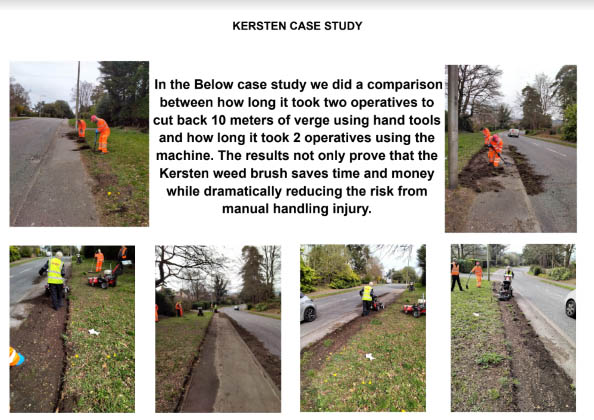
Veolia path-edging cost comparison
A direct comparison assessed mechanical path edging with the Kersten UBS 16 against conventional hand work.
- Challenge
- Remove encroached soil and vegetation from path edges efficiently.
- Approach
- UBS 16 two-wheel tractor with mechanical weed-brush attachment.
- Operator
- Lower reported effort than manual edging, reducing fatigue and injury risk.

Rejuvo footpath preparation
Rejuvo needed clean, solid path edges before applying footway repair systems across projects around the country.
- Challenge
- Hand tools and pressure washing were slower and could cause more surface damage.
- Approach
- UBS weed brush removes encroached soil and vegetation before resurfacing.
- Outcome
- Rejuvo developed a small fleet of Kersten machines for projects nationwide.
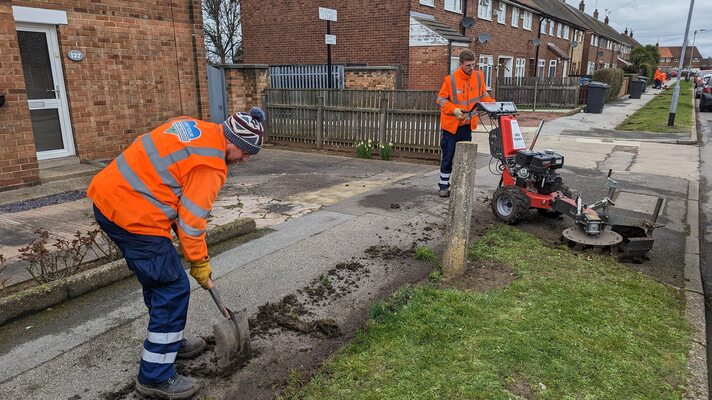
Hull Love Your Neighbourhood
Kersten machinery supported a wider programme combining street cleaning, verge edging, gully work and repairs.
- Challenge
- Improve access, appearance and surface condition across neighbourhood streets.
- Approach
- UBS power units and weed brushes within a multi-service clean-up programme.
- Context
- The street totals describe the wider council programme, not machine output alone.
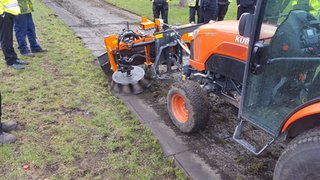
Edinburgh expands mechanical weeding
The council linked weed management more closely with street care, proactive cleaning and community engagement.
- Challenge
- Reduce reliance on glyphosate across council-managed assets.
- Approach
- Expand mechanical weeding and sweeping, supported by planned street-cleaning regimes.
- Learning
- Responsibility, data, cleansing and community involvement all form part of the transition.
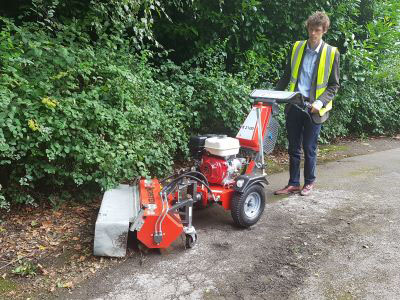
Newport preventative maintenance
Winter weed brushing was used to limit soil build-up before the main spring growing period.
- Challenge
- Reduce the seedbed and weed burden before growth accelerates.
- Approach
- Use weed brushes preventatively during winter to minimise soil accumulation.
- Evidence
- Outcome reported by Newport Council during an industry meeting.
 Customer identity image: original article photographs are no longer loading
Cormac puts IWM into practice
Cormac evaluated methods by task and site rather than seeking a single substitute for herbicide treatment.
- Challenge
- Respond to stakeholder demand for lower chemical dependency.
- Approach
- Trial several methods and match each one to terrain, frequency and operational need.
- Learning
- A blended programme was more practical than relying on one universal treatment.
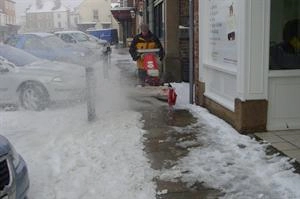
Pocklington footpath snow clearance
A pedestrian power unit and hydraulic brush were purchased specifically to improve snow clearance on town footpaths.
- Challenge
- Clear pedestrian routes after significant snowfall.
- Approach
- Two-wheel tractor with powered brush, followed by salting.
- Context
- The account was published by Pocklington Town Council and reproduced by Kersten.
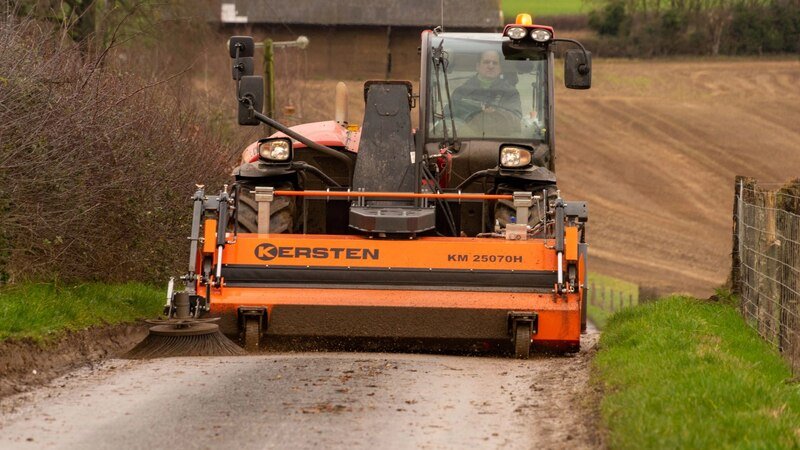
Manitou MT835 road sweeping
A southern farm needed to collect road mud on a cambered, uneven rural route after tractors moved between sites.
- Challenge
- Complaints about mud left on a road with camber and poorly defined edges.
- Approach
- KM70 sweeper, floating telehandler hitch, collector box and gully brush.
- Fitment
- Designed for robust front mounting on larger tractors and telehandlers.
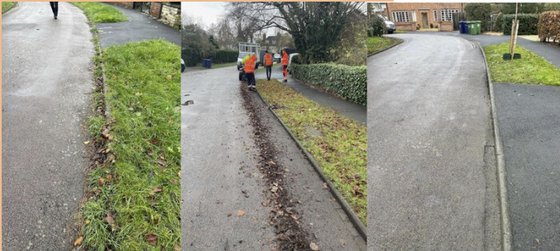
Cambridge City Council herbicide reduction
Cambridge developed trial areas, community engagement and a systematic ward-based approach to reducing routine herbicide use across streets and public spaces.
- Challenge
- Move away from routine herbicide use while maintaining safe and accessible public spaces.
- Approach
- Herbicide-free trial wards, specialist mechanical cleansing, community participation and method evaluation.
- Recognition
- Featured in NAP 2025 and visited by Defra Minister Emma Hardy MP in March 2026.
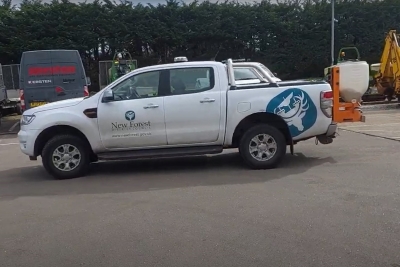
New Forest District Council winter gritting
Two pickup-mounted Lehner Polaro spreaders replaced pedestrian spreading across a large and geographically dispersed council car-park network.
- Before
- Four teams of two took all day and mainly treated entrances and corners.
- After
- Two operatives treated complete car parks before opening time.
- Payback
- The council team believed the spreaders paid for themselves during the first season.
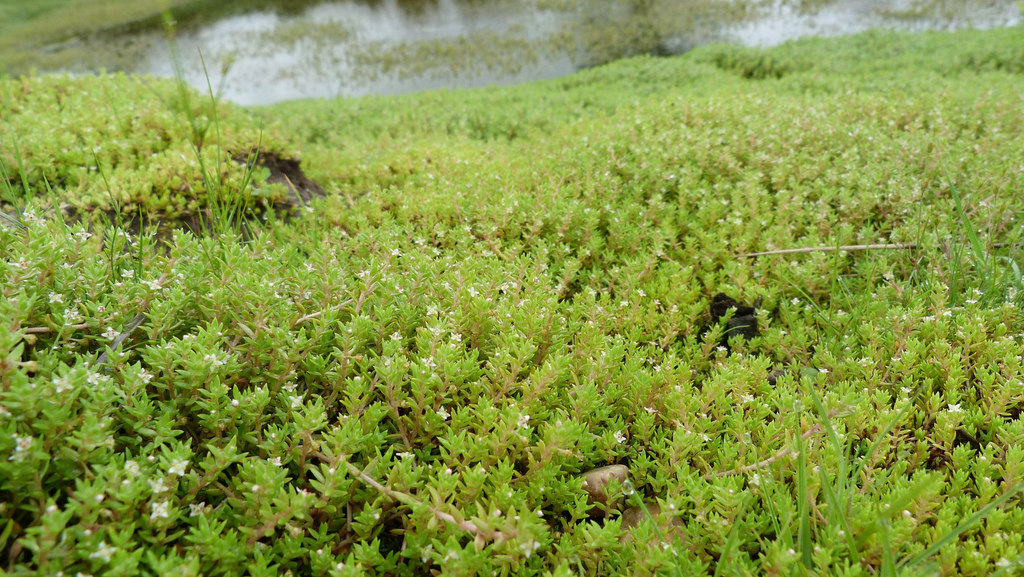
Bristol Water Crassula treatment trial
A small field trial compared electric, hot-air and hot-water treatment on dense Crassula helmsii growing around a waterbody.
- Challenge
- Control invasive Crassula beside and within a water environment where chemical treatment was not suitable.
- Approach
- Compare Zasso electric treatment, Ripagreen hot air and 100°C low-pressure hot water.
- Outcome
- The source article reports 50% and 60% one-treatment kill from electric and hot air, while hot water penetrated the overlapping plant layers most effectively.
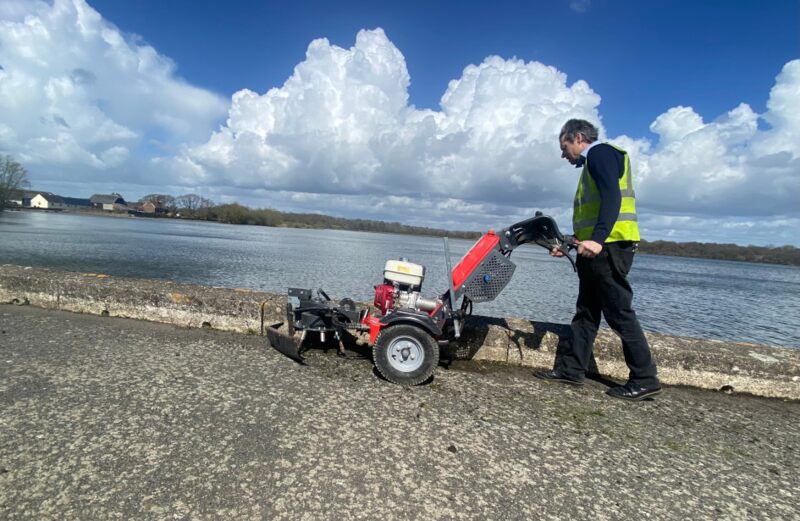
South East Water at Arlington Reservoir
Arlington Reservoir combines operational water infrastructure with a public walking route, creating a need for safe, reliable path and edge maintenance.
- Challenge
- Remove weeds and accumulated soil while maintaining safe pedestrian access.
- Approach
- Heavy-duty UBS two-wheel tractor with weed-brush attachment.
- Context
- Maintenance also supports the condition and safe operation of critical reservoir infrastructure.
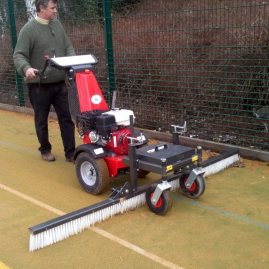 Application image: customer project photograph not published
Mitie Landscapes year-round surface care
A multi-attachment Kersten machine gave the grounds team one power unit for seasonal artificial-surface, moss and winter-maintenance tasks.
- Challenge
- Make one machine useful across several surfaces and seasons.
- Approach
- Change attachments around artificial-pitch grooming, hard-brush moss clearance and winter work.
- Outcome
- Higher year-round utilisation from a flexible power unit and attachment system.
Featured research programme
Bracknell moves the conversation from claims to measured evidence
Pavement Ecological Succession and first-season pesticide reduction
Kersten UK, Bracknell Town Council and Complete Weed Control established controlled plots to compare treatment combinations and examine how detritus depth, root anchorage and species relate to surface condition.
Create your own evidence
Move from reading a case study to testing the method
The strongest next step is usually a defined demonstration, site trial or short hire with agreed success measures.
Define the baseline
Record the surface, existing method, labour, treatment frequency, complaints and desired outcome before changing anything.
Request a baseline review →Demonstrate or hire
Test the machine on the actual surface, with the people who will operate it and the access constraints they face.
View machinery hire →Measure the result
Compare productivity, quality, repeat visits, pesticide use, operator effort and surface condition against the baseline.
Plan a measured trial →Which result is closest to the problem on your site?
Tell us the surface, the current method and the outcome you need. We will point you towards the most relevant project, machine and practical next step.