Sean Faulkner From reactive treatment to surface stewardship.
Sales and Marketing Director, Kersten UK
Author, researcher, trainer and industry speaker
Sean helps councils, contractors and land managers understand why hard surfaces deteriorate, how weed problems develop and where preventative maintenance can protect both infrastructure and environmental outcomes.
- Integrated Weed Management strategy
- Hard-surface diagnosis and prevention
- Professional training and workshops
- Research, writing and conference speaking
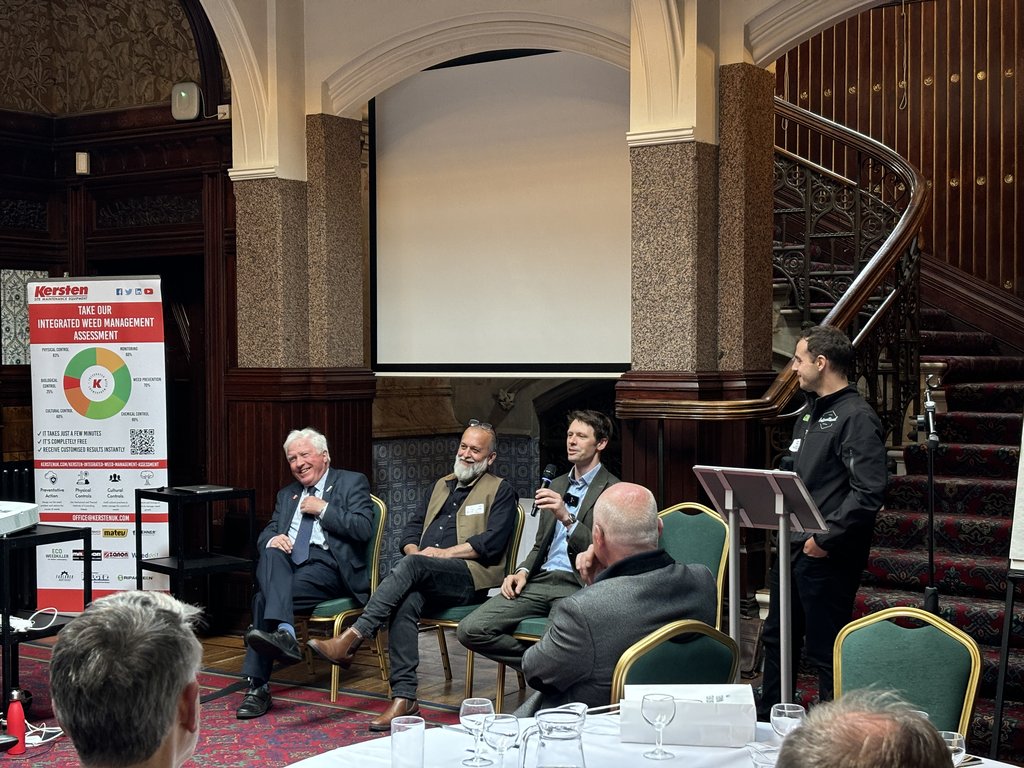
2025 industry recognition
Recognised by the Grounds Management Association for work advancing sustainable hard-surface management.
Trustee and guide contributor
Supports the organisation's work and contributed to its Integrated Weed Management Reference Guide.
Training contributor
Contributed to the development of updated Integrated Weed Management training for the amenity sector.
Research leadership
Leads Kersten's research contribution to a live council trial examining surface condition and pesticide reduction.
The central argument
The visible weed is often the last thing in the process, not the first
Sean's work focuses on the conditions that allow vegetation to establish: accumulated detritus, trapped moisture, compacted material, damaged joints and maintenance systems that intervene only after visible growth appears.
Prevention, diagnosis and intervention at the right time
Traditional weed management often starts with the question: what should we use to kill the plant? Sean starts earlier: what has changed in the surface, how deep is the accumulated material, has the root anchored and what intervention still makes economic sense?
This changes the decision from a simple choice between chemical and non-chemical treatment into a broader programme of cleansing, tolerance, extraction, suppression, targeted treatment and asset management.
The goal is not to prescribe one machine or one method. It is to help each organisation choose a defensible, measurable and practical hierarchy for the places it manages.
Surface diagnosis
Read detritus, root anchorage, species, drainage, joints and condition before selecting an intervention.
IWM strategy
Build documented programmes that combine prevention, tolerance, physical methods and justified targeted treatment.
Operational implementation
Translate policy into specifications, training, equipment, site trials and monitoring that teams can actually deliver.
Education and communication
Explain complex ecological and maintenance processes to operatives, managers, finance teams and elected members.
Current field research
Turning a maintenance philosophy into measurable evidence
Bracknell Integrated Weed Management Trial
Pavement Ecological Succession and pesticide reduction
The trial with Bracknell Town Council and Complete Weed Control examines how detritus depth, species composition, root anchorage and treatment sequence relate to surface condition and pesticide demand.
Books, guidance and research
Practical resources for people responsible for public space
Sean's work is designed to help practitioners make a better argument internally and apply the same reasoning in the field.
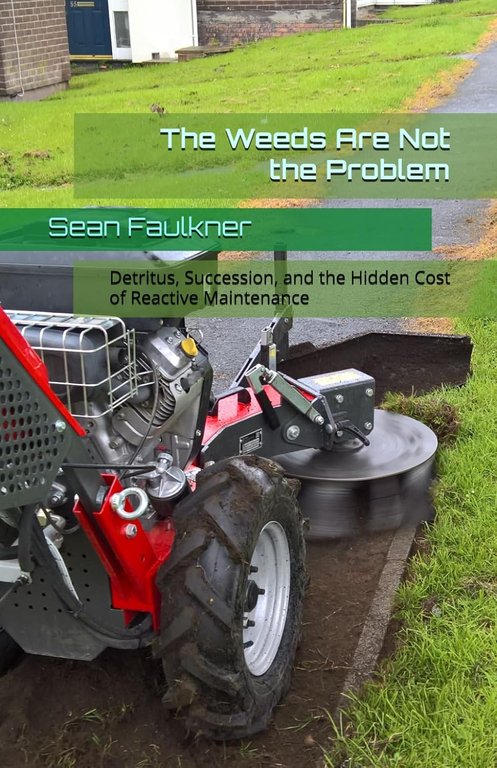
The Weeds Are Not the Problem
Detritus, succession and the hidden cost of reactive maintenance, published in July 2026.
Explore the book →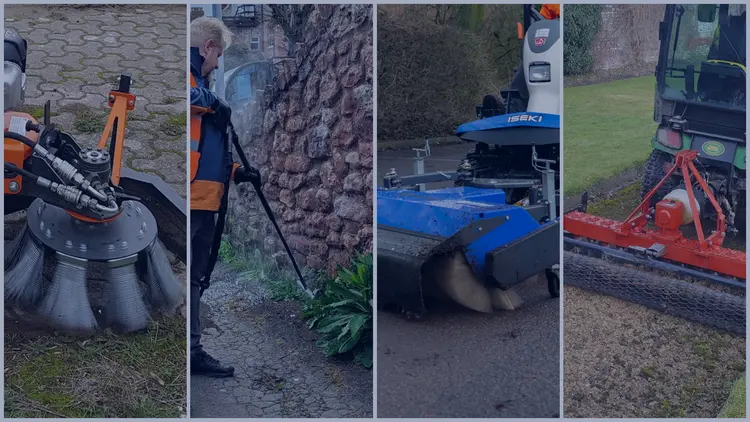
The Surface Maintenance Handbook
A practical introduction to compaction, detritus and vegetation as the main threats to surface performance.
Download the handbook →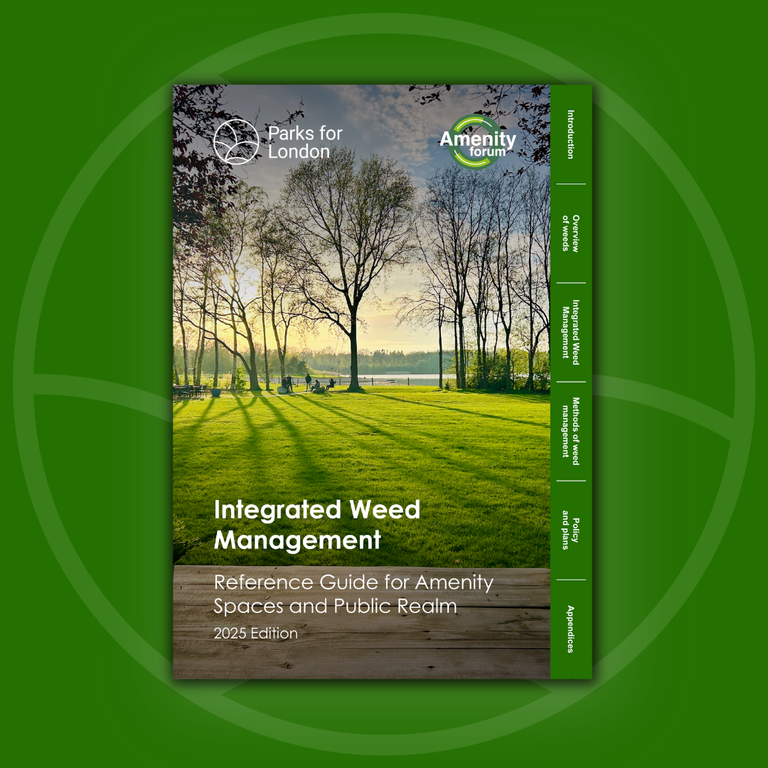
IWM Reference Guide 2025
Defra-funded guidance and editable templates for amenity spaces and public-realm management.
Open the guide →
Pavement Ecological Succession
A species-depth diagnostic framework developed from the Bracknell baseline study.
Download the paper →Work with Sean
Strategy, training, research and public discussion
Engagements can be designed around a whole programme, a representative site sample, an operational team or a specific event audience.
Council and estate strategy reviews
Review policy, contracts, treatment records and surface condition, then identify a manageable pilot and reporting structure.
Discuss a strategy review →Training and practical workshops
Help managers and operatives read a surface, understand treatment limitations and select methods around the actual condition.
View the practical workshop →Speaking, panels and industry events
Present on IWM, NAP 2025, surface performance, preventative maintenance, non-chemical methods and evidence-led implementation.
Invite Sean to speak →Selected recent thinking
Articles connecting policy, ecology and operational reality
Bracknell Weed Management Research Update
The first measured pesticide result, the four-stage framework and what the baseline means for council maintenance planning.
Read the update →The 25mm Rule
Why depth and root anchorage help explain the apparent success or failure of non-chemical weed-control trials.
Read the article →The Roadmap for Weed Management
A view of how evidence, training, practical skills and professional standards can improve amenity weed management.
Read the roadmap →Contact Sean
Start with the problem, audience or decision you need to make
Build a structured enquiry for a strategy review, workshop, speaking engagement, research discussion or professional collaboration.
Build your enquiry to Sean
The button opens the Kersten contact page with the details below already included.
This opens the normal Kersten contact form so the message can be reviewed before sending.
Better maintenance begins by diagnosing the process, not reacting to the symptom
Sean works with organisations that want to move from repeated treatment towards evidence-led stewardship of the surfaces and places in their care.