Rethinking Our Streets: Announcing the Launch of "The Weeds Are Not the Problem
Today marks the exciting launch of a groundbreaking new book, The Weeds Are Not the Problem: Detritus, Succession, and the Hidden Cost of Reactive Maintenance, by Sean Faulkner.
Today marks the exciting launch of a groundbreaking new book, The Weeds Are Not the Problem: Detritus, Succession, and the Hidden Cost of Reactive Maintenance, by Sean Faulkner. Drawing on a lifetime of experience working with machinery and urban surfaces, Sean challenges everything we think we know about public space maintenance.
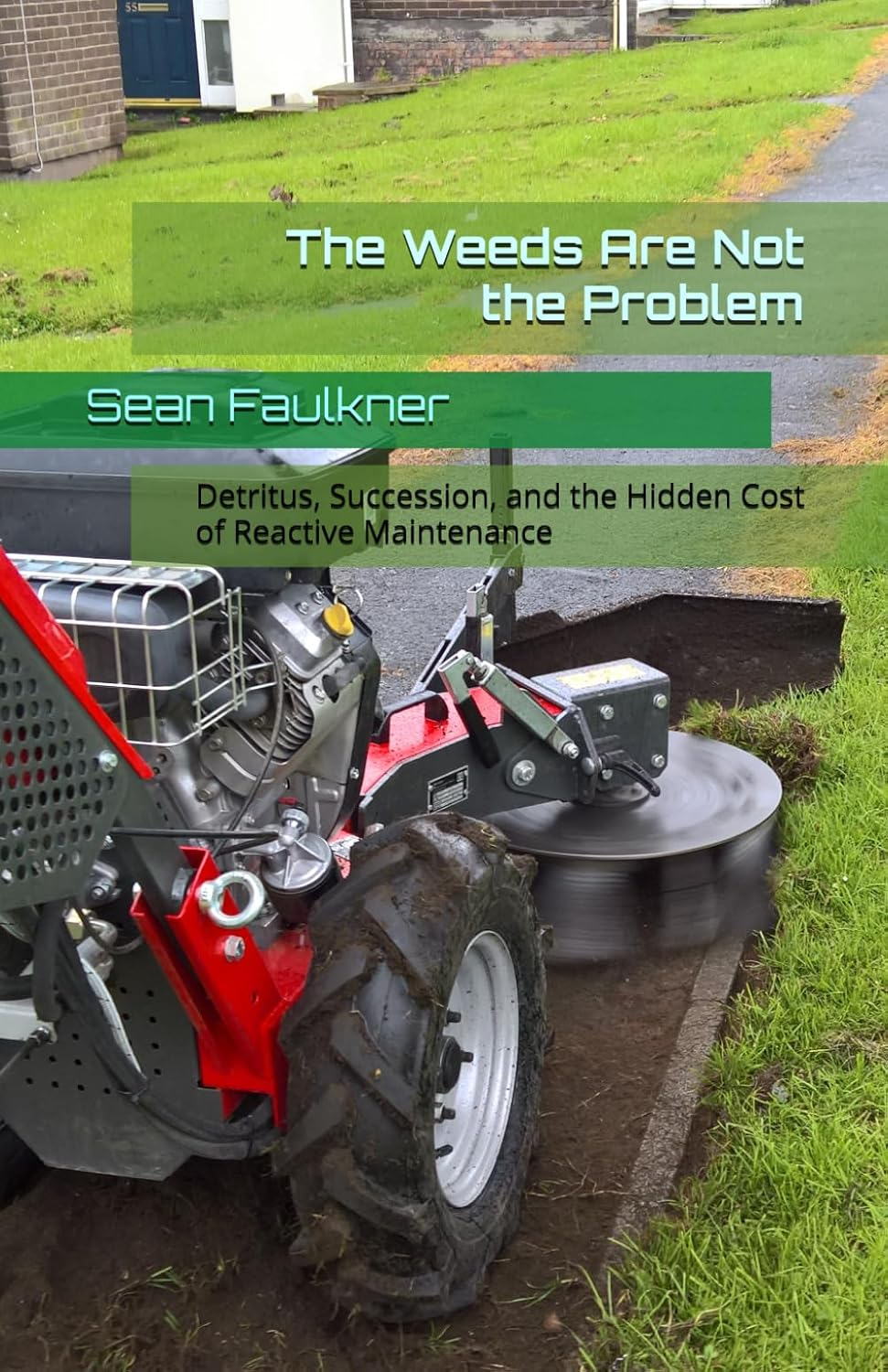
For decades, the public has been conditioned to associate visible vegetation on hard surfaces with civic neglect, prompting authorities to focus almost exclusively on visible weediness. However, Faulkner argues that what most people call a weed problem is actually ecological succession occurring across deteriorating infrastructure.
Here are a few of the core concepts explored in the book:
- The Flaw of Reactive Maintenance: The modern maintenance system appears to treat the symptom while preserving the cause. Operatives repeatedly spray visible growth with herbicides, yet the underlying conditions producing the weeds, such as accumulated soil, detritus, and blocked drainage remain untouched.
- The Accumulation of Ecological Debt: When preventative cleansing is cut to save money, detritus accumulates and alters the surface. Moisture becomes trapped in organic matter, leading to intensified freeze-thaw cycles that slowly fracture the surface from the outside inward.
- The "Kick Test": The book introduces a disarmingly simple field diagnostic tool called the Kick Test. An operative presses the toe of their boot against the base of the weed mass. If the entire mass moves, the root system is floating and the surface can still be easily recovered. If the visible growth snaps or resists firmly, the ecology has already locked itself into the infrastructure.
- Firefighters vs. Stewards: Reactive systems act like firefighters, chasing structural decline and responding to visible crises. Preventative systems act like stewards, noticing how water moves and intervening early to preserve resilience before deterioration compounds.
The book bridges the gap between ecological arguments, operational realities, and the financial consequences of municipal neglect. It is essential reading for council officers trying to make the case for better maintenance internally, contractors attempting to understand why old approaches fail, and anyone who wants to see our shared public spaces managed with intentional care.
The weeds were never the problem, but this book makes it clear exactly what is.
Get your copy today!
The Weeds Are Not the Problem is available now on Amazon. You can also learn more about the book and the integrated weed management philosophy at Kersten UK.

No comments yet. Login to start a new discussion Start a new discussion