Glyphosate, the Shikimate Pathway and Parkinsons
The shikimate pathway is a metabolic pathway used by bacteria, archaea, fungi, algae, some protozoans, and plants for the biosynthesis of folates and aromatic amino acids.
A colleague of mine in Europe mentioned to me the other day that farmers in France were being awarded compensation for Parkinson's disease, which was being linked to glyphosate use.
Over the years I have tried to avoid the question of whether glyphosate affects human health before, as it has been highly contested and I didn't want to pick a side without enough evidence. But I did some digging into this to try and understand it.
Perhaps the content below will give people pause for thought.
As some readers probably know - The shikimate pathway is a primary metabolic pathway found in microbes and plants and connects the central carbon metabolism to the biosynthesis of aromatic amino acids.
Glyphosate works by inhibiting EPSP synthase, an enzyme in the shikimic acid pathway. Inhibiting this enzyme prevents plants from producing the amino acids phenylalanine, tryptophan, and tyrosine, which are required to synthesize proteins and lignin in plant cells (Shaner 2014). Without these amino acids, plants lack a support structure and will die.
The glyphosate molecule does not contain functional groups that would interact with biomolecules other than EPSP synthase (Berry 2020). The shikimate pathway occurs in bacteria and other prokaryotic organisms, plants and fungi, but not in animals it was therefore thought by most in the industry (to my understanding) that glyphosate was safe for animals and humans.
Approximately 8.6 billion kg of glyphosate have been applied since 1974, with two-thirds of this amount used in the past 10 years (Hebert et al., 2019). Glyphosate is frequently detected in our water (Sanchis et al., 2012), soils (Silva et al., 2018), food crops (Kolakowski et al., 2020, Louie et al., 2021), and even urine which has raised concerns over its overall effect on human health (Eaton et al., 2022, Grau et al., 2022, Nomura et al., 2022).
In recent years, modulation of the gut microbiota has gained significant attention for its association with various disorders, including metabolic, gastrointestinal, and autoimmune diseases (Fan and Pedersen, 2021, Zhang et al., 2020, Qiu et al., 2022). The gut microbiome mediates these effects on human health in multiple ways, including the production of metabolites that interact with the colonic epithelium and lamina propria to alter immune and metabolic responses (Zheng et al., 2020)
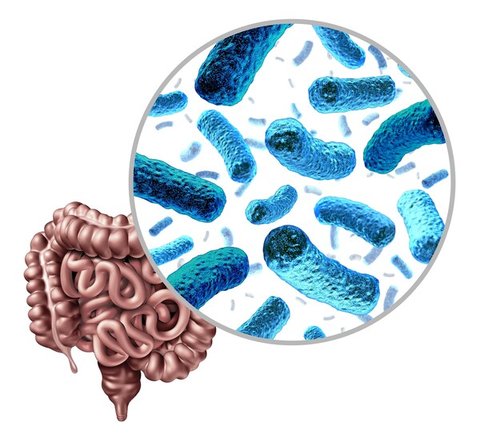
Image credit: https://gmoscience.org/2020/01/15/glyphosate-and-roundup-disrupt-the-gut-microbiome-by-inhibiting-the-shikimate-pathway/
It so happens that the shikimate pathway occurs in some of this gut microbiota, One study showed that the common beneficial bacteria Lactobacillus and Bifidobacterium were more susceptible to glyphosate exposure than the pathogenic bacteria Clostridium perfringens and Salmonella typhimurium (Shehata et al., 2013).
Some fairly recent research shows that low-dose glyphosate exposure can modulate gut microbiota composition, especially by reducing the abundance of known beneficial commensal bacteria Bifidobacterium pseudolongum and Lactobacillus sp., which is accompanied with a decrease in microbial SCFA biosynthesis pathways. Additionally, glyphosate exposed mice showed increased fecal pH levels and increased proinflammatory markers. Thus, the study highlights the ability of glyphosate to cause gut dysbiosis and a potential mechanism through which exposure to glyphosate can negatively affect host physiology (Lehman et al., 2023).
The diagram below shows some of what I have written above in diagramatic form.
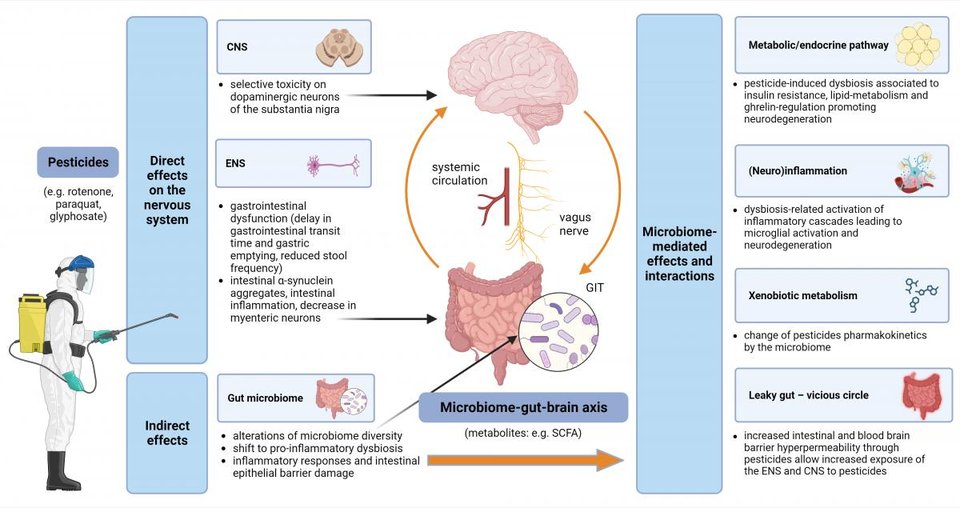
The gut microbiota and its metabolites have been suggested to be involved in the pathogenesis of Parkinson’s disease by regulating neuroinflammation, barrier function and neurotransmitter activity. Parkinson’s disease is a common neurodegenerative disease largely characterized by the loss of dopaminergic neurons with abnormal accumulation of α-synuclein in the substantia nigra and striatum. Blood circulation and the vagus nerve provide a pathway for intestinal inflammation and the transmission of α-synuclein by which the neurotoxins produced in the gut enter the brain.
Perhaps more research still needs to be done to conclude whether or not Glyphosate indirectly causes Parkinson's disease. However, it has convinced me to be cautious, and at least suggests that there is a possibility it could be linked to this and other diseases.
One more reason to look at alternative methods of weed management where we can?

No comments yet. Login to start a new discussion Start a new discussion